



Short Intro
The chapter “The Pot Maker” by Temsula Ao is an inspiring story about determination, traditional skills, perseverance, and passion for one’s vocation. The story revolves around Sentila, a young girl who dreams of becoming a skilled pot maker despite several challenges and discouragements.
This complete solution guide is specially designed for students and teachers to upload directly on MyMockMate in Unicode format. It includes all important question answers, explanations, vocabulary exercises, grammar solutions, MCQs, FAQs, and exam preparation tips.
Quick Information Box
| Topic | Details |
|---|---|
| Chapter Name | The Pot Maker |
| Author | Temsula Ao |
| Subject | English |
| Theme | Passion, Perseverance & Traditional Skills |
| Main Character | Sentila |
| Literary Form | Short Story |
| Important Values | Hard Work, Patience, Skill Development |
Concepts Used (Topics Covered)
- Reading Comprehension
- Character Analysis
- Traditional Crafts & Vocations
- Theme of Perseverance
- Vocabulary Development
- Grammar (Clauses & Determiners)
- Critical Reflection
- Poetic Appreciation
- Role of Mentorship
- Value-Based Learning
Important Formulas / Grammar Rules
Noun Clause Structure
Main Clause+Noun Clause
Example:
- She realised that the pot was ready.
Relative Clause Structure
Noun+Relative Pronoun+Clause
Example:
- The potter who worked carefully made beautiful pots.
Questions & Step-by-Step Solutions with Explanation
Reflect and Respond Answers
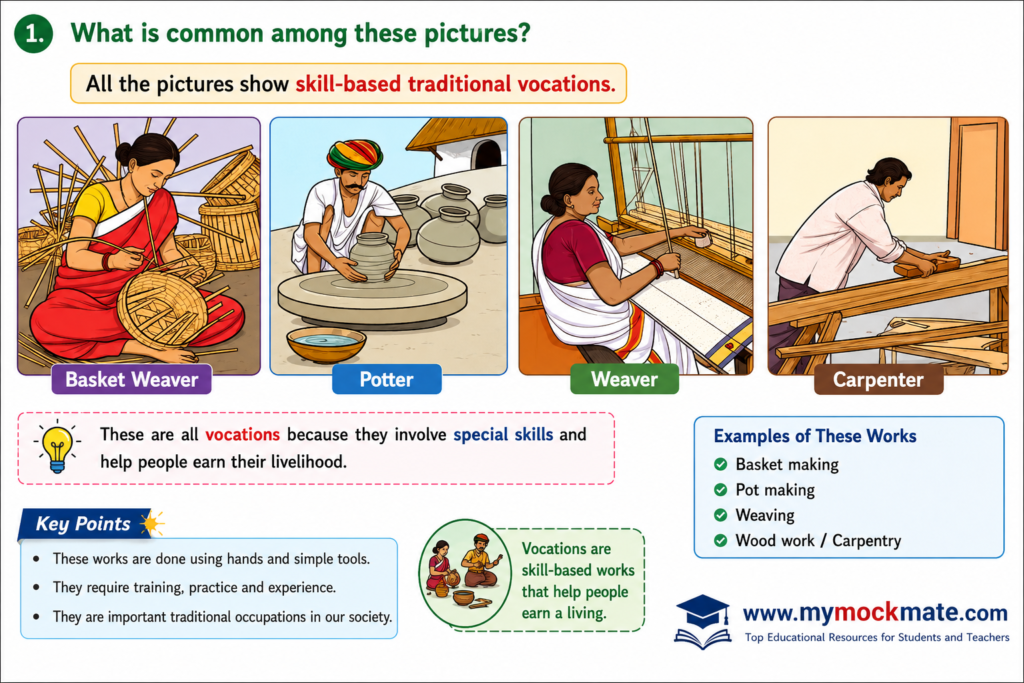
I. Look at the pictures given below and identify the vocations. Now, list at least five more vocations.

II. Work in pairs. Discuss the following questions and share your answers with your classmates and teacher.
Q1. What is common among the pictures?
Answer:
Q2. We refer to such skill-based work as?
Answer:
We refer to such skill-based work as “vocations.”
Q3. Mention differences between handmade and machine-made products.
Answer:

Check Your Understanding – Part I
Q1. Do you think pot making is easy?
Answer:

Q2. Would Sentila fulfil her dream?
Answer:

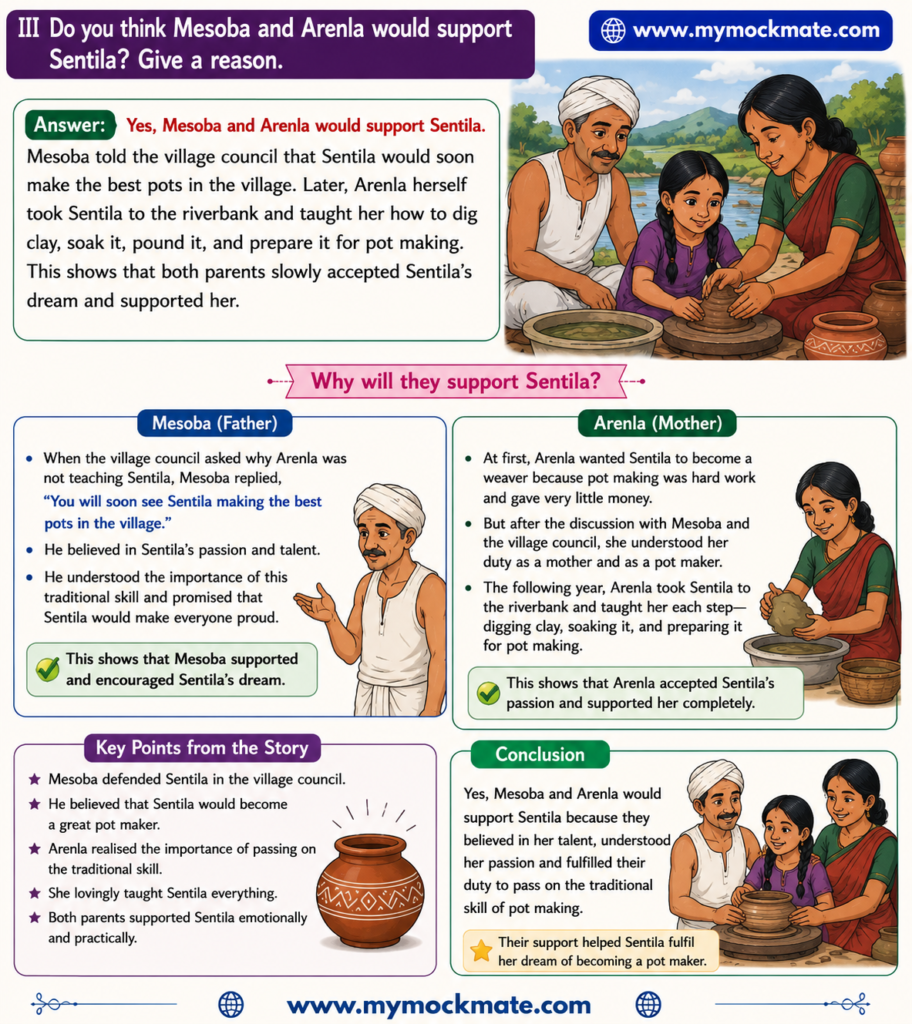
Q3. Do you think Mesoba and Arenla would support Sentila? Give a reason.
Answer:
Check Your Understanding – Part II
Q1. Do you think Onula’s support helped Sentila? If yes, why? If no, why not?
Answer:
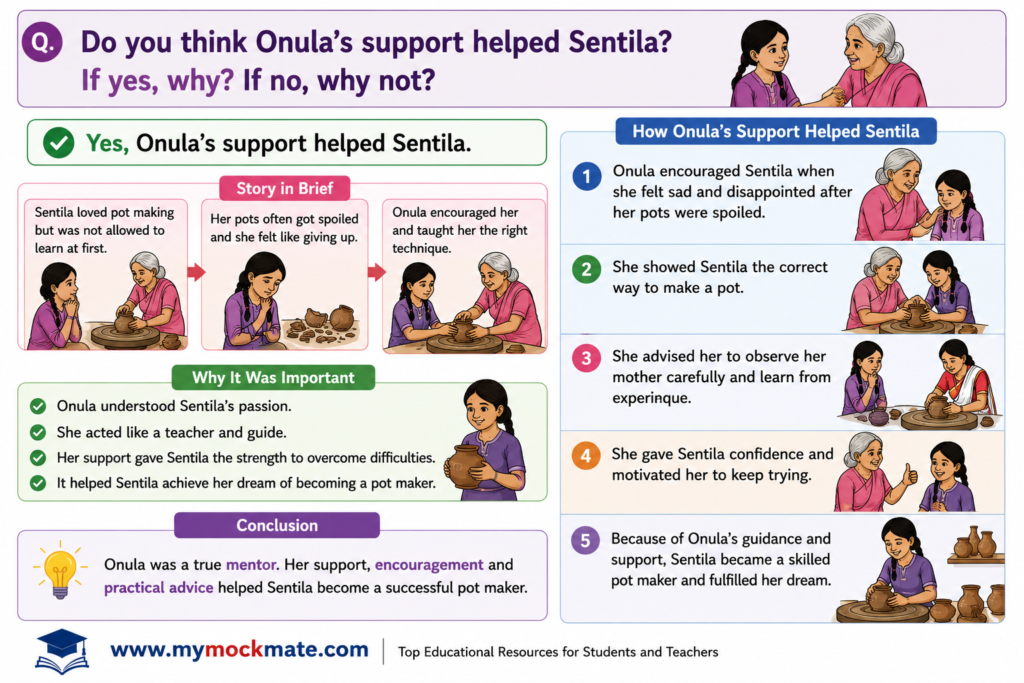
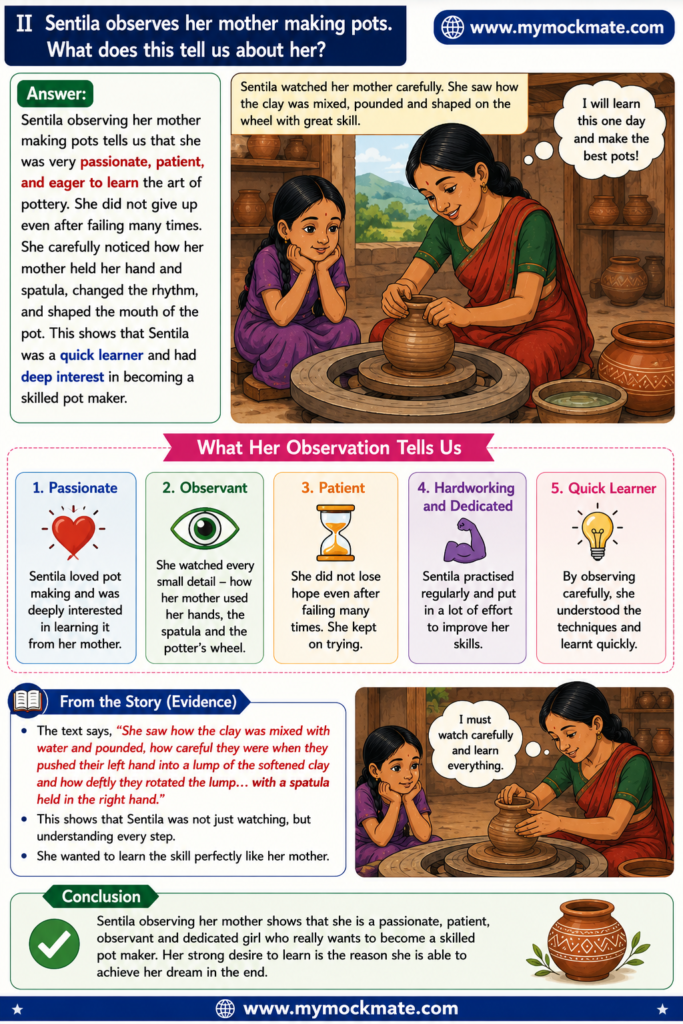
Q2. Sentila observes her mother making pots. What does this tell us about her?
Q3. Arrange the following events of the story in the correct sequence.

Critical Reflection Answers
I. Read the extracts given below and answer the questions that follow.
1.
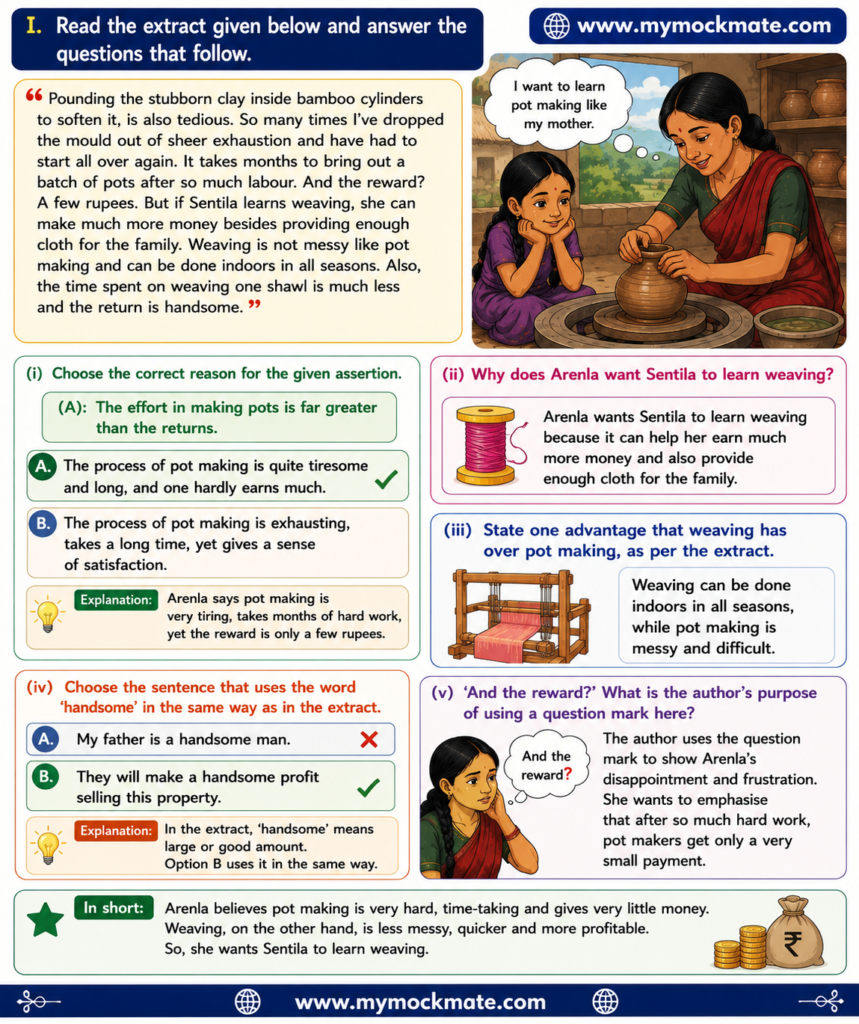
2

II. Answer the following questions.
Q1. Describe the process of pot making followed by expert pot makers, as observed by Sentila.
Answer:

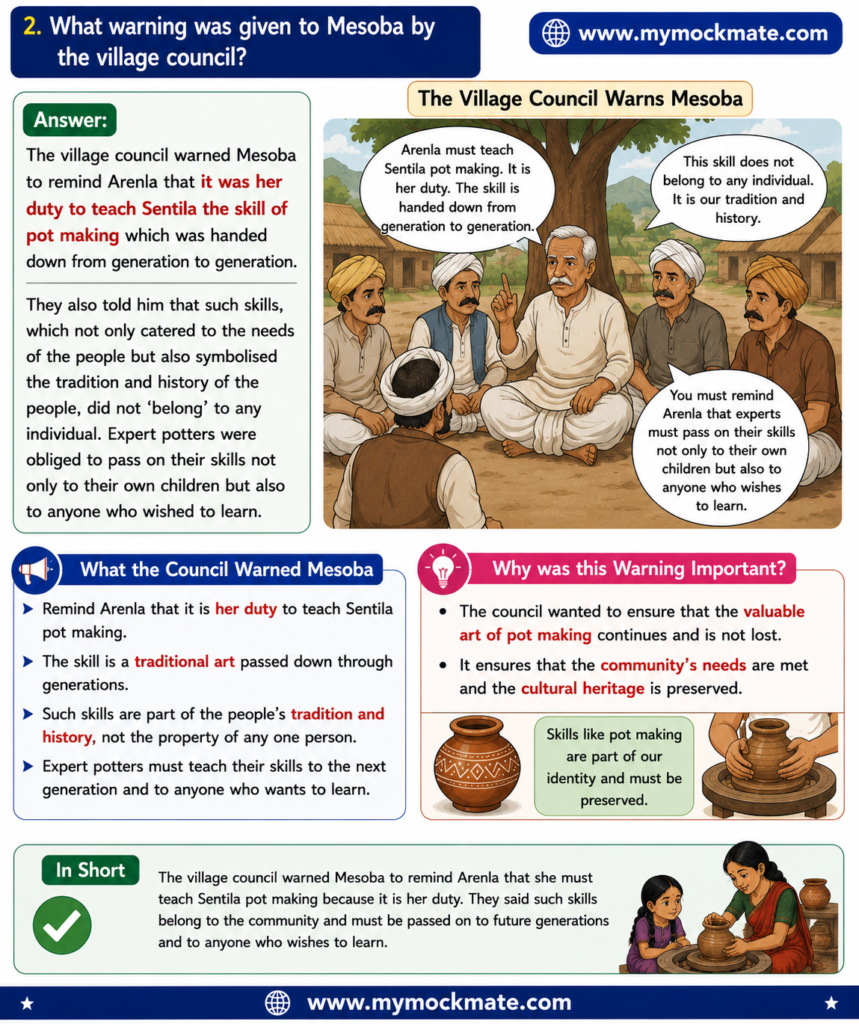
Q2. What warning was given to Mesoba by the village council?
Answer:
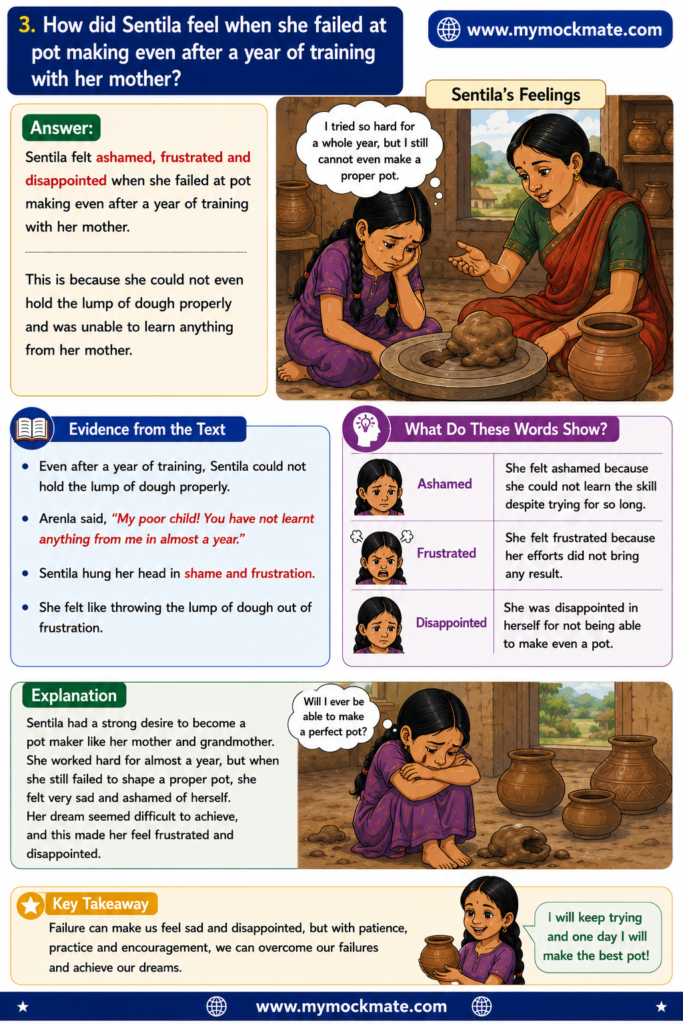
Q3. How did Sentila feel after failing for a year?
Answer:
Q4. ‘Onula stood there for a long time as if trying to absorb a new phenomenon’. Explain.
Answer:

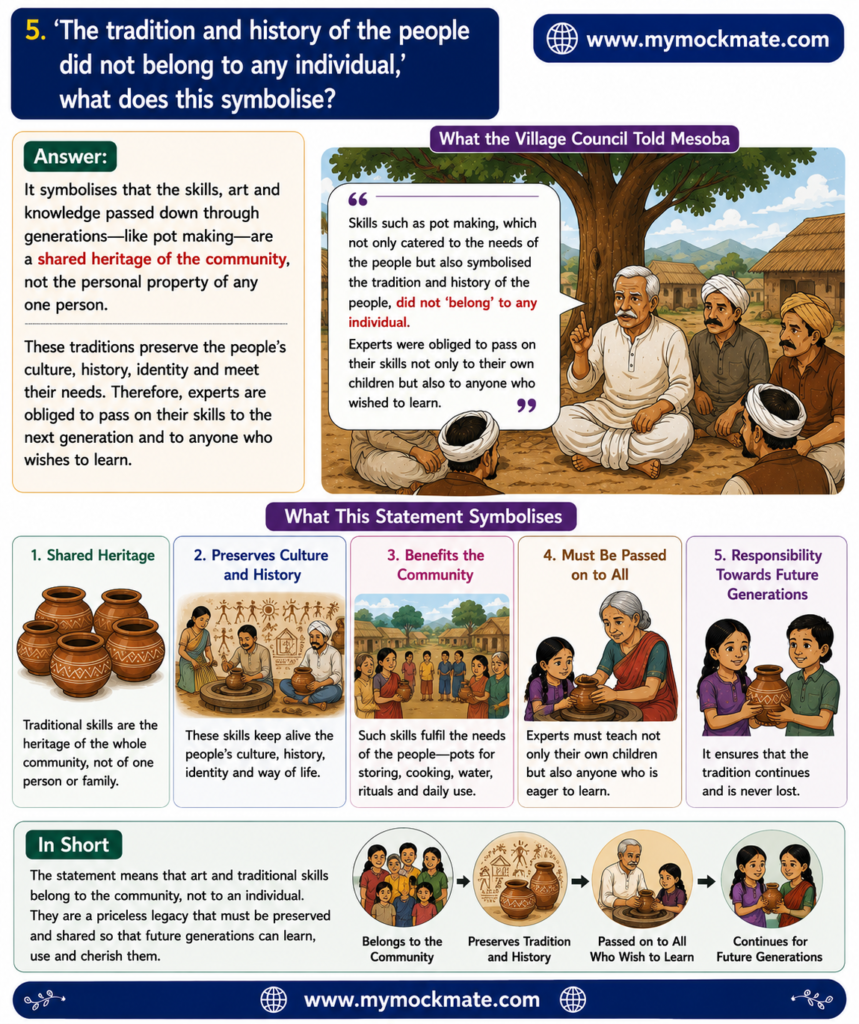
Q5. ‘The tradition and history of the people did not belong to any individual,’ what does this symbolise?
Answer:
Q6. What is the significance of the concluding line of the story, ‘A new pot maker was born’?
Answer:

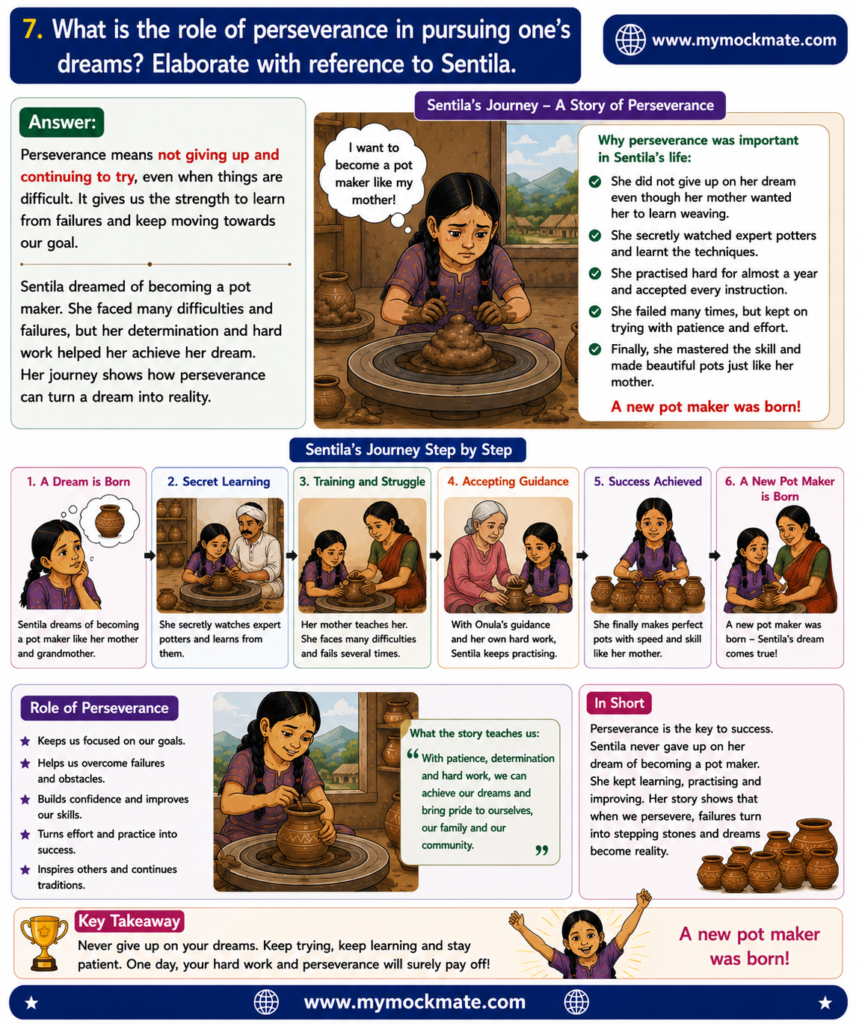
Q7. What is the role of perseverance in pursuing one’s dreams? Elaborate with reference to Sentila.
Answer:
Vocabulary and Structures Solutions
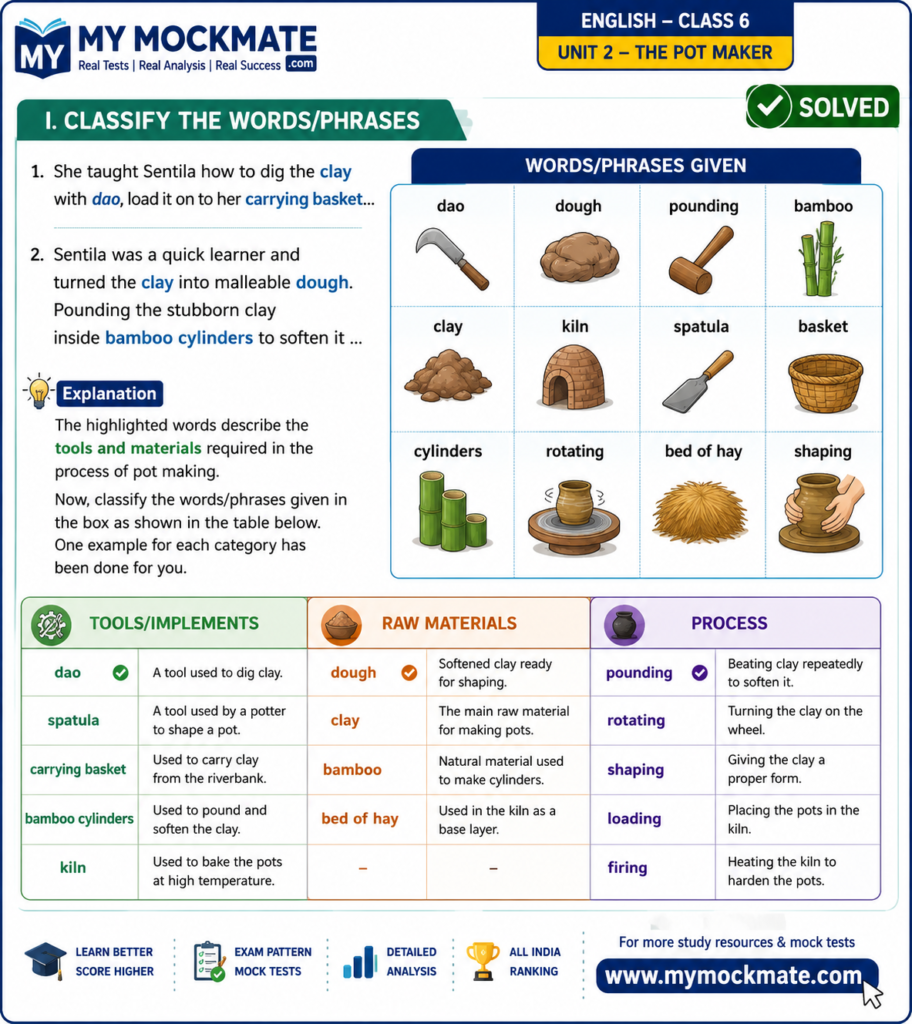
I. Read the highlighted words in the following sentences
from the text.
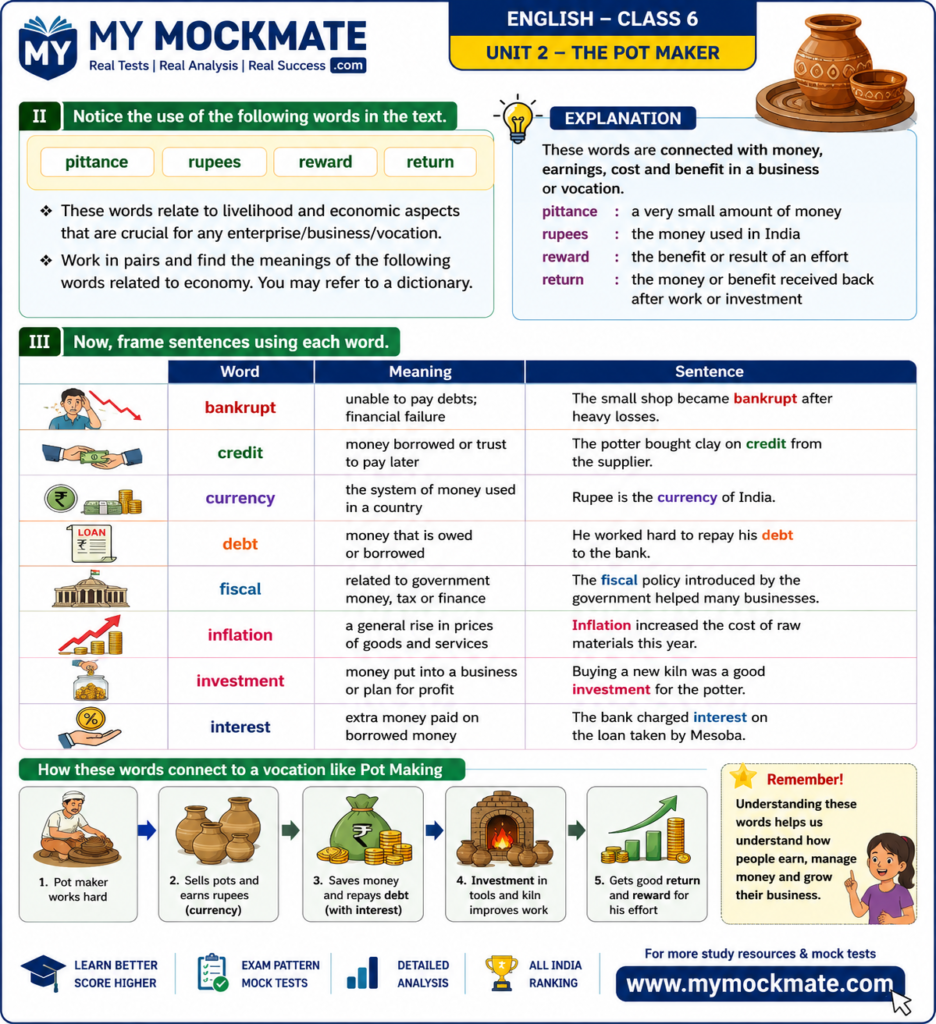
II. Notice the use of the following words in the text.
III Read the following sentences from the text. The main clause has been underlined and the subordinate clause has been circled.
- Complete the following sentences with suitable noun clauses.

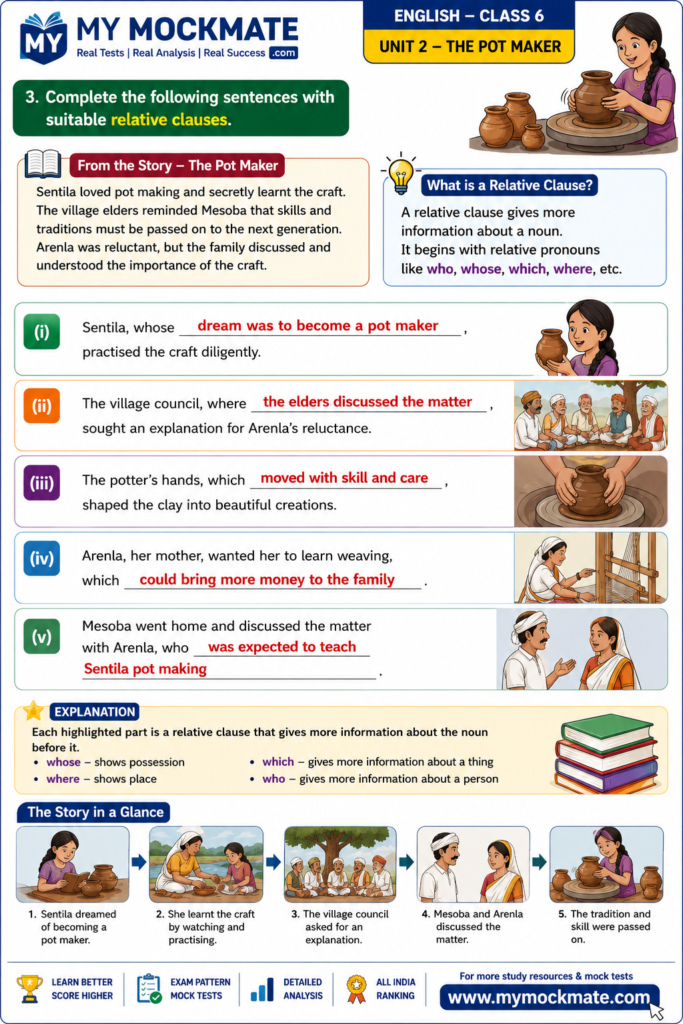
- Complete the following sentences with suitable relative clauses.
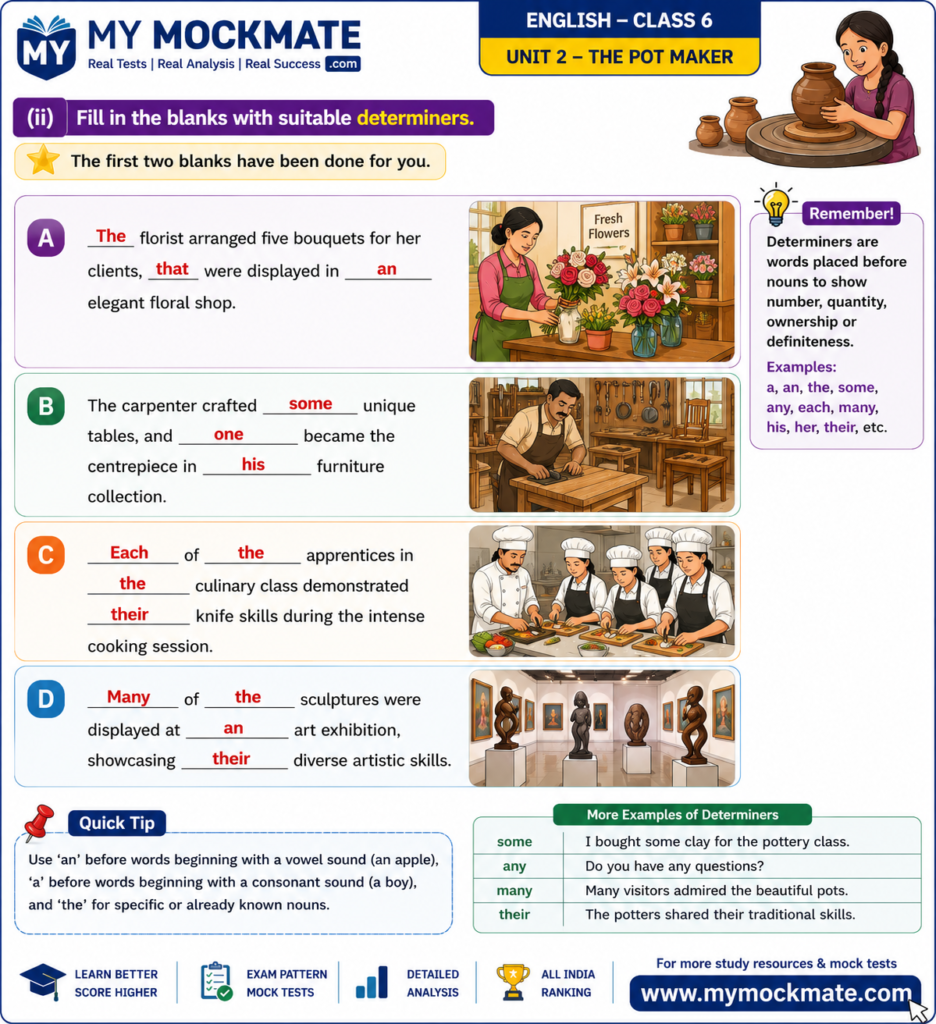
(ii) Fill in the banks with suitable determiners. The first two blanks have been done for you.
Listen and Respond
1 . You will listen to a man speak about stone statues. As you listen, complete the given paragraph by filling in the blanks with the exact words you listen to.

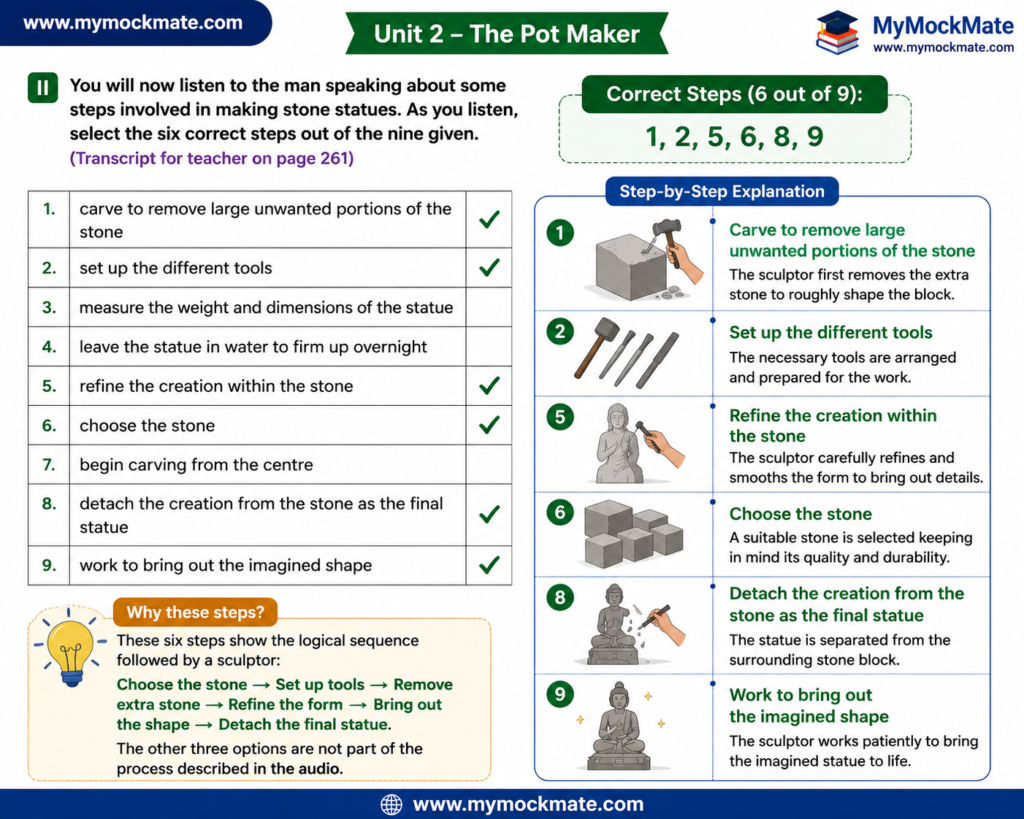
2. You will now listen to the man speaking about some steps involved in making stone statues. As you listen, select the six correct steps out of the nine given.
Writing Task
I. a write-up about your skills and passions.

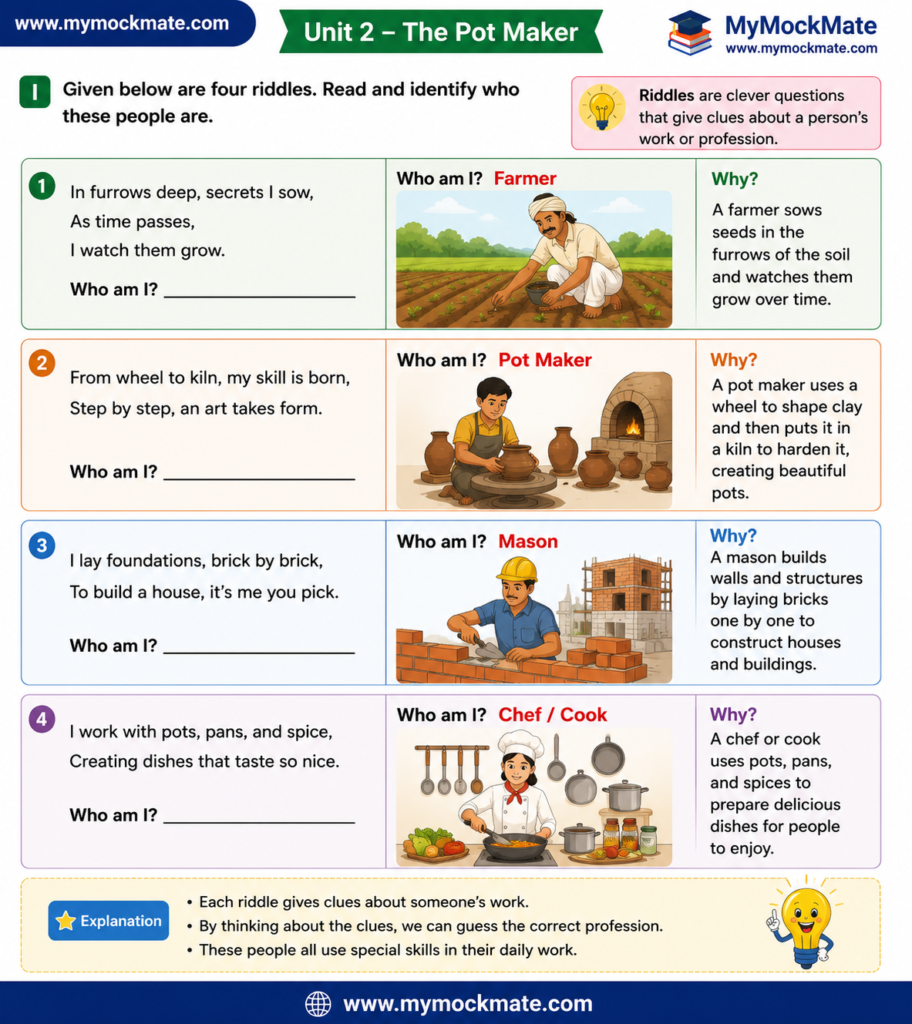
Gifts of Grace – Riddle Answers
Reflect and Respond

Check Your Understanding
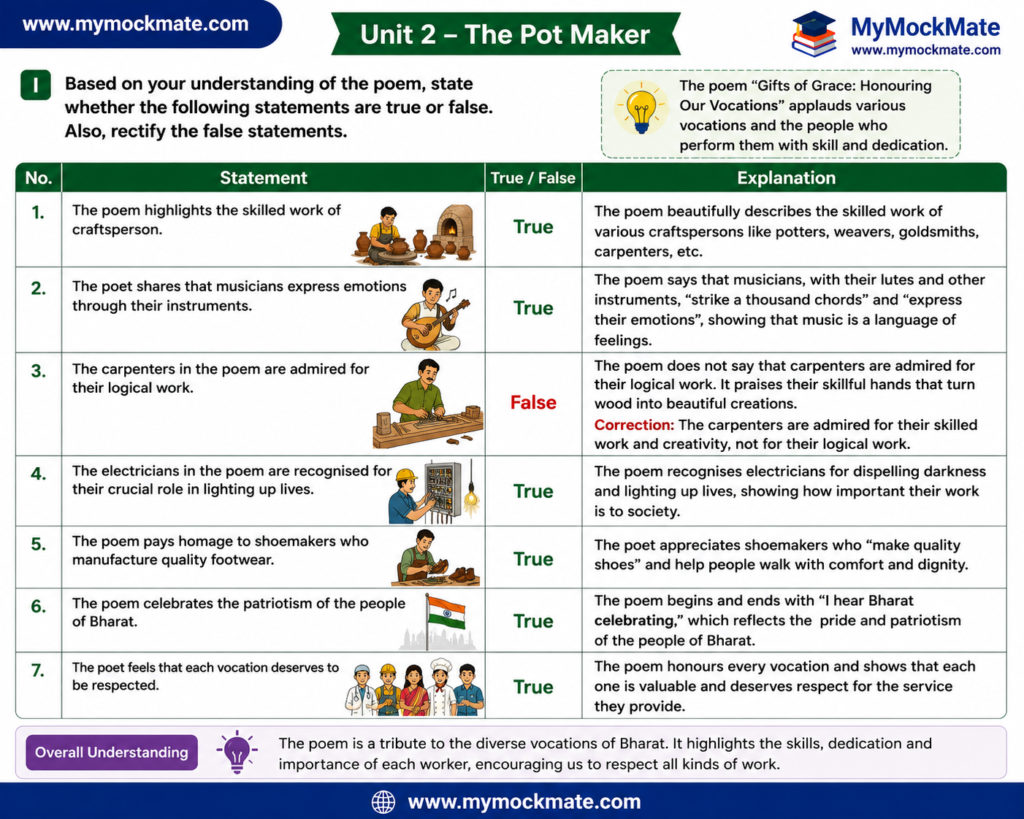
I. Based on your understanding of the poem, state whether the following statements are true or false. Also, rectify the false statements.
II. Let us appreciate the poem.
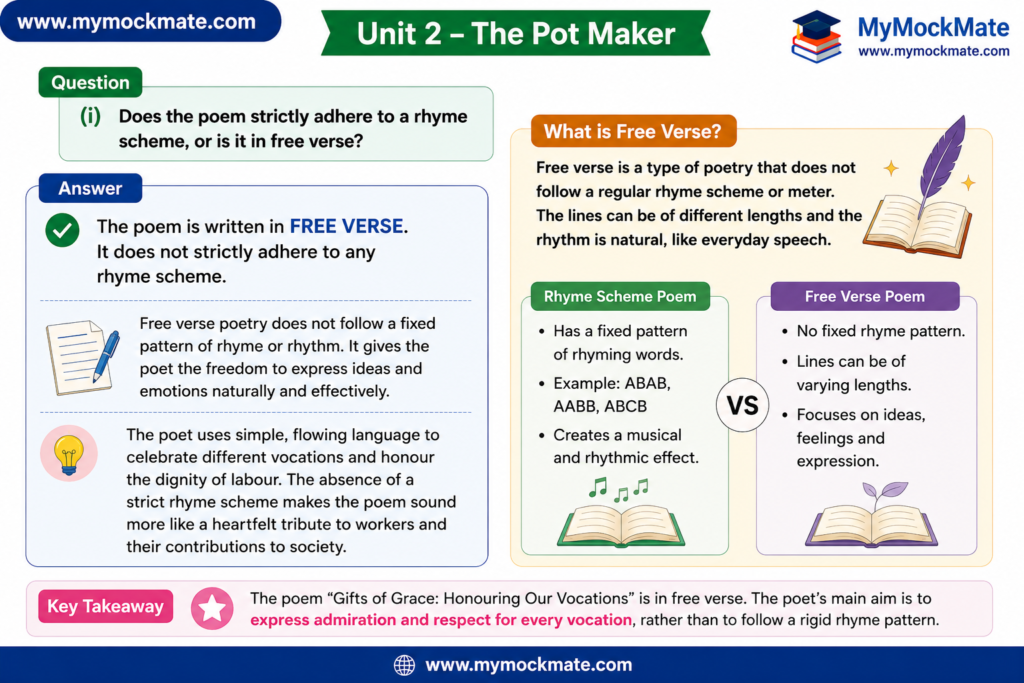
1. Rhyme Scheme and Lineation
(i) Does the poem strictly adhere to a rhyme scheme, or is it in free verse?
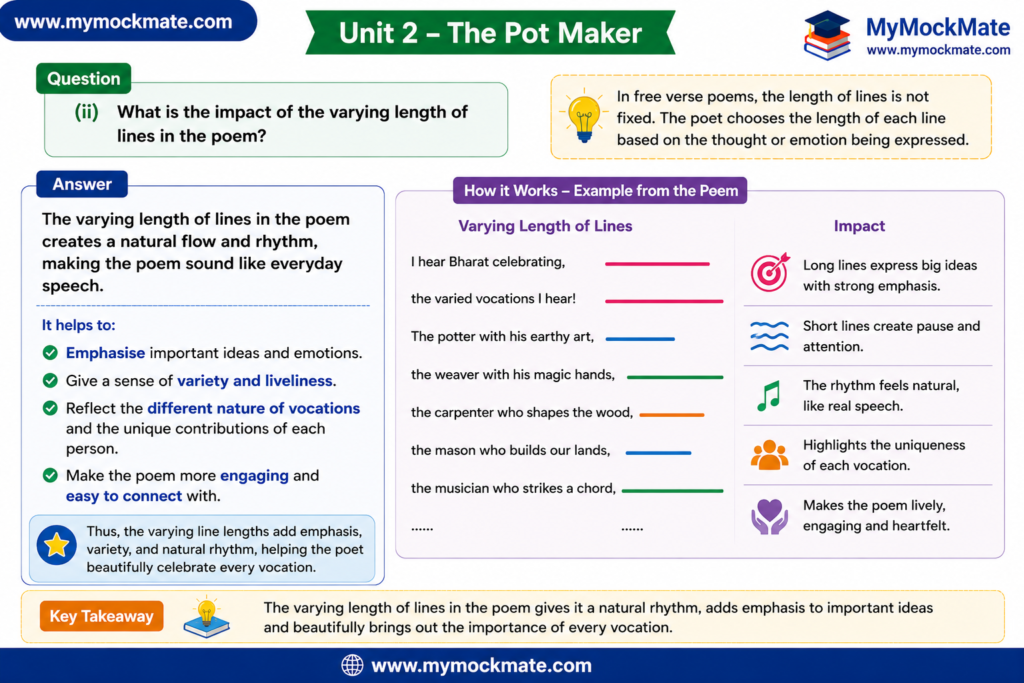
(ii) What is the impact of the varying length of lines in the poem?
(iii) What is the pattern in the structure of most lines of the poem?

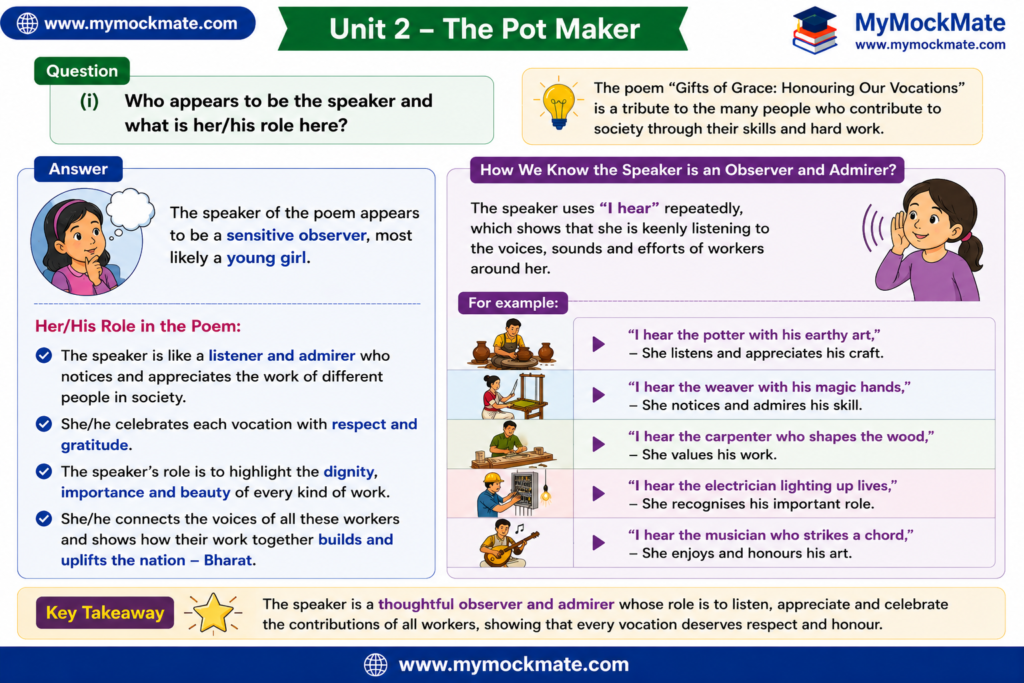
2. Speaker
(i) Who appears to be the speaker and what is her/his role here?
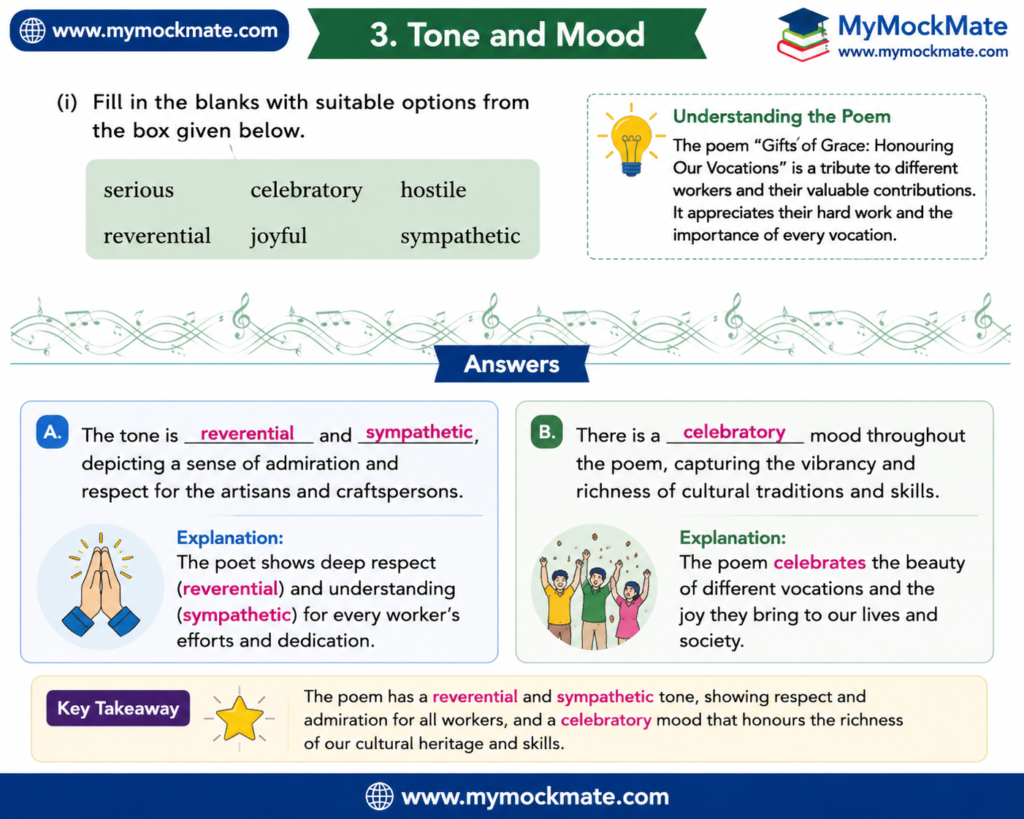
3. Tone & Mood
(i) Fill in the blanks with suitable options from the box given below.
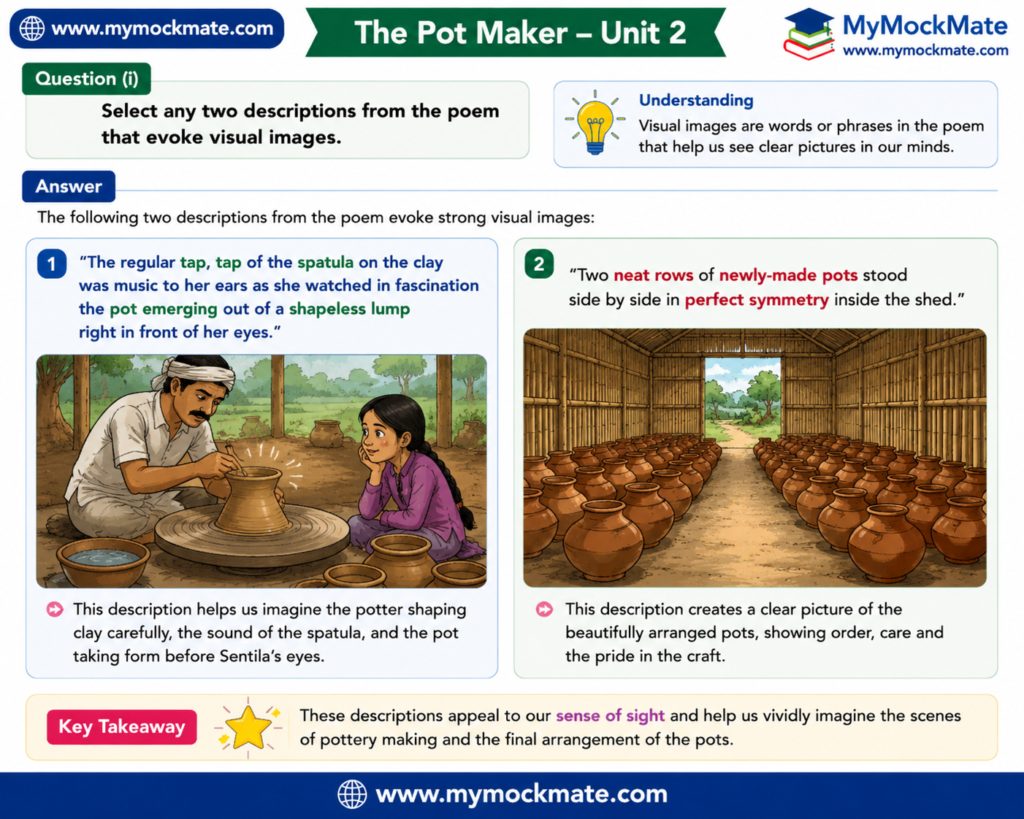
4. Imagery
(i) Select any two descriptions from the poem that evoke visual images.
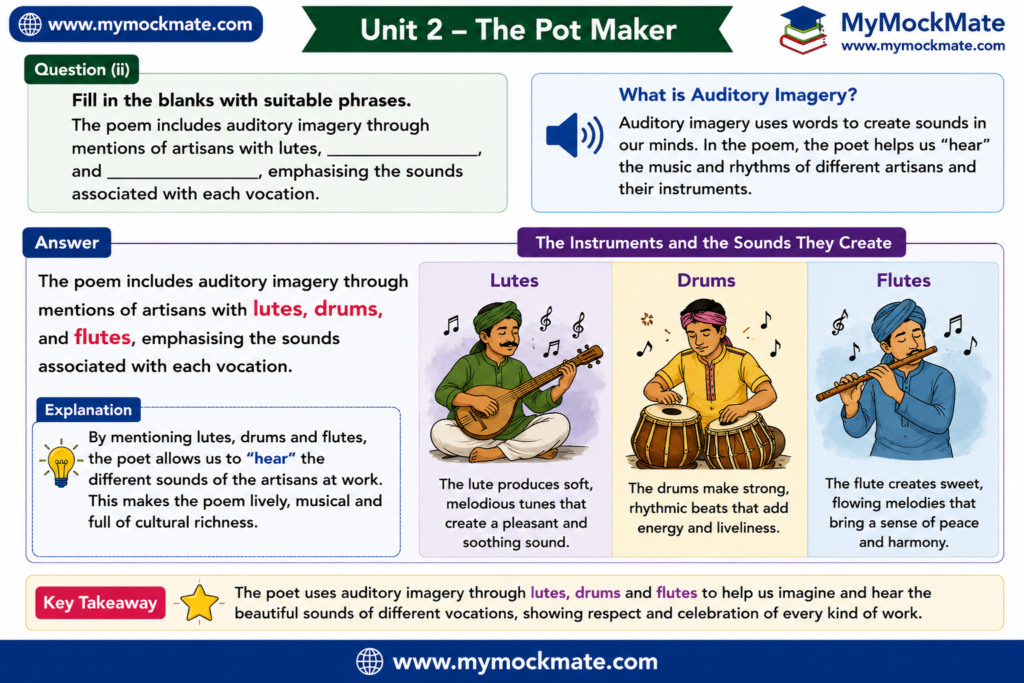
(ii) Fill in the blanks with suitable phrases.
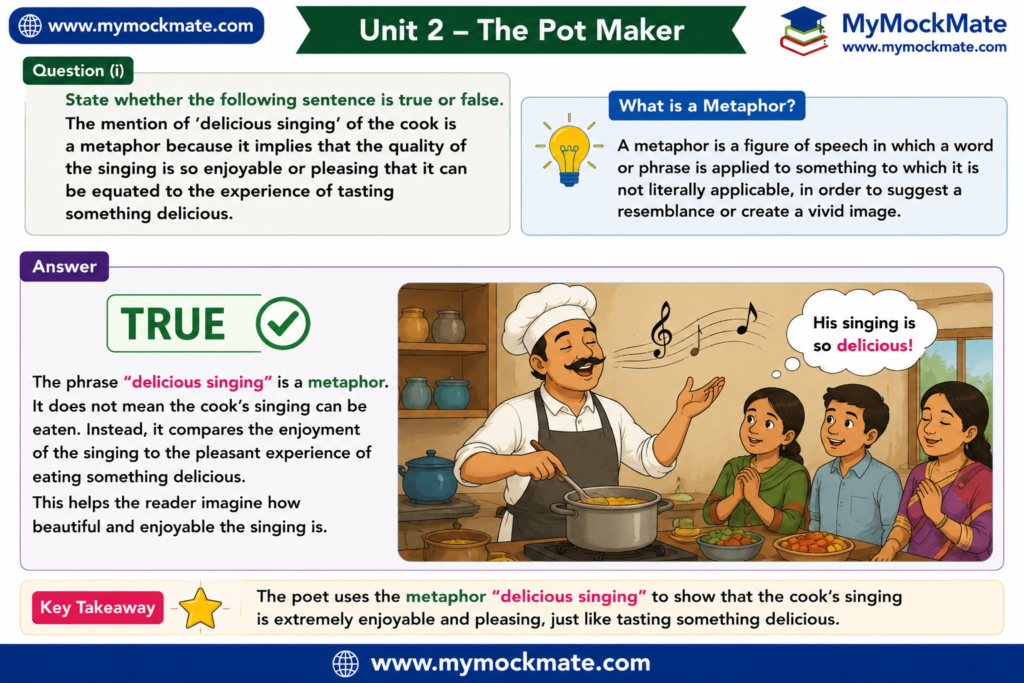
5. Metaphor
(i) State whether the following sentence is true or false.
7. Personification
(i) Why might the poet have begun and ended with the same line—‘I hear Bharat celebrating, the varied vocations I hear!’?

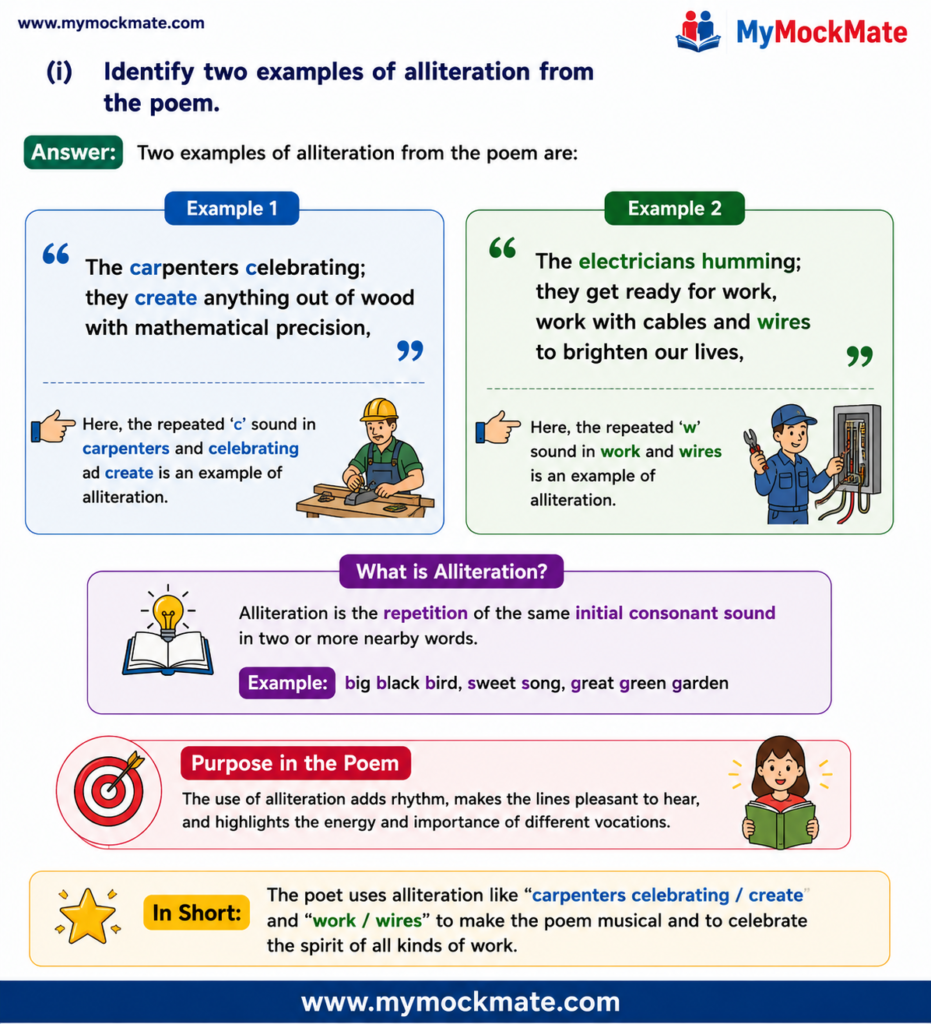
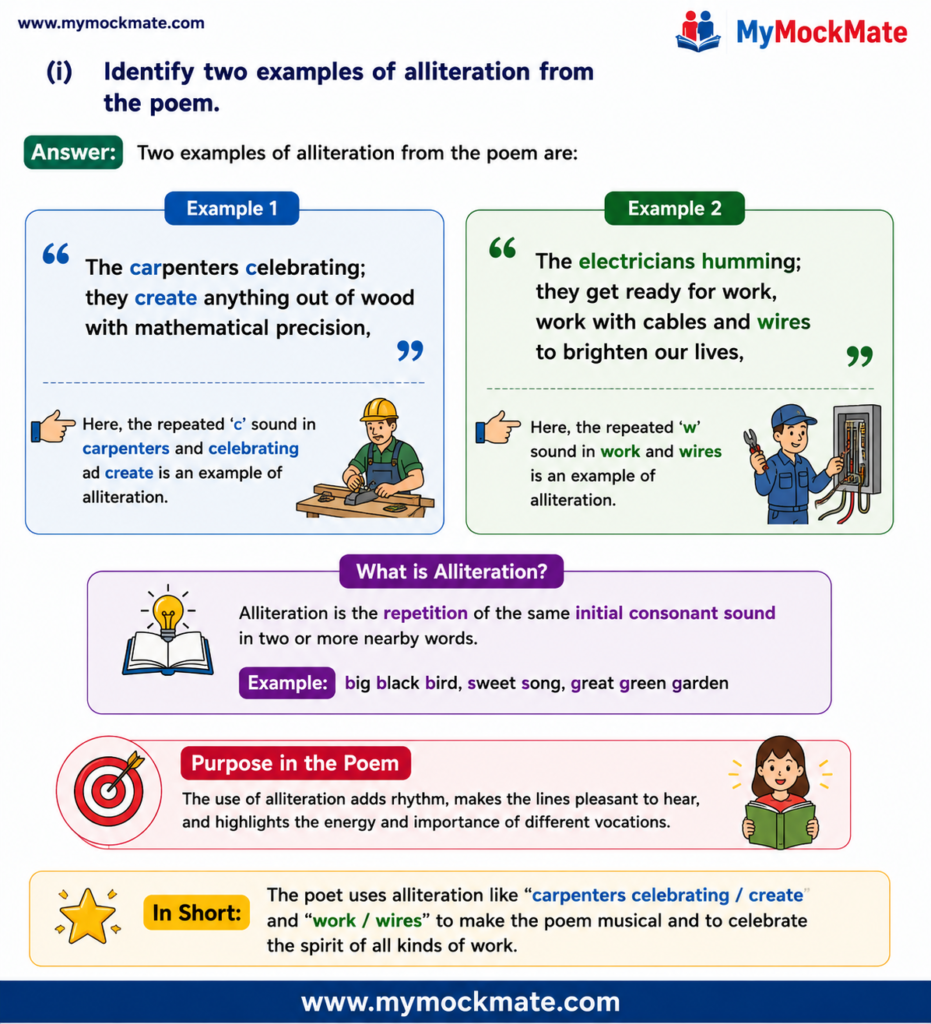
8. Alliteration
(i) Identify two examples of alliteration from the poem.
9. Symbolism
(i) Each vocation in the poem symbolises something more than just a job. What does it symbolise?
Critical Reflection
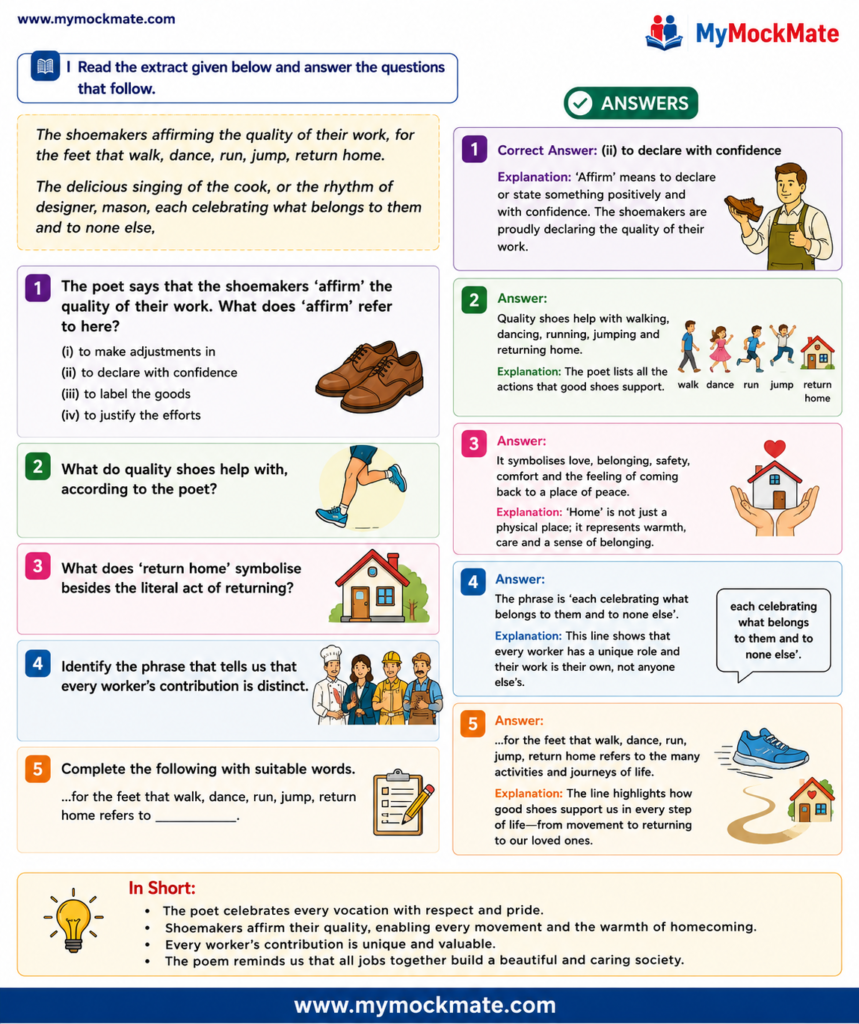
I. Read the extract given below and answer the questions that follow.
II. Answer the following questions.

Vocabulary in Context
I. People of different vocations are being described in the poem. Match the vocations given in the box below with the descriptions that follow.

II. Identify the word from Column 2 that is not the synonym of the words given in Column 1.

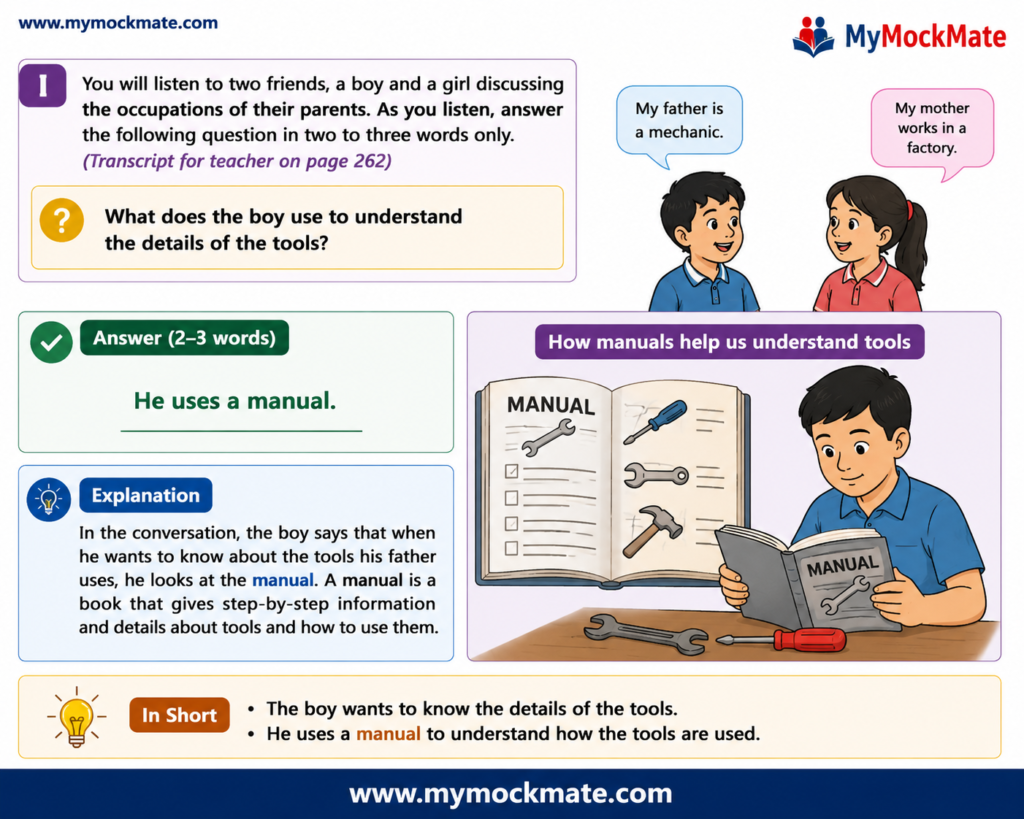
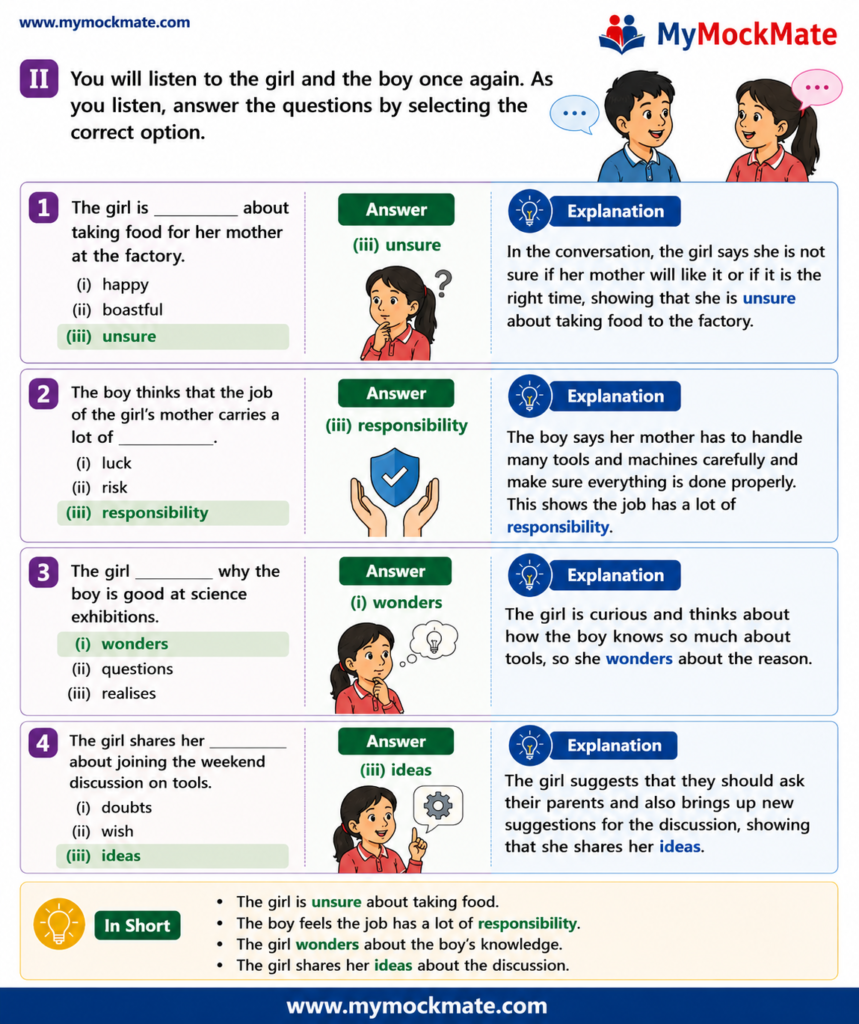
Listen and Respond
I.
II.
Writing Task
I. Your school will be organising a ‘Career Mela’ in which students are to be made familiar with the different
career options. Complete the poster for the event given below.

Common Mistakes Students Make
- Writing incomplete explanations
- Ignoring vocabulary meanings
- Confusing noun clauses and relative clauses
- Memorising without understanding themes
- Missing sequence-based questions
Exam Tips
✅ Learn character roles carefully
✅ Practice grammar exercises regularly
✅ Revise vocabulary meanings
✅ Focus on theme-based long answers
✅ Read extracts carefully before answering
Practice MCQs
1. Who is the author of “The Pot Maker”?
A. Ruskin Bond
B. Temsula Ao
C. Tagore
D. Premchand
✅ Answer: B
2. What vocation fascinated Sentila?
A. Weaving
B. Farming
C. Pot making
D. Carpentry
✅ Answer: C
3. Who helped Sentila gain confidence?
A. Mesoba
B. Arenla
C. Onula
D. Village elder
✅ Answer: C
4. What was Arenla worried about?
A. Pot making earned less money
B. Sentila was lazy
C. Clay was unavailable
D. Village rules
✅ Answer: A
5. What message does the story convey?
A. Skills should be hidden
B. Tradition should continue
C. Money is everything
D. Pot making is easy
✅ Answer: B
FAQ Section
Q1. What is the main theme of “The Pot Maker”?
The importance of perseverance, tradition, and skill development.
Q2. Why did Sentila want to learn pot making?
Because she was deeply fascinated by the craft.
Q3. Why did Arenla prefer weaving?
Because weaving earned more money and involved less physical labour.
Q4. Who was Onula?
A kind widow who encouraged and guided Sentila.
Q5. Why is the ending important?
It symbolises the birth of a new skilled pot maker.
Q6. What role did the village council play?
They reminded Mesoba about preserving traditional skills.
Q7. What values do students learn from the story?
Hard work, patience, determination, and respect for tradition.
Q8. Why is the story inspiring?
Because Sentila achieves her dream despite repeated failures.
📚 Looking for more detailed chapter solutions, grammar practice, mock tests, and exam preparation resources?
Visit MyMockMate today and boost your preparation with high-quality educational content, instant practice tests, and smart learning tools for school and competitive exams.