




Short Intro
Cells are the fundamental units of life that perform all essential activities in living organisms. This chapter explains the discovery of cells, structure and functions of cell organelles, types of cells, osmosis, diffusion, mitosis, meiosis, and cell theory. These detailed solutions help students understand concepts easily with step-by-step explanations.
Quick Information Box
| Topic | Details |
|---|---|
| Chapter Name | Cell: The Building Block of Life |
| Subject | Science |
| Grade | 9 |
| Chapter Number | 2 |
| Main Focus | Cell Structure and Functions |
| Important Topics | Cell Organelles, Osmosis, Cell Division |
| Difficulty Level | Moderate |
Concepts Used (Topics Covered)
- Discovery of Cells
- Microscope and Cell Observation
- Cell Membrane and Cell Wall
- Diffusion and Osmosis
- Prokaryotic and Eukaryotic Cells
- Cell Organelles and Their Functions
- Plant Cell vs Animal Cell
- Mitosis and Meiosis
- Cell Theory
- Cell Division and Growth
Important Formulas
Cell Size Estimation
Magnification Formula
Osmosis Concept
Water moves from dilute solution to concentrated solution through a selectively permeable membrane
? Think It Over
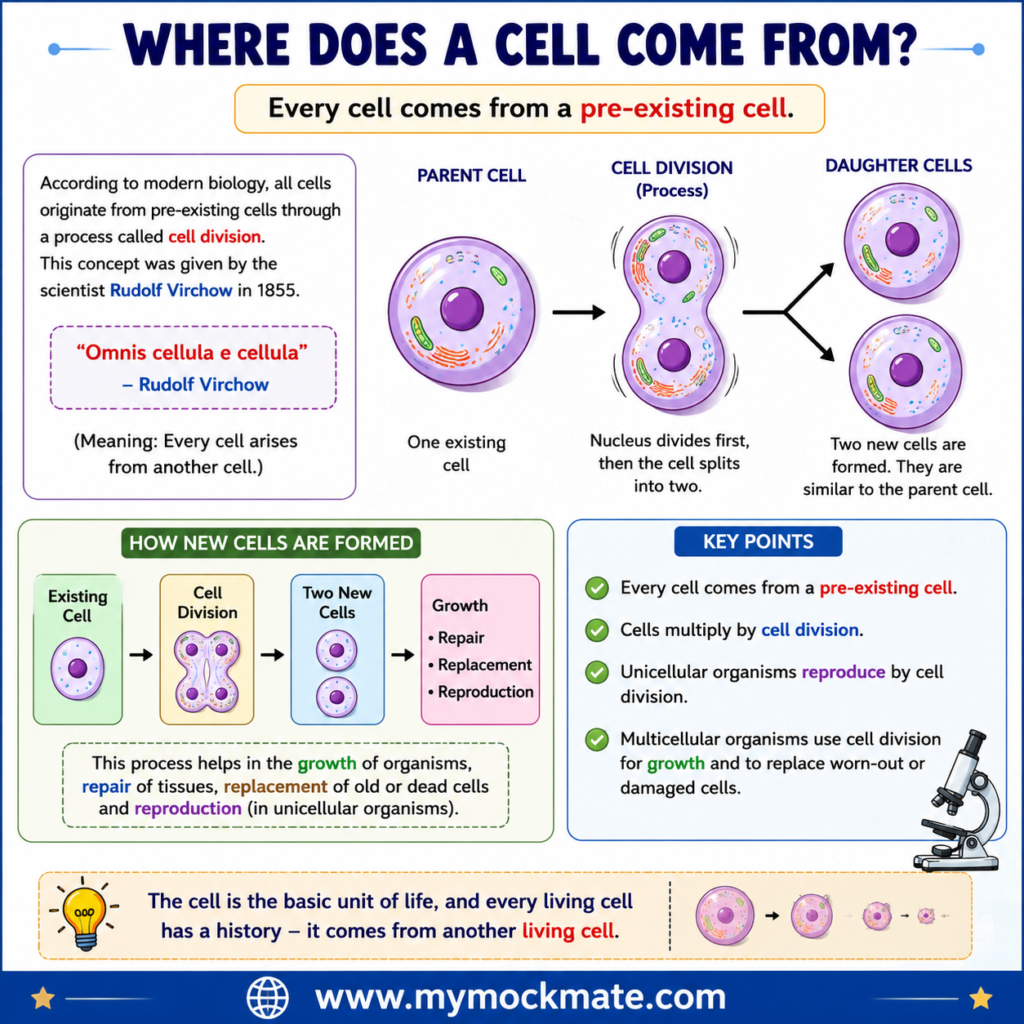
Q. 1 Where does a cell come from?
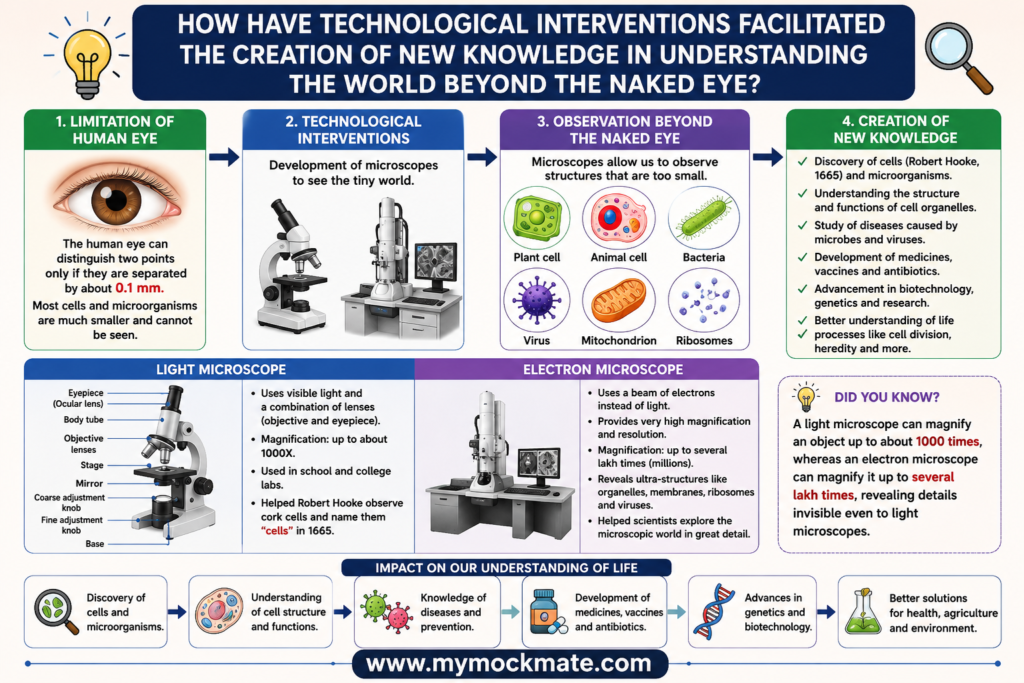
Q. 2 How have technological interventions facilitated the creation of new knowledge in understanding the world beyond the naked eye?
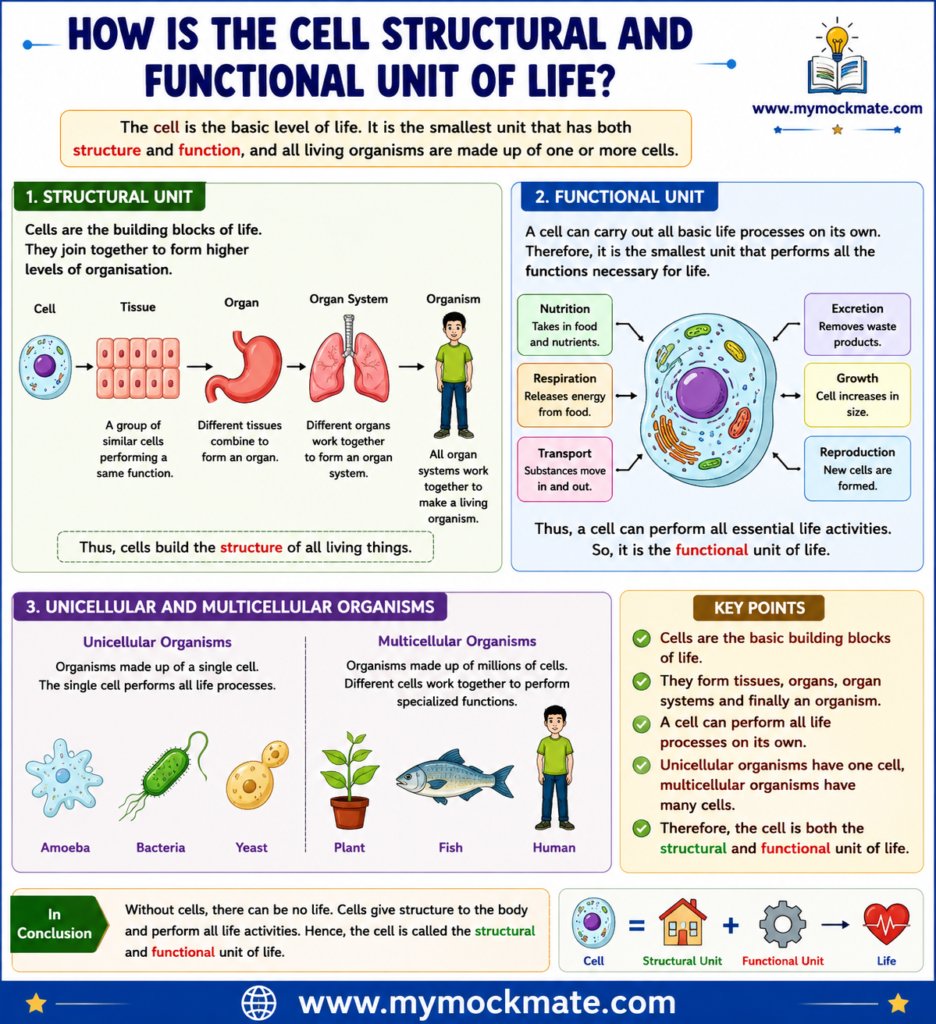
Q. 3 How is the cell structural and functional unit of life?
Q. 4 How does a cell multiply?

Pause and Ponder
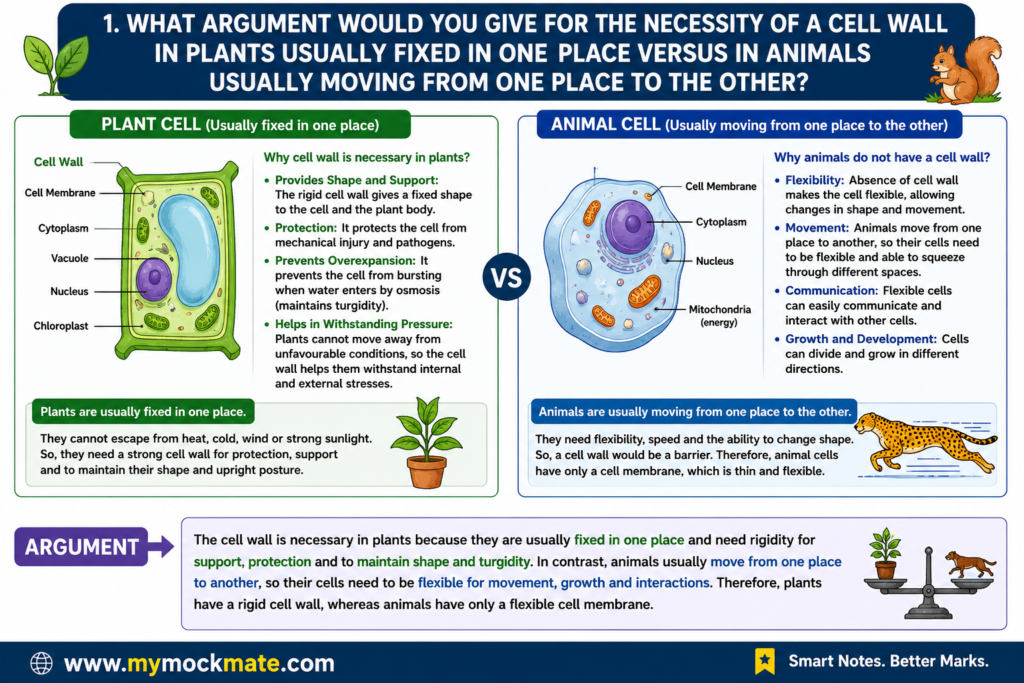
- What argument would you give for the necessity of a cell wall in plants usually fixed in one place versus in animals usually moving from one place to the other?
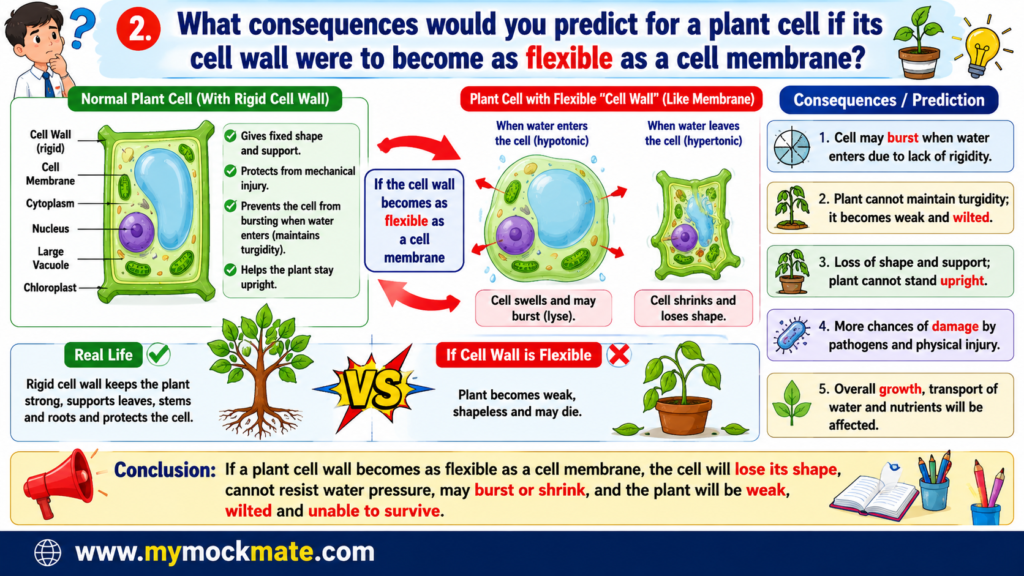
2. What consequences would you predict for a plant cell if its cell wall were to become as flexible as a cell membrane?
3. Why is it important to cut the two potato pieces in roughly equal size and measure their initial weight before placing them in different liquids?

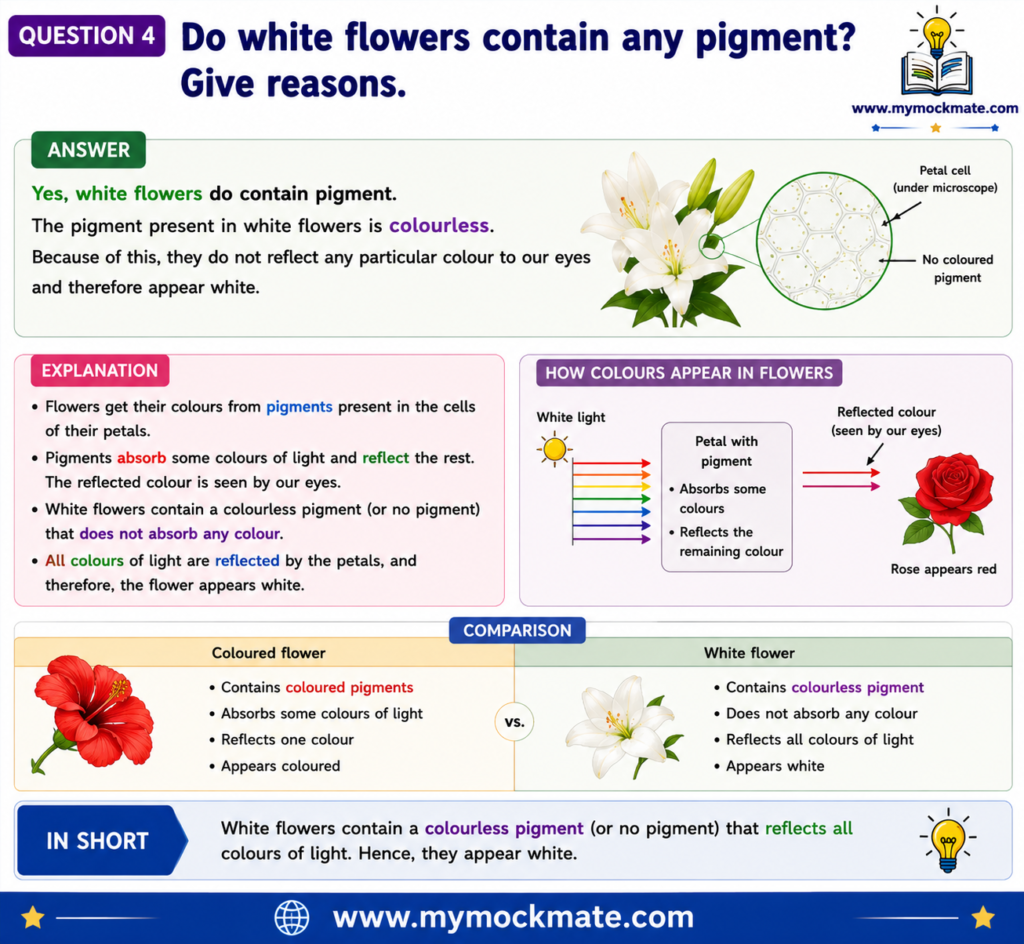
4. Do white flowers contain any pigment? Give reasons.
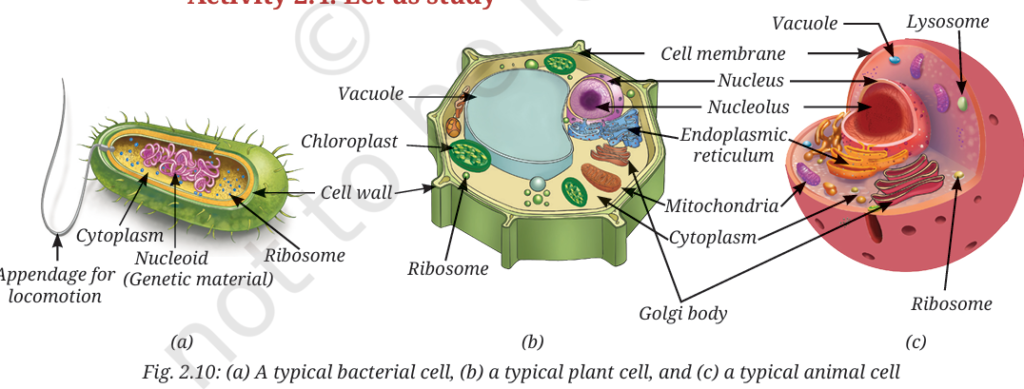
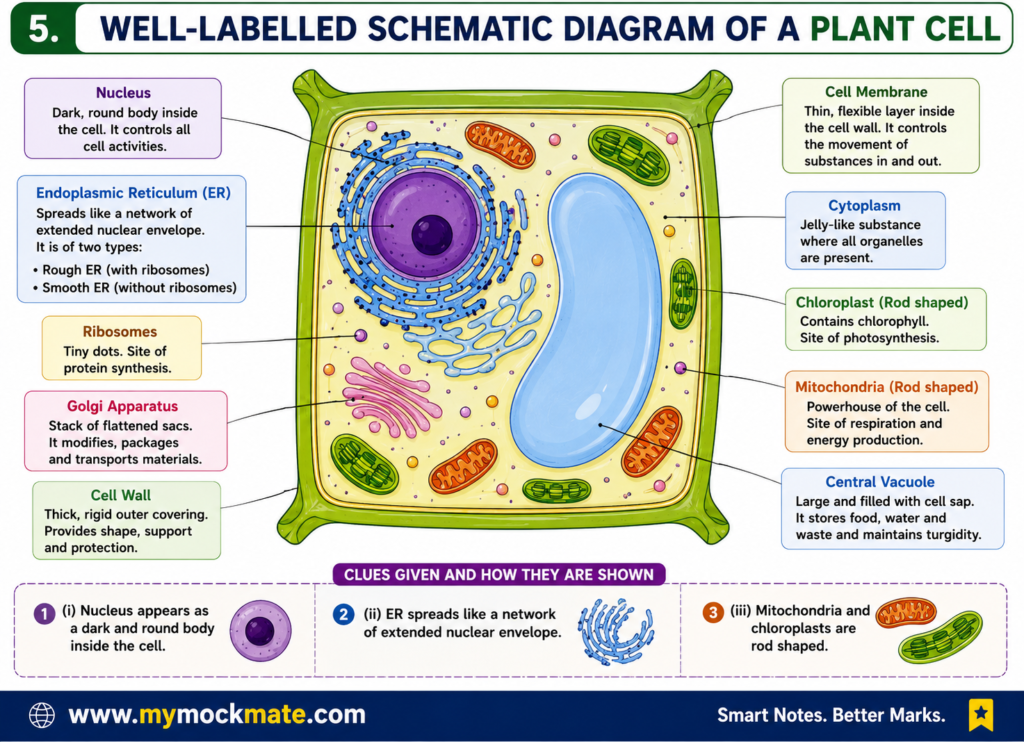
5. Draw a well-labelled schematic diagram of a plant or an animal cell using these clues —
(i) Nucleus appears as a dark and round body inside the cell.
(ii) ER spreads like a network of extended nuclear envelope.
(iii) Mitochondria and chloroplasts are rod shaped.
You may refer to Fig. 2.10.
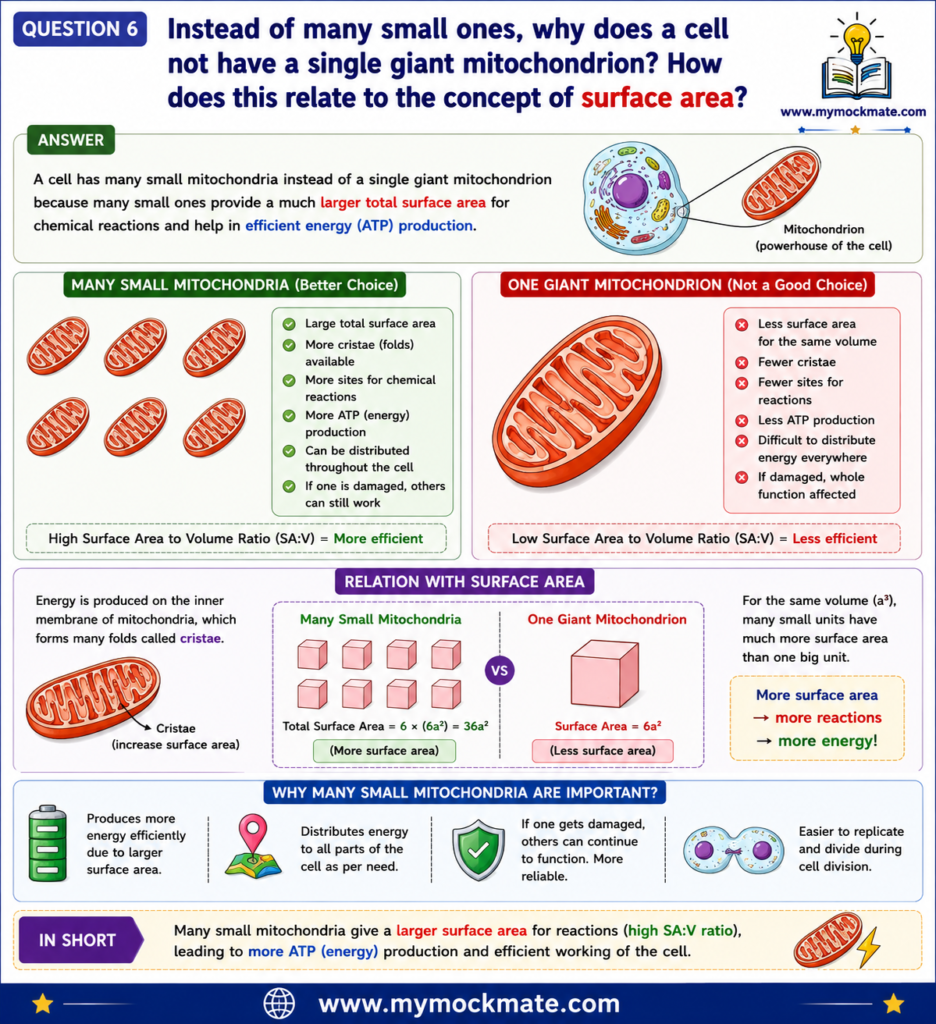
6. Instead of many small ones, why does a cell not have a single giant mitochondrion? How does this relate to the concept of surface area?
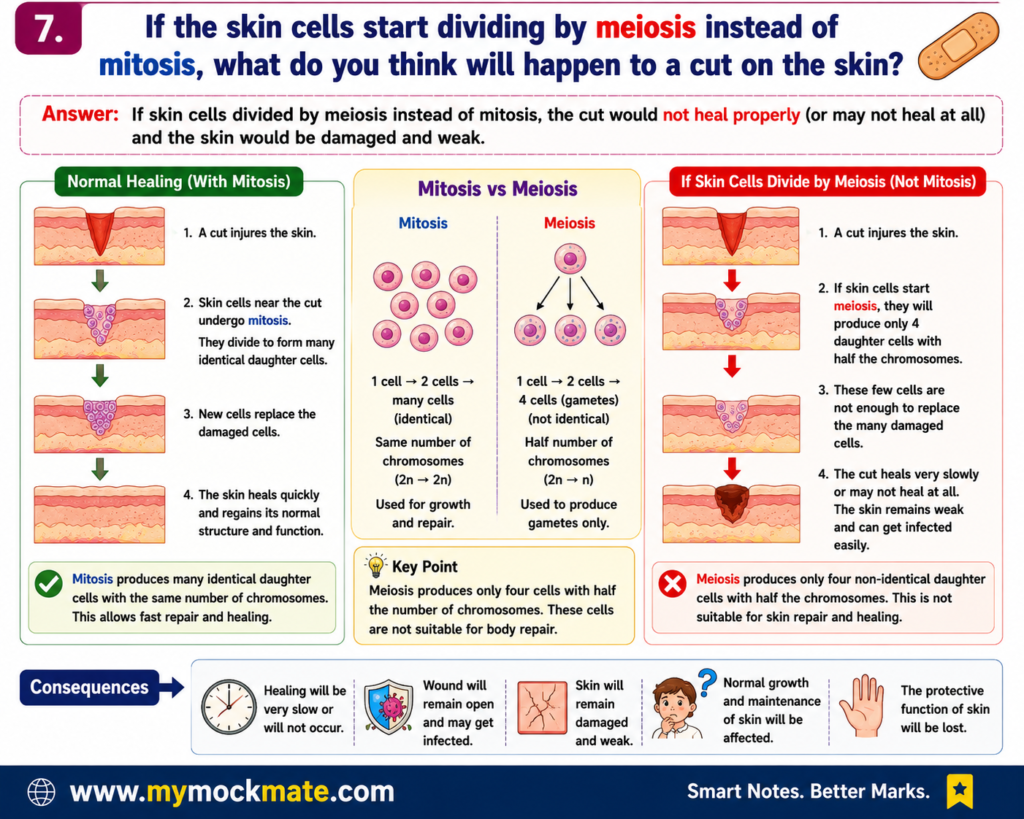
7. If the skin cells start dividing by meiosis instead of mitosis, what do you think will happen to a cut on the skin?
Revise, Reflect, Refine
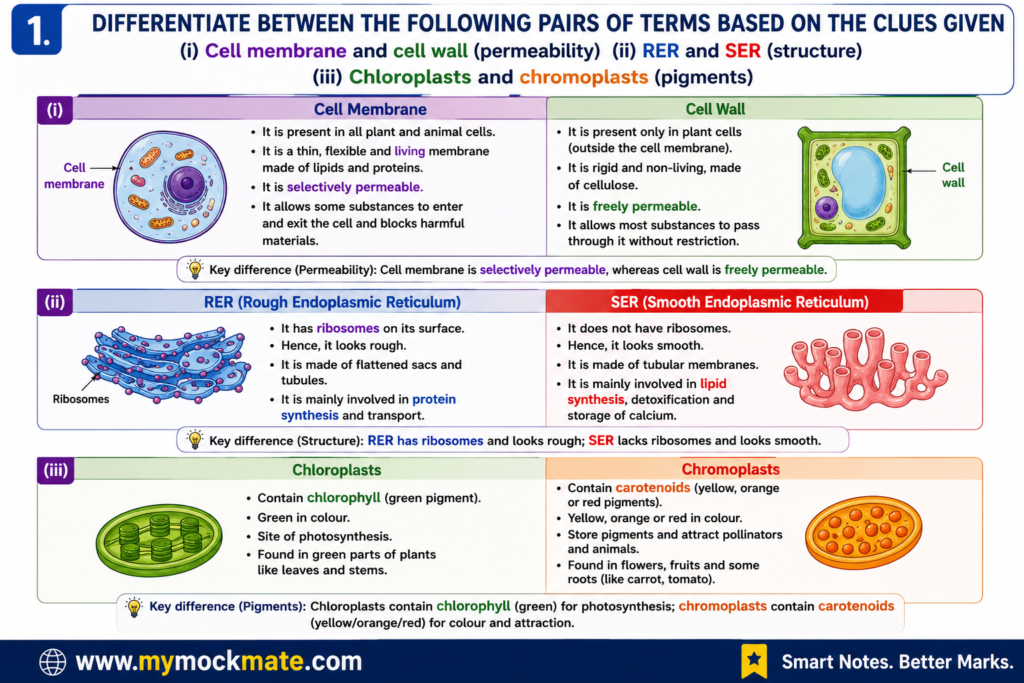
1. Differentiate between the following pairs of terms based on the clues given in parentheses:
(i) Cell membrane and cell wall (permeability)
(ii) RER and SER (structure)
(iii) Chloroplasts and chromoplasts (pigments)

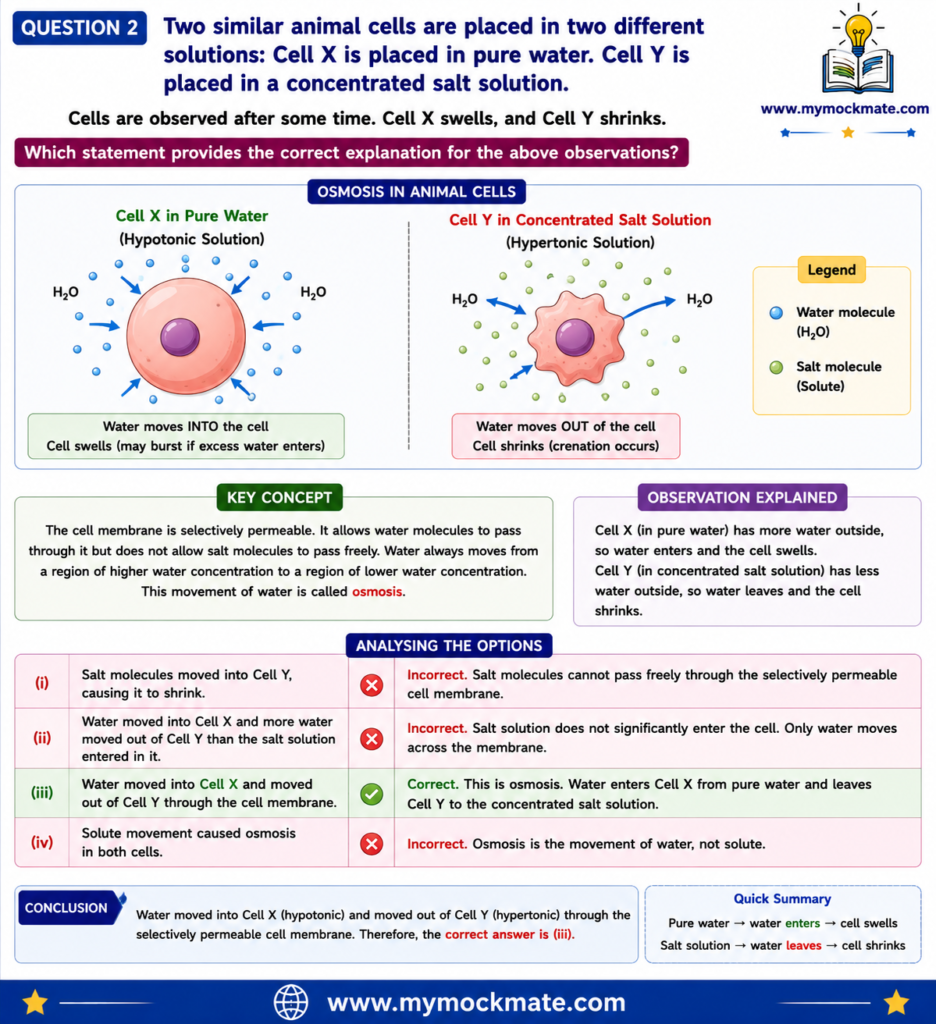
2. Two similar animal cells are placed in two different solutions:
Cell X is placed in pure water.
Cell Y is placed in a concentrated salt solution.
Cells are observed after some time. Cell X swells, and Cell Y shrinks. Which statement provides the correct explanation for the above observations?
(i) Salt molecules moved into Cell Y, causing it to shrink.
(ii) Water moved into Cell X and more water moved out of Cell Y than the salt solution entered in it.
(iii) Water moved into Cell X and moved out of Cell Y through the cell membrane.
(iv) Solute movement caused osmosis in both cells.
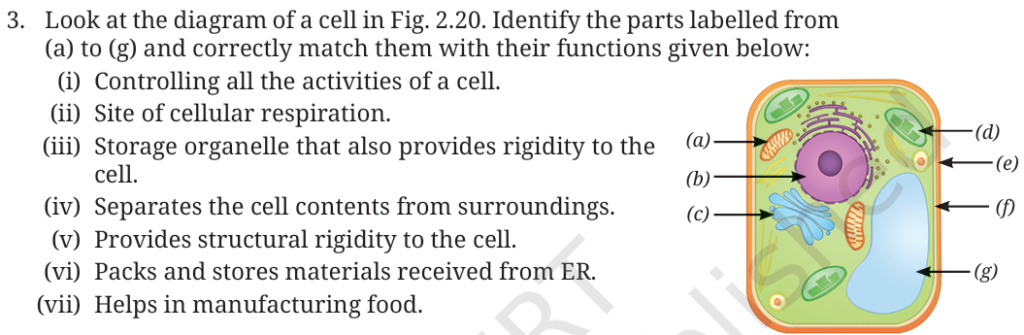
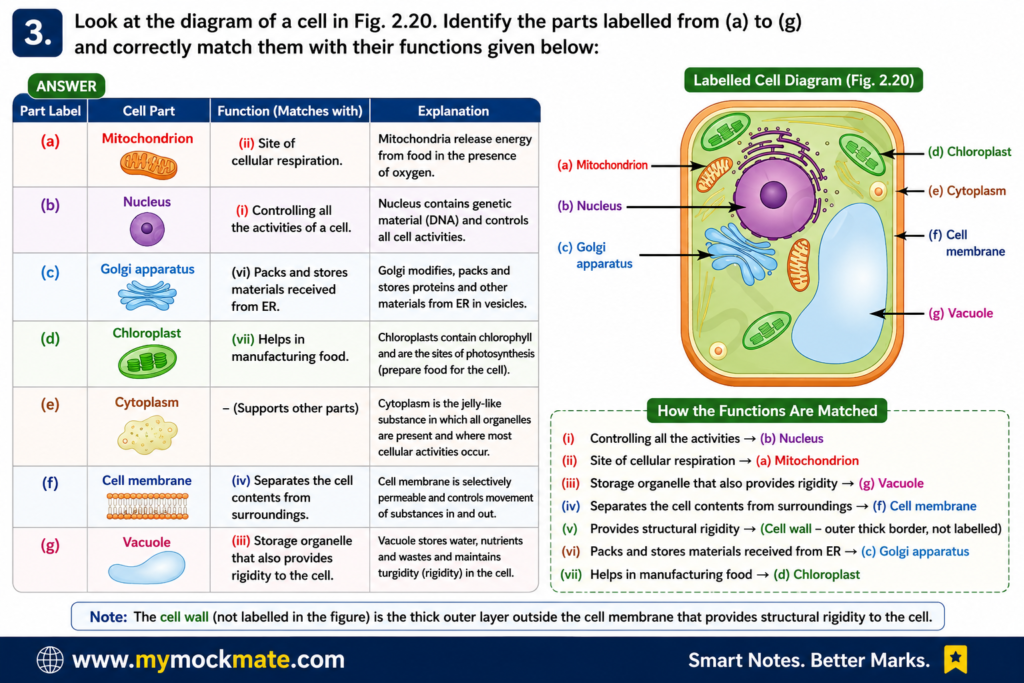
4. Which of the following option(s) of the pairs of cell
organelles are correctly placed under the given
categories?

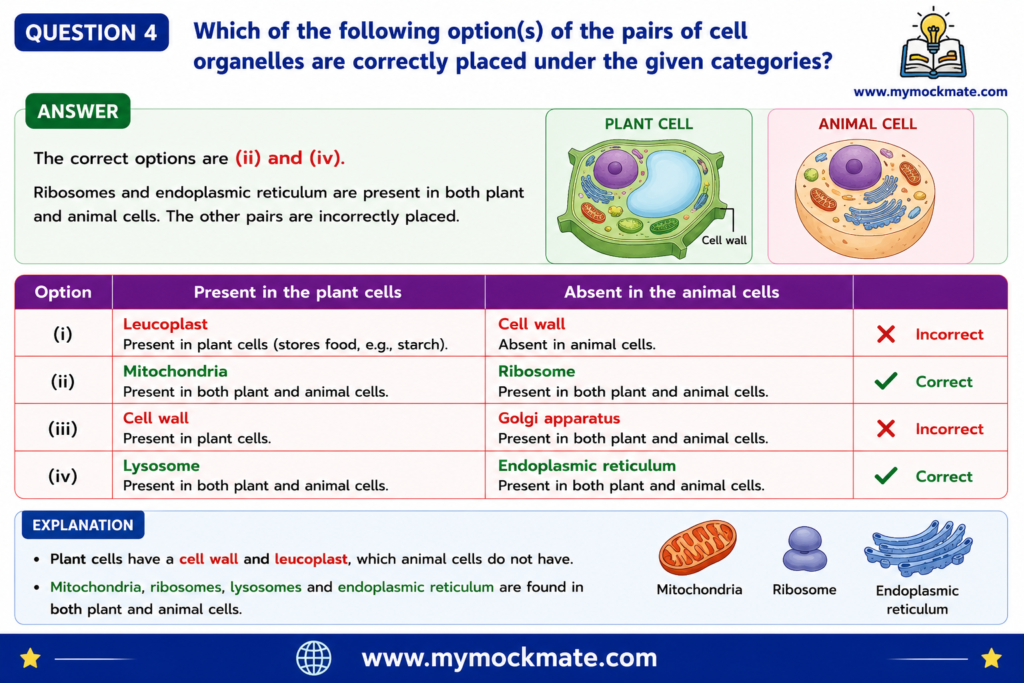
5. Two students, Renu and Rohit, were having a discussion on the plastids. Renu emphasised that all parts of the plants, even roots, contain plastids. However, Rohit did not agree with the statement and told her that plastids are absent in plant roots since the roots are underground
and do not need to perform photosynthesis. Who is correct? Justify your answer.
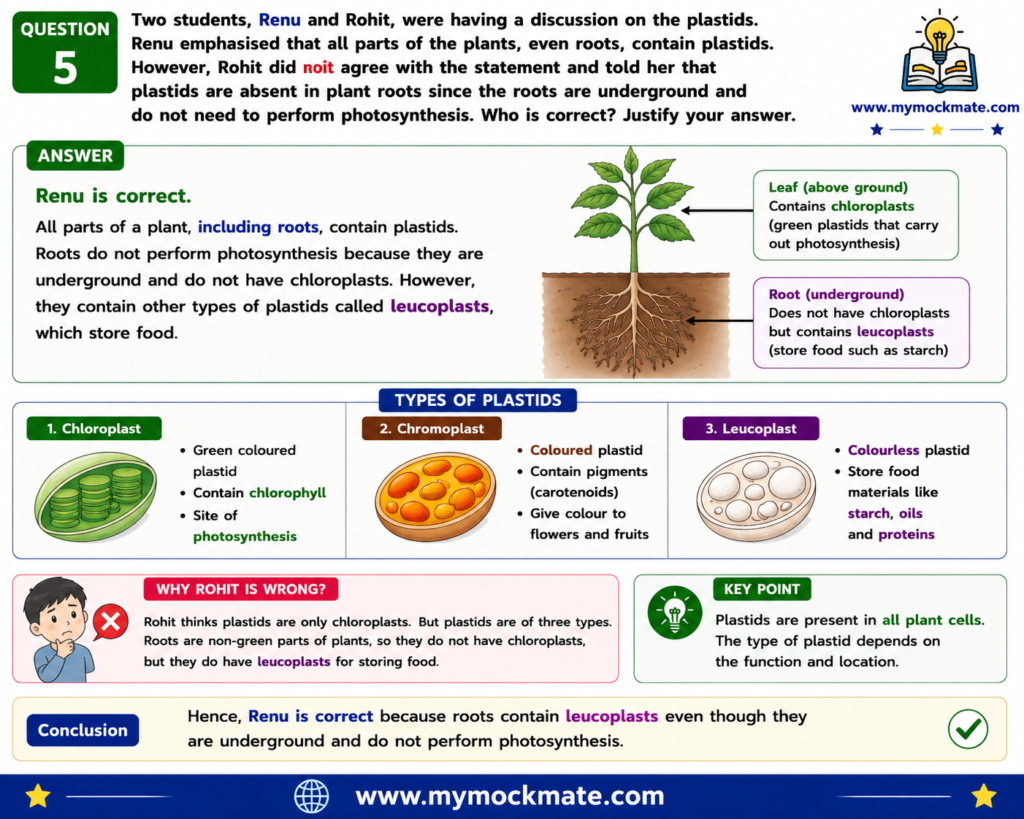
6. Mitochondria and chloroplasts are two important organelles in a plant cell. Discuss how these two organelles are structurally and functionally similar to each other, and different from each other.
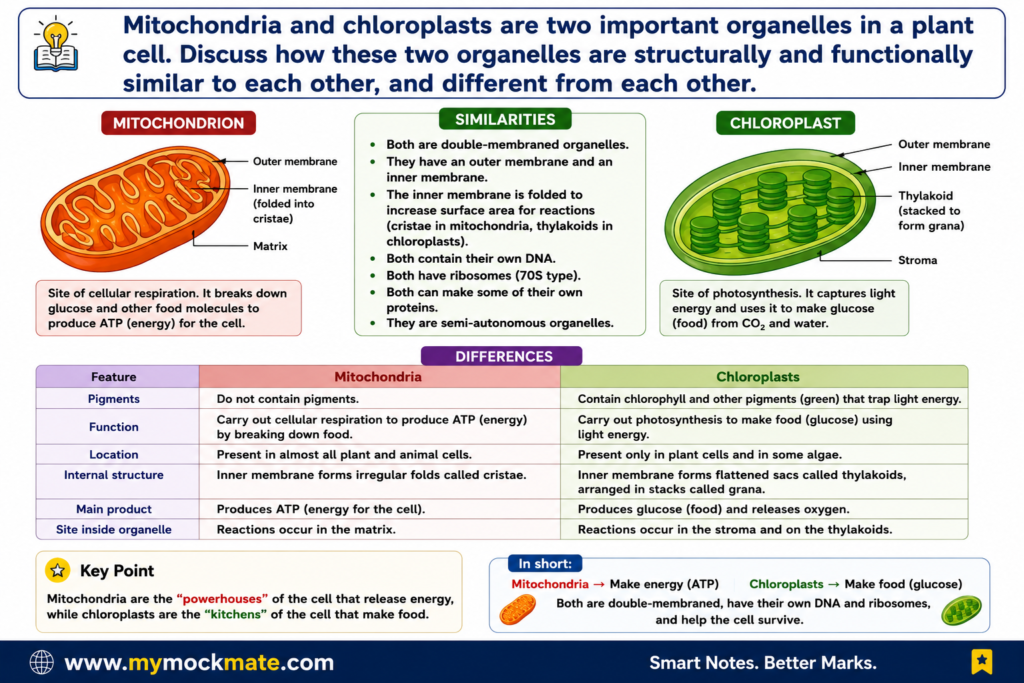
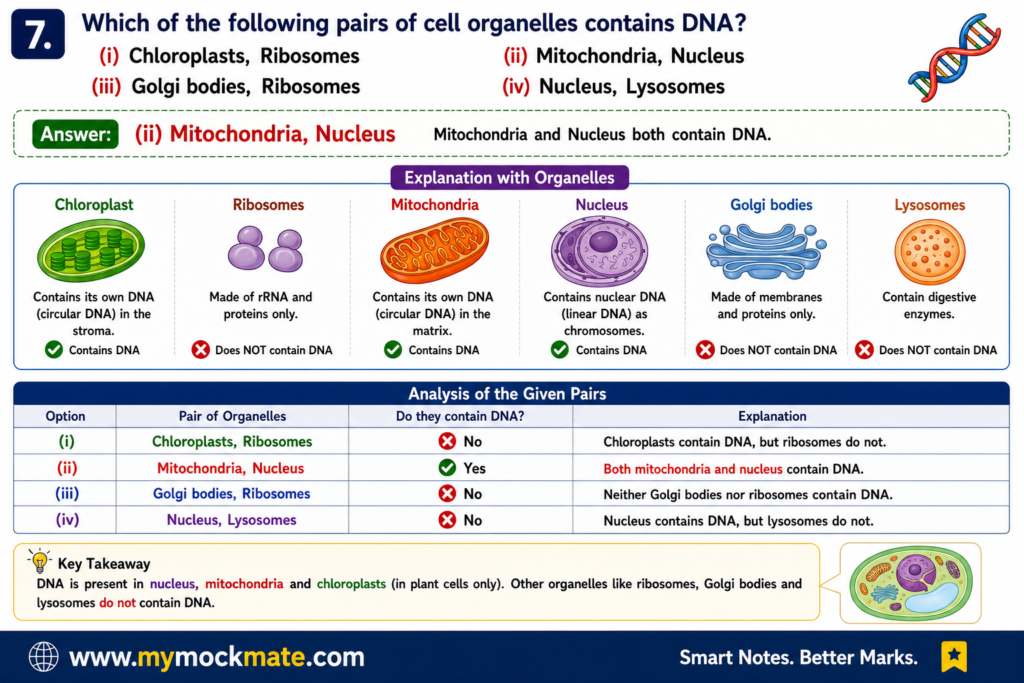
7. Which of the following pairs of cell organelles contains DNA?
(i) Chloroplasts, Ribosomes
(ii) Mitochondria, Nucleus
(iii) Golgi bodies, Ribosomes
(iv) Nucleus, Lysosomes
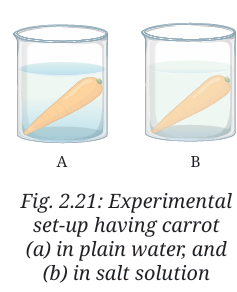
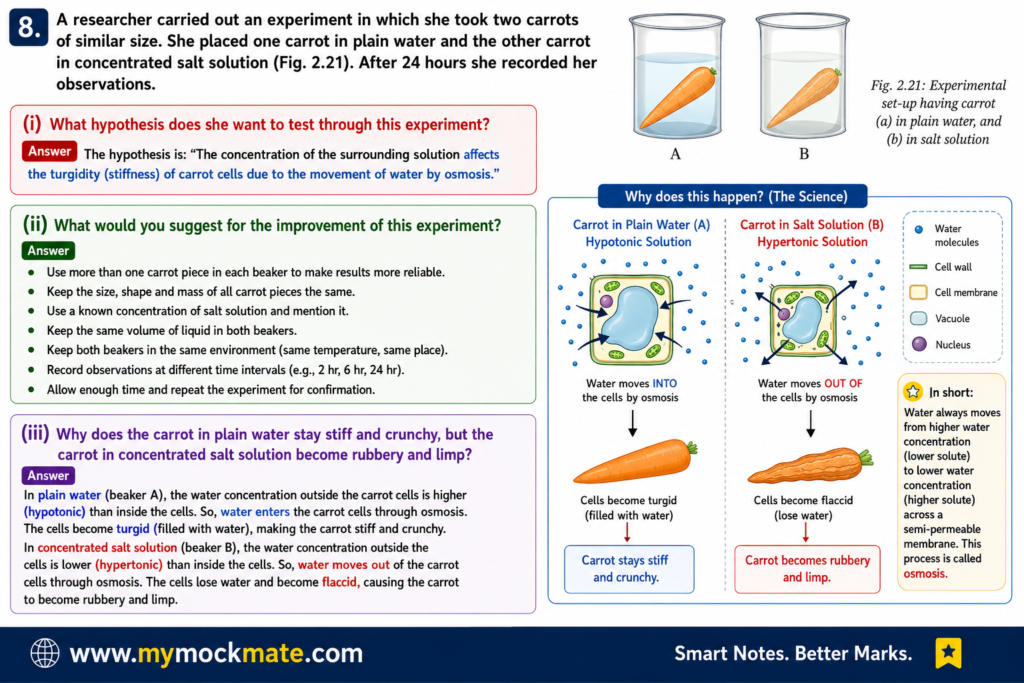
8. A researcher carried out an experiment in which she took two carrots of similar size. She placed one carrot in plain water and the other carrot in concentrated salt solution (Fig. 2.21). After 24 hours she recorded her
observations.
(i) What hypothesis does she want to test through this experiment?
(ii) What would you suggest for the improvement of this experiment?
(iii) Why does the carrot in plain water stay stiff and crunchy, but the
carrot in concentrated salt solution become rubbery and limp?
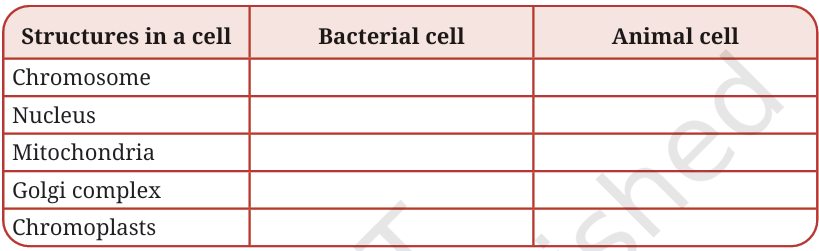
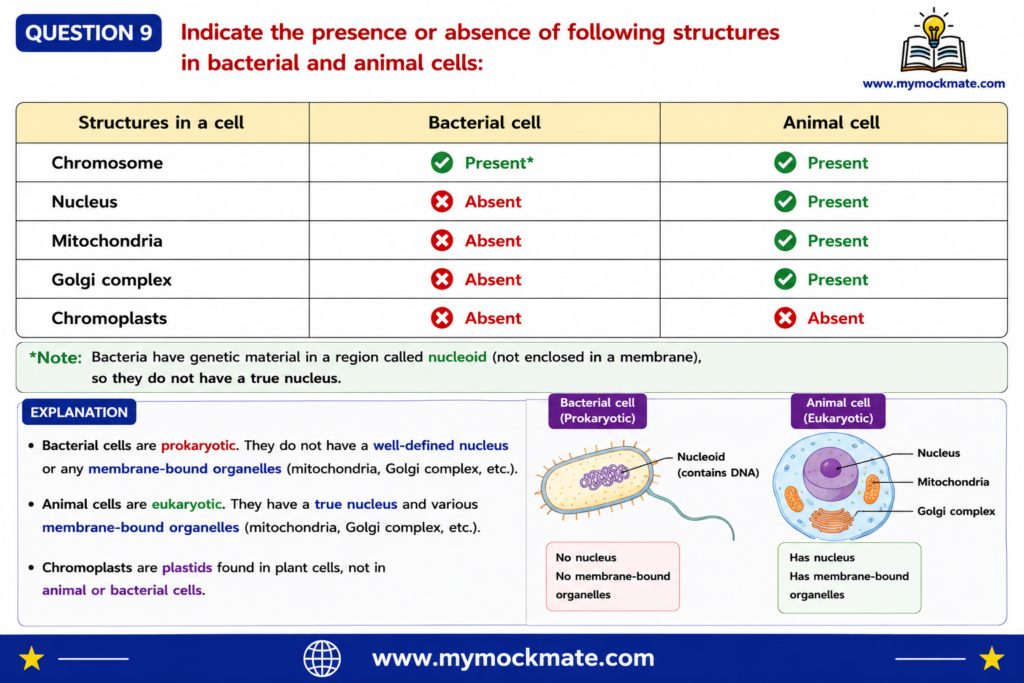
9. Indicate the presence or absence of following structures in bacterial and animal cells:
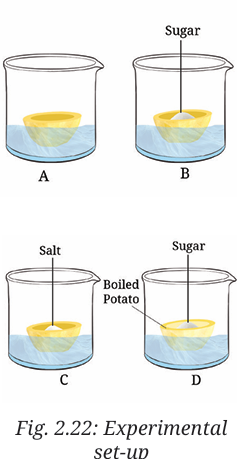
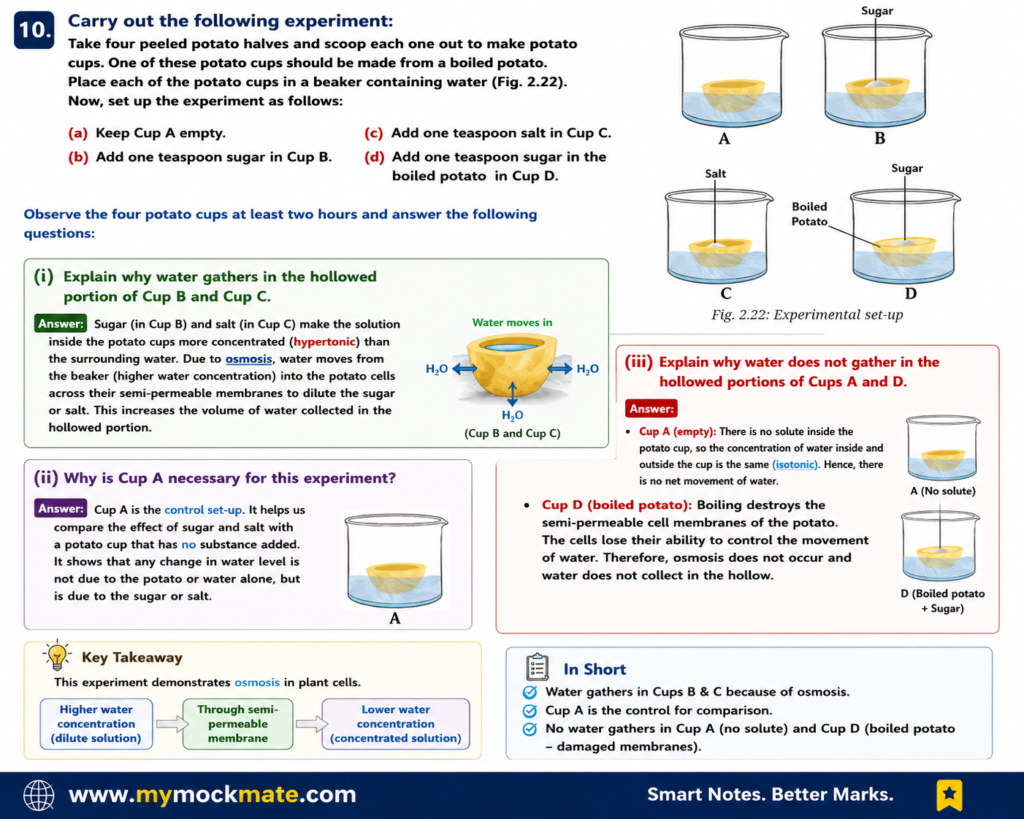
10. Carry out the following experiment: Take four peeled potato halves and scoop each one out to make potato cups. One of these potato cups should be made from a boiled potato. Place each of the potato cups in a beaker containing water (Fig. 2.22). Now, set up the experiment as follows:
(a) Keep Cup A empty.
(b) Add one teaspoon sugar in Cup B.
(c) Add one teaspoon salt in Cup C.
(d) Add one teaspoon sugar in the boiled potato in Cup
D. Observe the four potato cups at least two hours and answer the following questions:
(i) Explain why water gathers in the hollowed portion of Cup B and Cup C.
(ii) Why is Cup A necessary for this experiment?
(iii) Explain why water does not gather in the hollowed portions of Cups A and D.
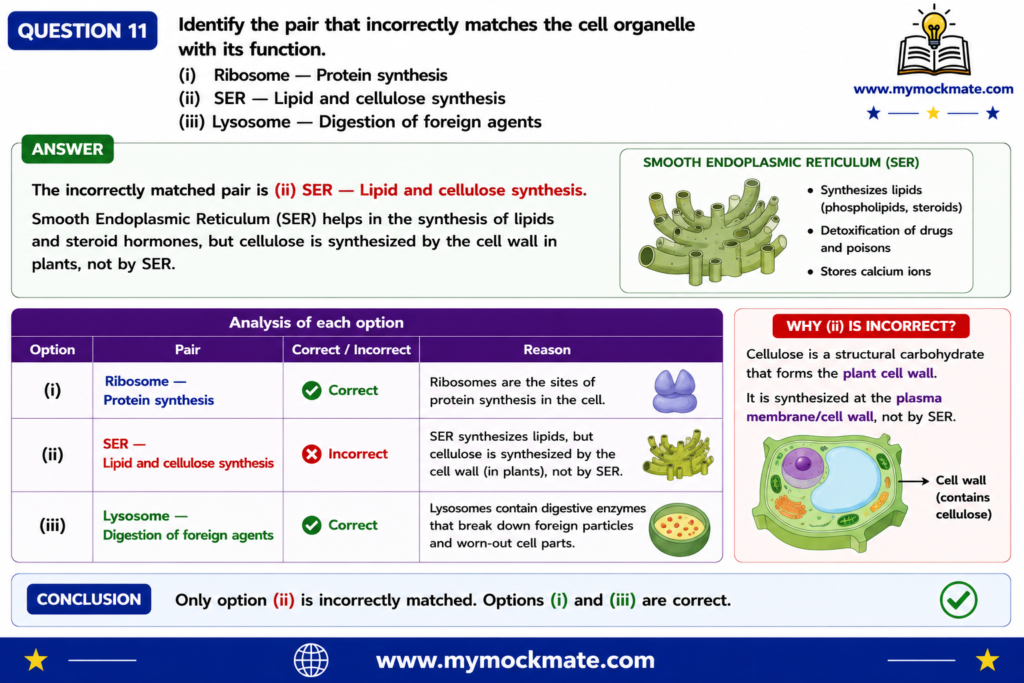
11. Identify the pair that incorrectly matches the cell organelle with its function.
(i) Ribosome — Protein synthesis
(ii) SER — Lipid and cellulose synthesis
(iii) Lysosome — Digestion of foreign agents
12. What outcome do you expect, if all the mitochondria are removed from
a eukaryotic cell?

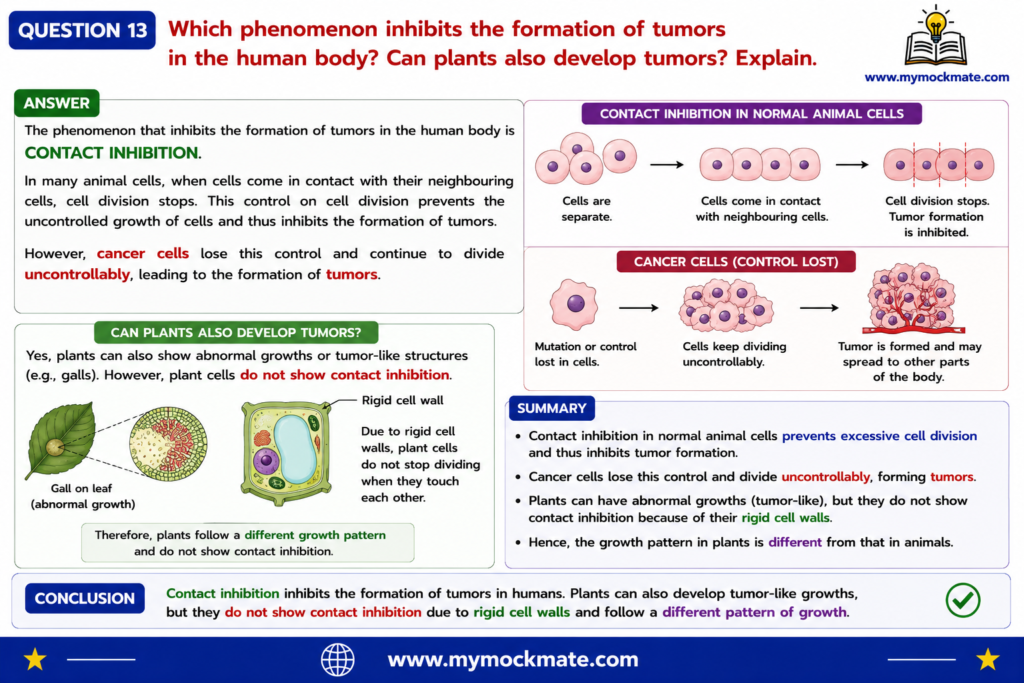
13. Which phenomenon inhibits the formation of tumors in the human
body? Can plants also develop tumors? Explain.
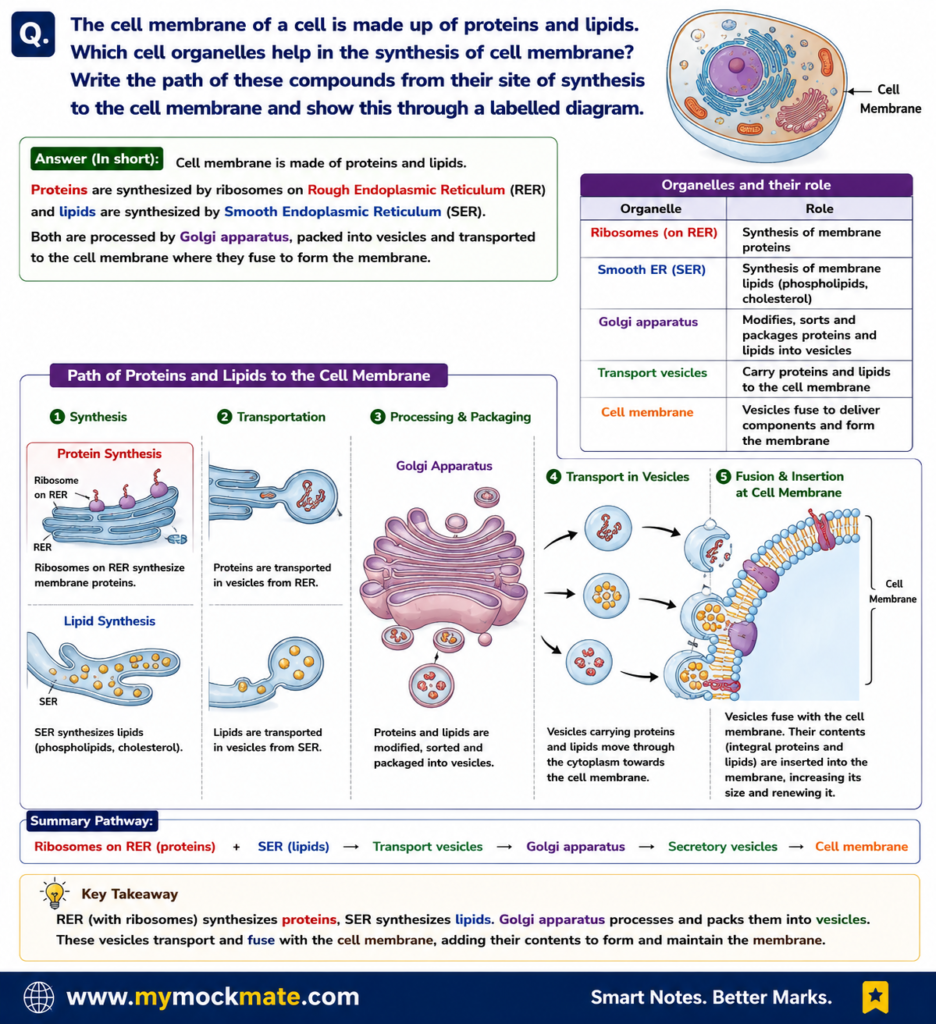
14. The cell membrane of a cell is made up of proteins and lipids. Which
cell organelles help in the synthesis of cell membrane? Write the path of
these compounds from their site of synthesis to the cell membrane and
show this through a labelled diagram.
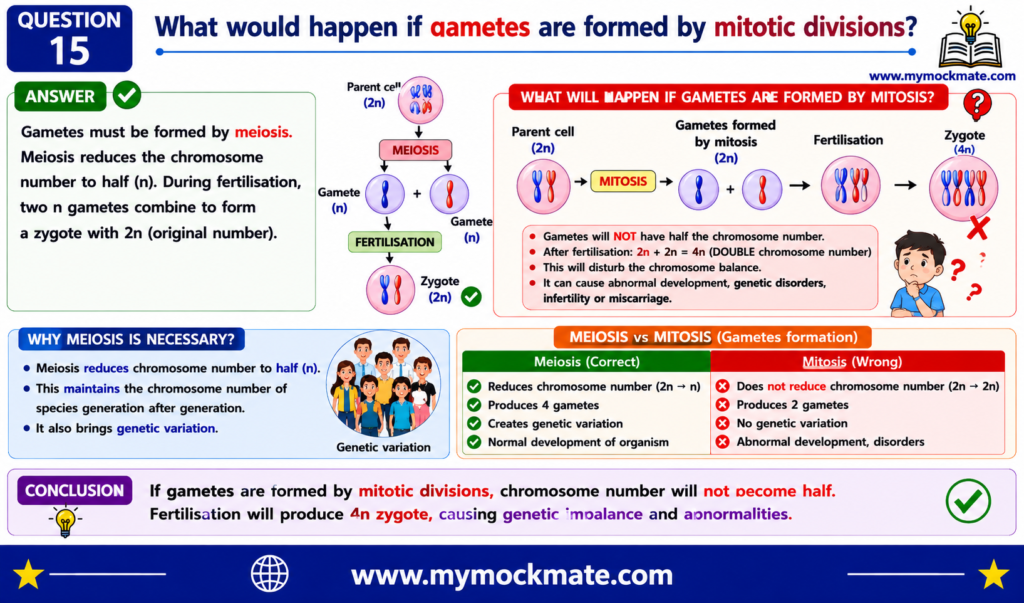
15. What would happen if gametes are formed by mitotic divisions?
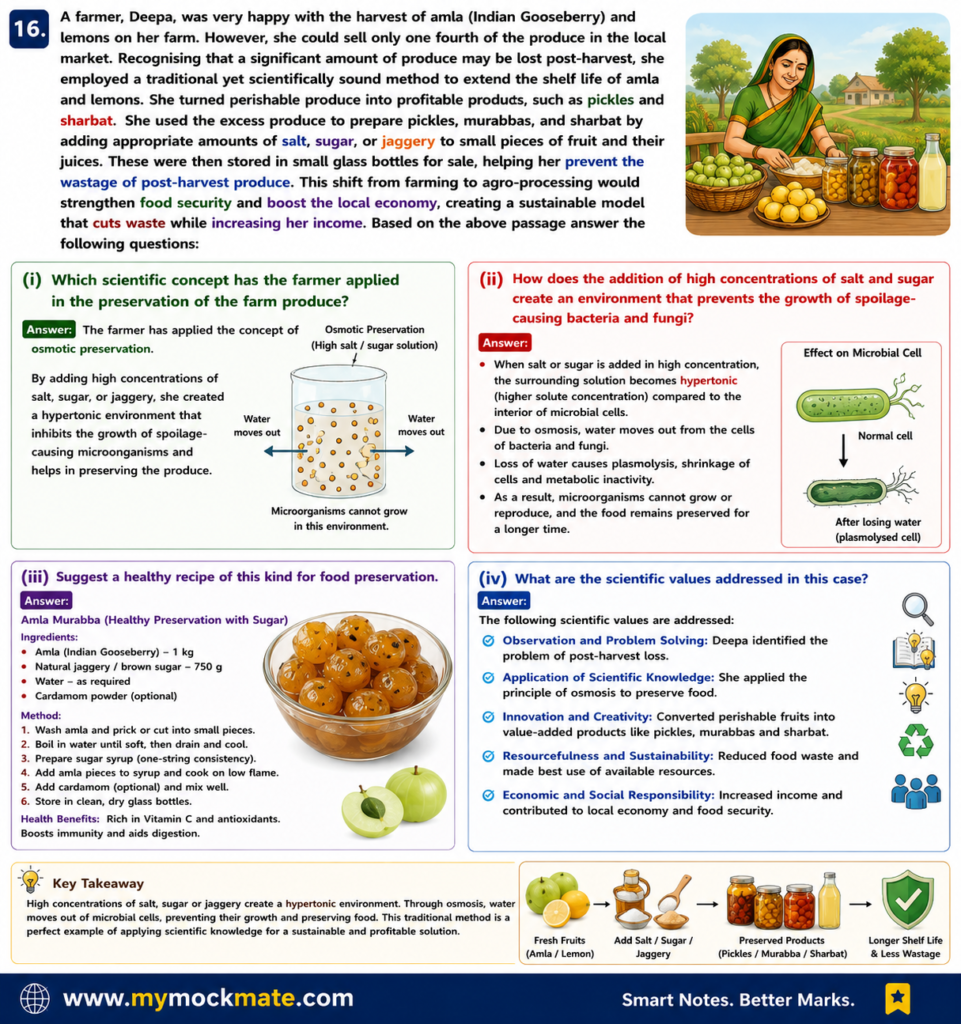
16. A farmer, Deepa, was very happy with the harvest of amla (Indian
Gooseberry) and lemons on her farm. However, she could sell only one
fourth of the produce in the local market. Recognising that a significant
amount of produce may be lost post-harvest, she employed a traditional
yet scientifically sound method to extend the shelf life of amla and
lemons. She turned perishable produce into profitable products, such
as pickles and sharbat. She used the excess produce to prepare pickles,
murabbas, and sharbat by adding appropriate amounts of salt, sugar,
or jaggery to small pieces of fruit and their juices. These were then
stored in small glass bottles for sale, helping her prevent the wastage
of post-harvest produce. This shift from farming to agro-processing
would strengthen food security and boost the local economy, creating a
sustainable model that cuts waste while increasing her income. Based
on the above passage answer the following questions:
(i) Which scientific concept has the farmer applied in the preservation
of the farm produce?
(ii) How does the addition of high concentrations of salt and sugar create an environment that prevents the growth of spoilage-causing bacteria and fungi?
(iii) Suggest a healthy recipe of this kind for food preservation.
(iv) What are the scientific values addressed in this case?
Common Mistakes
- Confusing osmosis with diffusion
- Forgetting functions of organelles
- Mixing up mitosis and meiosis
- Writing incorrect differences between plant and animal cells
- Forgetting that mitochondria contain DNA
Exam Tips
- Practice labelled diagrams regularly
- Learn organelle functions with keywords
- Use tables for comparisons
- Revise osmosis experiments carefully
- Remember definitions of prokaryotic and eukaryotic cells
Practice MCQs
1. Which organelle is known as the powerhouse of the cell?
A. Ribosome
B. Chloroplast
C. Mitochondria
D. Golgi Body
Answer
C. Mitochondria
2. Osmosis involves movement of:
A. Salt
B. Sugar
C. Water
D. Proteins
Answer
C. Water
3. Which organelle contains chlorophyll?
A. Mitochondria
B. Chloroplast
C. Vacuole
D. Nucleus
Answer
B. Chloroplast
4. Which cell lacks a true nucleus?
A. Plant Cell
B. Animal Cell
C. Bacterial Cell
D. Fungal Cell
Answer
C. Bacterial Cell
5. Mitosis produces:
A. Four daughter cells
B. Two identical daughter cells
C. Gametes
D. Spores
Answer
B. Two identical daughter cells
FAQ Section
Q1. Why is the cell called the basic unit of life?
Because all living organisms are made up of cells and all life processes occur within cells.
Q2. What is osmosis?
Osmosis is the movement of water through a selectively permeable membrane from dilute to concentrated solution.
Q3. What is the function of mitochondria?
Mitochondria produce ATP energy through cellular respiration.
Q4. Why do plant cells have a cell wall?
The cell wall provides rigidity, protection, and shape to plant cells.
Q5. What is the difference between mitosis and meiosis?
Mitosis forms two identical cells, while meiosis forms four gametes with half chromosome number.
Get more detailed Grade 9 Science notes, MCQs, important questions, and chapter-wise solutions only on www.mymockmate.com and boost your exam preparation today!