




Short Intro
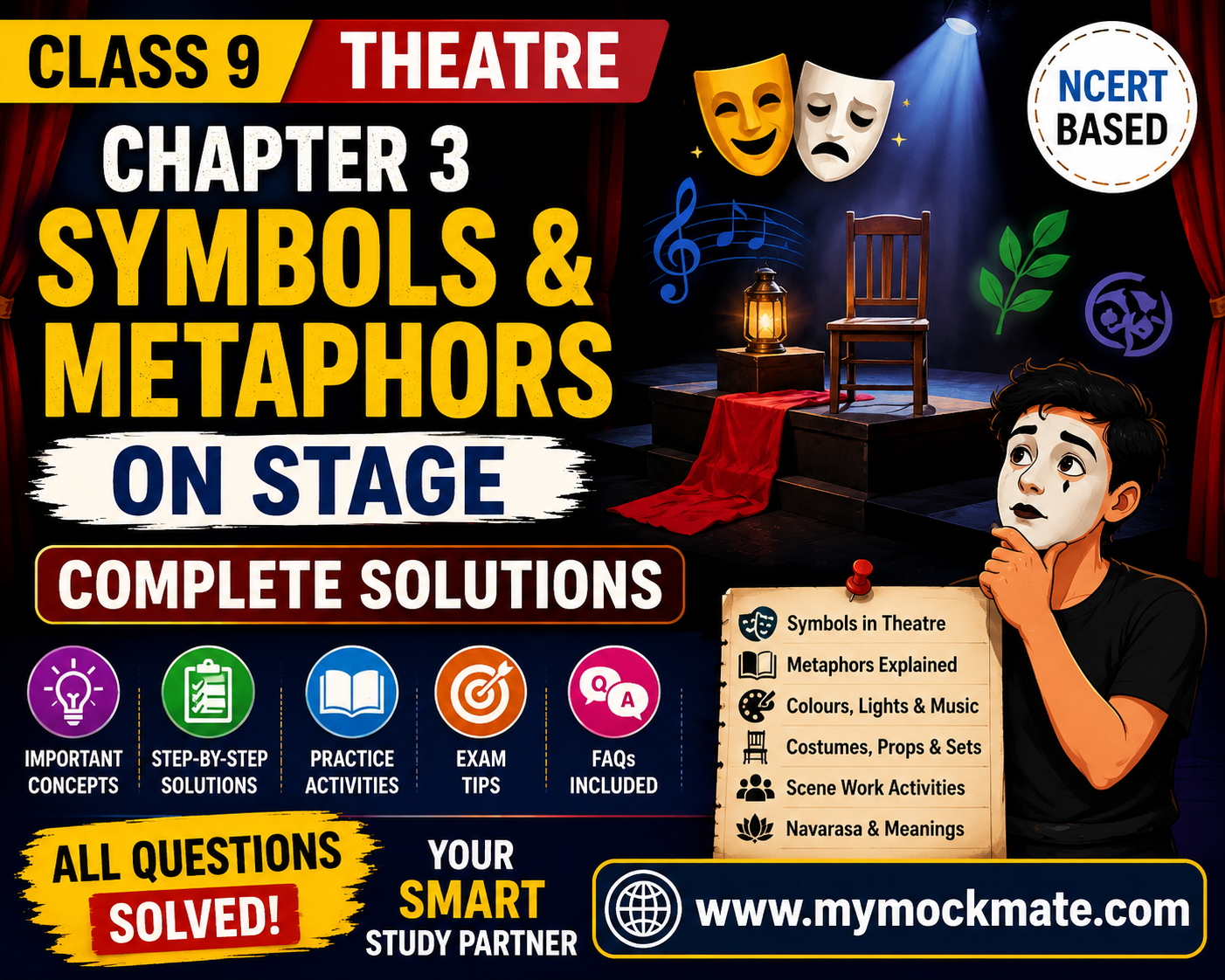
This chapter explains how theatre communicates through symbols, metaphors, colours, lights, music, costumes, props, and stage design. It teaches students how emotions and meanings can be expressed visually and creatively without direct dialogue. These solutions provide detailed explanations, examples, MCQs, FAQs, and exam-oriented answers for better understanding.
Quick Information Box
| Topic | Details |
|---|---|
| Chapter Name | Symbols and Metaphors on Stage |
| Subject | Theatre |
| Class | 9 |
| Main Focus | Symbolism and Visual Storytelling |
| Important Concepts | Colours, Lights, Music, Props, Metaphors |
| Learning Goal | Creative Interpretation and Stage Design |
Concepts Used (Topics Covered)
- Symbolism in Theatre
- Metaphors on Stage
- Symbolism Using Colour
- Symbolism Using Music
- Symbolism Using Costumes
- Symbolism Using Make-up
- Symbolism Using Sets and Props
- Symbolism Using Light
- Visual Storytelling
- Navarasa and Colours
- Theatre Creativity
Important Formulas / Key Terms
- Symbol = Object representing deeper meaning
- Metaphor = Comparison through visuals or actions
- Bright Light = Clarity and happiness
- Dim Light = Fear and suspense
- Red Colour = Anger and power
- Blue Colour = Calmness and sadness
Questions & Step-by-Step Solutions
Q1. Observe the stage picture and explain what each thing represents.
Solution
Stage Lights
Represent mood, emotion, and focus of the performance.
Different Levels on Stage
Show importance, authority, or emotional differences between characters.
Props and Furniture
Represent the location and situation of the scene.
Colours
Express emotions such as happiness, fear, courage, or mystery.
Shadows
Create suspense, mystery, or inner conflict.
Overall Meaning
The stage scene symbolises emotional tension, storytelling, and visual communication between characters and audience.
Explanation
Every object placed on stage has symbolic meaning and helps the audience understand emotions and situations.
Q2. Show a person growing in wisdom and intelligence over 10 years without dialogue.
Solution
Beginning Stage
- Character wears bright casual clothes.
- Fast movements and playful background music.
- Bright white lighting.
Middle Stage
- Character starts carrying books and writing notes.
- Music becomes calm and thoughtful.
- Slightly dim warm lighting.
Final Stage
- Character wears simple formal clothes with spectacles.
- Slow and confident body language.
- Soft instrumental music in background.
- Golden spotlight symbolising wisdom.
Props Used
- Books
- Lamp
- Table and chair
- Diary or journal
Symbolism
- Grey hair symbolises ageing and experience.
- Books symbolise knowledge.
- Warm lights represent maturity and understanding.
Explanation
Visual elements like costumes, lights, and props can effectively show the passage of time and growth.
Q3. Assign colours to friends and explain why.
| Colour | Name of Friend | Reason |
|---|---|---|
| Red | Aman | Energetic and confident |
| Blue | Riya | Calm and thoughtful |
| Green | Arjun | Loves nature and growth |
| Yellow | Meera | Cheerful and positive |
| Black | Rahul | Serious and mysterious |
Explanation
Colours are often used symbolically to describe personality traits and emotions.
Q4. Why are symbolism and metaphors used on stage?
Solution
Symbolism and metaphors are used in theatre to:
- Create deeper meanings.
- Express emotions visually.
- Improve audience imagination.
- Make performances creative and memorable.
- Communicate ideas without direct dialogue.
- Add emotional and artistic impact to scenes.
Explanation
Theatre becomes more powerful when objects, colours, lights, and movements represent hidden ideas and emotions.
Common Mistakes
- Confusing symbolism with literal meaning
- Forgetting colour symbolism
- Ignoring the importance of lights and music
- Writing short answers without explanation
- Missing emotional interpretation in scenes
Exam Tips
- Learn the symbolic meanings of colours carefully.
- Remember examples of props and lighting effects.
- Use creative examples in descriptive answers.
- Practice interpreting stage scenes visually.
- Revise important theatre terms like metaphor and symbolism.
Practice MCQs
1. What does symbolism mean in theatre?
A. Direct explanation
B. Hidden meaning through objects or actions
C. Loud music on stage
D. Dance performance
Answer:
B. Hidden meaning through objects or actions
2. Which colour commonly represents danger and anger?
A. Blue
B. Green
C. Red
D. White

Answer:
C. Red
3. Which lighting effect creates fear and suspense?
A. Bright spotlight
B. Dim lighting
C. Colourful lighting
D. Front lighting
Answer:
B. Dim lighting
4. What can a broken mirror symbolise?
A. Happiness
B. Wealth
C. Inner conflict
D. Friendship
Answer:
C. Inner conflict
5. Which theatre element helps create emotional atmosphere?
A. Props
B. Music
C. Lighting
D. All of these
Answer:
D. All of these
FAQ Section
Q1. What is symbolism in theatre?
Symbolism means using objects, colours, sounds, or actions to represent deeper meanings.
Q2. What is a metaphor on stage?
A metaphor is a visual comparison that expresses ideas creatively without direct explanation.
Q3. Why are colours important in theatre?
Colours help express emotions, mood, and character personality.
Q4. How do lights help in storytelling?
Lights create mood, focus attention, and symbolise emotions like fear, mystery, or happiness.
Q5. Why are props important in theatre?
Props help establish the setting, character traits, and symbolic meanings in a performance.
For more chapter-wise solutions, MCQs, notes, projects, and exam preparation materials, visit www.mymockmate.com and make your learning easy, creative, and exam-ready.