NCERT Class 9 Maths End-of-Chapter Exercises Solutions – Linear Polynomials
Short Intro
The End-of-Chapter Exercises of Chapter 2 “Introduction to Linear Polynomials” help students revise important concepts like linear polynomials, polynomial evaluation, linear equations, graph plotting, linear growth, linear decay, and linear relationships. These detailed solutions are written in simple step-by-step format for better understanding and exam preparation.
Quick Information Box
| Topic | Details |
|---|---|
| Chapter | Introduction to Linear Polynomials |
| Exercise | End-of-Chapter Exercises |
| Subject | Mathematics |
| Class | Grade 9 |
| Main Concepts | Polynomials & Linear Relationships |
| Difficulty Level | Moderate to Advanced |
| Useful For | School Exams & Olympiad Preparation |
Concepts Used (Topics Covered)
- Linear Polynomials
- Degree of Polynomial
- Polynomial Evaluation
- Linear Equations
- Linear Growth & Decay
- Graphs of Linear Equations
- Slope & y-intercept
- Coordinate Geometry
- Linear Relationships
- Pattern Formation
Important Formulas
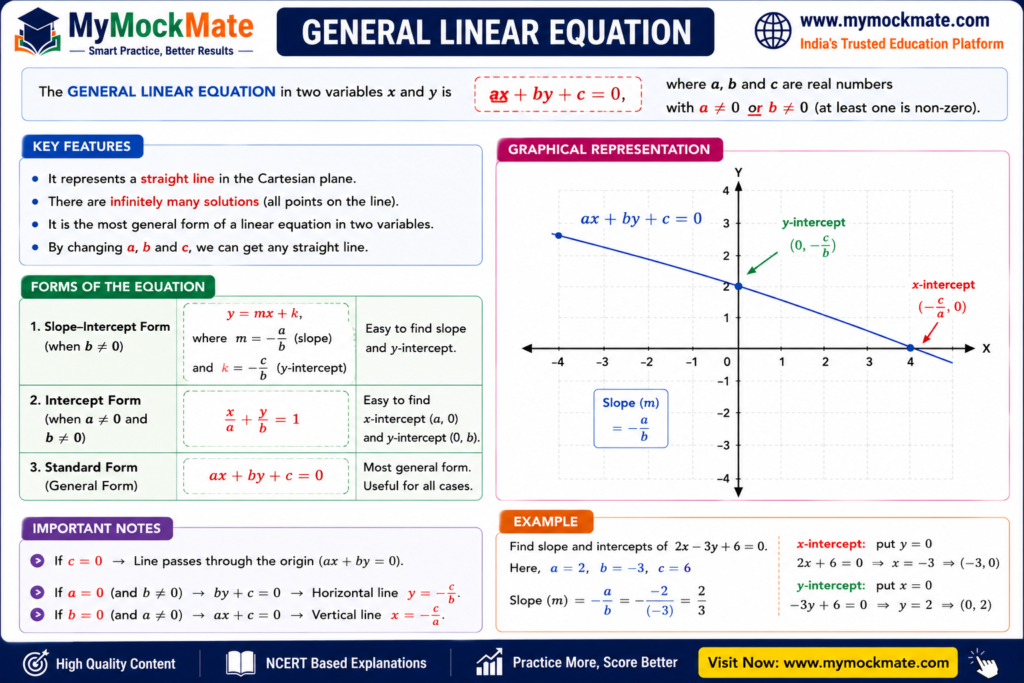
General Linear Equation
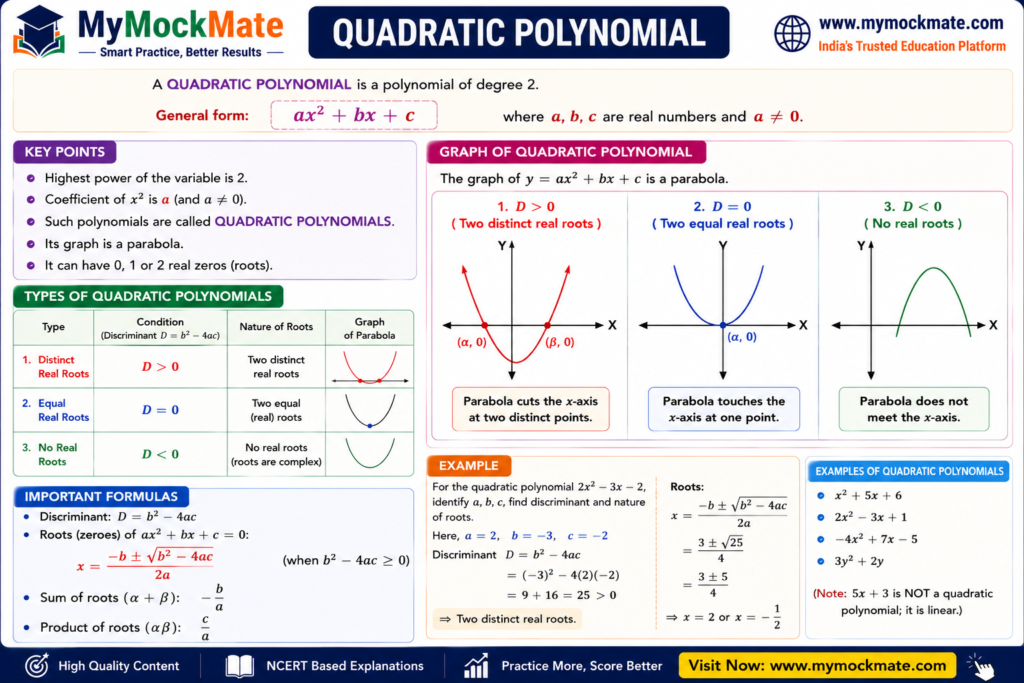
Quadratic Polynomial
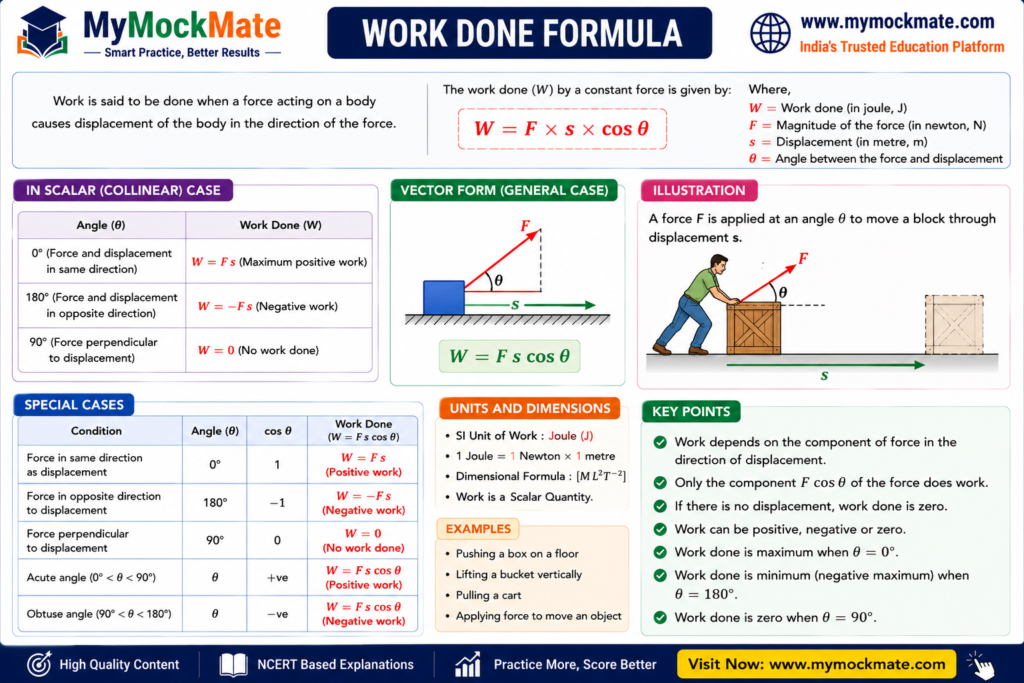
Work Done Formula
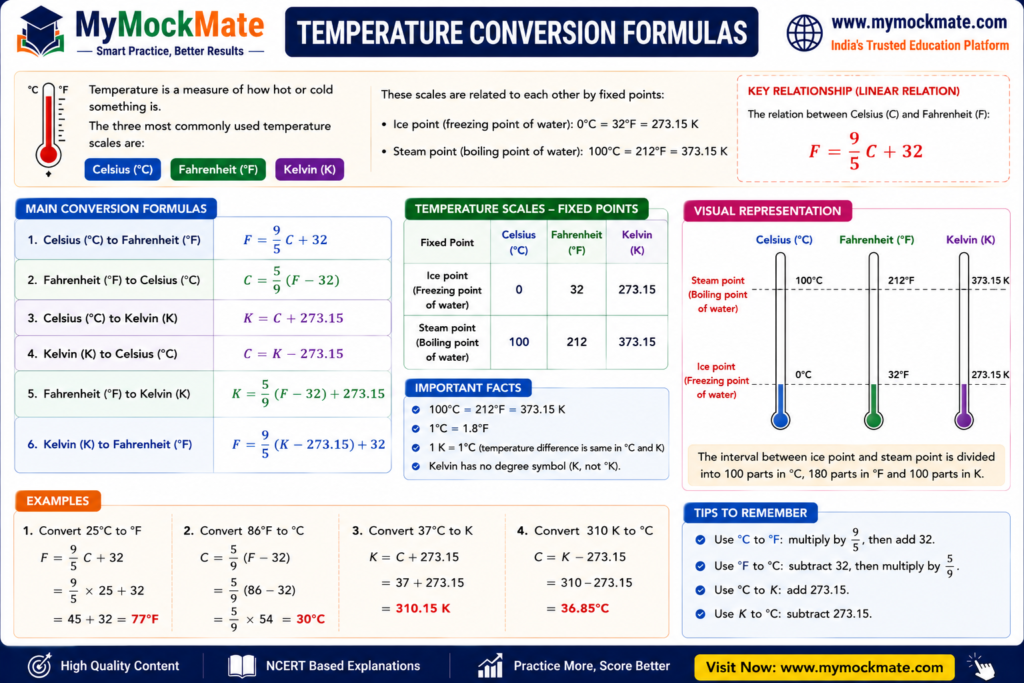
Temperature Conversion Formula
Questions & Step-by-Step Solutions
Question 1
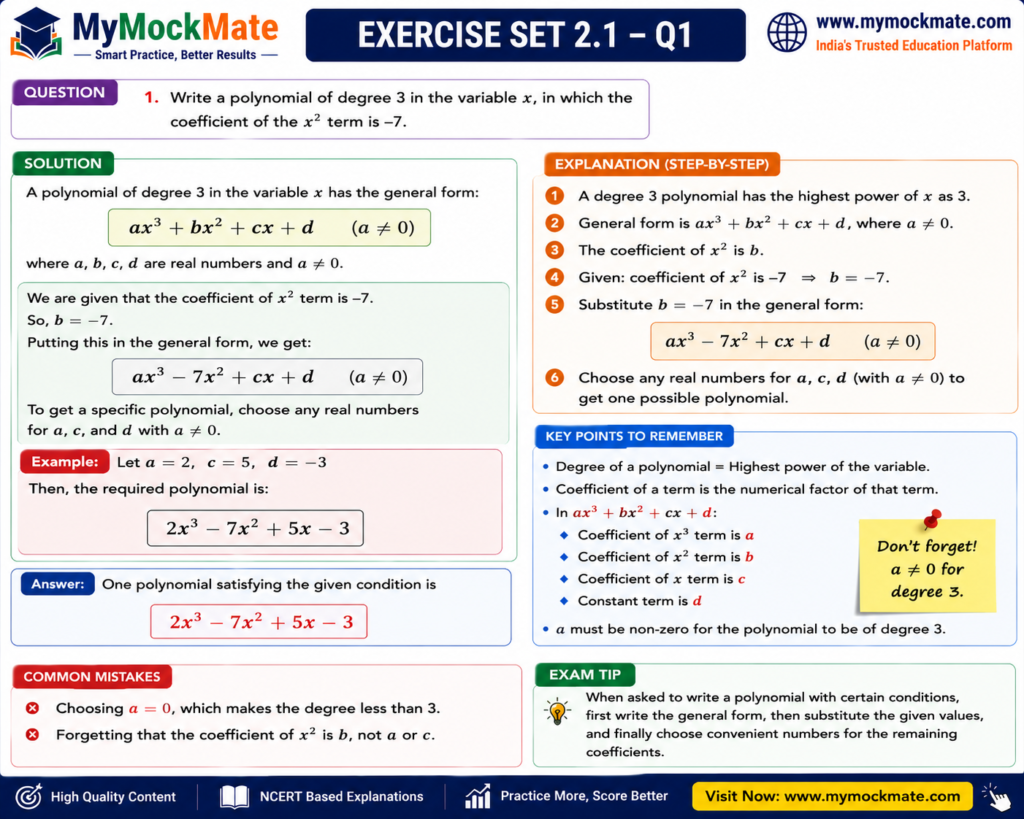
Write a polynomial of degree 3 in the variable x, in which the coefficient of the x2 term is –7.
Solution
Question 2
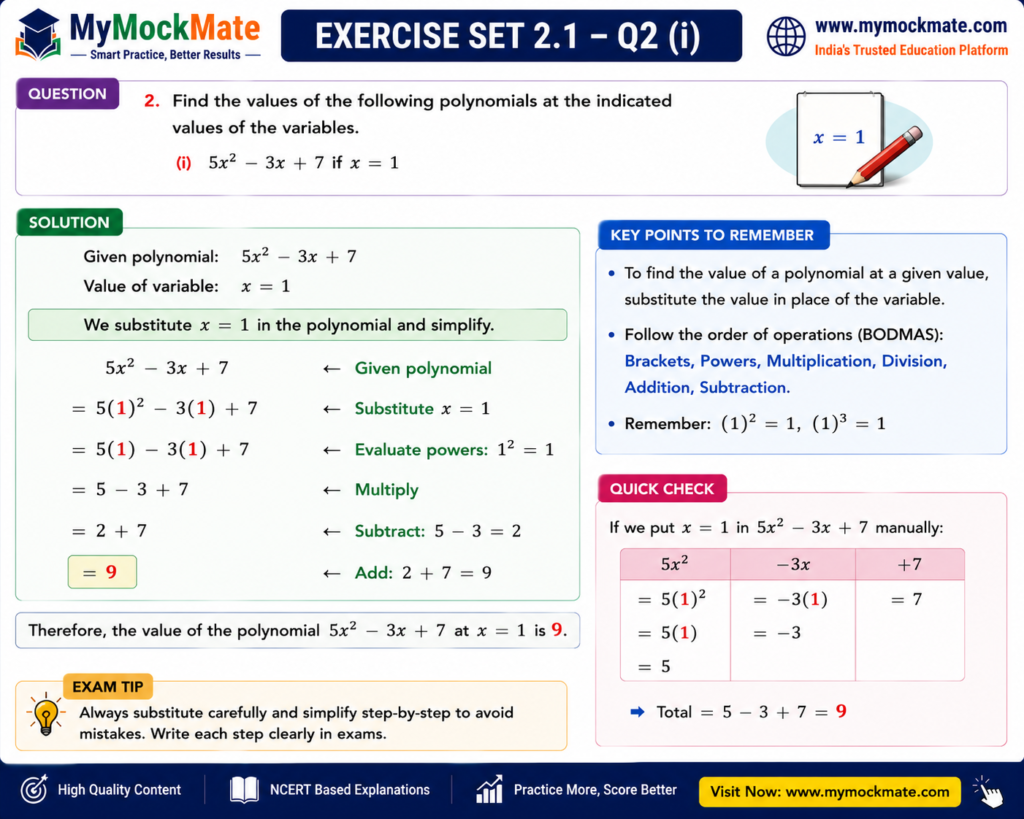
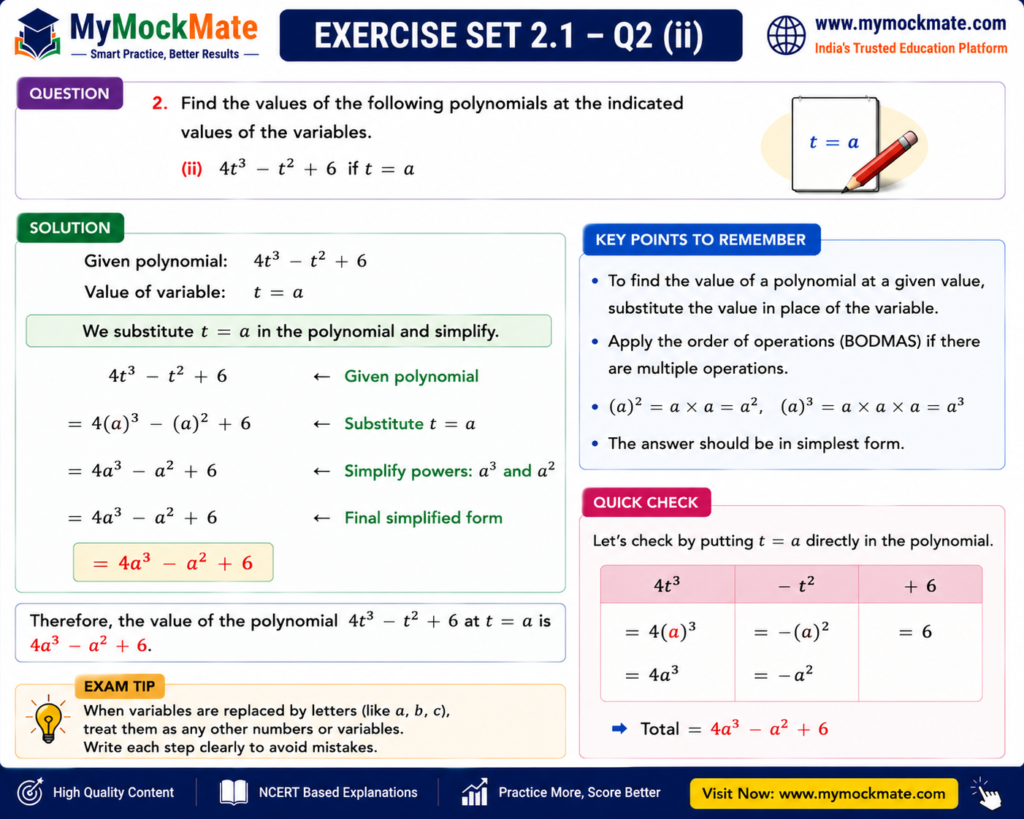
Find the values of the following polynomials at the indicated values of the variables.
(i) when
Solution
(ii) when
Solution
Final Answer
✅ Value = 4a3−a2+6
Question 3
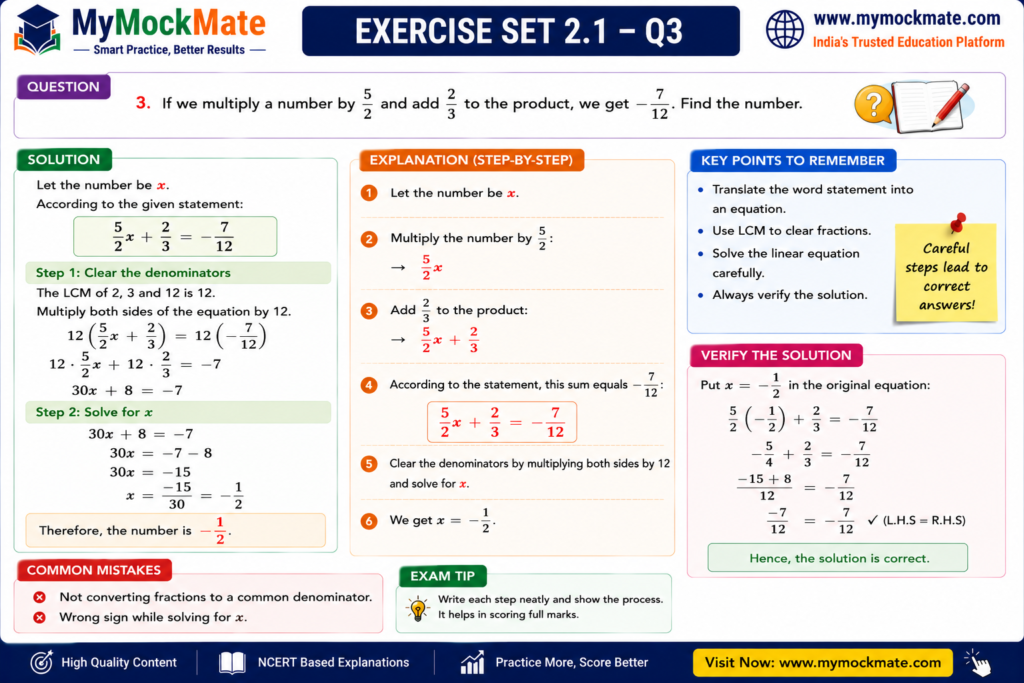
If a number is multiplied by and is added, the result becomes . Find the number.
Solution
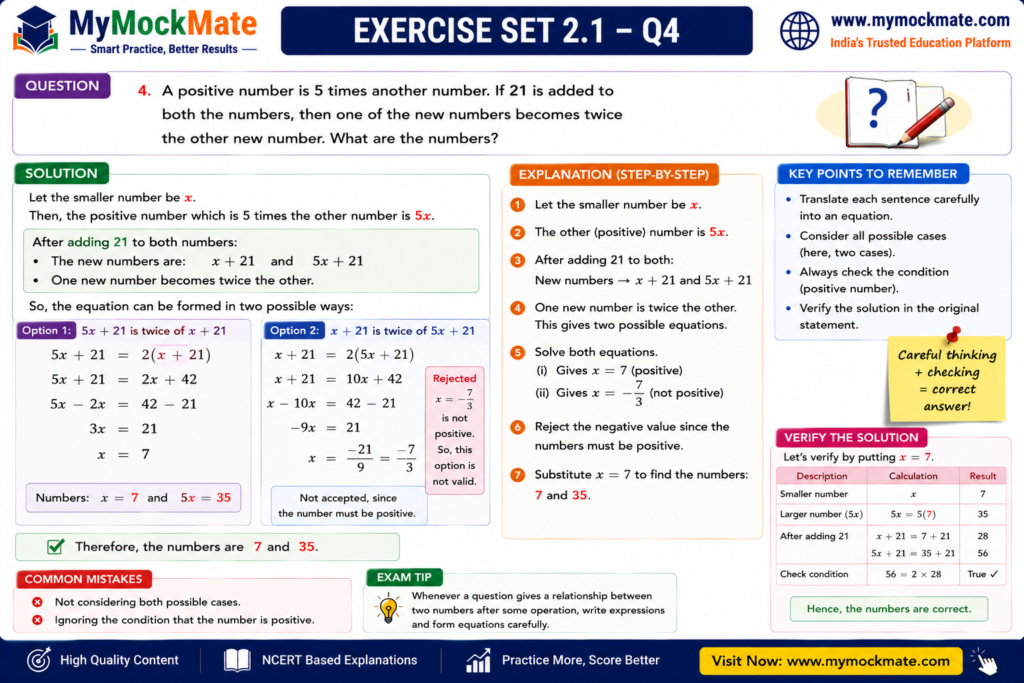
Question 4
A positive number is 5 times another number. If 21 is added to both the numbers, then one of the new numbers becomes twice the other new number. What are the numbers?
Solution
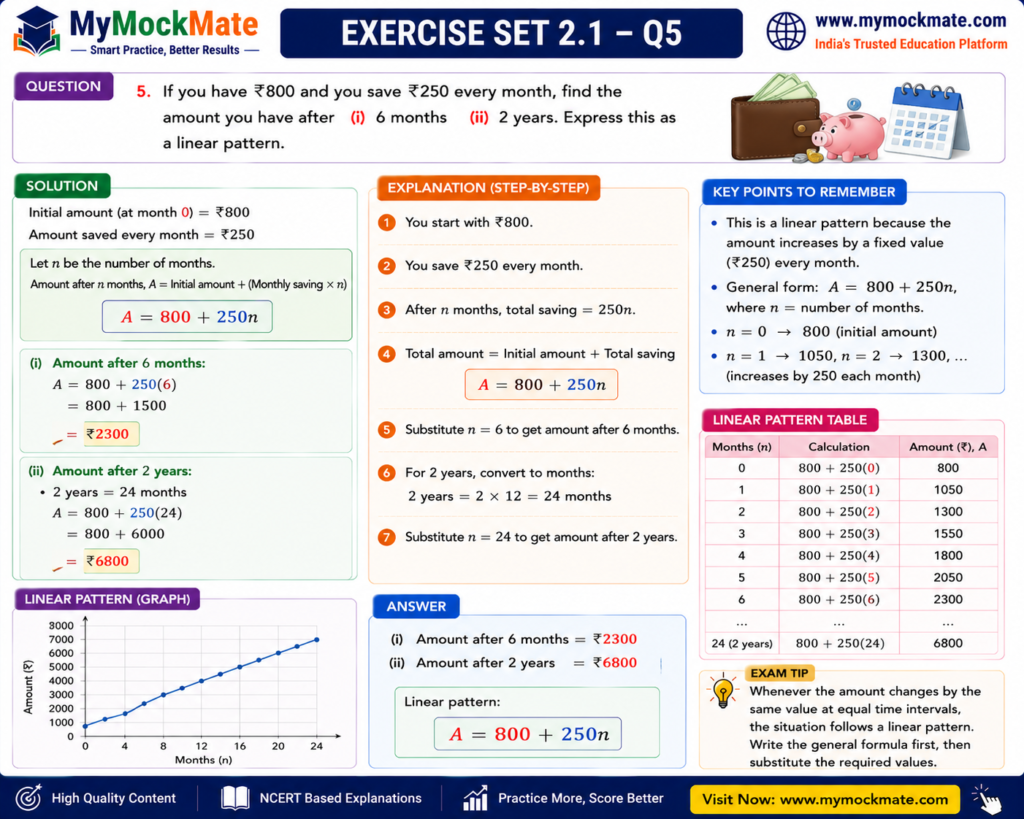
Question 5
If You have ₹800 and you save ₹250 every month. Find amount after:
(i) 6 months
(ii) 2 years
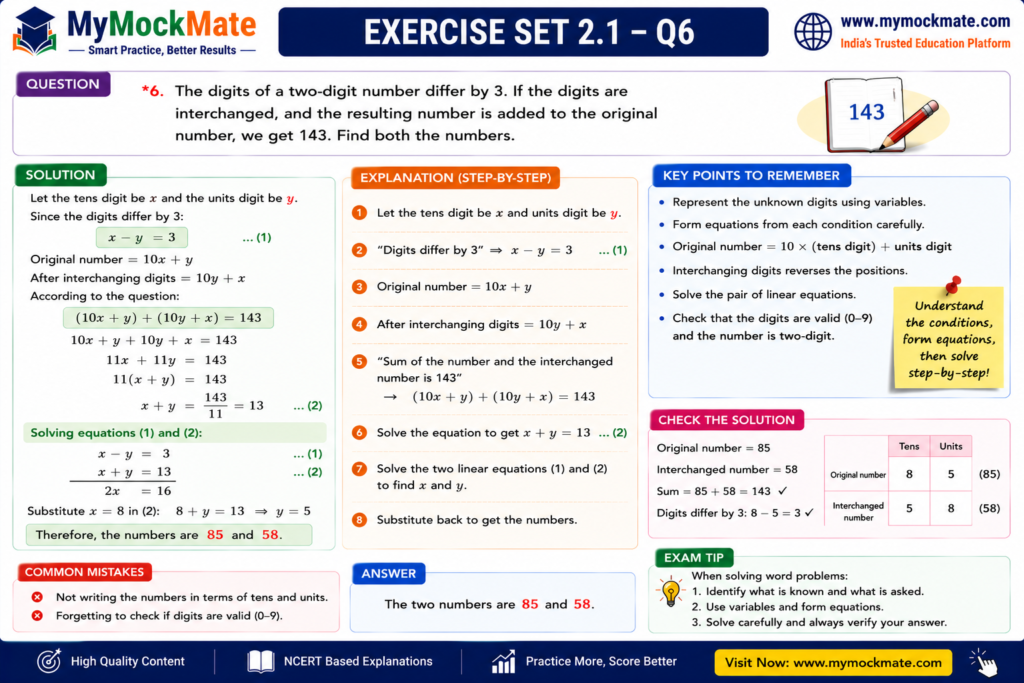
Question 6
The digits of a two-digit number differ by 3. If the digits are interchanged, and the resulting number is added to the original
number, we get 143. Find both the numbers.
Solution
Question 7
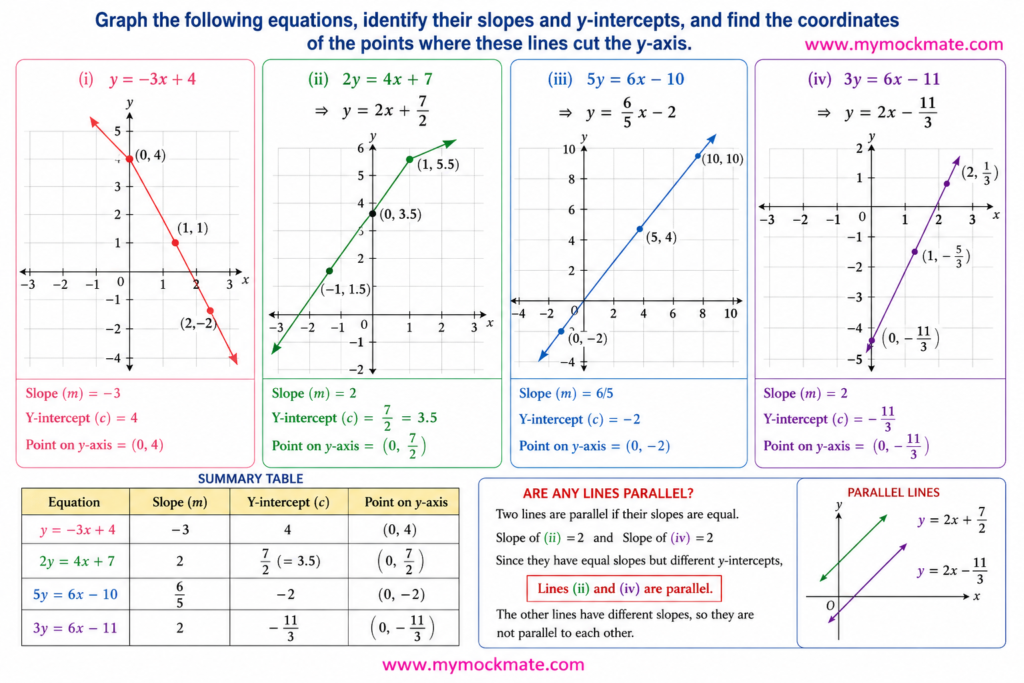
Note: for slope we have to convert equation in the form of y=mx+c, here m is a slope of line.
Question 8
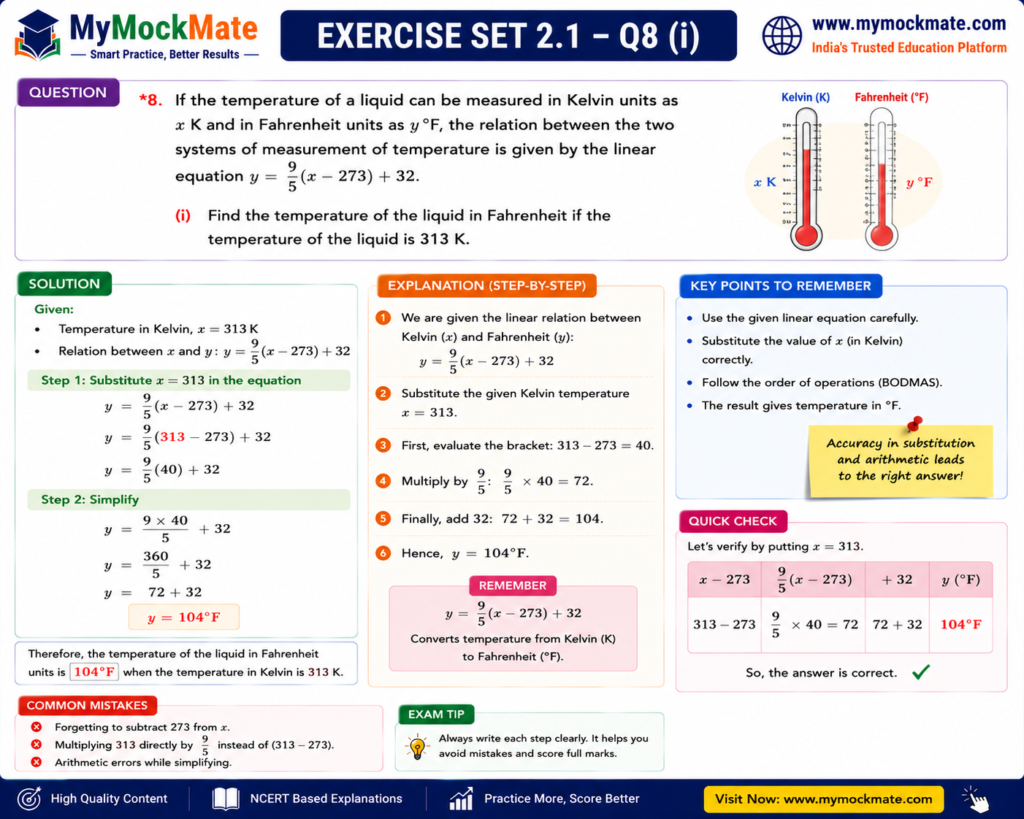
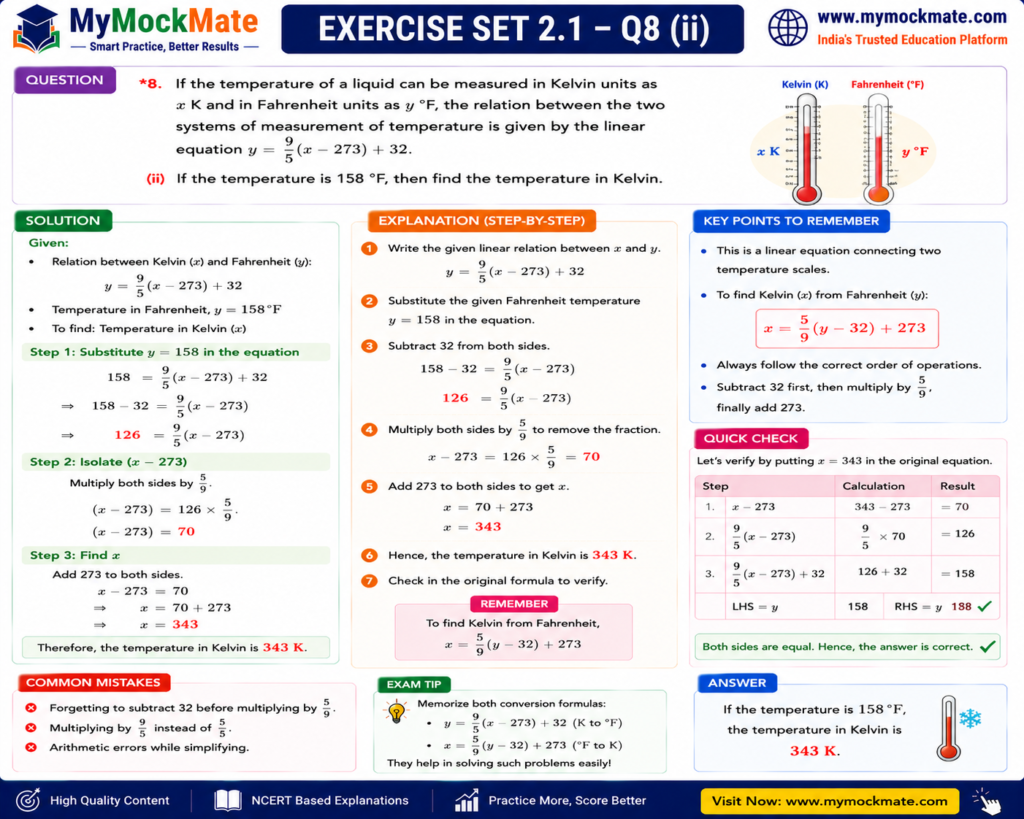
If the temperature of a liquid can be measured in Kelvin units as x K and in Fahrenheit units as y °F, the relation between the two systems of measurement of temperature is given by the linear equation
(i) Find the temperature of the liquid in Fahrenheit if the temperature of the liquid is 313 K.
(ii) If the temperature is 158 °F, then find the temperature in Kelvin.
Temperature relation:
(i) Find Fahrenheit when
Solution
(ii) Find Kelvin when
Solution
Question 9
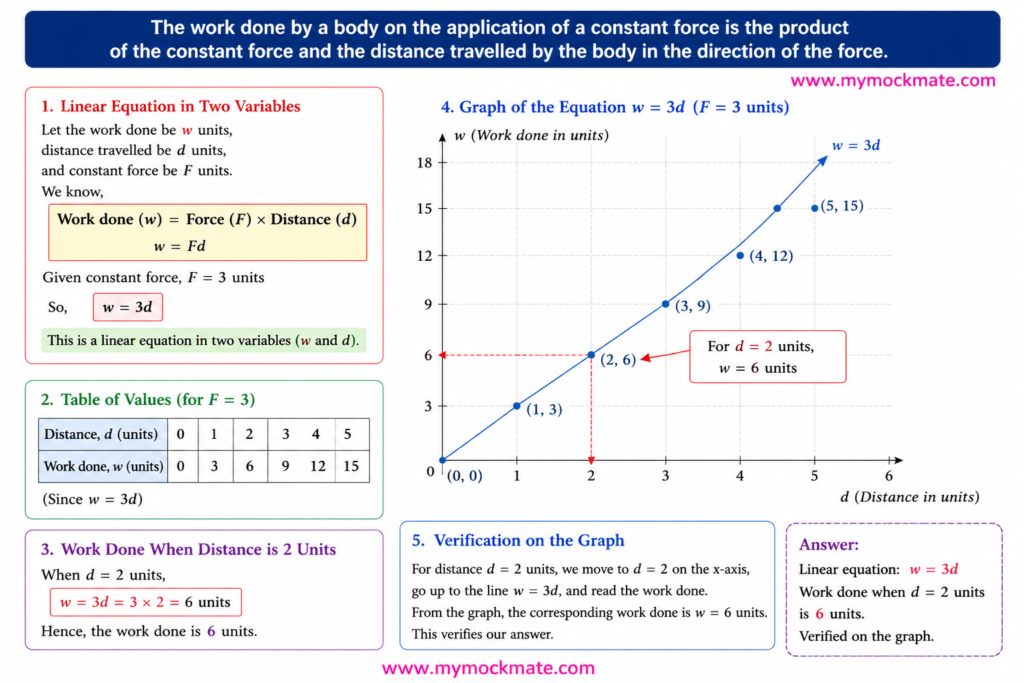
The work done by a body on the application of a constant force is the product of the constant force and the distance travelled by the body in the direction of the force. Express this in the form of a linear equation in two variables (work w and distance d), and draw its graph by taking the constant force as 3 units. What is the work done when the distance travelled is 2 units? Verify it by plotting it on the graph.
Question 10
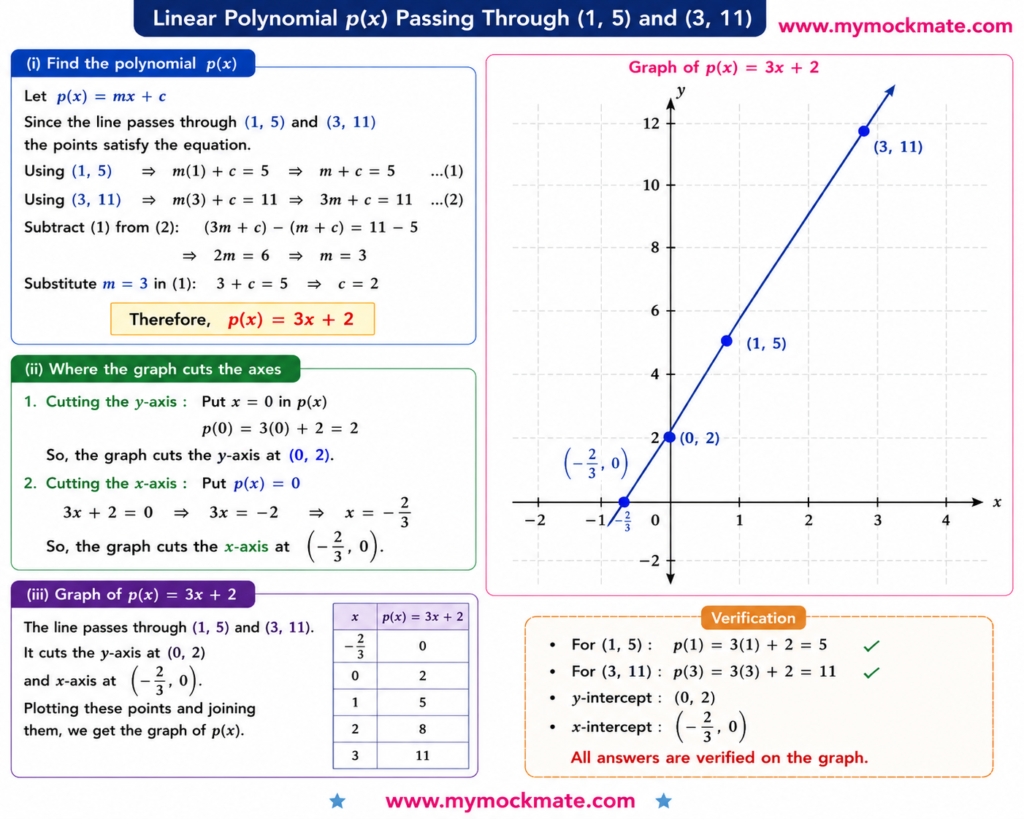
The graph of a linear polynomial p(x) passes through the points (1, 5) and (3, 11).
(i) Find the polynomial p(x).
(ii) Find the coordinates where the graph of p(x) cuts the axes.
(iii) Draw the graph of p(x) and verify your answers
Solution
Question 11
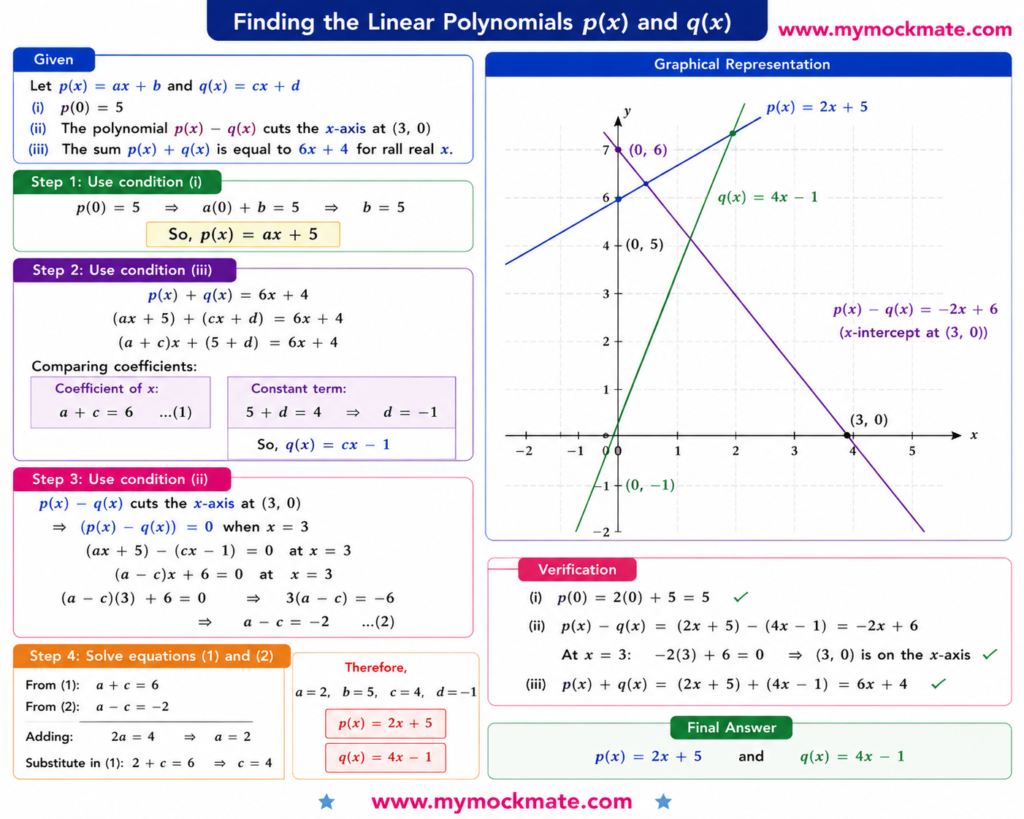
Let p(x) = ax + b and q(x) = cx + d be two linear polynomials such that:
(i) p(0) = 5.
(ii) The polynomial p(x) – q(x) cuts the x-axis at (3, 0).
(iii) The sum p(x) + q(x) is equal to 6x + 4 for all real x.
Find the polynomials p(x) and q(x)
Question 12
Look at the first three stages of a growing pattern of hexagons made using matchsticks. A new hexagon gets added at every stage which shares a side with the last hexagon of the previous stage.
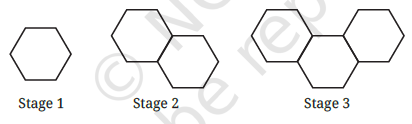
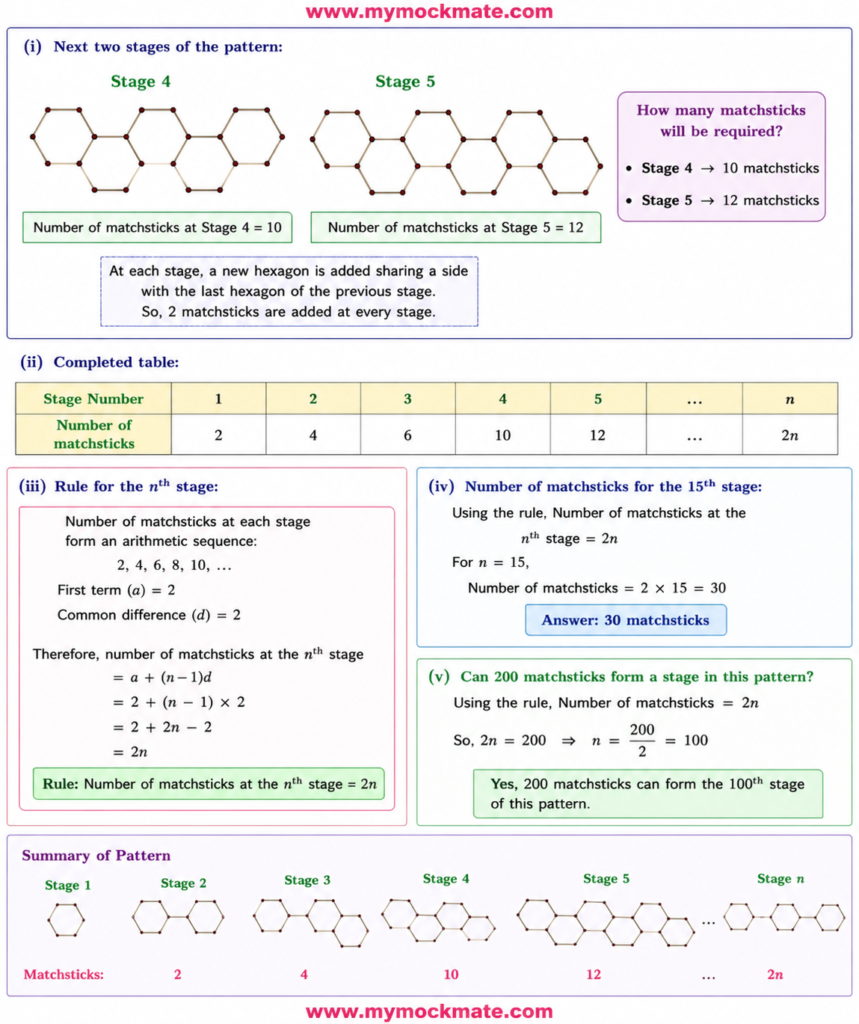
(i) Draw the next two stages of the pattern. How many matchsticks will be required at these stages?
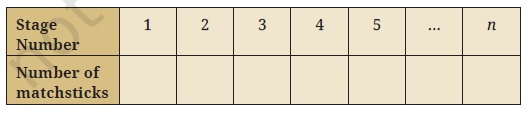
(ii) Complete the following table.
(iii) Find a rule to determine the number of matchsticks required for the nth stage.
(iv) How many matchsticks will be required for the 15th stage of the pattern?
(v) Can 200 matchsticks form a stage in this pattern? Justify your answer.
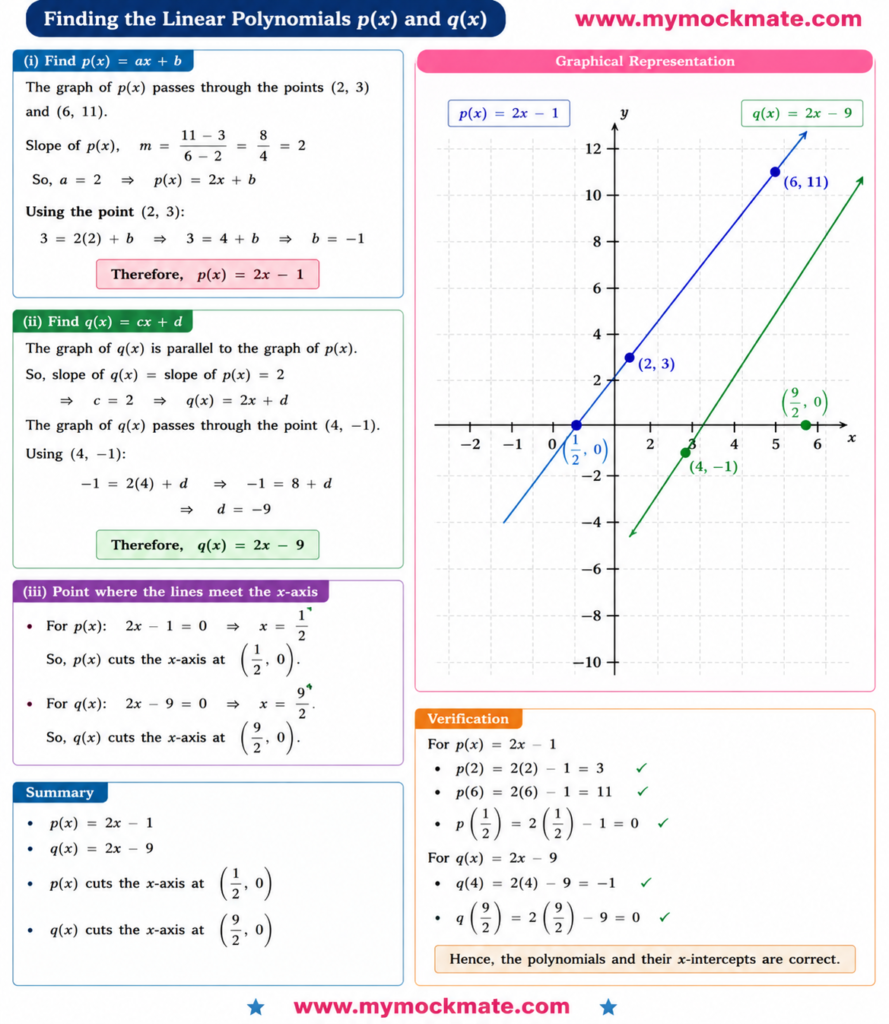
Question 13
Let p(x) = ax + b and q(x) = cx + d be two linear polynomials such that:
(i) The graph of p(x) passes through the points (2, 3) and (6, 11).
(ii) The graph of q(x) passes through the point (4, –1).
(iii) The graph of q(x) is parallel to the graph of p(x).
Find the polynomials p(x) and q(x). Also, find the coordinates of the point where these lines meet the x-axis.
Question 14
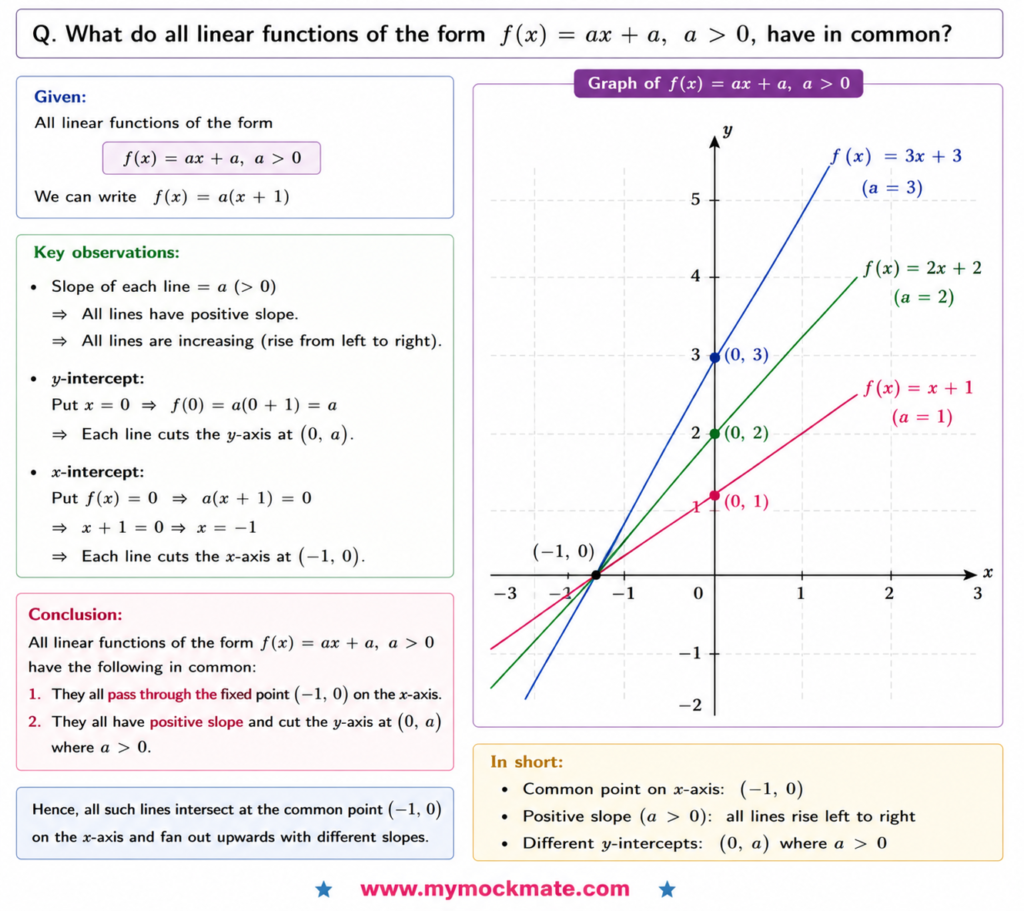
What do all linear functions of the form f(x) = ax + a, a > 0, have in common?
Common Mistakes
❌ Sign errors while solving equations
❌ Wrong substitution in polynomial evaluation
❌ Confusing slope with intercept
❌ Incorrect graph plotting
Exam Tips
✔ Always simplify equations step-by-step
✔ Remember slope formula carefully
✔ Verify answers after solving
✔ Practice graph questions regularly
Practice MCQs
1. Degree of polynomial is:
A) 1
B) 2
C) 3
D) 4
Answer
✅ C) 3
2. Which equation represents a straight line?
A)
B)
C)
D)
Answer
✅ B)
3. In equation , represents:
A) intercept
B) constant
C) slope
D) variable
Answer
✅ C) slope
4. Parallel lines have:
A) Same intercept
B) Same slope
C) Same coordinates
D) Same graph
Answer
✅ B) Same slope
FAQ Section
Q1. What is a linear polynomial?
A polynomial having degree 1 is called a linear polynomial.
Q2. What is slope?
Slope measures the steepness of a straight line.
Q3. What is y-intercept?
It is the point where graph cuts the y-axis.
Q4. Why are linear relationships important?
They help represent real-life situations mathematically.
Q5. How can graph questions be solved easily?
By plotting accurate points and joining them carefully.
Practice more chapter-wise Maths solutions, MCQs, graph questions, and mock tests on MyMockMate and strengthen your Class 9 Mathematics preparation with smart learning resources!