NCERT Class 9 Science Earth as a System Energy Matter and Life Solutions
Short Intro
This chapter explains how Earth functions as an interconnected system involving energy flow, matter cycling, atmosphere, hydrosphere, lithosphere, and biosphere. Students learn about biogeochemical cycles, climate regulation, greenhouse gases, weather systems, and human impact on the environment through detailed explanations and solved questions.
Quick Information Box
| Topic | Details |
|---|---|
| Chapter Name | Earth as a System: Energy, Matter, and Life |
| Class | Grade 9 |
| Subject | Science |
| Main Topics | Earth Spheres, Climate, Biogeochemical Cycles |
| Energy Source | Sun |
| Important Cycles | Water, Carbon, Nitrogen, Oxygen |
Concepts Used (Topics Covered)
- Earth as an Interconnected System
- Atmosphere, Hydrosphere, Lithosphere and Biosphere
- Solar Radiation and Insolation
- Weather and Climate
- Wind Formation
- Ocean Currents
- Water Cycle
- Carbon Cycle
- Nitrogen Cycle
- Oxygen Cycle
- Greenhouse Effect
- Global Warming and Climate Change
- Eutrophication
- Deforestation
- Sustainable Development
Important Formulas
- Heat Transfer
Heat flows from hotter region to colder region. - Greenhouse Effect
Earth absorbs solar radiation and re-radiates infrared radiation trapped by greenhouse gases. - Water Cycle
Evaporation → Condensation → Precipitation → Runoff - Photosynthesis Equation
CO₂ + H₂O + Sunlight → Glucose + O₂ - Respiration Equation
Glucose + O₂ → CO₂ + H₂O + Energy
Questions & Step-by-step Solutions with Explanation
Think It Over
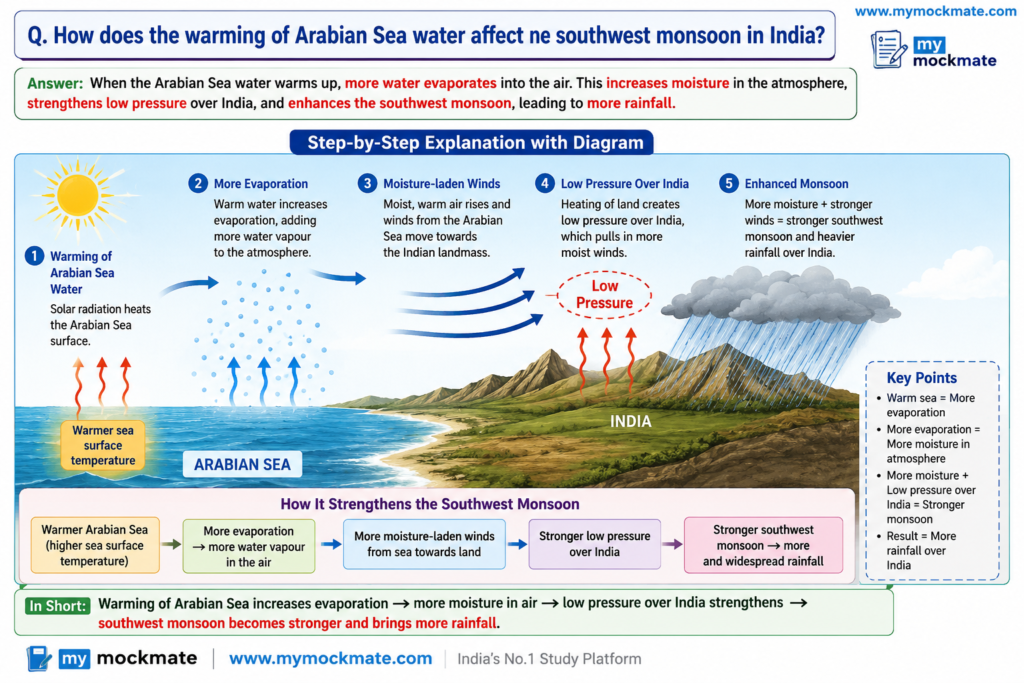
1. How does the warming of Arabian Sea water affect the southwest monsoon in India?
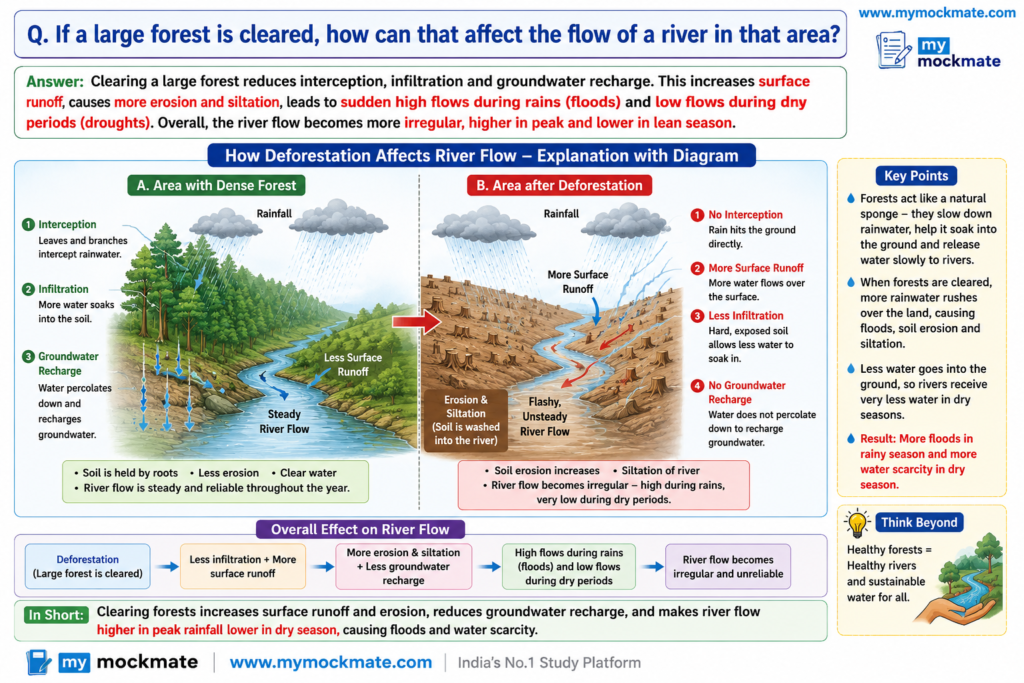
2. If a large forest is cleared, how can that affect the flow of a river in that area?
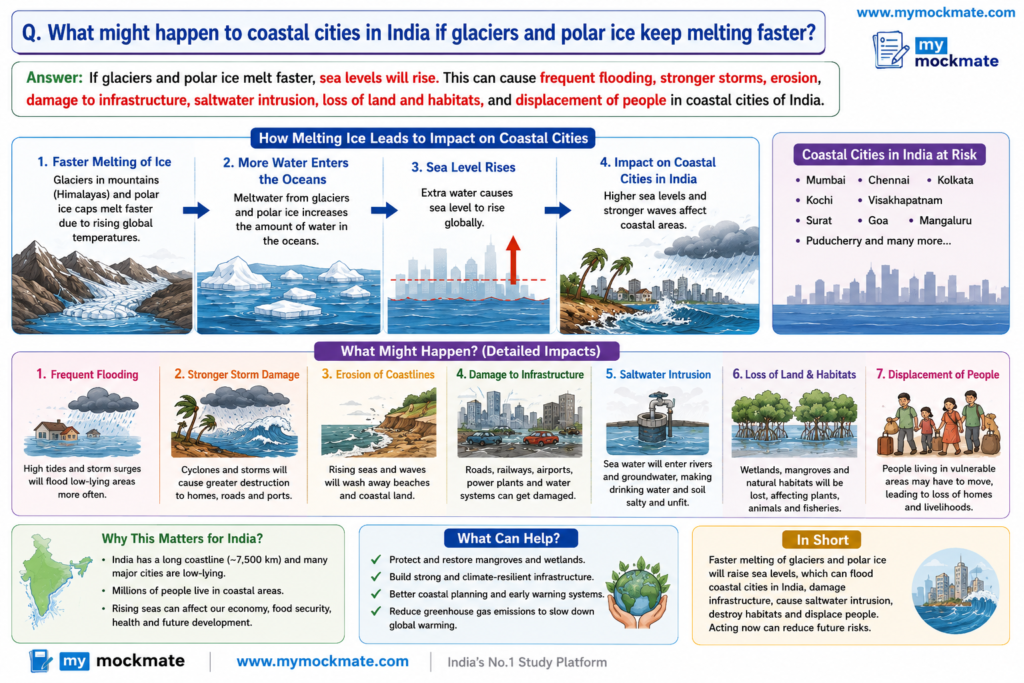
3. What might happen to coastal cities in India if glaciers and polar ice keep melting faster?
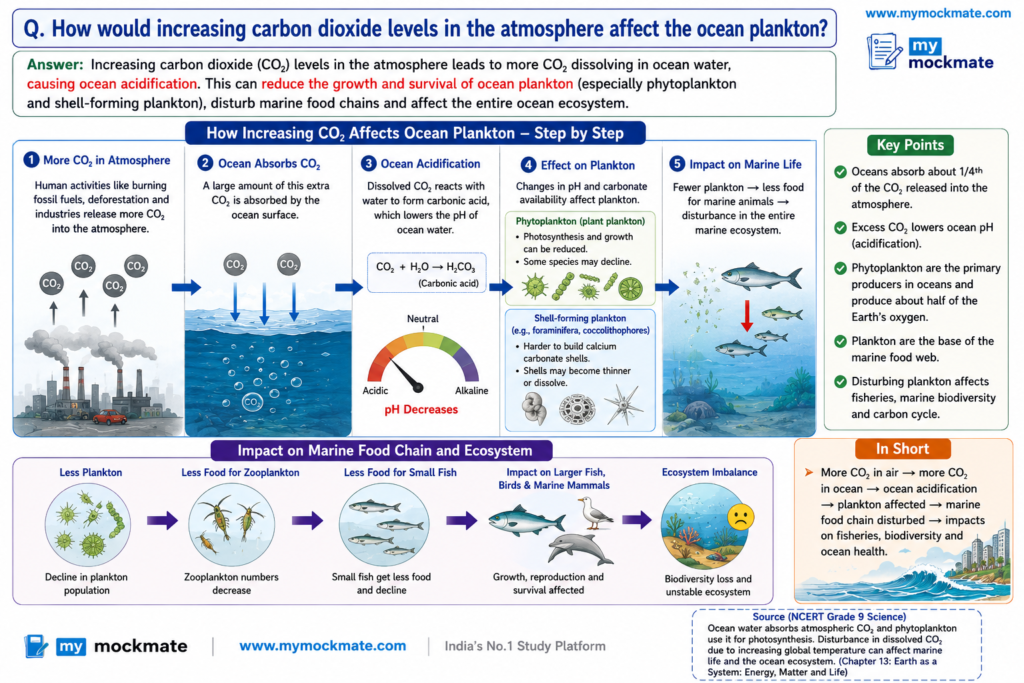
4. How would increasing carbon dioxide levels in the atmosphere affect the ocean plankton?
Pause and Ponder
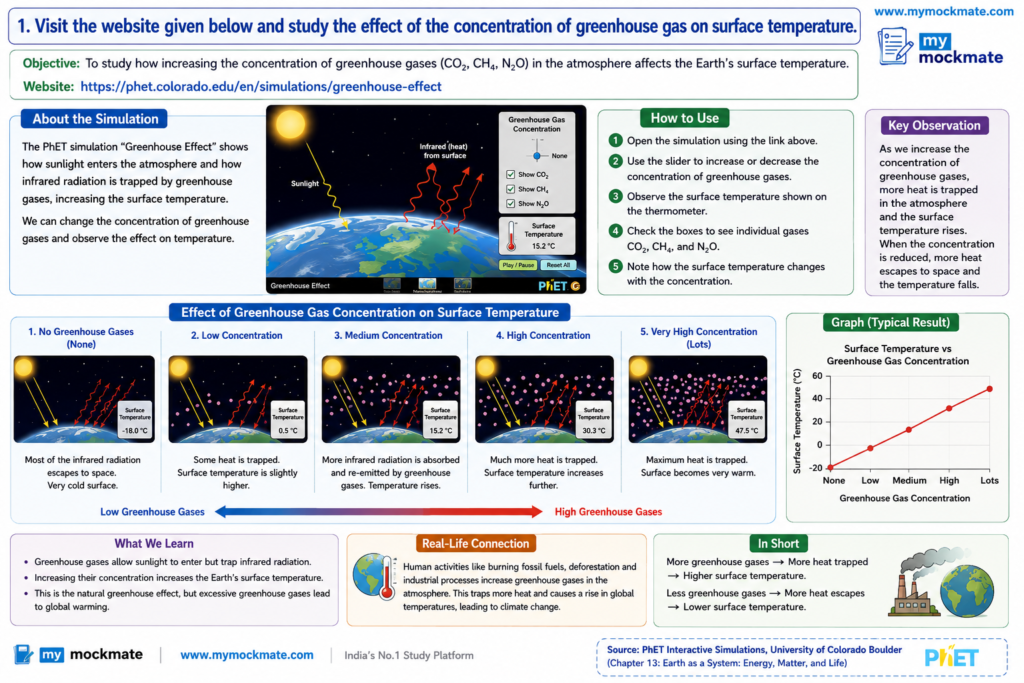
1. Visit the website given below and study the effect of the concentration of greenhouse gas on surface temperature, https://phet.colorado.edu/en/simulations/greenhouse-effect
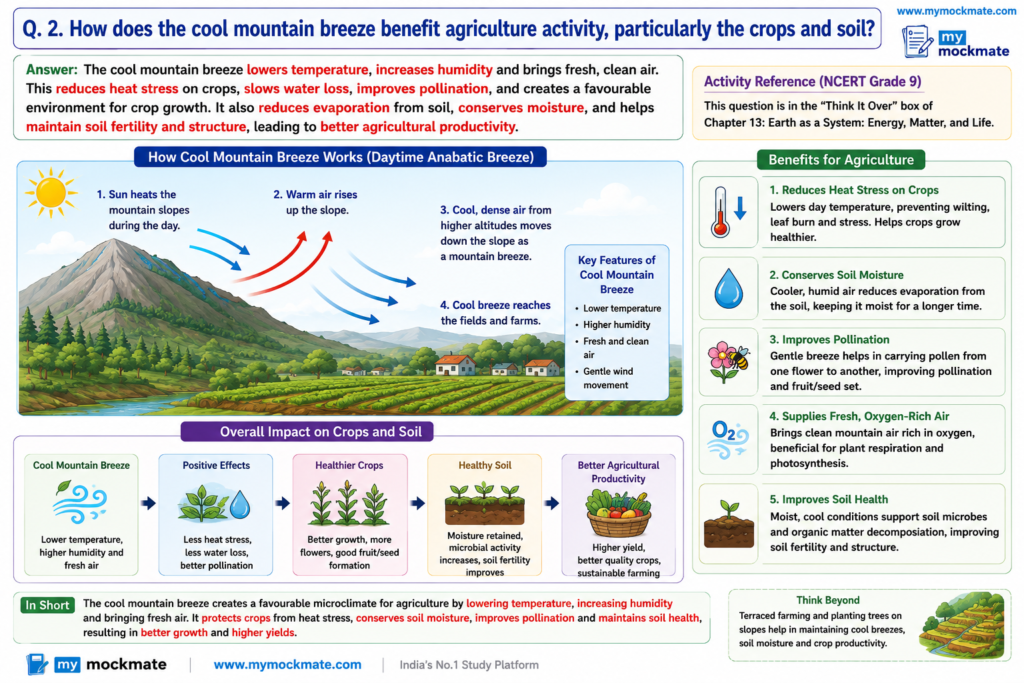
2. How does the cool mountain breeze benefit agriculture activity, particularly the crops and soil?
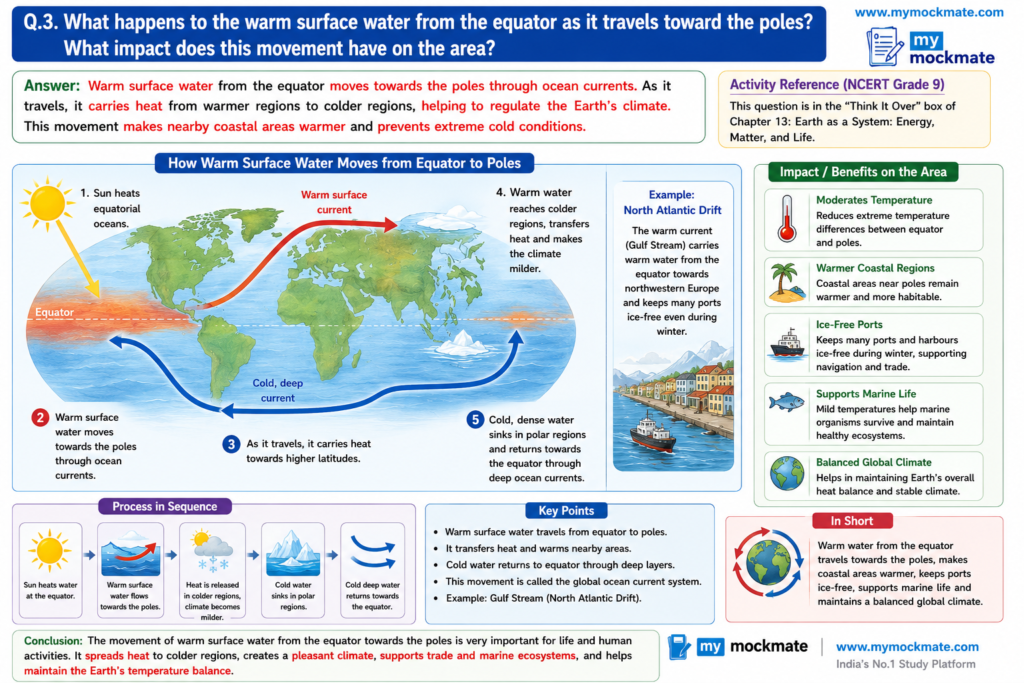
3. What happens to the warm surface of water from the equator as it travels toward the poles? What impact does this movement have on the area?
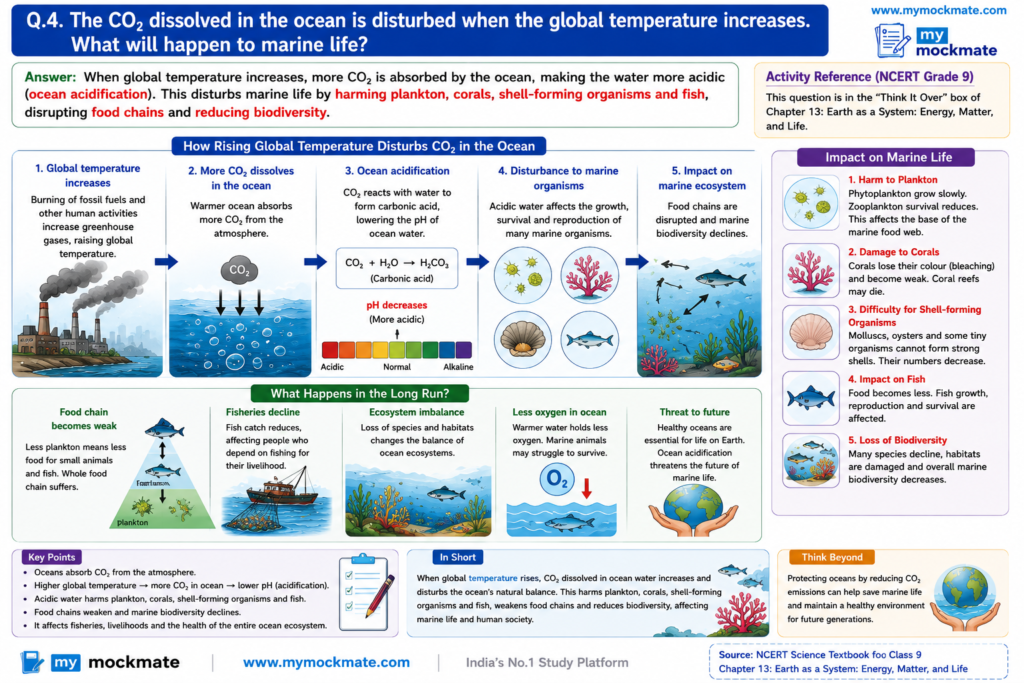
4. The CO2 dissolved in the ocean is disturbed when the global temperature increases. What will happen to marine life?
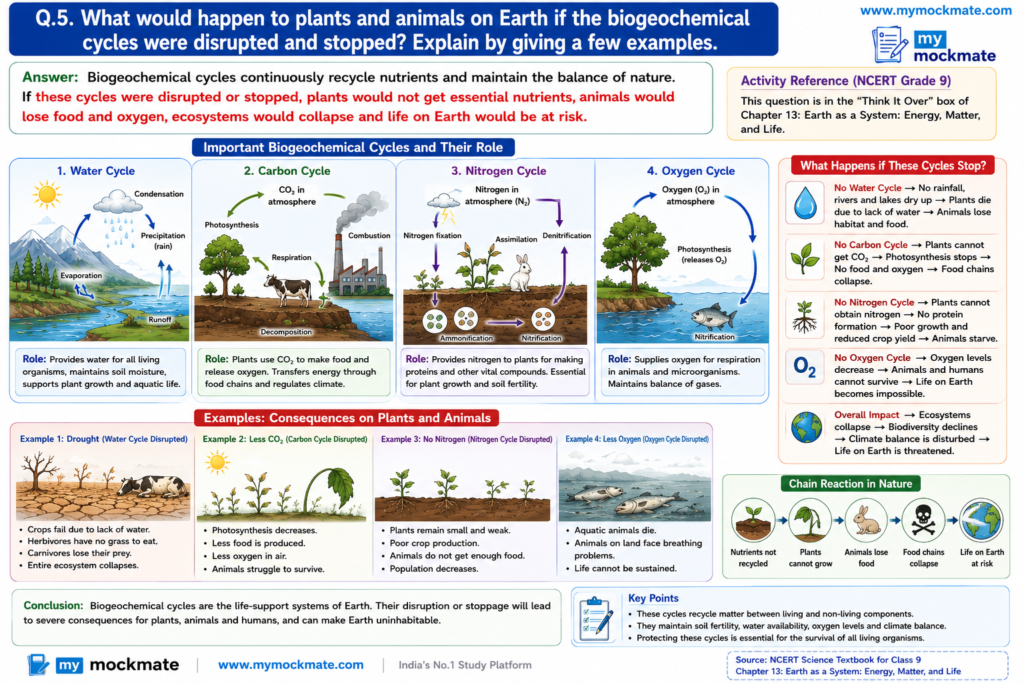
5. What would happen to plants and animals on Earth if the biogeochemical cycles were disrupted and stopped? Explain by giving a few examples.
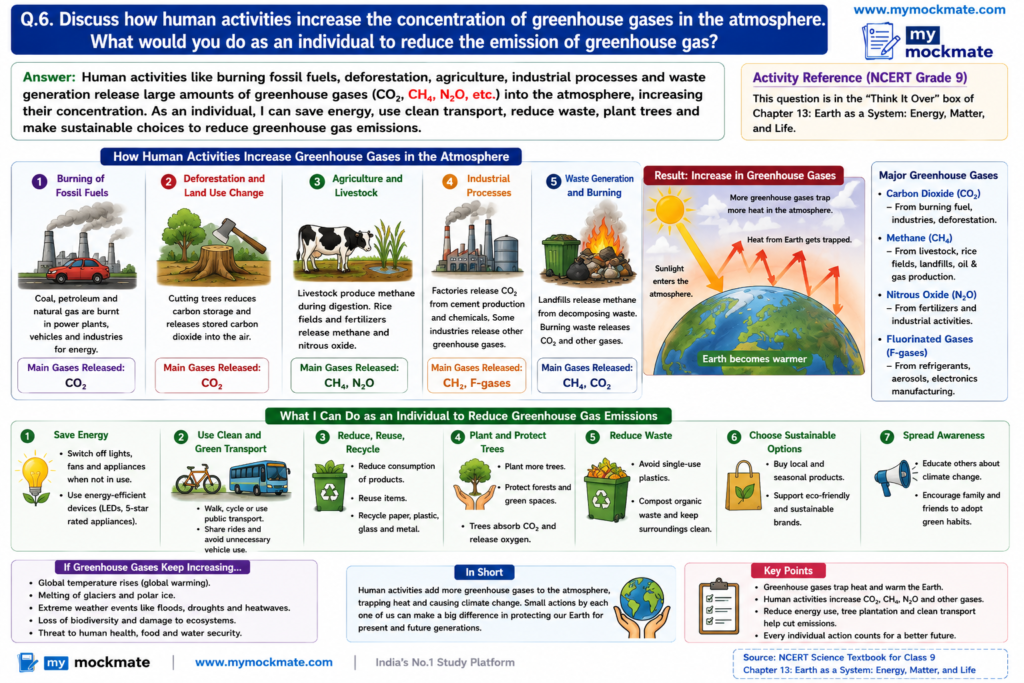
6. Discuss how human activities increase the concentration of greenhouse gases in the atmosphere. What would you do as an individual to reduce the emission of greenhouse gas?
Revise, Reflect, Refine
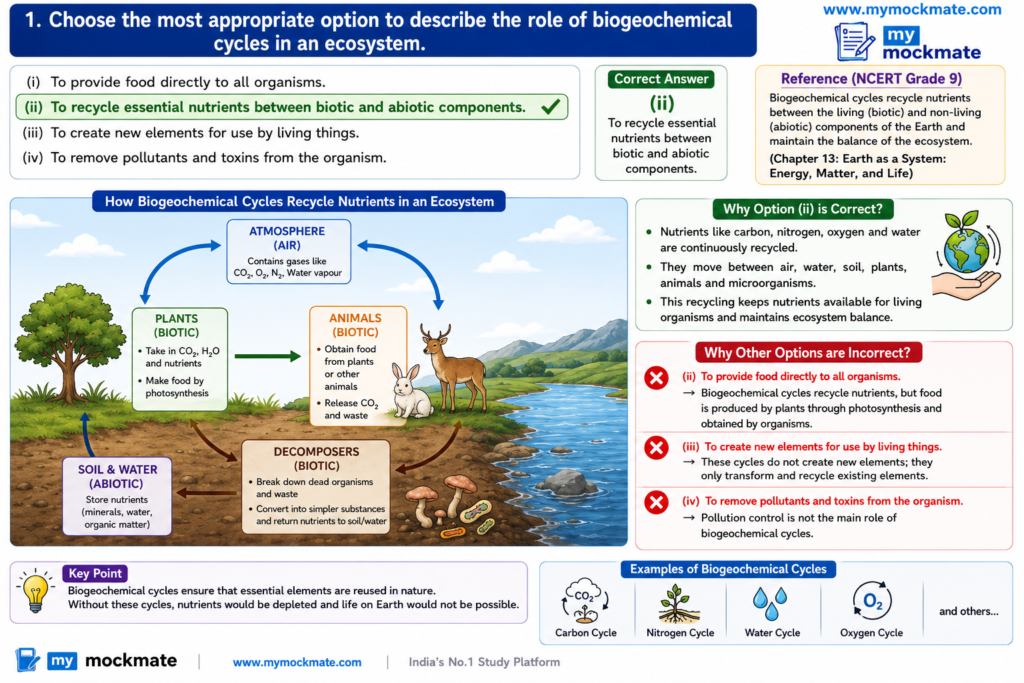
1. Choose the most appropriate option to describe the role of biogeochemical cycles in an ecosystem.
(i) To provide food directly to all organisms.
(ii) To recycle essential nutrients between biotic and abiotic components.
(iii) To create new elements for use by living things.
(iv) To remove pollutants and toxins from the organism.
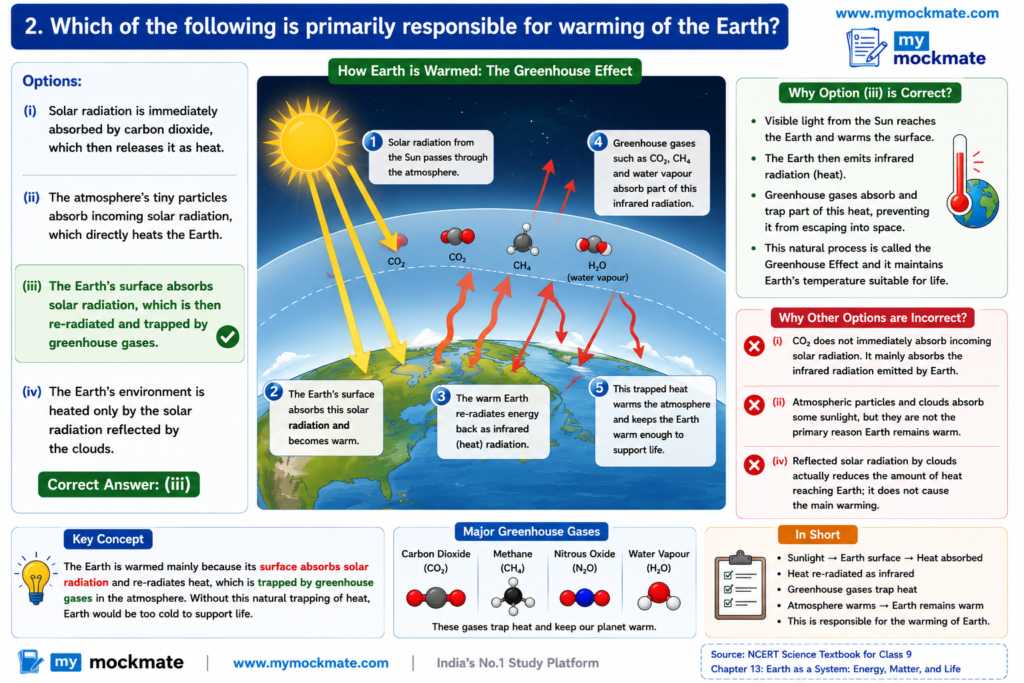
2. Which of the following is primarily responsible for warming of the Earth?
(i) Solar radiation is immediately absorbed by carbon dioxide, which then releases it as heat.
(ii) The atmosphere’s tiny particles absorb incoming solar radiation, which directly heats the Earth.
(iii) The Earth’s surface absorbs solar radiation, which is then re-radiated and trapped by greenhouse gases.
(iv) The Earth’s environment is heated only by the solar radiation reflected by the clouds.
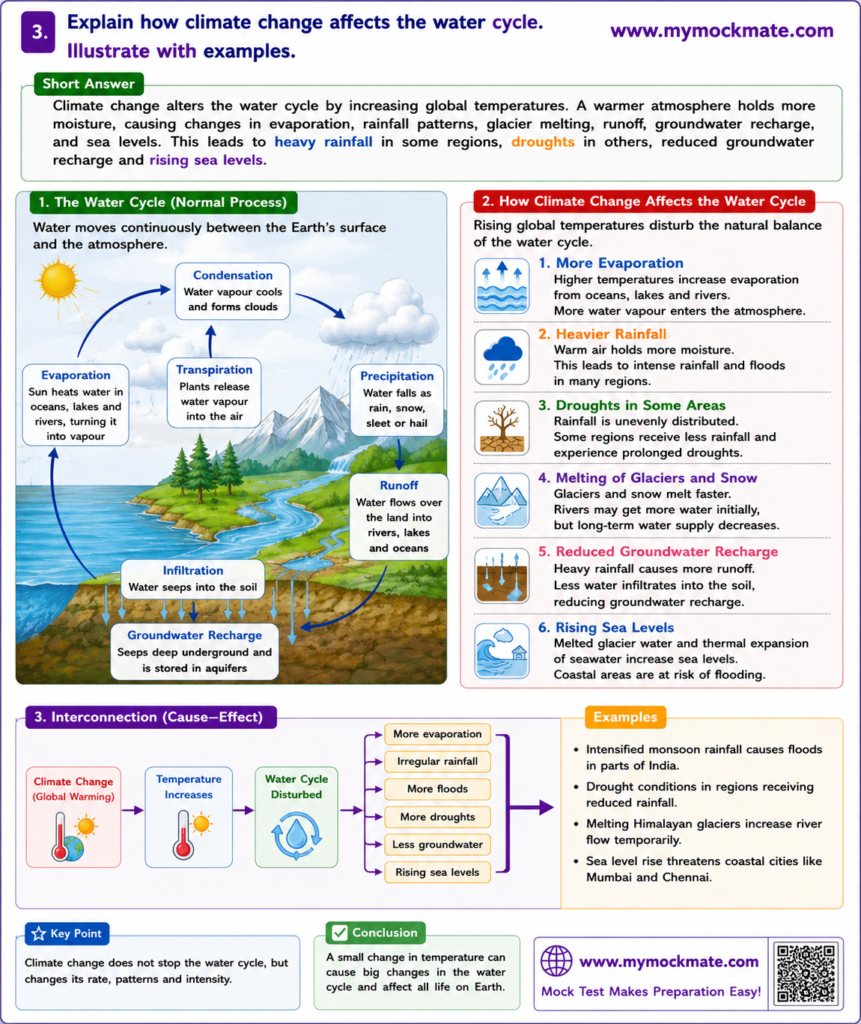
3. Explain how climate change affects the water cycle. Illustrate with examples.
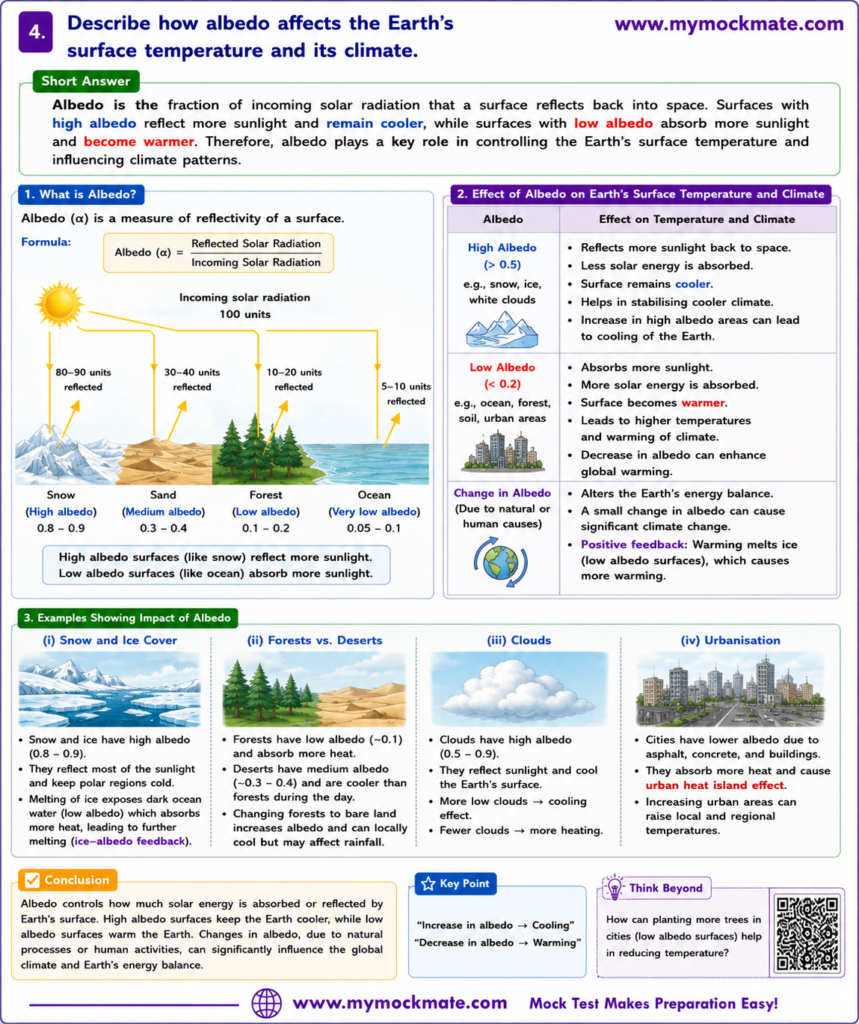
4. Describe how albedo affects the Earth’s surface temperature and its climate.
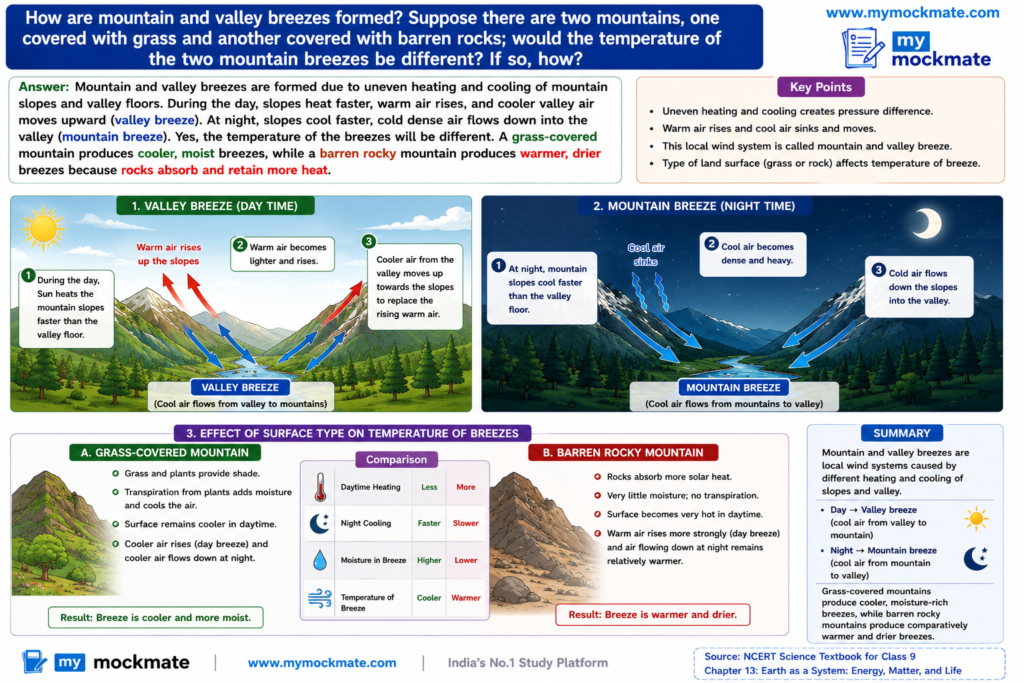
5. How are mountain and valley breezes formed? Suppose there are two mountains, one covered with grass and another covered with barren rocks; would the temperature of the two mountain breezes be different? If so, how?
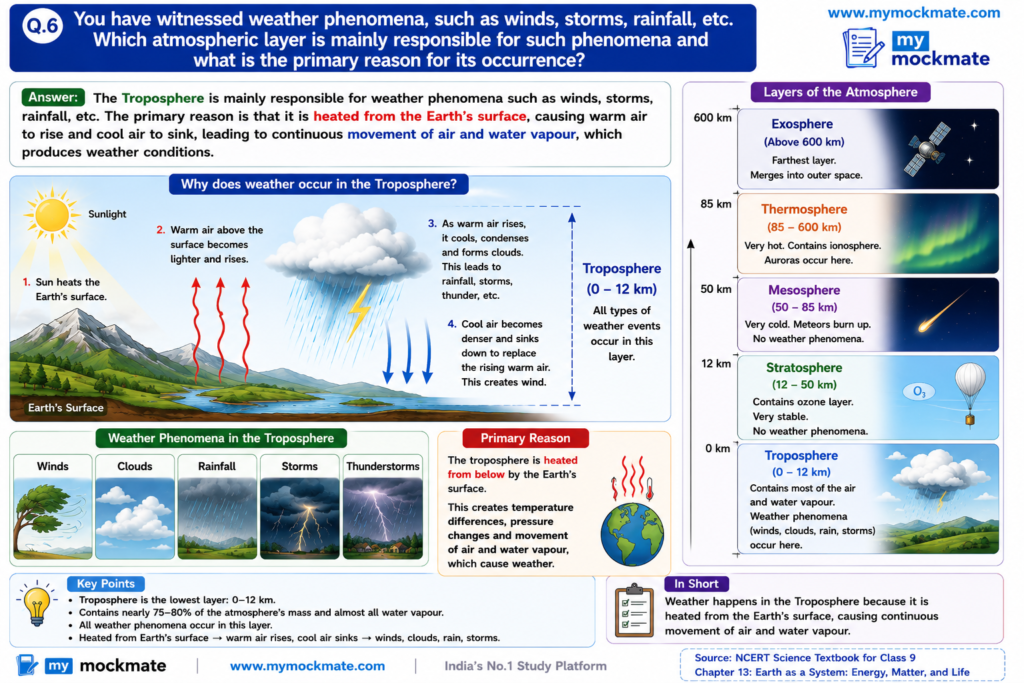
6. You have witnessed weather phenomena, such as winds, storms, rainfall, etc. Which atmospheric layer is mainly responsible for such phenomena and what is the primary reason for its occurrence?
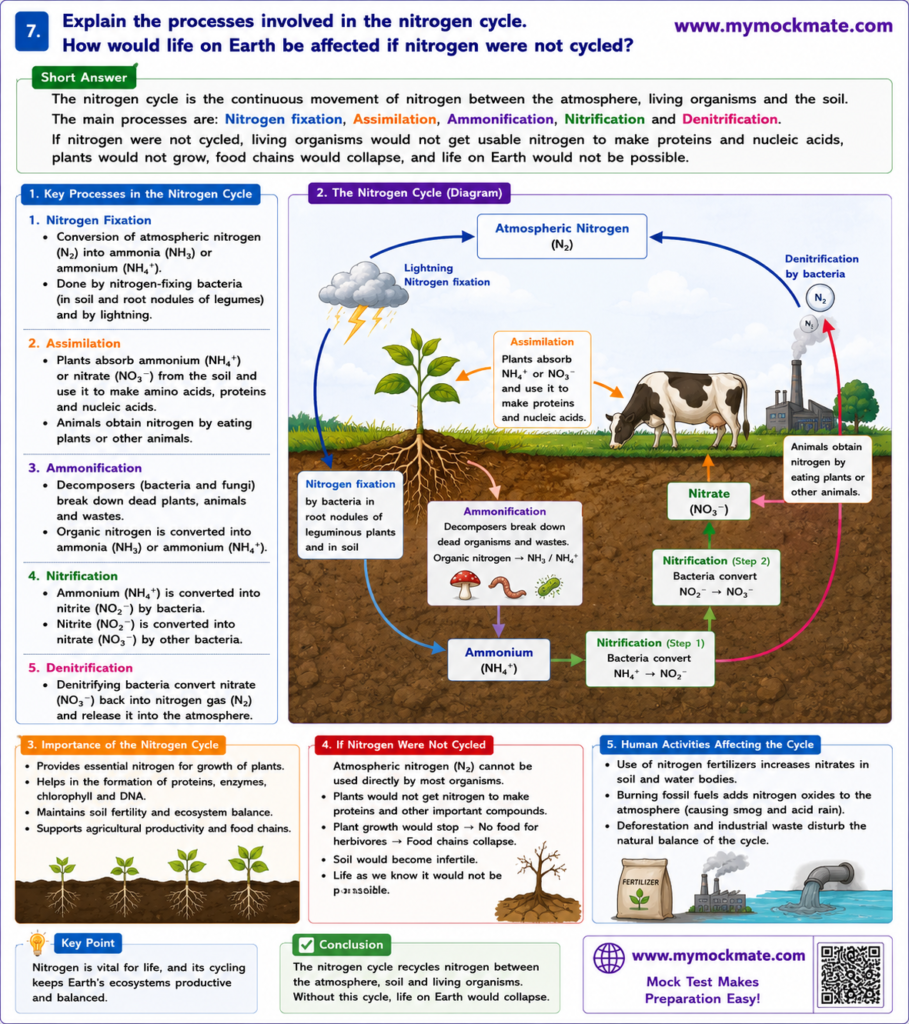
7. Explain the processes involved in the nitrogen cycle. How would life on Earth be affected if nitrogen were not cycled?
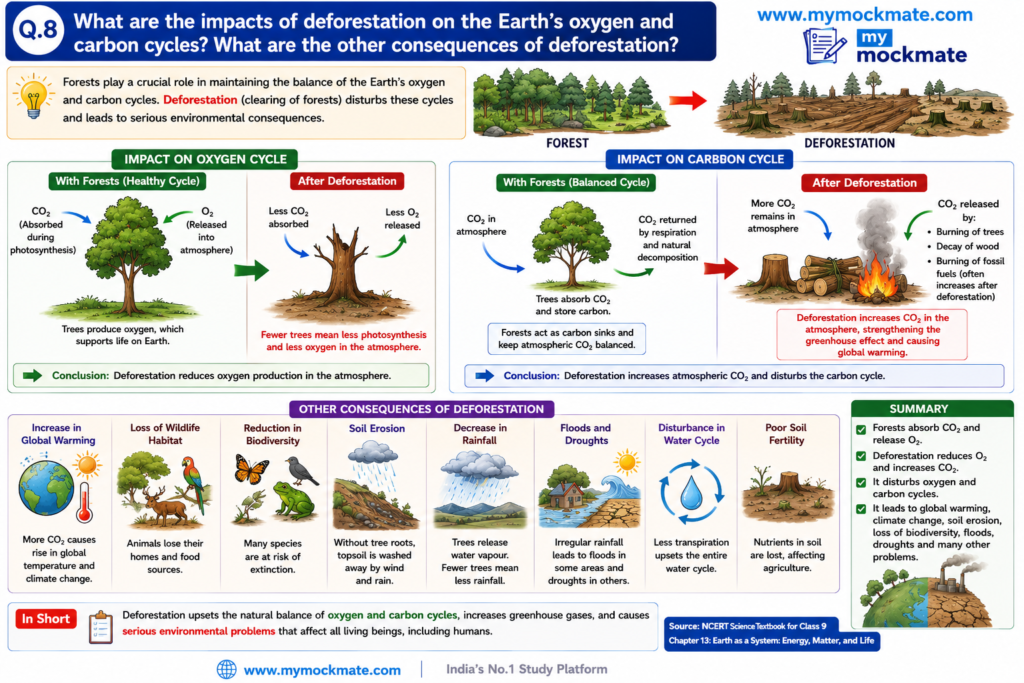
8. What are the impacts of deforestation on the Earth’s oxygen and carbon cycles? What are the other consequences of deforestation?
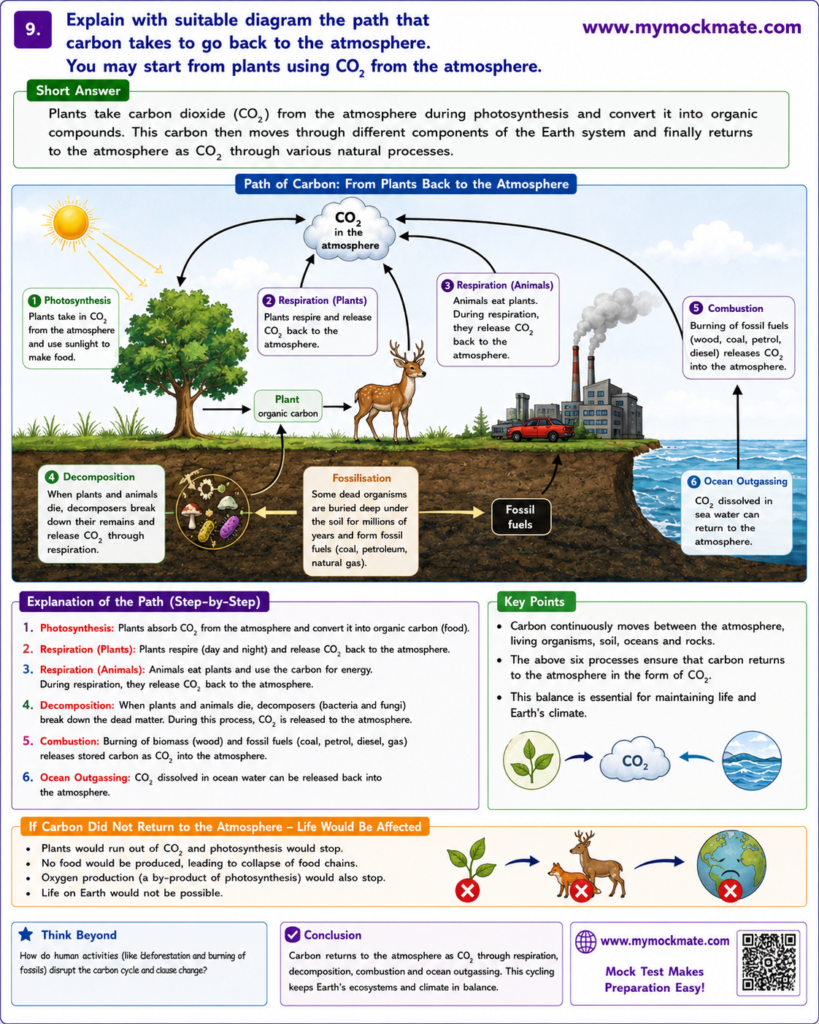
9. Explain with suitable diagram the path that carbon takes to go back to the atmosphere. You may start from plants using CO2 from the atmosphere.
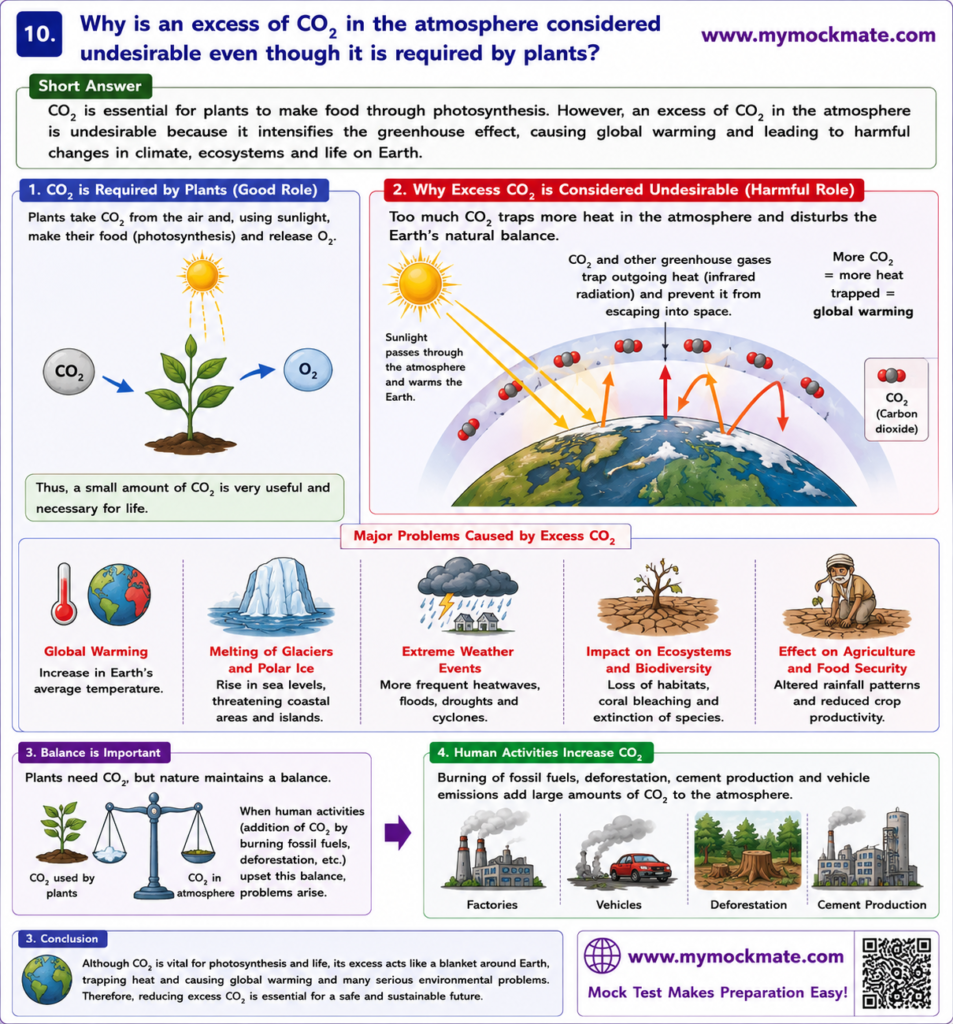
10. Why is an excess of CO2 in the atmosphere considered undesirable even though it is required by plants?
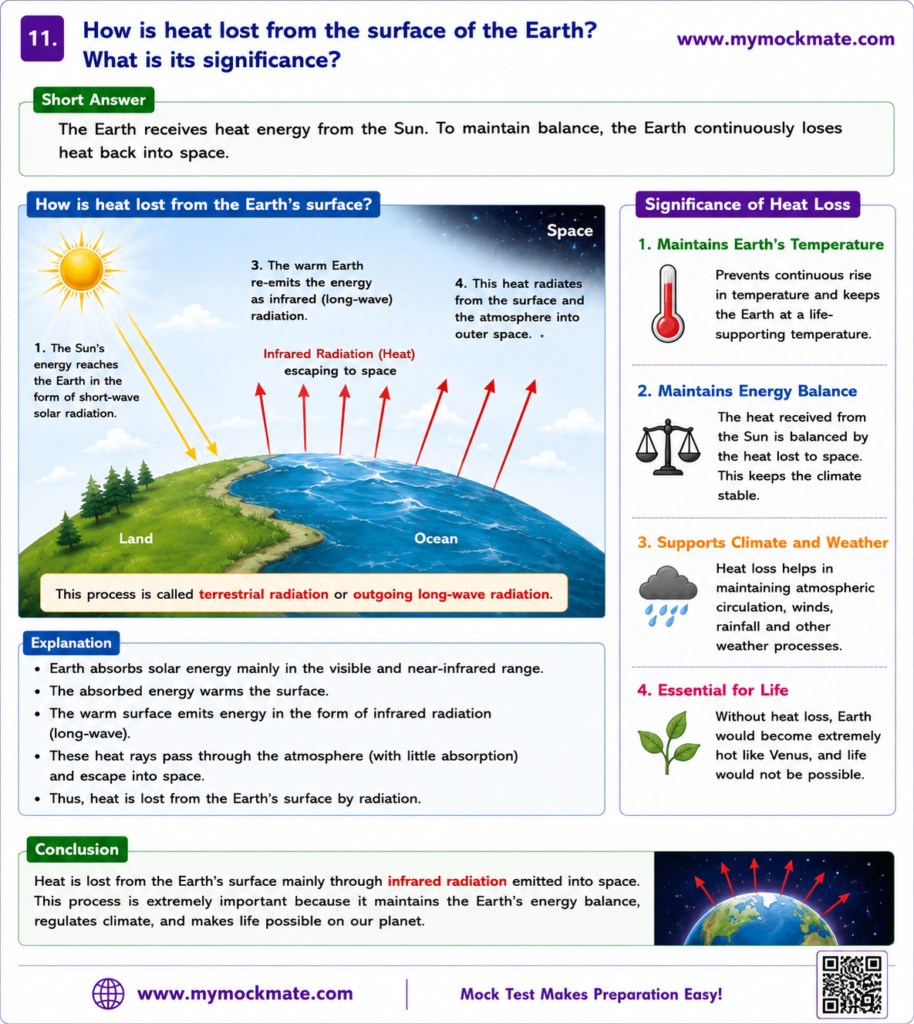
11. How is heat lost from the surface of the Earth? What is its significance?
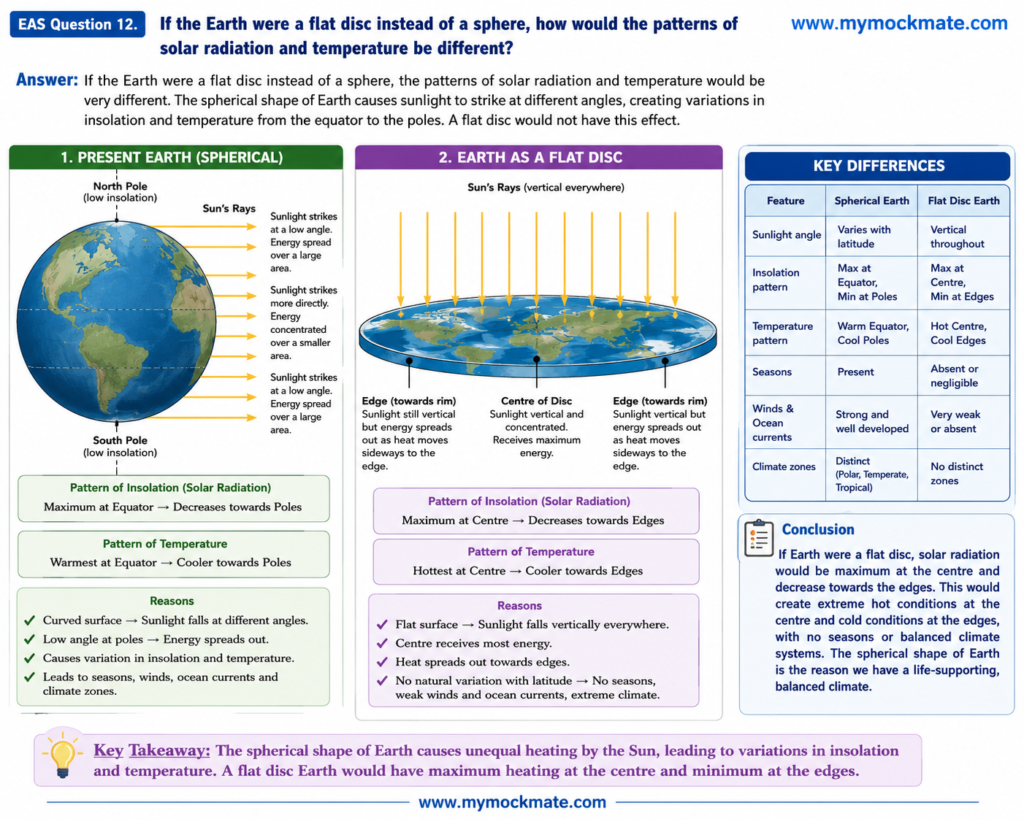
12. If the Earth were a flat disc instead of a sphere, how would the patterns of solar radiation and temperature be different?
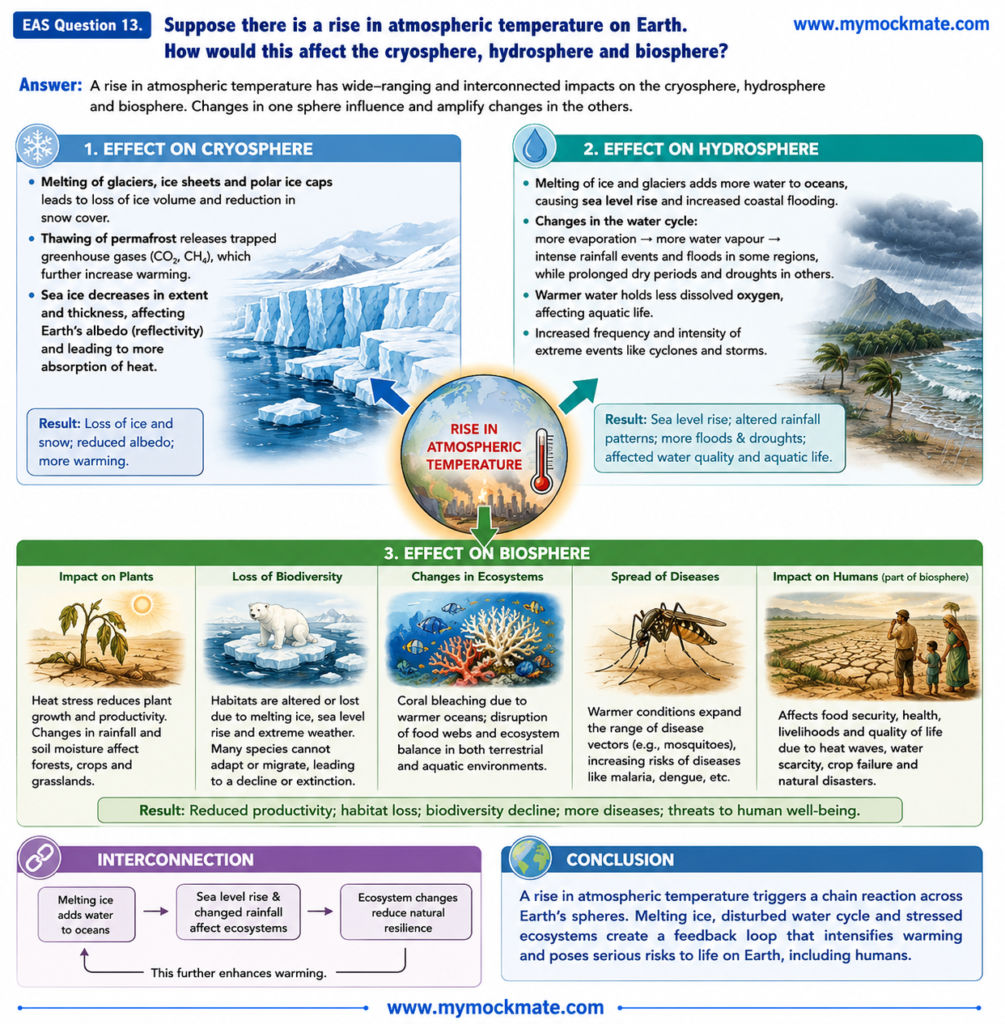
13. Suppose there is a rise in atmospheric temperature on Earth. How would this affect the cryosphere, hydrosphere and biosphere?
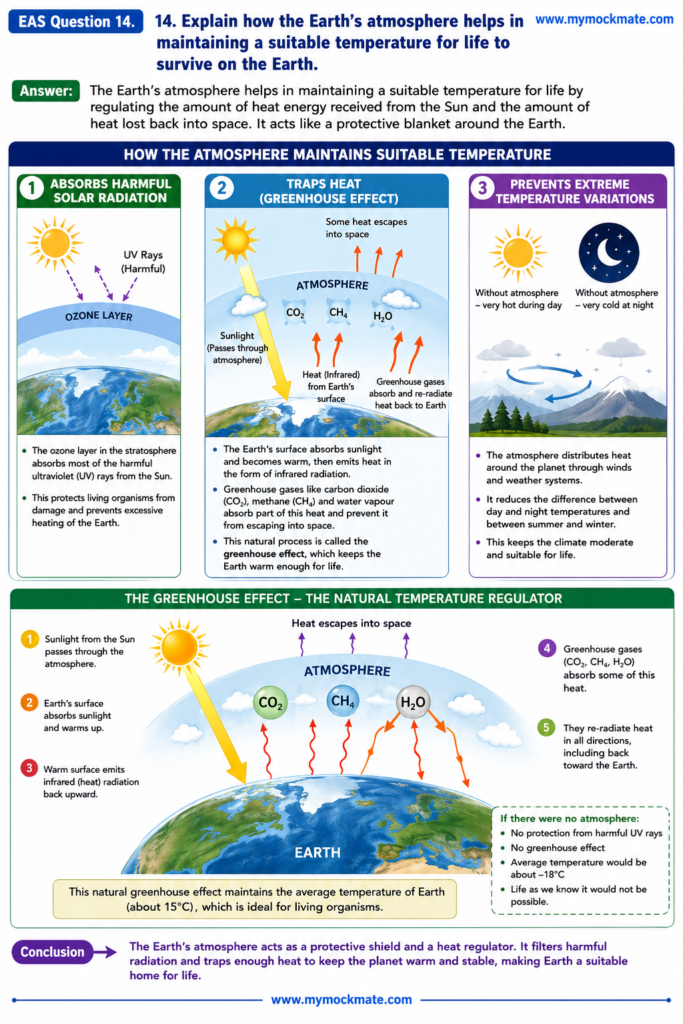
14. Explain how the Earth’s atmosphere helps in maintaining a suitable temperature for life to survive on the Earth.
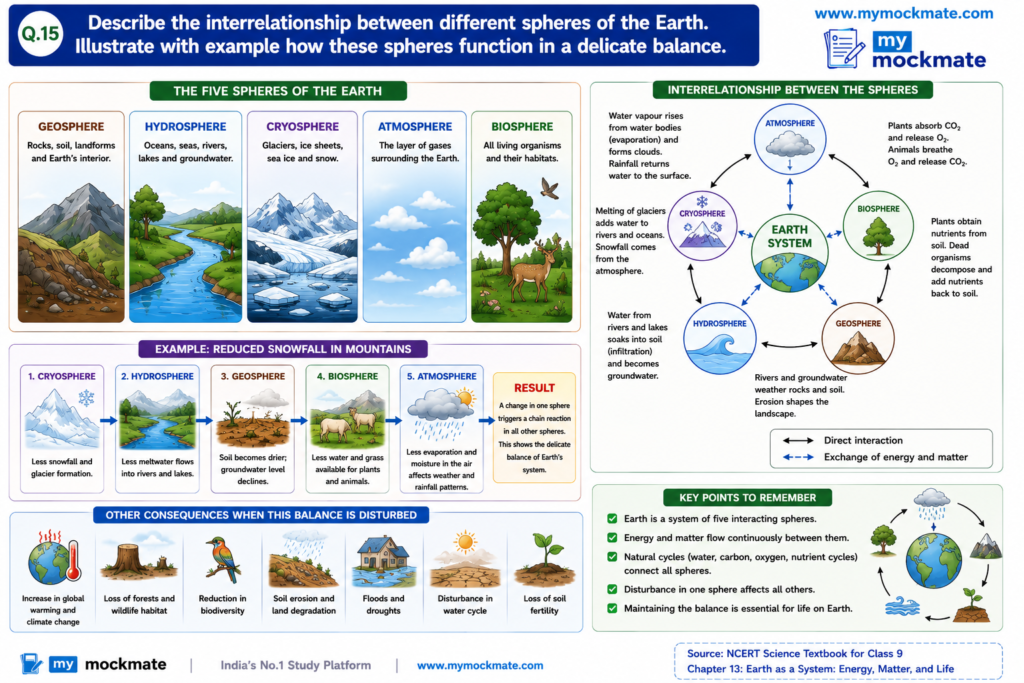
15. Describe the interrelationship between different spheres of the Earth. Illustrate with example how these spheres function in a delicate balance.
Common Mistakes
- Confusing weather with climate
- Forgetting steps of biogeochemical cycles
- Mixing greenhouse effect with ozone depletion
- Ignoring role of atmosphere in heat balance
- Writing incomplete carbon cycle steps
Exam Tips
- Learn all cycles using flow diagrams.
- Revise greenhouse effect carefully.
- Practice definitions of atmosphere layers.
- Draw labelled diagrams neatly.
- Remember causes and effects of climate change.
Practice MCQs
1. Main source of Earth’s energy:
A. Moon
B. Volcanoes
C. Sun
D. Oceans
Answer:
C. Sun
2. Weather phenomena mainly occur in:
A. Stratosphere
B. Mesosphere
C. Troposphere
D. Thermosphere
Answer:
C. Troposphere
3. Which gas mainly causes greenhouse effect?
A. Oxygen
B. Nitrogen
C. Carbon dioxide
D. Helium
Answer:
C. Carbon dioxide
4. Excess nutrients in water bodies cause:
A. Condensation
B. Eutrophication
C. Respiration
D. Weathering
Answer:
B. Eutrophication
5. Plants release oxygen during:
A. Respiration
B. Combustion
C. Photosynthesis
D. Decomposition
Answer:
C. Photosynthesis
FAQ Section
Q1. What are biogeochemical cycles?
They are natural cycles that recycle matter between living and non-living components.
Q2. What is the greenhouse effect?
Trapping of heat by greenhouse gases in atmosphere.
Q3. What is eutrophication?
Excessive algal growth in water bodies due to nutrient pollution.
Q4. Why is the atmosphere important?
It regulates temperature and supports life.
Q5. What causes climate change?
Mainly increased greenhouse gases from human activities.
Prepare smarter with chapter-wise notes, solved questions, MCQs, quizzes, and mock tests only on www.mymockmate.com and achieve excellent marks in Science exams!