NCERT Class 9 English Winds of Change Question Answers and Complete Solutions
Short Introduction
“Winds of Change” is an informative chapter that highlights the rich tradition of handcrafted pankhas (hand fans) in India. The chapter explains their historical importance, cultural diversity, artistic value, and the challenges faced by artisans in modern times. Through examples from different states, students learn how traditional crafts reflect regional identity and heritage.
Source: Chapter “Winds of Change” from the uploaded textbook.
Quick Information Box
| Particular | Details |
|---|---|
| Chapter Name | Winds of Change |
| Book | Kaveri |
| Unit | 3 |
| Genre | Informative Article |
| Main Theme | Traditional Indian Hand Fans (Pankhas) |
| Key Values | Cultural Heritage, Craftsmanship, Preservation of Art |
| Important States Mentioned | Rajasthan, Gujarat, West Bengal, Uttar Pradesh, Bihar, Odisha |
Concepts Used (Topics Covered)
• Traditional Indian Crafts
• Cultural Heritage
• Handicrafts and Artisans
• Regional Diversity
• Vocabulary Development
• Reading Comprehension
• Critical Thinking
• Present Perfect Tense
Important Vocabulary
| Word | Meaning |
|---|---|
| Indigenous | Native to a particular region |
| Innovative | New and creative |
| Industrious | Hardworking |
| Intricate | Detailed and complex |
| Invoked | Brought out |
| Initiative | Action taken to improve a situation |
| Antiquity | Ancient times |
| Advent | Arrival |
| Perpetually | Continuously |
| Encrusted | Decorated or covered |
Reflect and Respond Solutions
I. Does anyone in your family use a hand fan? What do you call it in your language? What is it made of?

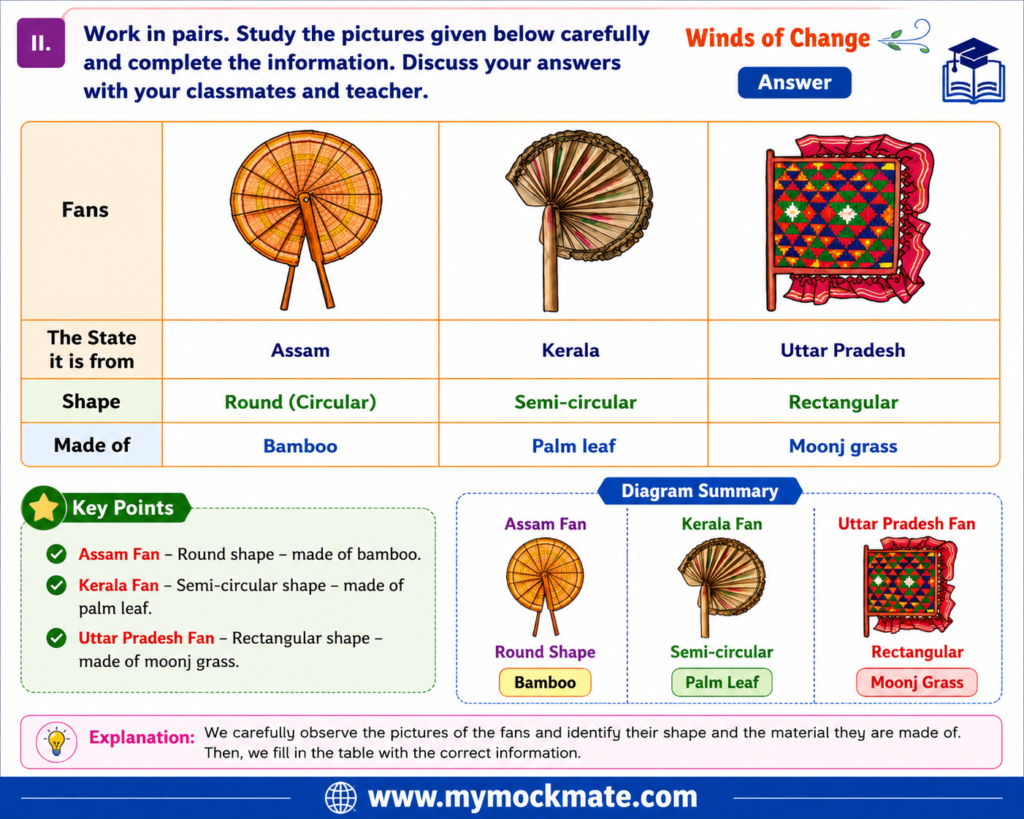
II. Work in pairs. Study the pictures given below carefully and complete the information. Discuss your answers with your classmates and teacher.
III. Work in pairs. Match the underlined words in Column 1 with their meanings in Column 2 given on the next page. Share your answers with
your classmates and teacher.
I visited the crafts fair yesterday. It was a wonderful experience. Each indigenous artefact was an innovative creation of industrious crafts persons
with its intricate design. It invoked a sense of respect for the initiatives taken by the government to showcase them

Reading for Meaning – Summary
The chapter explains that the word “Pankha” comes from the word “Pankh”, meaning a bird’s feather. Ancient Indian hand fans were used in temples and royal courts. Different regions developed their own unique styles using local materials such as bamboo, cane, palm leaves, silk, brass, leather, silver, beads, and decorative stones.
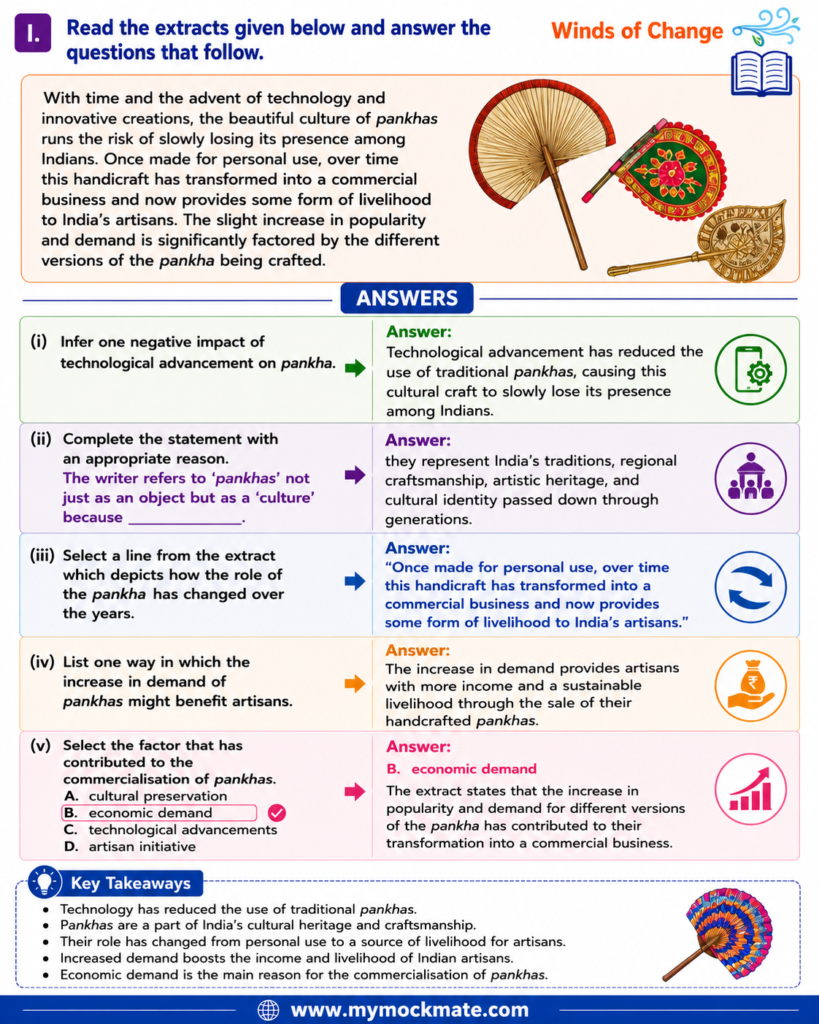
Over time, pankhas became cultural symbols and important handicraft items. Today they provide livelihood to many artisans, although technological advancements have reduced their practical use.
Check Your Understanding Solutions
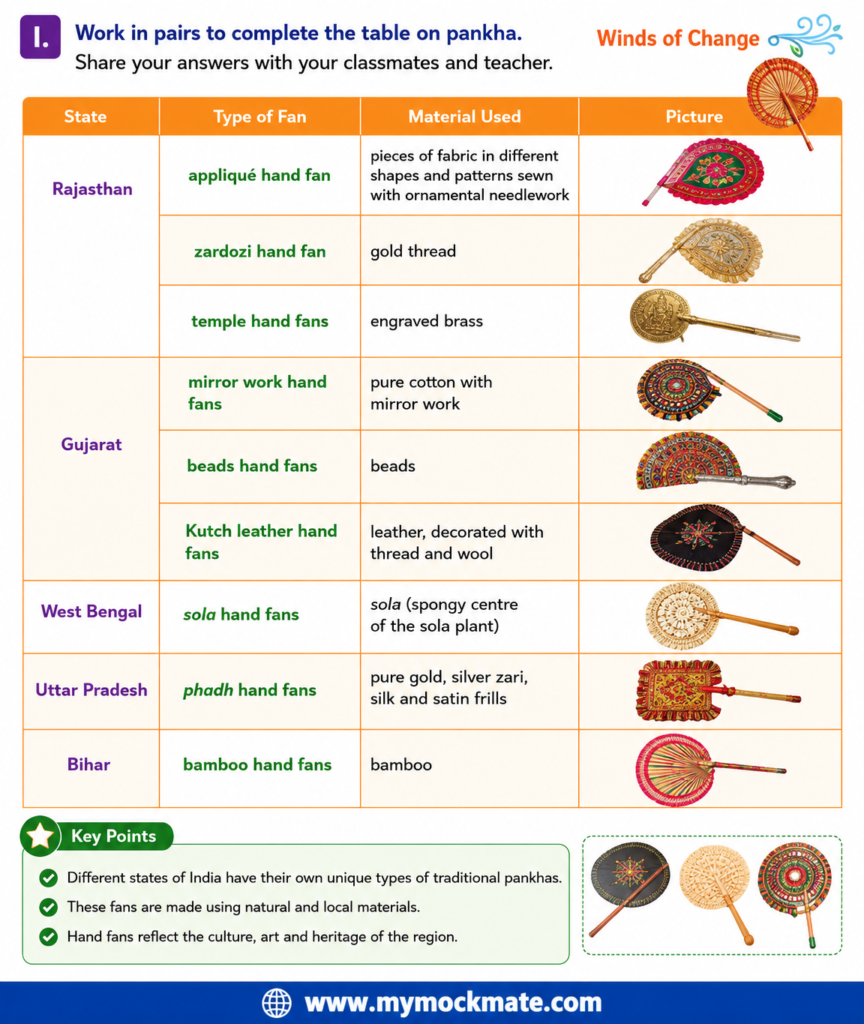
I. Work in pairs to complete the table on pankha. Share your answers with your classmates and teacher.
Chapter Summary
The chapter “Winds of Change” celebrates India’s traditional hand fans called pankhas. It describes their historical significance, regional variations, materials used, and artistic beauty. The chapter also discusses how modern technology threatens traditional crafts and emphasizes the need to preserve this heritage through awareness programs, exhibitions, and workshops.
Winds of Change – Detailed Solutions
Critical Reflection Solutions
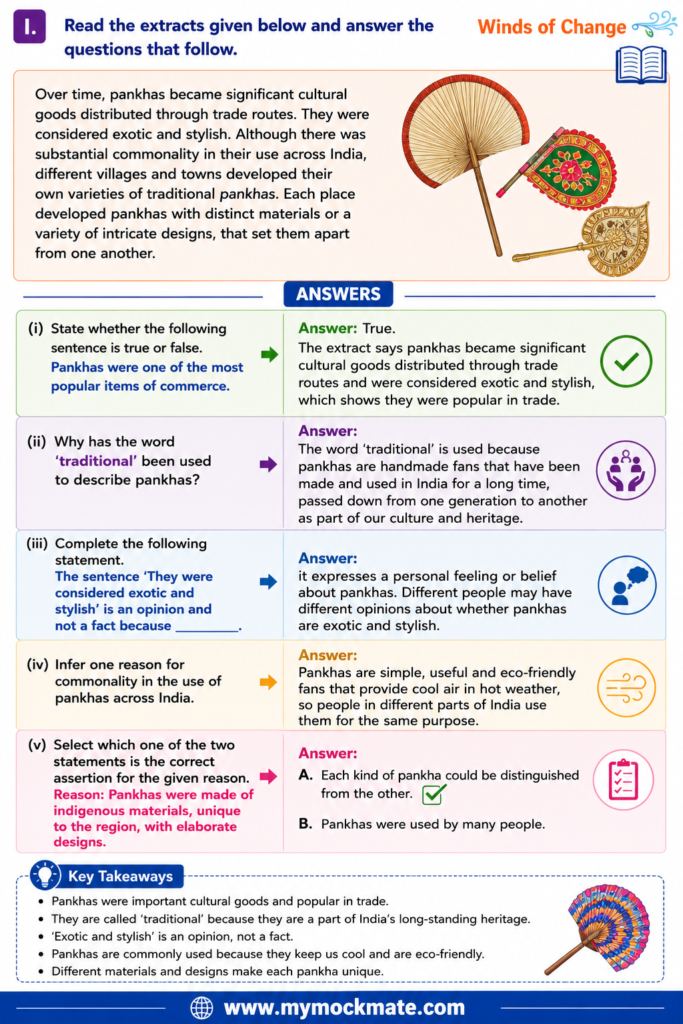
I Read the extracts given below and answer the questions that follow.
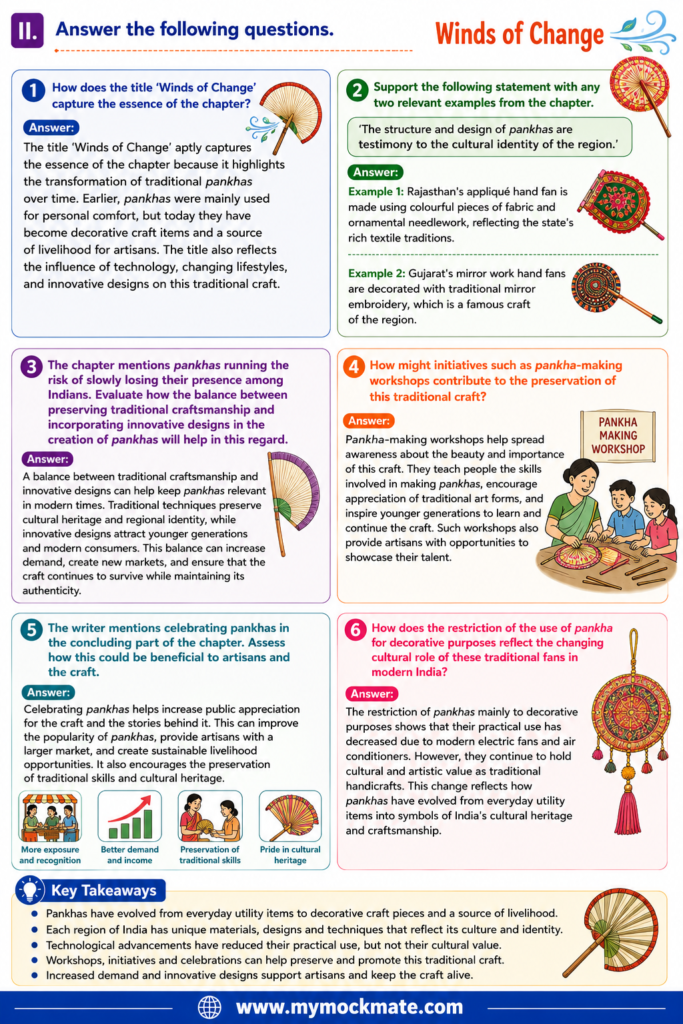
II Answer the following questions.
Vocabulary and Structures in Context
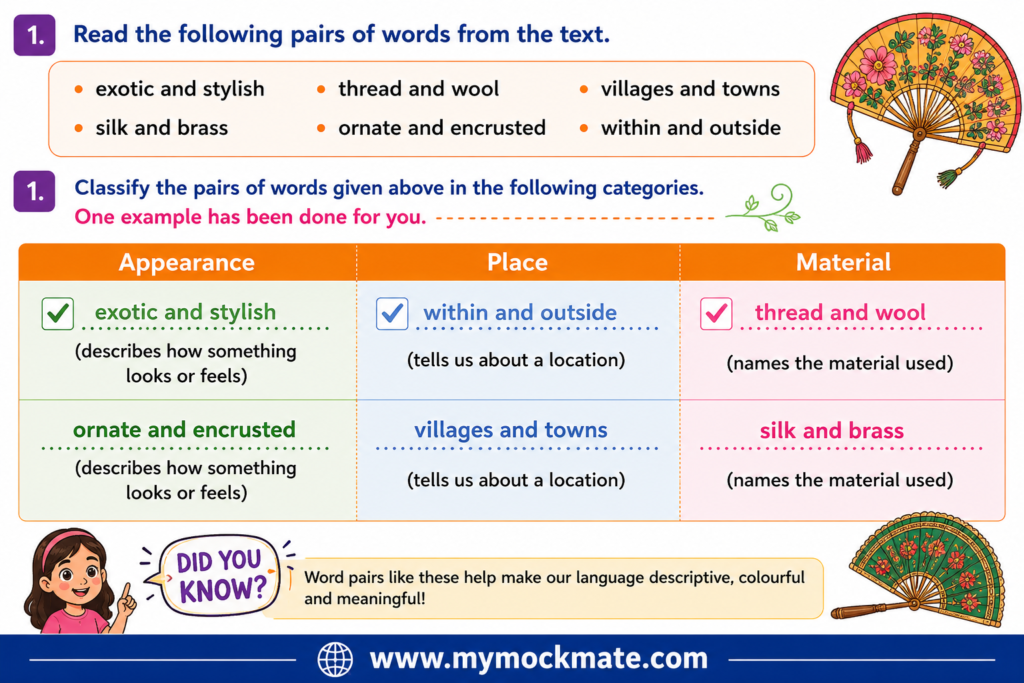
I. Read the following pairs of words from the text. exotic and stylish villages and towns thread and wool silk and brass ornate and encrusted within and outside
- Classify the pairs of words given above in the following categories. One example has been done for you.
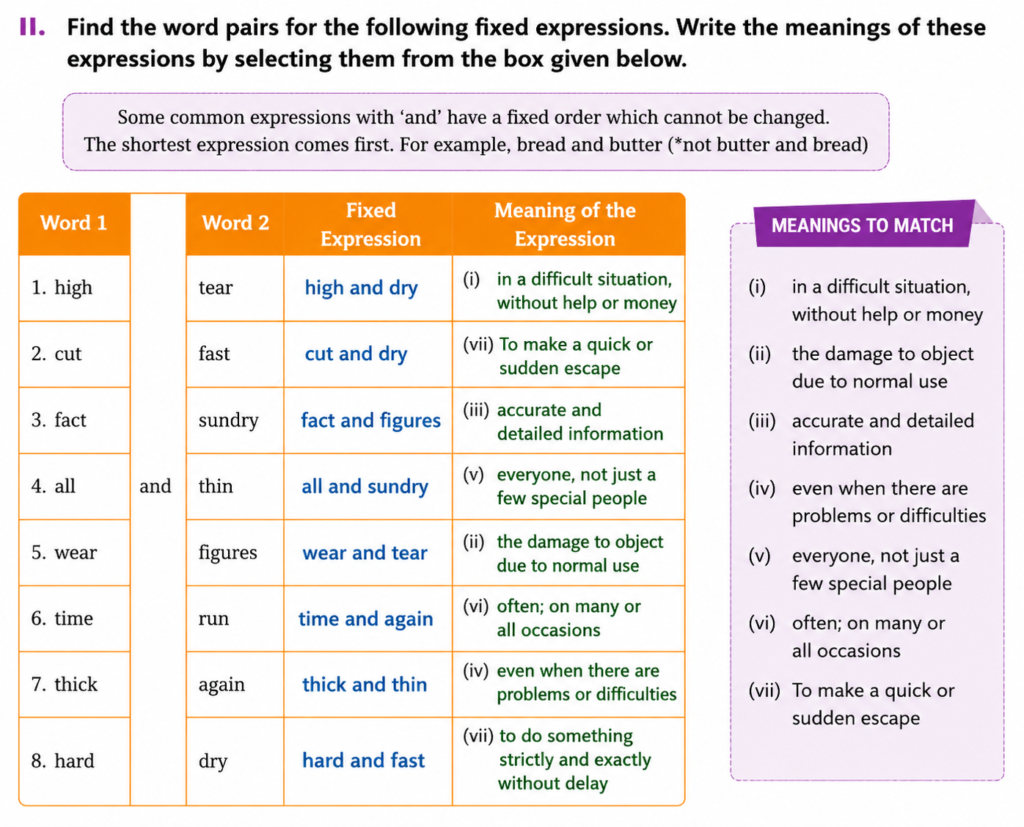
II. Find the word pairs for the following fixed expressions. Write the meanings of these expressions by selecting them from the box given below.
- Bamboo and Cane
- Beads and Stones
- Cultures and Traditions
- Shapes and Sizes
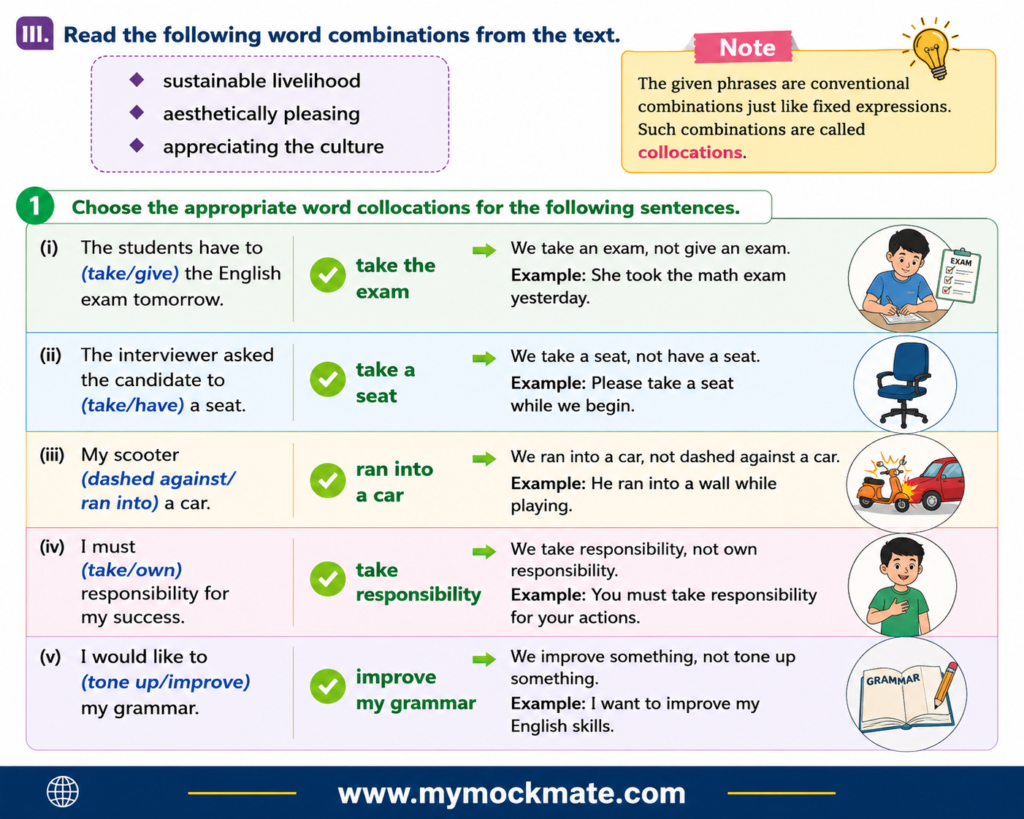
III. Read the following word combinations from the text.
* sustainable livelihood
* aesthetically pleasing
* appreciating the culture
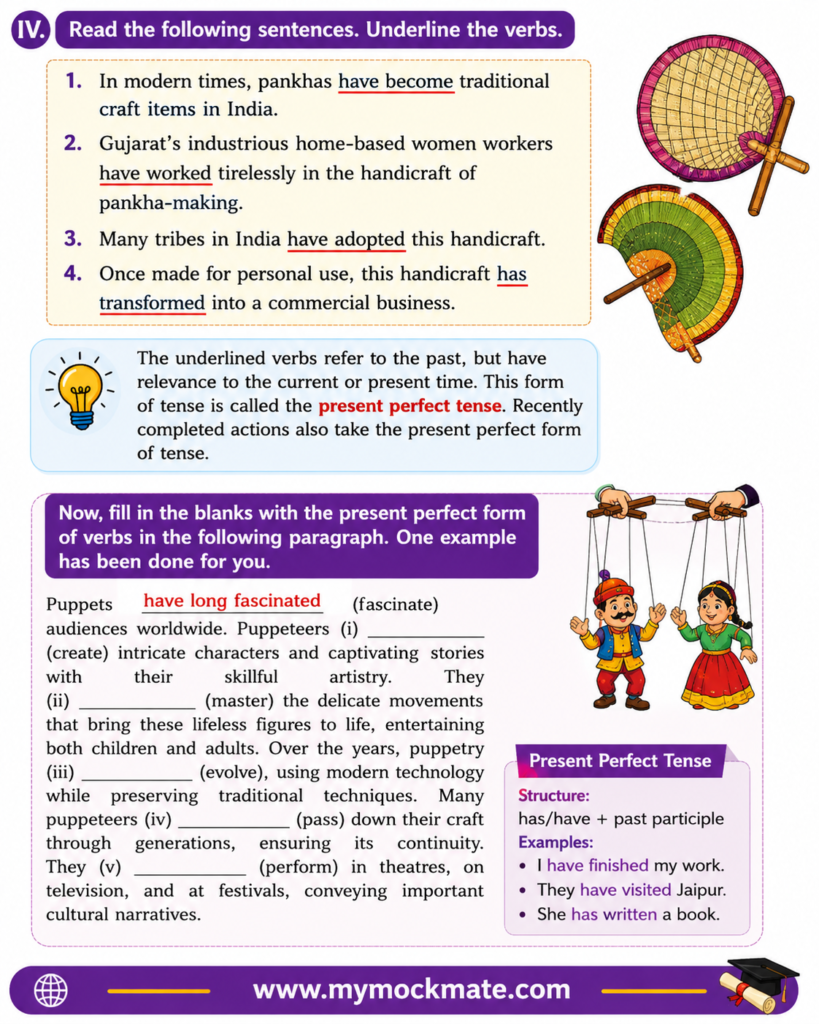
IV. Read the following sentences. Underline the verbs.
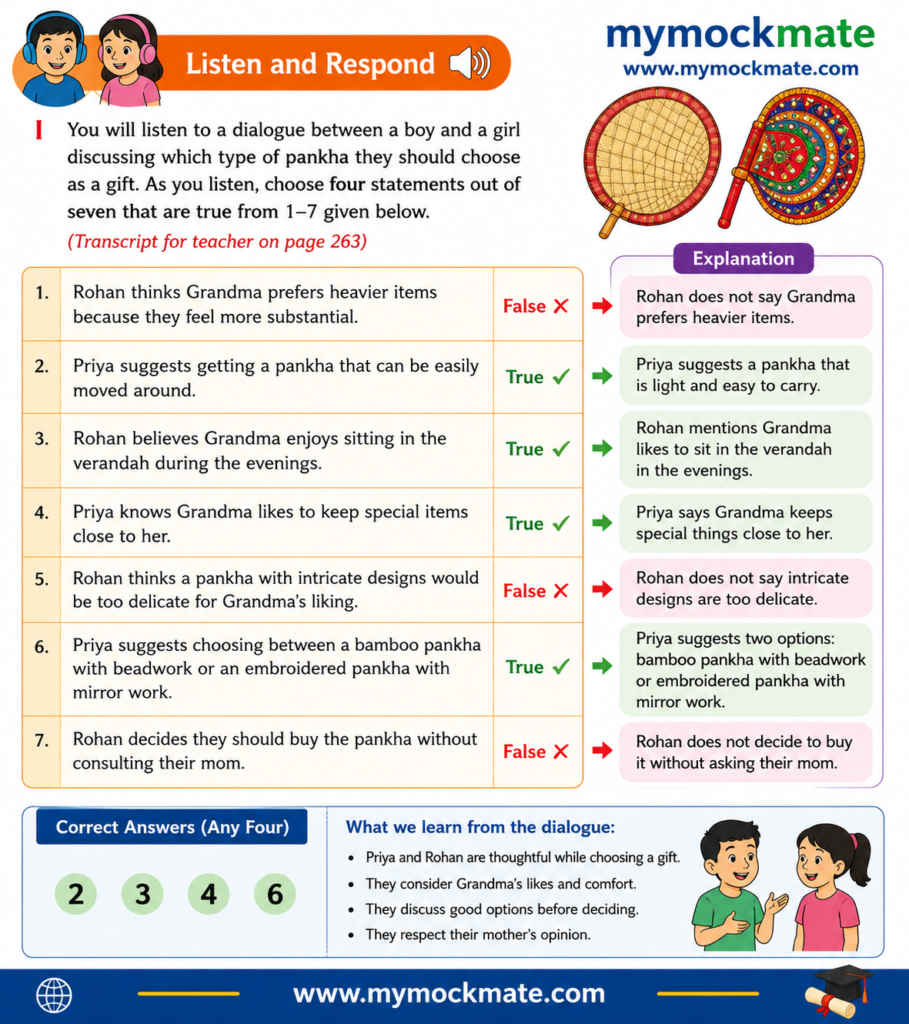
Listen and Respond
I You will listen to a dialogue between a boy and a girl discussing which type of pankha they should choose as a gift. As you listen, choose four statements out of seven that are true from 1–7 given below. (Transcript for teacher on page 263)
Speaking Activity
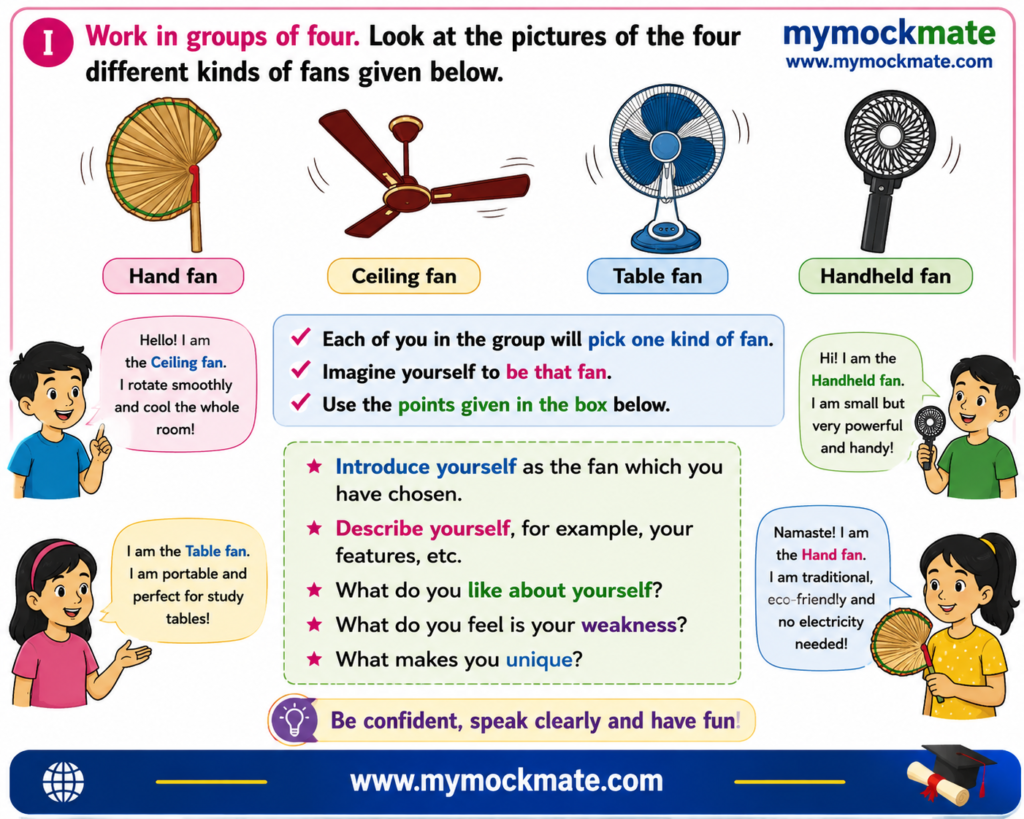
Sample Answer
Hello everyone!
I am a traditional hand fan. I am made from bamboo and palm leaves. I am lightweight and easy to carry. For centuries, people have used me during hot summers.
My greatest strength is that I do not require electricity. I am eco-friendly and can be used anywhere. I also represent India’s rich cultural heritage.
My weakness is that I cannot provide as much airflow as electric fans.
What makes me unique is my beautiful handcrafted design and cultural significance.
Thank you!
Self-Introduction as a Ceiling Fan
Hello friends!
I am a ceiling fan. I am attached to the ceiling and provide cool air throughout the room.
My strength is that I can cool a large area continuously.
My weakness is that I need electricity to function.
My uniqueness lies in my efficiency and widespread use in homes, schools, and offices.
Self-Introduction as a Table Fan
Hello everyone!
I am a table fan. I am portable and can be moved from one place to another.
I provide direct airflow and consume less electricity.
My weakness is that I can only cool a limited area.
My flexibility and convenience make me special.
Self-Introduction as a Handheld Fan
Greetings!
I am a handheld fan. I am compact, lightweight, and easy to carry.
My biggest advantage is portability.
My weakness is my small size.
I am perfect for personal cooling while travelling.
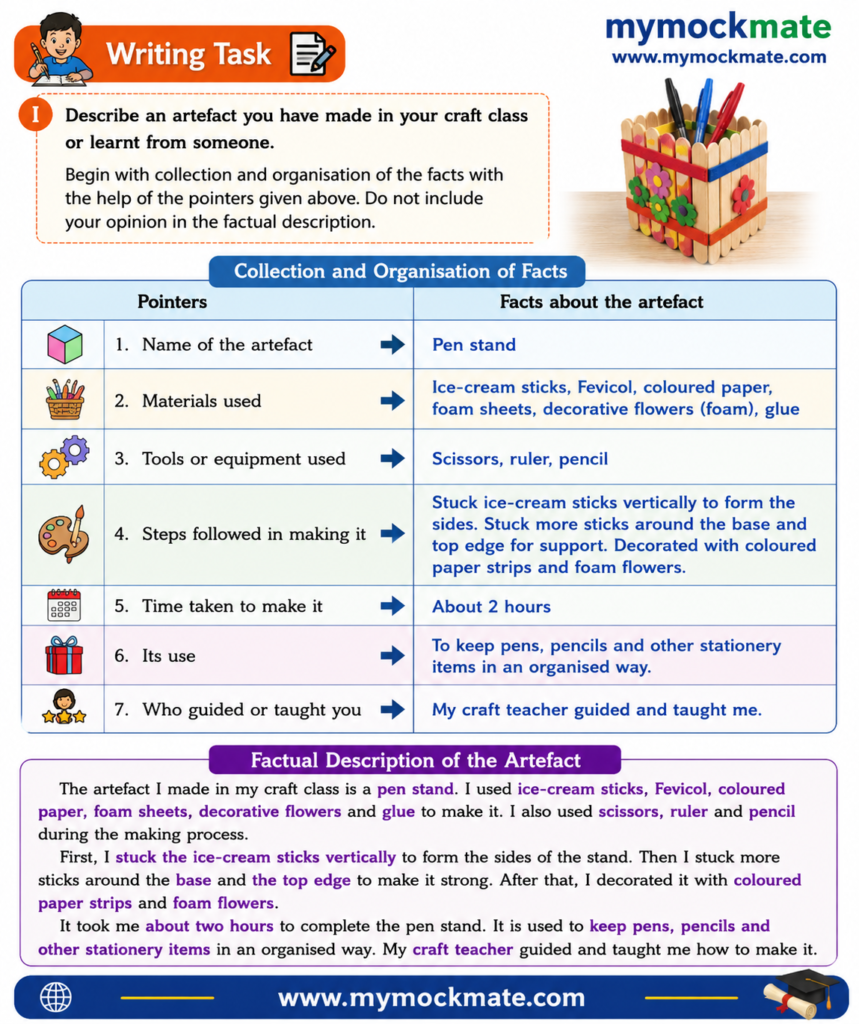
Writing Task
I. Describe an artefact you have made in your craft class or learnt from someone. Begin with collection and organisation of the facts with the help of the pointers given above. Do not include your opinion in the factual description.
Learning Beyond the Text
I. Identify any art or craft item from your region and make a presentation describing its features, materials,
and process involved in making it, its usage, etc. You may refer to the points given on the next page.
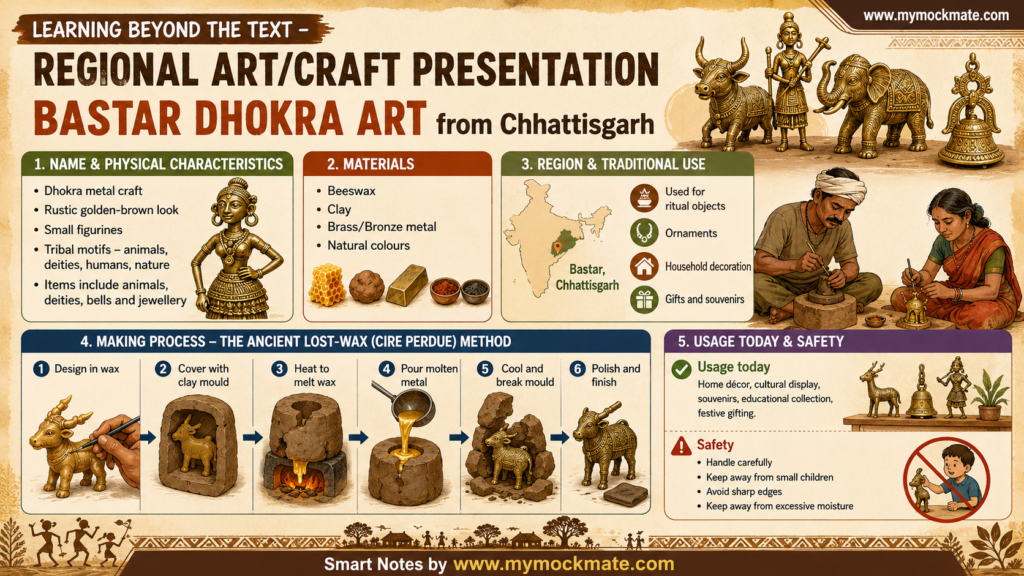
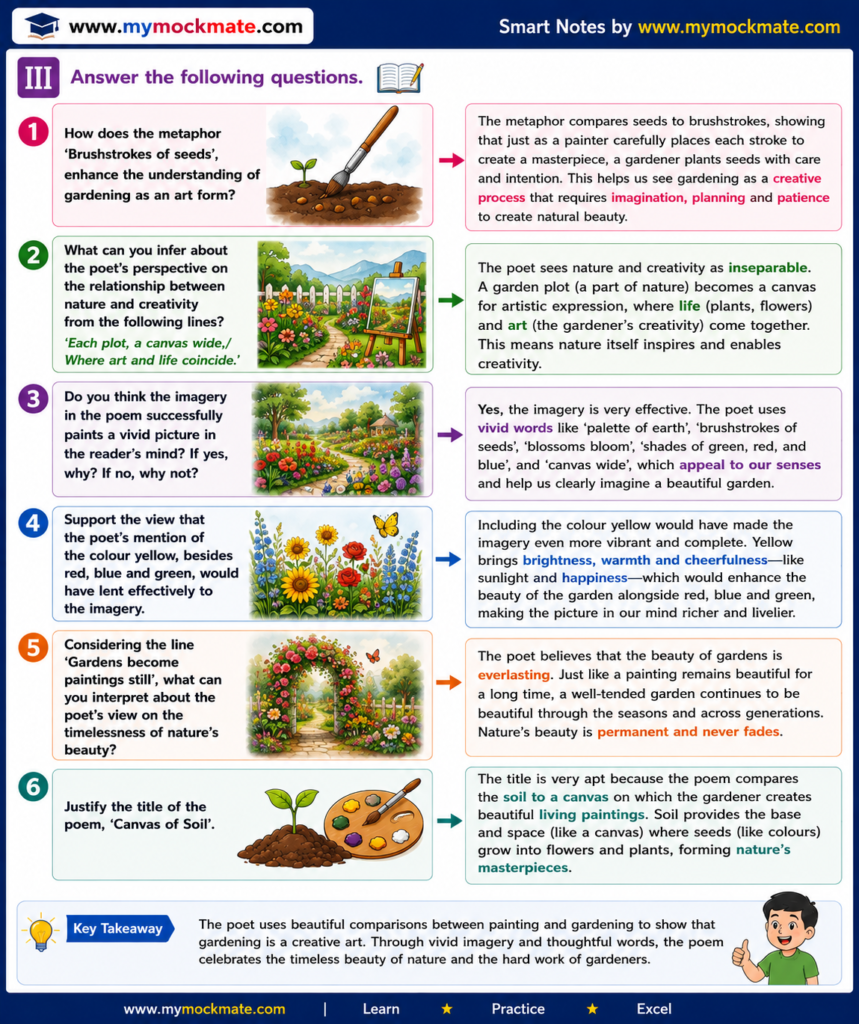
Canvas of Soil
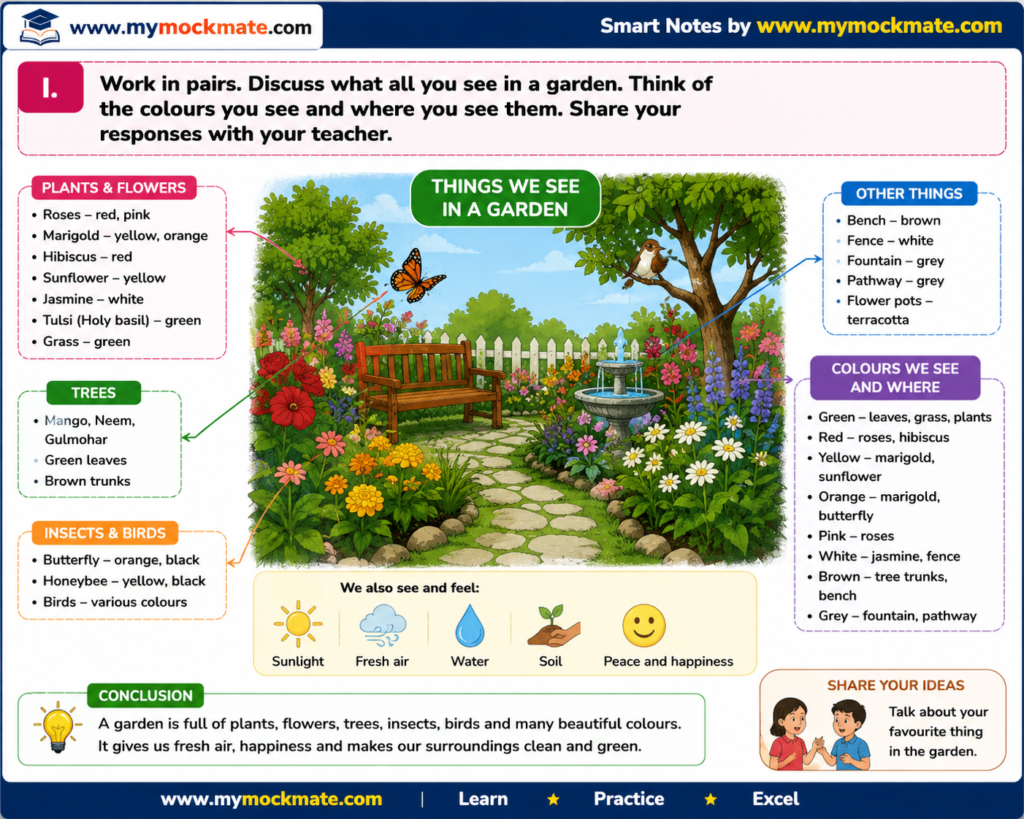
Reflect and Respond
I. Work in pairs. Discuss what all you see in a garden. Think of the colours you see and where you see them. Share your responses with your teacher.
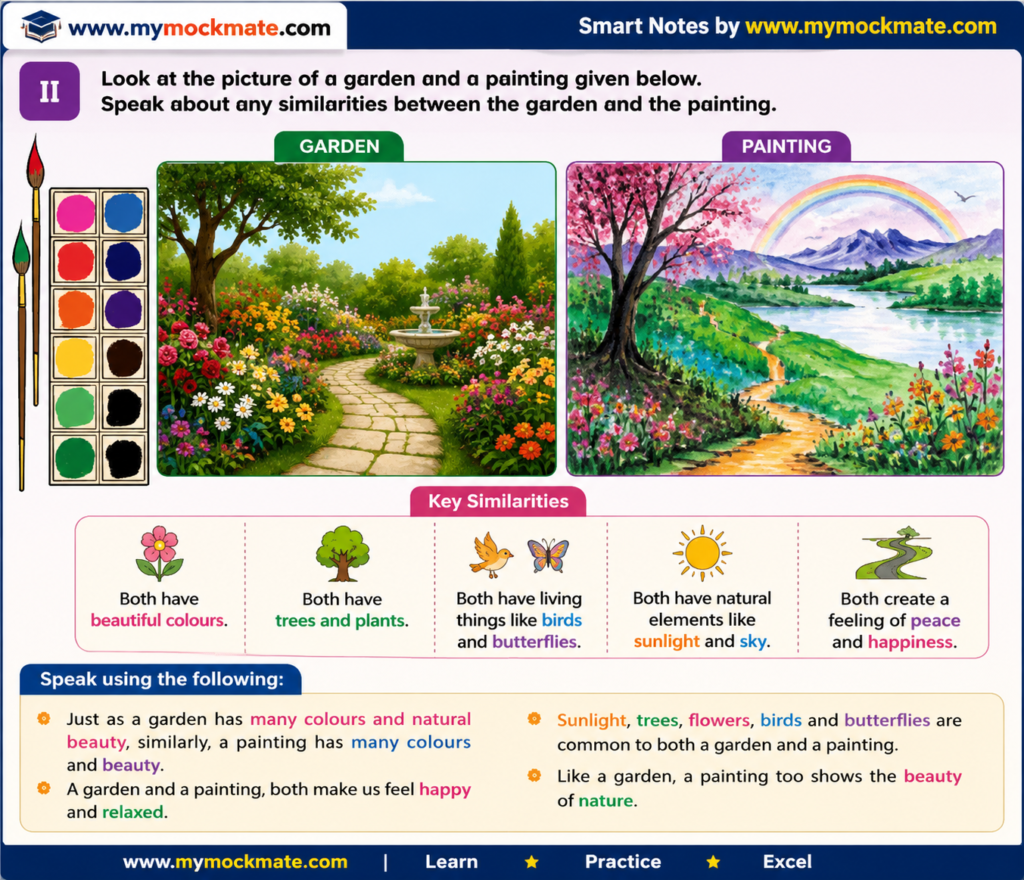
II. Look at the picture of a garden and a painting given below. Speak about any similarities between the garden and the painting.
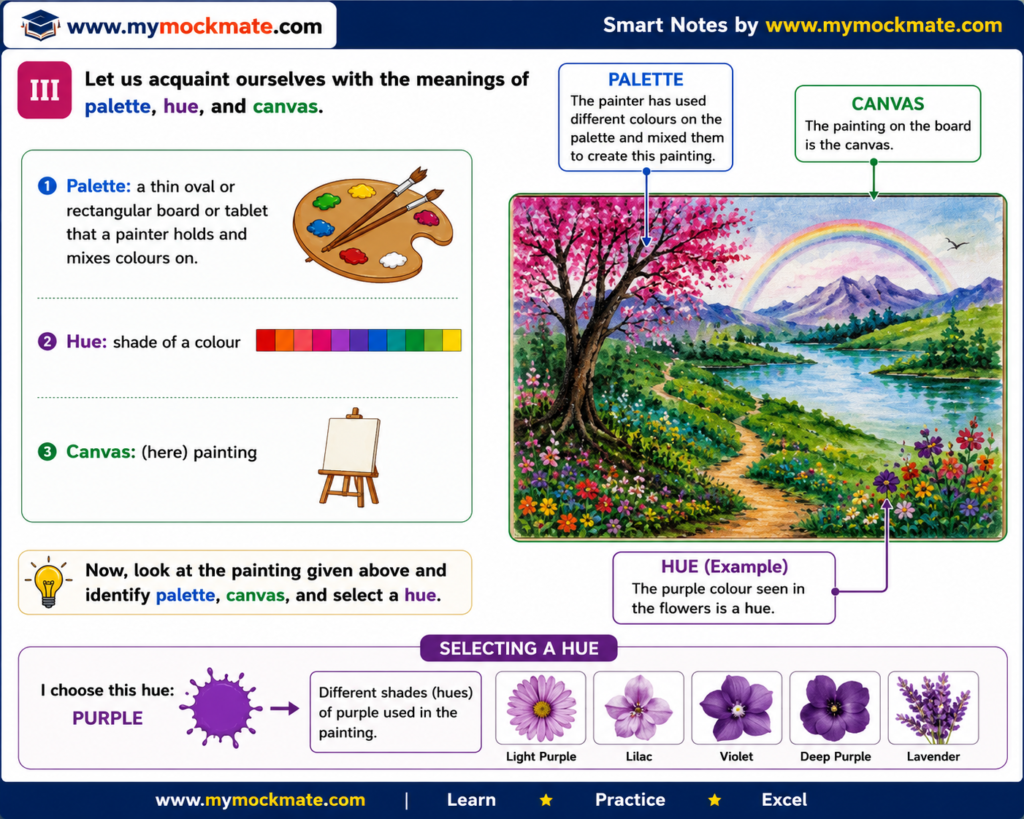
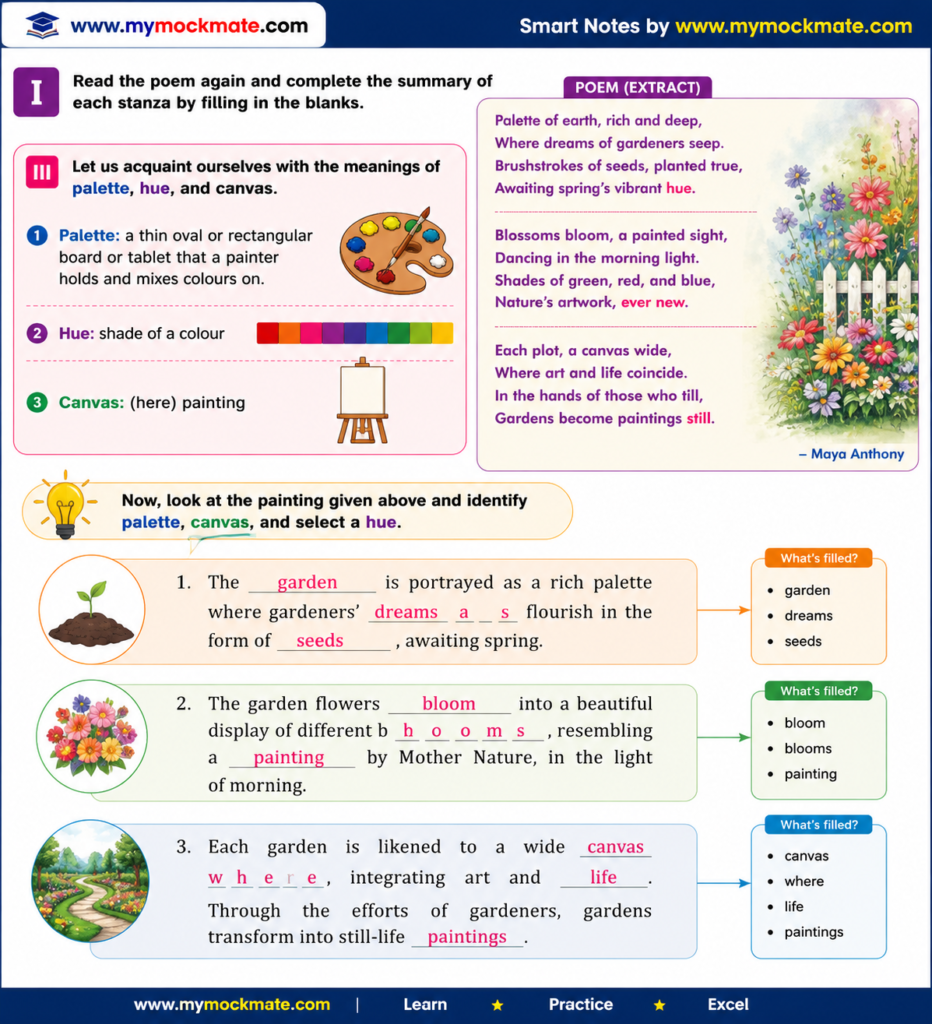
III. Let us acquaint ourselves with the meanings of palette, hue, and canvas.
- Palette: a thin oval or rectangular board or tablet
that a painter holds and mixes colours on. - Hue: shade of a colour
- Canvas: (here) painting
Now, look at the painting given above and identify
palette, canvas, and select a hue.
Check Your Understanding
I. Read the poem again and complete the summary of each stanza by filling in the blanks.
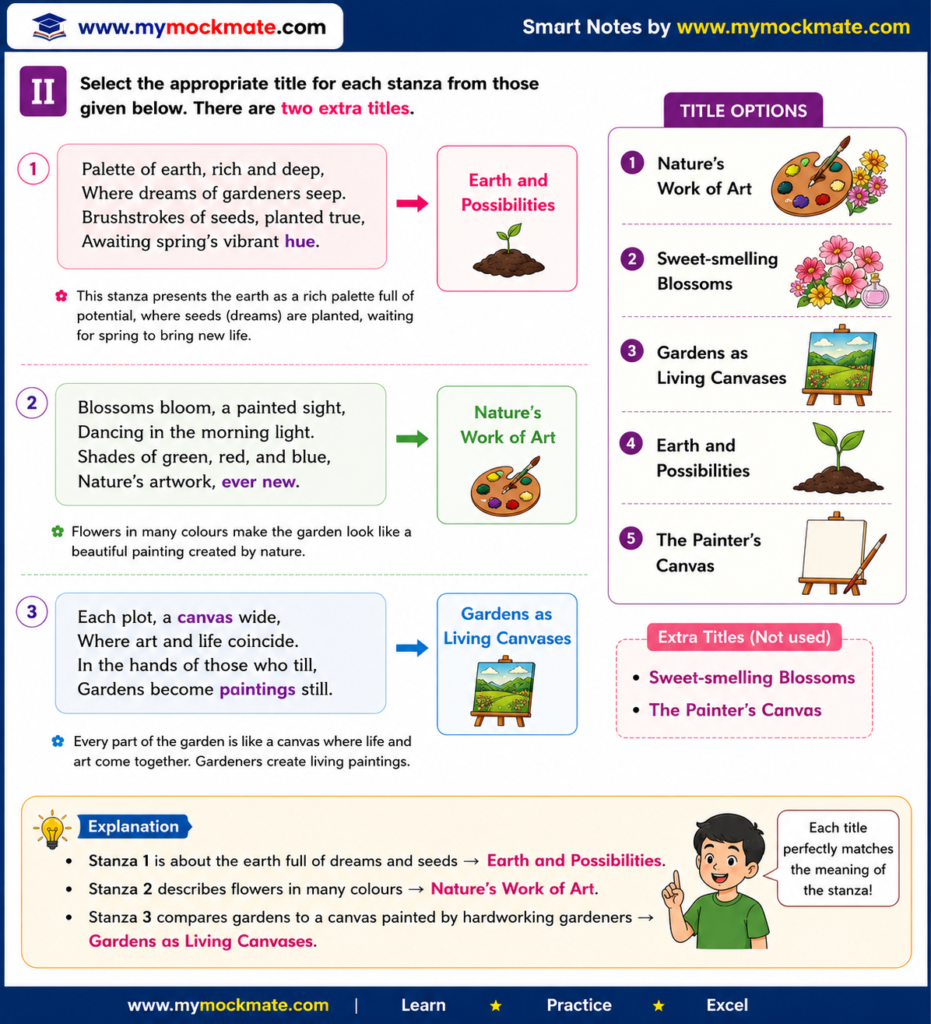
II. Select the appropriate title for each stanza from those given below. There are two extra titles.
- Nature’s Work of Art
- Sweet-smelling Blossoms
- Gardens as Living Canvases
- Earth and Possibilities
- The Painter’s Canvas
III. Match the poetic devices in Column 1 to the examples in Column 2. Discuss your responses in pairs. Then share
the responses with your classmates and teacher.

Critical Reflection
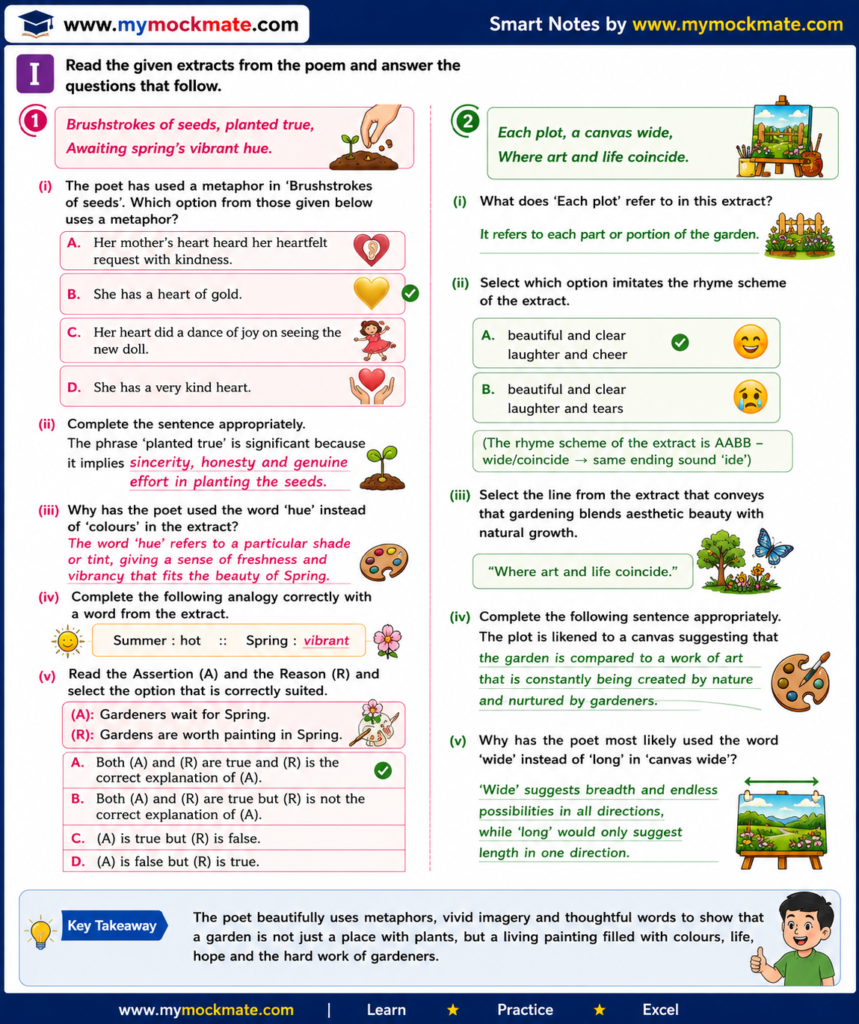
I. Read the given extracts from the poem and answer the questions that follow.
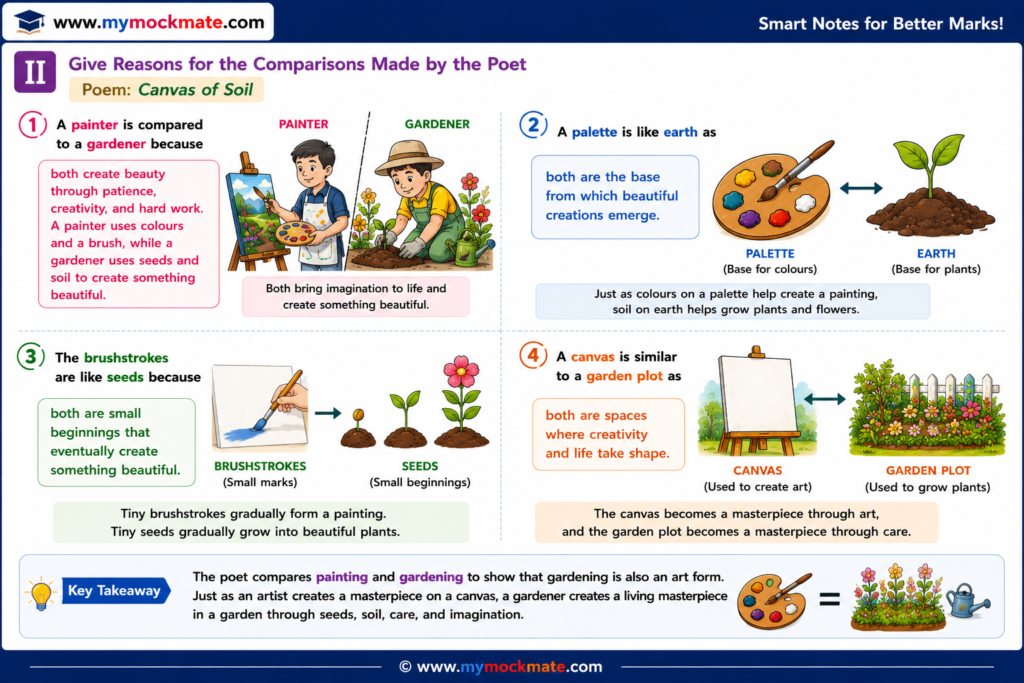
II. Give reasons for the comparisons made by the poet in the poem.
III. Answer the following questions.
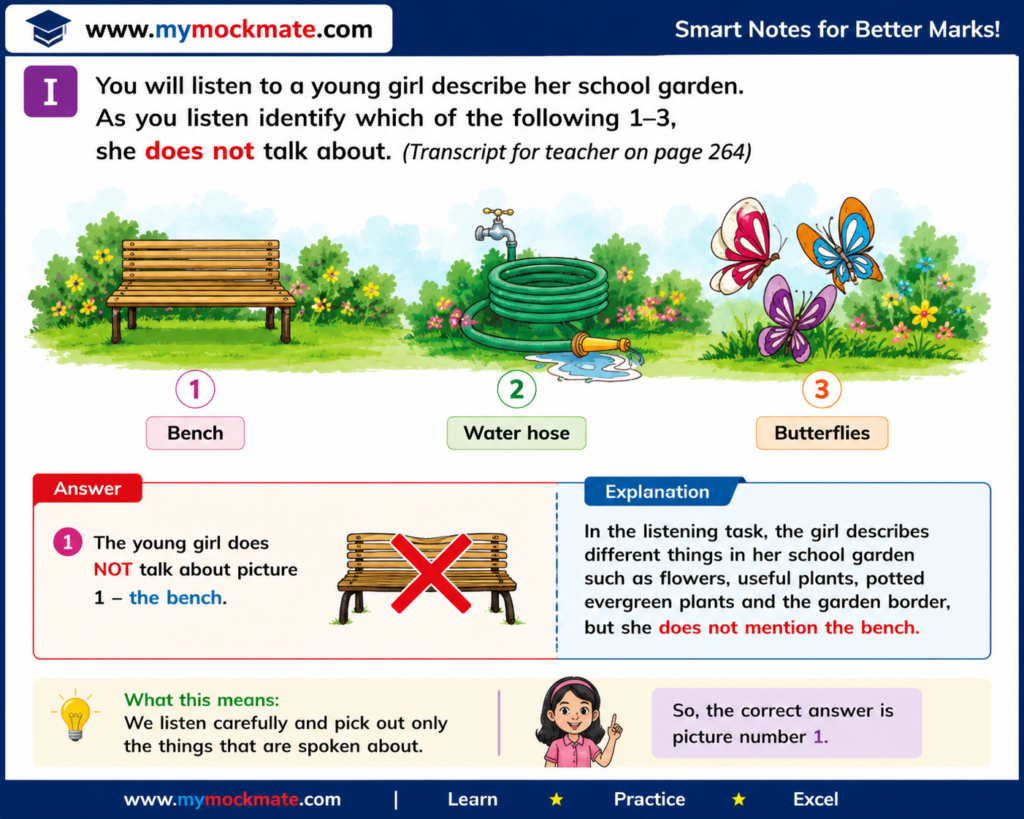
Listen and Respond
I. You will listen to a young girl describe her school garden. As you listen identify which of the following 1–3, she does not talk about.
II. You will once again listen to the young girl. As you listen, circle the correct answer from the options given below.

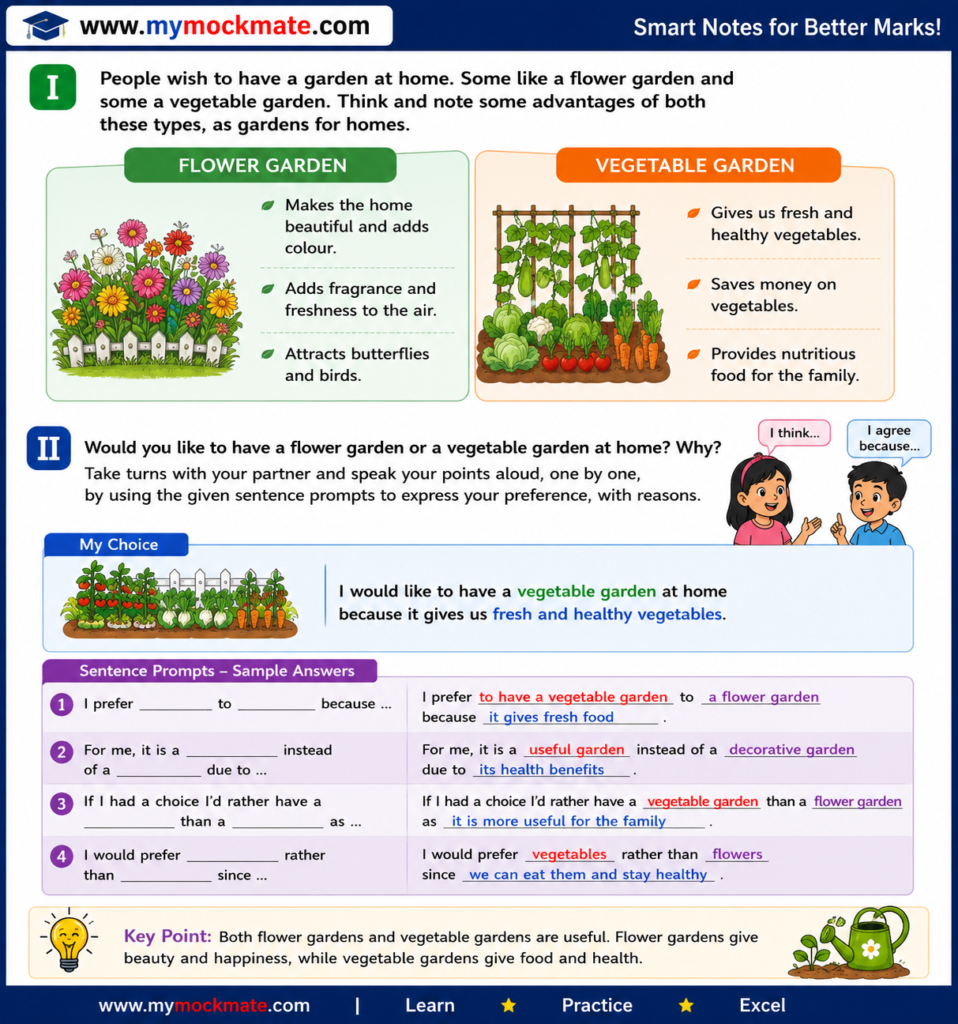
Speaking Activity
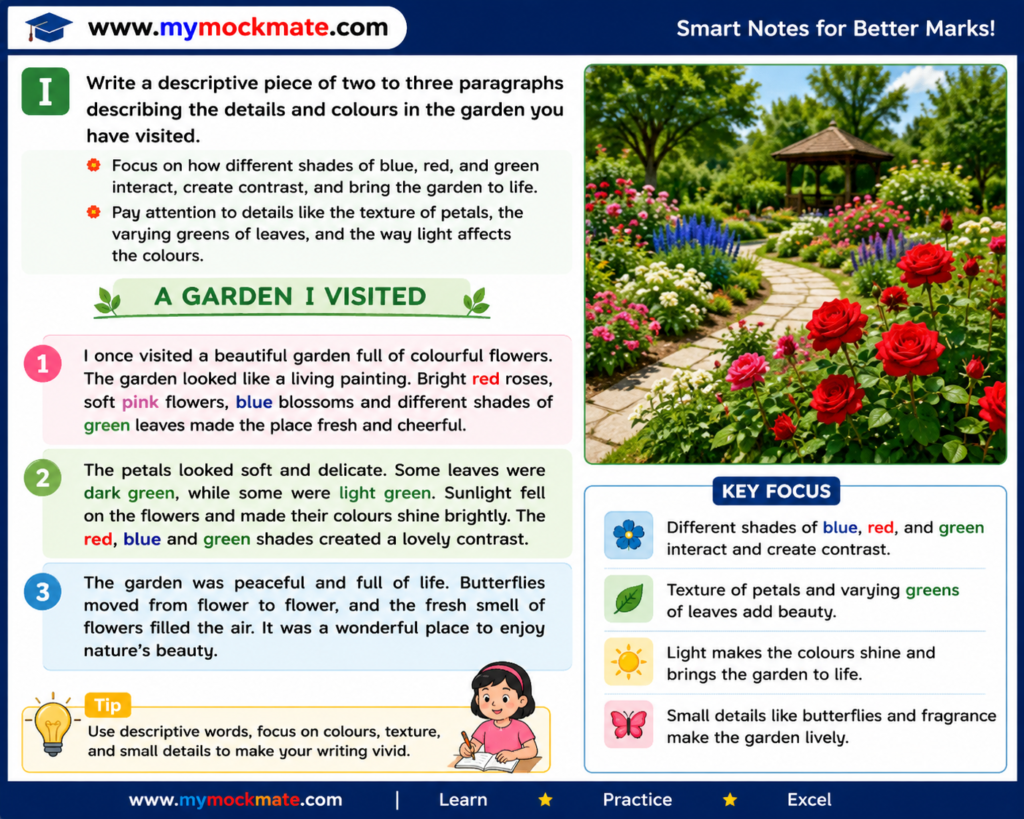
I. Write a descriptive piece of two to three paragraphs describing the details and colours in the garden you have visited.
Writing Task
Advanced Practice MCQs
1. What does the word “Pankh” mean?
A. Leaf
B. Feather
C. Bamboo
D. Silk
✅ Answer: B
2. Which place contains evidence of ancient pankhas?
A. Taj Mahal
B. Konark Temple
C. Ajanta Caves
D. Red Fort
✅ Answer: C
3. Which state is known for Zardozi hand fans?
A. Gujarat
B. Rajasthan
C. Bihar
D. Odisha
✅ Answer: B
4. Mirror-work fans belong to:
A. West Bengal
B. Rajasthan
C. Gujarat
D. Kerala
✅ Answer: C
5. Sola hand fans are associated with:
A. Bihar
B. Odisha
C. Punjab
D. West Bengal
✅ Answer: D
6. Which material is commonly used in Bihar hand fans?
A. Leather
B. Cotton
C. Bamboo
D. Silver
✅ Answer: C
7. Pankha-making workshops help in:
A. Reducing awareness
B. Preserving the craft
C. Replacing artisans
D. Stopping production
✅ Answer: B
8. What is the meaning of “Industrious”?
A. Lazy
B. Hardworking
C. Careless
D. Intelligent
✅ Answer: B
9. What is the meaning of “Advent”?
A. Departure
B. Arrival
C. Development
D. Tradition
✅ Answer: B
10. The chapter mainly promotes:
A. Industrialisation
B. Modern technology
C. Cultural preservation
D. Tourism
✅ Answer: C
11. The word “Pankha” is derived from:
A. Patta
B. Pankh
C. Pakshi
D. Patra
Answer: B. Pankh
12. Which material is commonly used in West Bengal’s hand fans?
A. Brass
B. Leather
C. Sola
D. Silver
Answer: C. Sola
13. Which state is famous for mirror-work hand fans?
A. Bihar
B. Gujarat
C. Odisha
D. Kerala
Answer: B. Gujarat
14. Zardozi hand fans are decorated with:
A. Bamboo
B. Gold thread
C. Moonj grass
D. Palm leaves
Answer: B. Gold thread
15. What is the main purpose of pankha-making workshops?
A. Increase machine production
B. Spread awareness about the craft
C. Replace artisans
D. Export machinery
Answer: B. Spread awareness about the craft
Final Revision Notes
Remember These Facts
✔ Pankha comes from the word “Pankh”.
✔ Ancient evidence is found in Ajanta paintings.
✔ Rajasthan – Appliqué, Zardozi, Temple Fans.
✔ Gujarat – Mirror Work, Bead Work, Leather Fans.
✔ West Bengal – Sola Fans.
✔ Uttar Pradesh – Phadh Fans.
✔ Bihar – Bamboo Fans.
✔ Pankhas represent regional culture.
✔ Technology has reduced their practical use.
✔ Awareness programs help preserve this traditional craft.
Frequently Asked Questions (FAQ)
Q1. Why are pankhas important in Indian culture?
They represent regional traditions, artistic skills, and cultural heritage.
Q2. Why is the chapter called “Winds of Change”?
It shows how pankhas have evolved from utility items to cultural artefacts and commercial products.
Q3. What threatens the survival of traditional pankhas?
Modern electrical appliances and changing lifestyles.
Q4. How can traditional crafts be preserved?
Through exhibitions, workshops, awareness campaigns, and public support.
Q5. How do pankhas help artisans?
They provide employment opportunities and a sustainable source of income.
Looking for more NCERT Solutions, Chapter-wise Notes, Detailed Question Answers, MCQs, Mock Tests, Sample Papers, and Exam Preparation Resources?
Visit www.mymockmate.com
✓ Chapter-wise NCERT Solutions
✓ Mock Tests with Detailed Analysis
✓ CBSE & State Board Study Material
✓ Entrance Exam Preparation
✓ Previous Year Questions
✓ Expert-Curated Learning Resources
www.mymockmate.com – Mock Test Makes Preparation Easy