




Short Intro
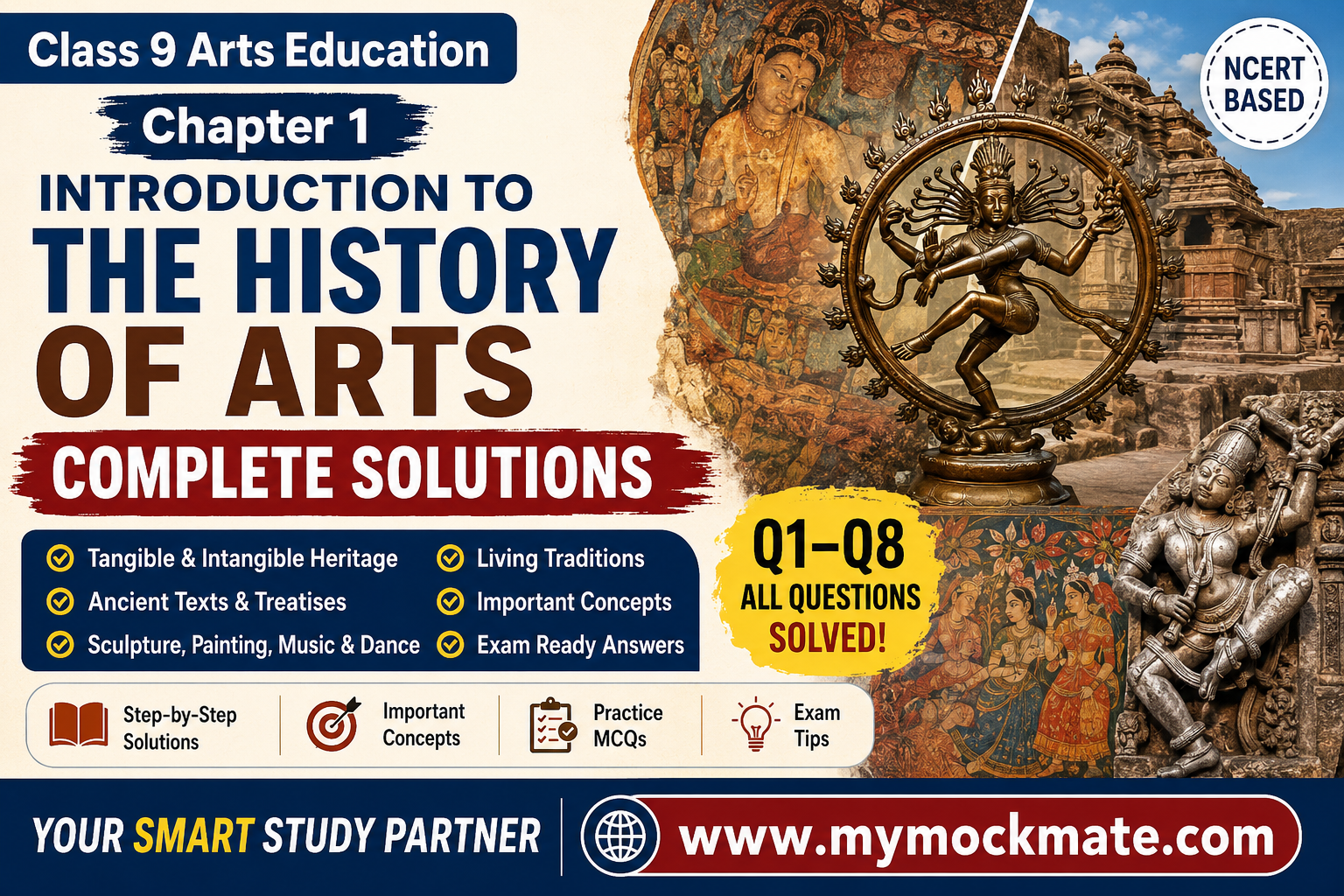
This chapter introduces students to the rich artistic heritage of India and the world. It explains the development of visual arts, theatre, dance, music, sculpture, painting, manuscripts, and living traditions from prehistoric times to 1200 CE. These solutions provide clear explanations, important concepts, MCQs, FAQs, and exam-oriented answers for better understanding.
Quick Information Box
| Topic | Details |
|---|---|
| Chapter Name | Introduction to the History of Arts |
| Subject | Arts Education |
| Class | 9 |
| Main Focus | Evolution of Indian and World Arts |
| Important Themes | Cultural Heritage, Sculpture, Painting, Music, Dance |
| Time Period Covered | 50,000 BCE – 1200 CE |
Concepts Used (Topics Covered)
- Tangible and Intangible Cultural Heritage
- Bhimbetka Cave Paintings
- Sindhu-Sarasvati Civilisation
- Ajanta Murals
- Natyashastra
- Temple Architecture
- Chola Bronzes
- Bhakti Traditions
- Living Traditions
- Indian Sculpture and Painting
- Music and Dance Traditions
- Manuscript Paintings
Important Formulas / Key Terms
- Rasa Theory = Bhava → Rasa
- Yato Hastas Tato Drishtih
- Iconography = Symbolic representation in art
- Tangible Heritage = Physical cultural objects
- Intangible Heritage = Traditions and practices
Questions & Step-by-Step Solutions
Q1. Categorise the given list into tangible and intangible cultural heritage.
Solution
Tangible Cultural Heritage
- Sculptures
- Pottery
- Jewellery
- Madhubani Painting
Intangible Cultural Heritage
- Vedic Chanting
- Knowledge of Weaving Textiles
- Traditional Wedding Songs
- Kāvaḍ Kathā
Explanation
Tangible heritage includes physical objects that can be seen and touched, while intangible heritage includes traditions, songs, rituals, and knowledge passed through generations.
Q2. Why are ancient texts and treatises on Indian arts still relevant today?
Correct Answer
(ii) They provide historical knowledge, technical guidance, and philosophical foundations for understanding and practising Indian arts.
Explanation
Ancient texts like the Nāṭyaśāstra and Abhinaya-darpaṇam continue to guide artists in dance, drama, music, and visual arts even today.
Q3. Why do you think the murals in the Ajanta caves have survived close to 1,500 years?
Correct Answer
(iii) Because the caves provided a stable, sheltered environment that protected the paintings from sunlight, rain, and wind.
Explanation
The cave environment protected the murals from weather damage. Natural pigments and proper wall preparation also helped preserve the paintings.
Q4. Write three rules you would follow at a historical monument, performance, or art gallery.
Solution
- Do not touch sculptures, paintings, or monuments.
- Maintain silence and respect during performances.
- Do not litter or damage heritage property.
Explanation
These actions help preserve cultural heritage for future generations.
Q5. Choose any art form you are familiar with and explain developments over time.
Solution (Example: Classical Dance)
i. Function of Dance
Earlier, dance was mainly performed in temples and royal courts. Today, it is also performed on stage, television, and digital platforms.
ii. Materials and Techniques
Traditional costumes and live music are now combined with modern lighting and technology.
iii. Connection with the Past
Present-day dance styles still follow mudras, postures, and expressions mentioned in ancient texts like the Nāṭyaśāstra.
Explanation
Art forms evolve with time but continue to preserve traditional roots.
Q6. Write a note on any work of Indian art made before 1200 CE.
Solution (Example: Chola Bronze Nataraja)
i. Material and Time Period
Bronze sculpture, Chola Period, 10th century CE.
ii. Subject
Lord Shiva as Nataraja, the cosmic dancer.
iii. Symbolism
The ring of fire represents the cycle of creation and destruction.
iv. Visual Features
Dynamic posture, balanced composition, detailed ornaments.
v. Relevance Today
The sculpture symbolises rhythm, balance, and spiritual energy.
vi. Navarasa
The sculpture creates feelings of wonder and devotion.
Explanation
The Nataraja sculpture is considered one of the finest examples of Indian bronze art.
Q7. Individual Project — Example on Kathak Dance
Solution
i. Art Forms Involved
Dance, music, storytelling, drama.
ii. Occasion
Performed during festivals, cultural events, and stage performances.
iii. Theme
Stories from epics like Mahabharata and Ramayana.
iv. Literary Sources
Nāṭyaśāstra and oral traditions.
v. Instruments Used
Tabla, harmonium, sitar, sarangi.
vi. Performers
Usually solo or group dancers with musicians.
vii. Changes Over Time
Modern stage technology and global performances have been added.
viii. Personal Interest
Kathak combines graceful movements with storytelling.
ix. Emotions
It creates joy, devotion, and excitement.
Q8. Group Project — Example on Warli Painting
Solution
Name of Tradition
Warli Painting
State
Maharashtra
Community
Warli Tribe
Description
Simple geometric paintings made using rice paste on mud walls.
Function
Used during weddings and festivals.
Changes in 20–25 Years
Now painted on paper, canvas, and modern products.
Stories and Traditions
Depicts village life, farming, festivals, and nature.
Presentation
Students can prepare charts, slides, and artwork samples.
Common Mistakes
- Confusing tangible and intangible heritage
- Forgetting important examples like Ajanta and Nataraja
- Writing very short answers without explanation
- Ignoring symbolism and iconography in artworks
- Missing time periods and historical context
Exam Tips
- Learn important art forms with examples.
- Remember keywords like rasa, iconography, murals, and heritage.
- Use headings and bullet points in long answers.
- Mention examples from the chapter for better marks.
- Revise important sculptures and paintings.
Practice MCQs
1. Which site is famous for prehistoric cave paintings?
A. Sanchi
B. Bhimbetka
C. Ellora
D. Khajuraho
Answer:
B. Bhimbetka
2. Which text explains rasa theory?
A. Arthashastra
B. Panchatantra
C. Natyashastra
D. Ramayana
Answer:
C. Natyashastra
3. Which art form is an example of intangible heritage?
A. Sculpture
B. Pottery
C. Folk Songs
D. Jewellery
Answer:
C. Folk Songs
4. Ajanta caves are famous for:
A. Bronze Sculptures
B. Murals
C. Terracotta
D. Metal Crafts
Answer:
B. Murals
5. The Nataraja sculpture belongs to which dynasty?
A. Maurya
B. Gupta
C. Chola
D. Pallava
Answer:
C. Chola
FAQ Section
Q1. What is cultural heritage?
Cultural heritage includes traditions, monuments, artworks, and practices passed from one generation to another.
Q2. What is the difference between tangible and intangible heritage?
Tangible heritage includes physical objects, while intangible heritage includes traditions, songs, and rituals.
Q3. Why is the Ajanta cave painting important?
Ajanta murals are among the finest examples of ancient Indian painting and show advanced artistic techniques.
Q4. What is iconography?
Iconography means using symbols to identify characters and themes in artworks.
Q5. Why should we study art history?
It helps us understand culture, creativity, traditions, and historical developments.
For more chapter-wise solutions, MCQs, notes, and exam preparation materials, visit www.mymockmate.com and boost your learning experience with easy and student-friendly study content.