


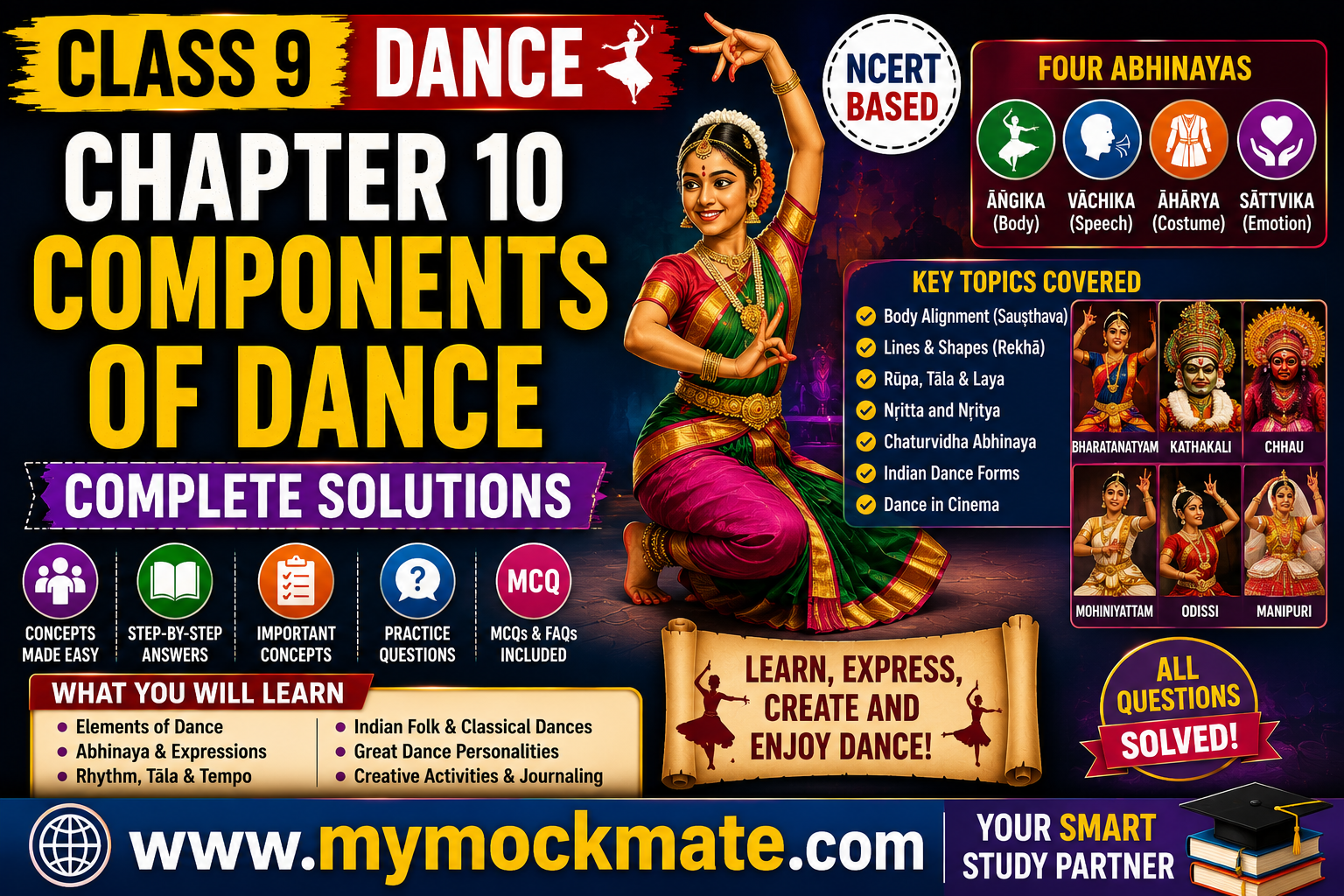

Short Intro
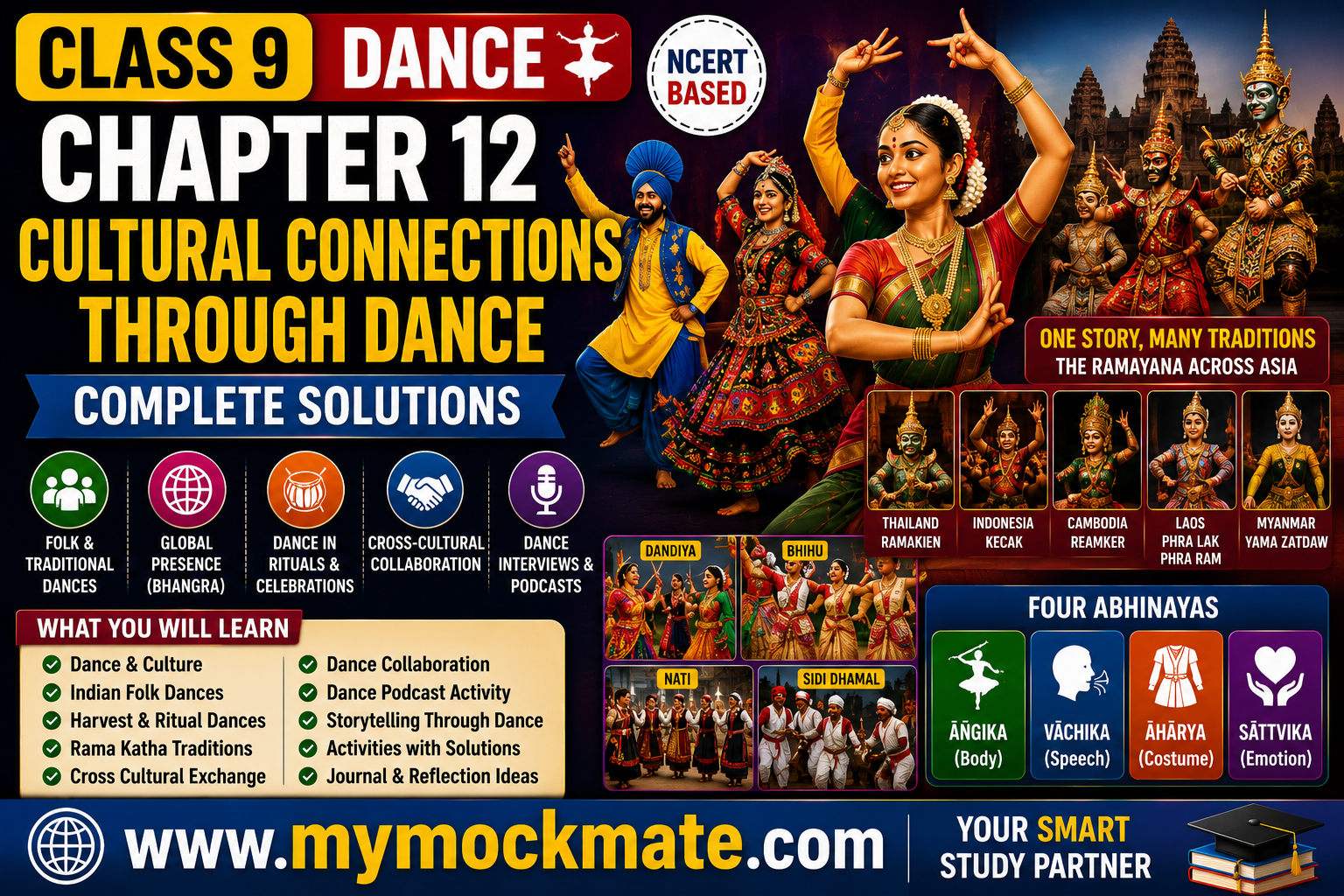
This chapter introduces the essential components of dance such as body alignment, rhythm, tempo, abhinaya, nṛitta, nṛitya, and expressive communication. Students learn how dance combines movement, emotion, rhythm, posture, and storytelling to create artistic performances. These solutions provide easy explanations, MCQs, FAQs, exam tips, and detailed step-by-step answers for better understanding.
Quick Information Box
| Topic | Details |
|---|---|
| Chapter Name | Components of Dance |
| Subject | Dance |
| Class | 9 |
| Main Focus | Dance Movements and Expressive Communication |
| Important Concepts | Sauṣhṭhava, Rekhā, Abhinaya, Tāla |
| Learning Goal | Understanding Body, Rhythm, and Expression in Dance |
Concepts Used (Topics Covered)
- Dance Movements
- Sauṣhṭhava (Body Alignment)
- Rekhā (Lines and Shapes)
- Rūpa (Expression and Disposition)
- Nṛitta and Nṛitya
- Tāla and Laya
- Chaturvidha Abhinaya
- Āṅgika Abhinaya
- Vāchika Abhinaya
- Āhārya Abhinaya
- Sāttvika Abhinaya
- Rhythm and Tempo
- Indian Classical Dance
- Folk Dance
- Dance in Cinema
Important Formulas / Key Terms
- Nṛitta = Pure dance movements without storytelling
- Nṛitya = Expressive dance with meaning and storytelling
- Tāla = Rhythmic cycle
- Laya = Tempo or speed
- Sauṣhṭhava = Proper body alignment and posture
- Rekhā = Shapes and lines created by the body
- Abhinaya = Expressive communication in dance
- Āṅgika = Expression through body
- Vāchika = Expression through speech/music
- Āhārya = Expression through costume and props
- Sāttvika = Expression through inner emotions
Questions & Step-by-Step Solutions
Q1. Which of these are not essential for proper body alignment?
Options
i. Sauṣhṭhava
ii. Vāchika
iii. Rūpa
iv. Rekhā
Correct Answer
ii. Vāchika
Explanation
Sauṣhṭhava, rūpa, and rekhā are related to body posture and movement, while vāchika refers to verbal expression and sound.
Q2. Explain any one of these.
i. Nṛitta and Nṛitya
Nṛitta
Nṛitta refers to pure dance movements without storytelling or emotional meaning. It focuses on rhythm, body movement, and technique.
Nṛitya
Nṛitya combines dance movements with expression and storytelling. It communicates emotions and meanings through abhinaya.
Difference Between Nṛitta and Nṛitya
| Nṛitta | Nṛitya |
|---|---|
| Pure dance | Expressive dance |
| No storytelling | Includes storytelling |
| Focus on rhythm | Focus on emotion and meaning |
| Technical movements | Emotional communication |
Explanation
Indian classical dances often combine both nṛitta and nṛitya to create beautiful performances.
ii. Rhythm (Tāla) and Tempo (Laya)
Tāla
Tāla is the rhythmic cycle or beat pattern used in dance and music.
Laya
Laya refers to the speed or tempo of movement and rhythm.
Types of Laya
- Vilambit (Slow)
- Madhya (Medium)
- Drut (Fast)
Explanation
Rhythm and tempo together create flow and balance in dance performances.
iii. Sauṣhṭhava
Meaning
Sauṣhṭhava means proper body alignment and graceful posture in dance.
Features
- Balanced body posture
- Straight spine
- Controlled movements
- Graceful appearance
Importance
- Improves dance quality
- Prevents injuries
- Enhances expression and confidence
Explanation
Sauṣhṭhava forms the foundation of strong and elegant dance movements.
Q3. Identify the abhinaya represented in the following pictures and fill in the blanks.
| Picture | Abhinaya Type |
|---|---|
| Purulia Chhau Costume | Āhārya Abhinaya |
| Yakṣhagāna | Vāchika Abhinaya |
| Expression in Mohiniyattam | Sāttvika Abhinaya |
| Krishna in Sattriya Dance | Āṅgika Abhinaya |
Explanation
Different forms of abhinaya use body, voice, costume, and emotions for artistic communication.
Q4. Fill in the blanks with the name of a legend in the dance forms.
| Dance Form | Legend |
|---|---|
| i. Kathak | Saroja Vaidyanathan |
| ii. Sattriya | Jatin Goswami |
| iii. Purulia Chhau | Gambhir Singh Mura |
| iv. Pulikaḻi | Chathunni Asan |
| v. Kathakali | Kalamandalam Gopi |
| vi. Mohiniyattam | Kanak Rele |
| vii. Bharatanatyam | Kumari Kamala |
| viii. Odissi | Kelucharan Mohapatra |
| ix. Manipuri | Ranjana Jhaveri |
Explanation
These artists contributed significantly to preserving and popularising Indian dance traditions.
Q5. Journal: Present your observations based on the following.
i. The Performance Watched
Observation
I watched a Bharatanatyam performance based on devotion and storytelling.

Dance Elements Observed
- Strong footwork
- Hand gestures (mudras)
- Rhythmic movements
- Facial expressions
- Graceful body posture
Emotion Experienced
The performance created feelings of peace, devotion, and admiration.
Costume and Props
Traditional silk costume, temple jewellery, flowers, and expressive makeup were used.
Region Connected
Tamil Nadu
ii. The Cinema Dance Sequence
Example
“Ghoomar” dance sequence from the movie Padmavat.
Observations
- Circular group formations
- Traditional Rajasthani costumes
- Rhythmic spinning movements
- Folk dance influence
Dance Elements Analysed
| Element | Observation |
|---|---|
| Body Movement | Graceful spinning and hand gestures |
| Costume | Traditional Rajasthani attire |
| Emotion | Celebration and pride |
| Rhythm | Medium-fast tempo |
| Expression | Joy and cultural identity |
Reflection
The dance sequence beautifully represented Indian folk traditions and cultural pride.
Common Mistakes
- Confusing nṛitta with nṛitya
- Forgetting the four types of abhinaya
- Ignoring posture and alignment concepts
- Mixing rhythm and tempo definitions
- Writing incomplete dance observations
Exam Tips
- Learn all four abhinayas carefully.
- Remember the meanings of tāla and laya.
- Practice examples of Indian dance forms.
- Use tables for comparison answers.
- Revise important dance personalities regularly.
Practice MCQs
1. What does Sauṣhṭhava mean?
A. Costume
B. Rhythm
C. Proper body alignment
D. Makeup
Answer:
C. Proper body alignment
2. Which dance element focuses on storytelling?
A. Nṛitta
B. Nṛitya
C. Rekhā
D. Tāla
Answer:
B. Nṛitya
3. Which abhinaya uses costumes and props?
A. Āṅgika
B. Vāchika
C. Āhārya
D. Sāttvika
Answer:
C. Āhārya
4. What is the meaning of laya?
A. Costume
B. Rhythm cycle
C. Tempo or speed
D. Expression
Answer:
C. Tempo or speed
5. Which dance form uses masks in Purulia style?
A. Bharatanatyam
B. Kathak
C. Chhau
D. Manipuri
Answer:
C. Chhau
FAQ Section
Q1. What is nṛitta?
Nṛitta is pure dance movement without storytelling or emotional expression.
Q2. What is nṛitya?
Nṛitya is expressive dance that combines movement with storytelling and emotions.
Q3. What are the four types of abhinaya?
Āṅgika, Vāchika, Āhārya, and Sāttvika.
Q4. Why is body alignment important in dance?
Proper alignment improves balance, expression, grace, and safety during movements.
Q5. What is the difference between tāla and laya?
Tāla is the rhythmic cycle, while laya is the speed or tempo.
For more chapter-wise solutions, MCQs, notes, dance activities, and exam preparation materials, visit www.mymockmate.com and make your learning creative, artistic, and exam-ready.