



Short Intro
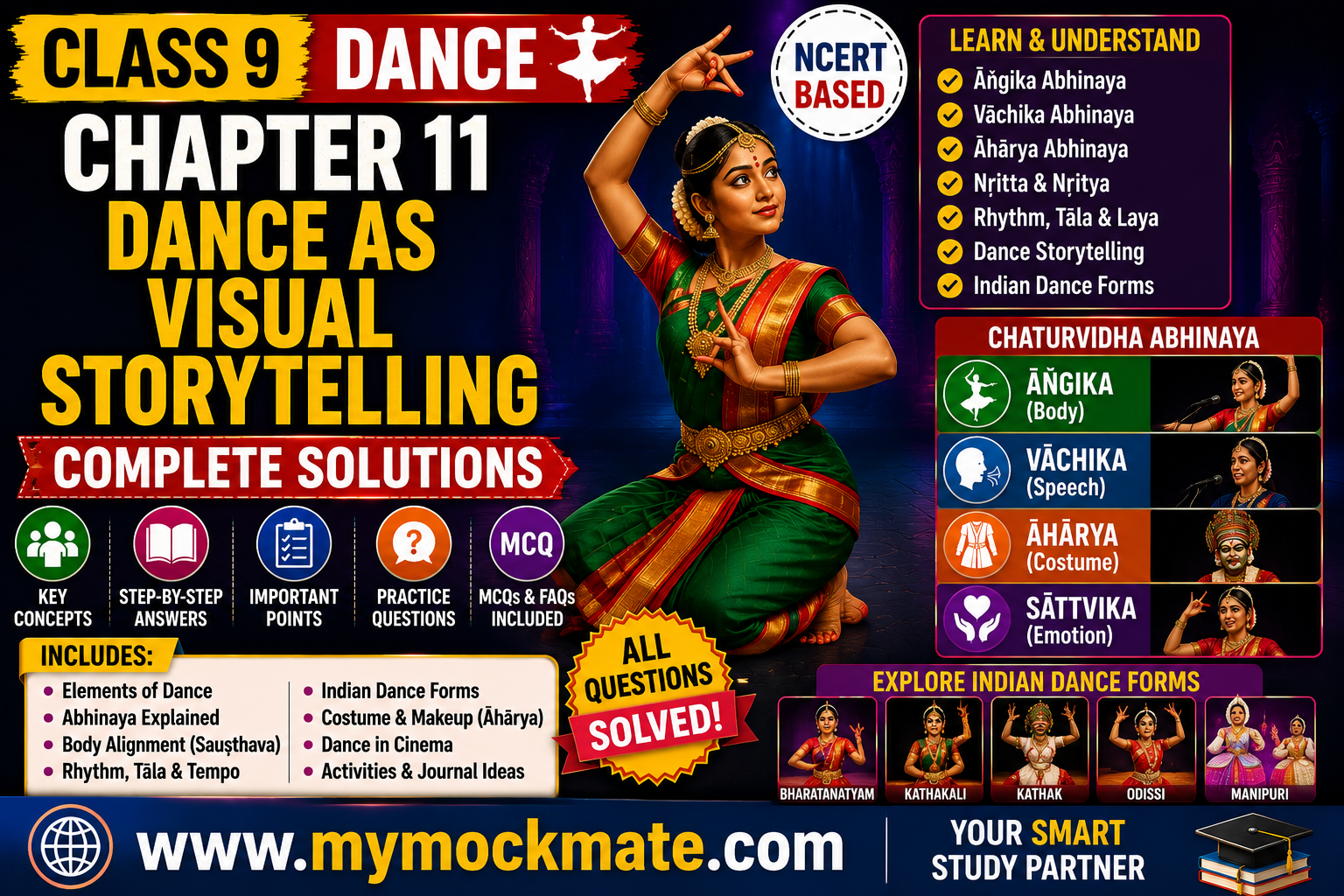
This chapter explains how dance acts as visual storytelling through movement, expression, costumes, music, and gestures. Students learn about Āṅgika, Vāchika, and Āhārya Abhinayas and how Indian dance forms communicate emotions, stories, and cultural traditions. These solutions provide step-by-step answers, MCQs, FAQs, exam tips, and detailed explanations in simple language.
Quick Information Box
| Topic | Details |
|---|---|
| Chapter Name | Dance as Visual Storytelling |
| Subject | Dance |
| Class | 9 |
| Main Focus | Storytelling Through Dance |
| Important Concepts | Abhinaya, Gesture, Costume, Expression |
| Learning Goal | Understanding Communication Through Dance |
Concepts Used (Topics Covered)
- Visual Storytelling in Dance
- Dṛiśhya-Kāvya
- Āṅgika Abhinaya
- Vāchika Abhinaya
- Āhārya Abhinaya
- Hand Gestures (Hastas)
- Chārī and Gati
- Utplavana and Bhramarī
- Dance Movements
- Folk Dance and Classical Dance
- Costume and Make-up
- Rhythm and Music in Dance
- Cultural Identity in Dance
Important Formulas / Key Terms
- Abhinaya = Expression and communication in dance
- Āṅgika = Expression through body movements
- Vāchika = Expression through speech, lyrics, and sound
- Āhārya = Expression through costume and props
- Chārī = Stylised leg movement
- Gati = Gait or walking style
- Utplavana = Jumping movement
- Bhramarī = Spinning movement
- Hastas = Hand gestures
- Dṛiśhya-Kāvya = Visual poetry
Questions & Step-by-Step Solutions
Q1. Describe and show how you can use these elements in your Āṅgika Abhinaya. Choose any two.
i. Chārī / Gati
Solution
Chārī and gati are used for graceful movement and storytelling in dance.
Example
- Slow walking movements can show sadness or devotion.
- Fast movements can represent excitement or celebration.
- Royal gait can represent kings and queens.
Usage in Dance
I can use smooth walking patterns and stylised steps to express emotions and character identity.
Explanation
Different movement styles help dancers communicate stories visually.
ii. Utplavana and Bhramarī
Solution
Utplavana
It refers to jumping movements in dance.
Bhramarī
It refers to spinning or circular turns.
Usage in Dance
- Jumps can show energy, excitement, or victory.
- Spins can show joy, beauty, or divine movement.
Example
In classical dances like Kathak, bhramarīs are used to create graceful circular movements.
Explanation
These movements make dance dynamic and visually attractive.
iii. Hastas – Hand Gestures
Solution
Hastas are symbolic hand gestures used for communication.
Examples
- Patāka hasta can represent clouds or blessings.
- Tripatāka can represent a crown or tree.
- Alapadma can represent flowers.
Usage in Dance
I can use hand gestures to narrate stories and express emotions without words.
Explanation
Hastas help audiences understand the meaning of the performance clearly.
Q2. Which Vāchika Abhinaya elements have you explored? Describe how they helped you communicate your ideas and thoughts.
Solution
Vāchika Elements Explored
- Songs with lyrics
- Rhythmic syllables
- Narration
- Dialogue
- Instrumental sounds
How They Helped
| Element | Contribution |
|---|---|
| Songs | Expressed emotions clearly |
| Rhythmic syllables | Improved energy and rhythm |
| Narration | Helped explain the story |
| Dialogue | Added dramatic effect |
| Instrumental music | Created mood and atmosphere |
Explanation
Vāchika Abhinaya supports storytelling through sound, voice, rhythm, and verbal expression.
Q3. In which Indian dance forms do dancers simultaneously sing and dance? Give three examples and mention the states.
Solution
| Dance Form | State |
|---|---|
| Kuchipudi | Andhra Pradesh |
| Sattriya | Assam |
| Yakshagana | Karnataka |
Explanation
In these dance traditions, performers combine singing, acting, and dancing together.
Q4. Explain the elements of Āhārya Abhinaya in two dance forms learnt in class. Can you connect any āhārya elements with Visual Arts?
Solution
1. Kathakali
Āhārya Elements
- Heavy makeup
- Elaborate headgear
- Bright costumes
- Facial painting
Purpose
These visual elements help identify characters and emotions.
2. Bharatanatyam
Āhārya Elements
- Silk costumes
- Temple jewellery
- Flowers in hair
- Traditional makeup
Purpose
They enhance elegance and cultural identity.

Connection with Visual Arts
Āhārya Abhinaya connects with Visual Arts through:
- Costume design
- Textile patterns
- Makeup art
- Jewellery craftsmanship
- Colour combinations
Explanation
Visual elements in dance use artistic principles similar to painting, sculpture, and design.
Q5. Do you think appropriate costume enhances movement or āṅgika of any dance form?
Solution
Yes, appropriate costume greatly enhances dance movement and āṅgika.
Reasons
- Costumes improve visual beauty.
- They help identify dance forms and characters.
- Flowing costumes enhance spinning and movement effects.
- Traditional attire reflects cultural identity.
- Accessories and props add dramatic impact.
Example
The long skirt in Kathak creates beautiful circular effects during spins.
Explanation
Costumes support expression, storytelling, and audience engagement in dance performances.
Common Mistakes
- Confusing the different types of abhinaya
- Forgetting examples of dance forms
- Mixing āṅgika with āhārya concepts
- Writing incomplete explanations
- Ignoring the storytelling role of dance
Exam Tips
- Learn definitions of all abhinayas carefully.
- Practice examples of gestures and movements.
- Remember important dance forms and states.
- Use tables for comparison-based answers.
- Revise costume and expression-related concepts regularly.
Practice MCQs
1. What does Āṅgika Abhinaya use for communication?
A. Costume
B. Body movements
C. Jewellery
D. Lighting
Answer:
B. Body movements
2. Which abhinaya includes songs and narration?
A. Āhārya
B. Āṅgika
C. Vāchika
D. Sāttvika
Answer:
C. Vāchika
3. What is Bhramarī in dance?
A. Hand gesture
B. Costume
C. Spinning movement
D. Makeup
Answer:
C. Spinning movement
4. Which dance form belongs to Assam?
A. Kathakali
B. Kuchipudi
C. Sattriya
D. Bharatanatyam
Answer:
C. Sattriya
5. What does Āhārya Abhinaya include?
A. Body posture only
B. Costume and props
C. Rhythm only
D. Facial muscles only
Answer:
B. Costume and props
FAQ Section
Q1. What is visual storytelling in dance?
Visual storytelling means expressing stories, emotions, and ideas through dance movements and expressions.
Q2. What is Āṅgika Abhinaya?
Āṅgika Abhinaya is expression through body movements, gestures, and posture.
Q3. What is the role of Vāchika Abhinaya?
It uses songs, speech, rhythm, and narration to support dance communication.
Q4. Why are costumes important in dance?
Costumes improve visual appeal, identify characters, and support storytelling.
Q5. What are hastas?
Hastas are symbolic hand gestures used in Indian dance forms.
For more chapter-wise solutions, MCQs, notes, dance activities, and exam preparation materials, visit www.mymockmate.com and make your learning creative, artistic, and exam-ready.