



Short Intro
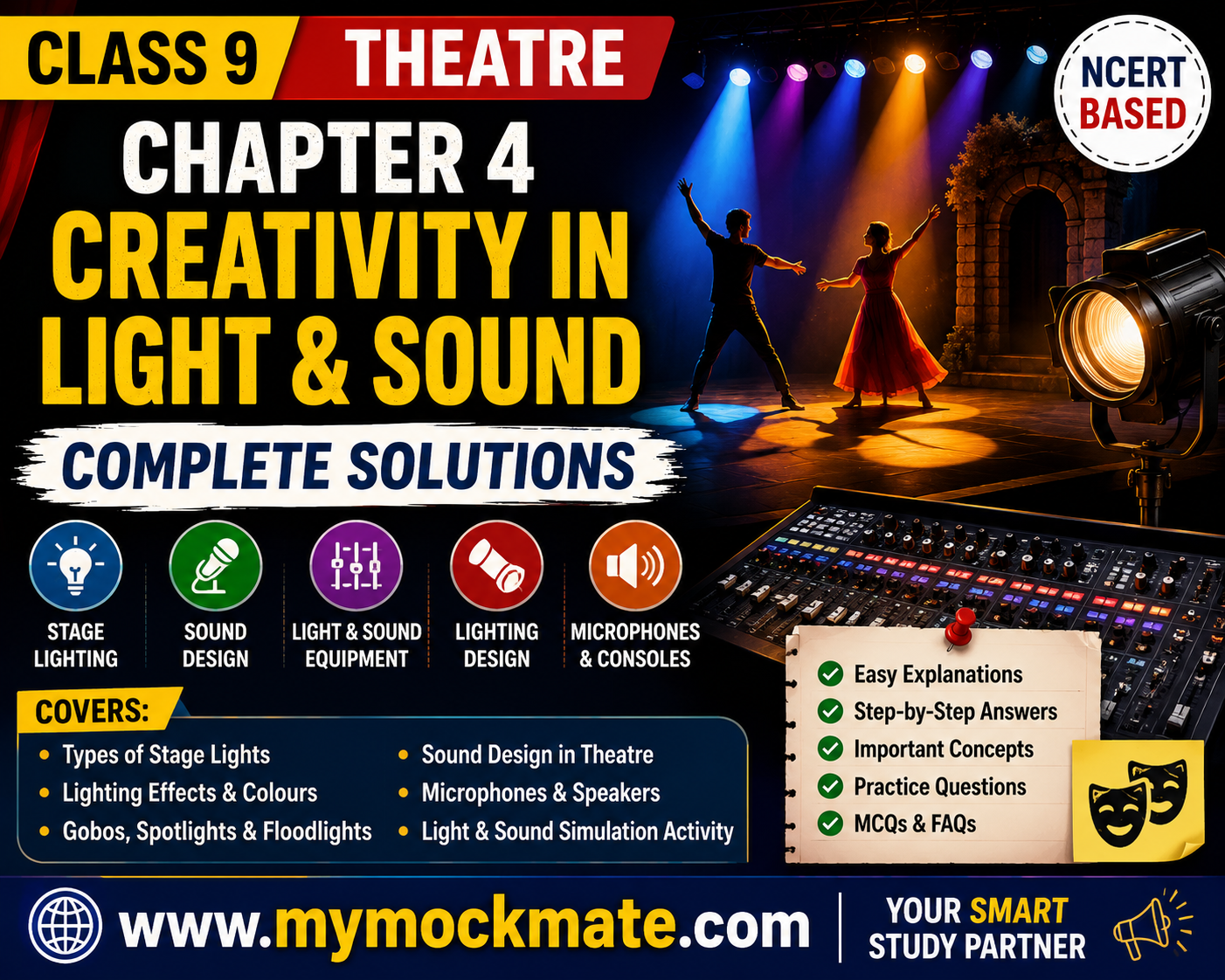
This chapter explains the importance of lighting and sound in theatre performances. Students learn about different types of stage lights, microphones, lighting design, sound systems, and their role in storytelling. These solutions provide detailed explanations, examples, MCQs, FAQs, and exam-oriented answers in simple language.
Quick Information Box
| Topic | Details |
|---|---|
| Chapter Name | Creativity in Light and Sound |
| Subject | Theatre |
| Class | 9 |
| Main Focus | Stage Lighting and Sound Design |
| Important Concepts | Lights, Microphones, Sound Effects |
| Learning Goal | Creative Use of Technology in Theatre |
Concepts Used (Topics Covered)
- Stage Lighting
- Importance of Light in Theatre
- Types of Stage Lights
- Floodlight
- PAR Can
- Fresnel Light
- Profile Spotlight
- Gobos
- Lighting Design
- Sound Design
- Microphones
- Light Console
- Sound Console
- Theatre Technology
Important Formulas / Key Terms
- Visibility = Light reflected into eyes
- PAR = Parabolic Aluminised Reflector
- Gobo = Pattern used in spotlight projection
- Footlight = Light from below
- Backlight = Light from behind
- Sound Console = Device controlling audio signals
Questions & Step-by-Step Solutions
Q1. What is the purpose of using lights for a play? How many types of lights are commonly used for stage lighting?
Solution
Purpose of Stage Lighting
Lights are used in theatre for many important purposes:
- To make actors and objects visible on stage.
- To create mood and emotions.
- To show time and place such as day or night.
- To focus audience attention on important characters or objects.
- To create special effects and symbolism.
- To improve visual storytelling.
Common Types of Stage Lights
- Floodlight
- PAR Can
- Fresnel Light
- Profile Spotlight
- Moving Lights
Explanation
Lighting is not only used for visibility but also for creating dramatic and emotional impact during performances.
Q2. Suppose you have to design lighting for a battle scene and soldiers are wearing red costumes. Would you still use red light?
Solution
No, using completely red lighting with red costumes may not be effective.
Possible Effects
- The costumes may blend with the background.
- Characters may lose visibility and details.
- The audience may not clearly see facial expressions.
- The stage may appear too visually heavy.
Better Alternative
- Use a combination of red, white, and blue lights.
- Use backlighting or side lighting for contrast.
- Add shadows and smoke effects for dramatic impact.
Explanation
Lighting colours must match and balance with costumes and stage design to maintain clarity and mood.
Q3. Match the type of mic with its purpose.
| Type of Mic | Purpose |
|---|---|
| i. Lapel mic | b. Play performance |
| ii. Foot mic | a. Catches minute sounds |
| iii. Dynamic mic | c. Seminar/talk by the chief guest |
Explanation
Different microphones are used according to performance needs and sound requirements.
Common Mistakes
- Confusing different types of stage lights
- Forgetting the functions of microphones
- Ignoring the role of lighting in storytelling
- Writing incomplete explanations
- Mixing sound equipment with lighting equipment
Exam Tips
- Learn the functions of all stage lights carefully.
- Remember microphone types and their uses.
- Use examples while explaining lighting effects.
- Revise important terms like gobo, spotlight, and console.
- Understand how lights and sound create mood.
Practice MCQs
1. Which light is mainly used to flood the stage with light?
A. Fresnel
B. Floodlight
C. Spotlight
D. Footlight
Answer:
B. Floodlight
2. What does PAR stand for?
A. Performance Audio Recorder
B. Parabolic Aluminised Reflector
C. Professional Artistic Reflector
D. Power Audio Regulator
Answer:
B. Parabolic Aluminised Reflector
3. Which lighting creates silhouettes and mystery?
A. Front light
B. Backlight
C. Footlight
D. Floodlight
Answer:
B. Backlight
4. What is a gobo used for?
A. Increasing sound
B. Recording music
C. Projecting patterns in light
D. Colour mixing
Answer:
C. Projecting patterns in light
5. Which equipment controls stage lighting?
A. Sound console
B. Speaker
C. Light console
D. Microphone

Answer:
C. Light console
FAQ Section
Q1. Why is lighting important in theatre?
Lighting helps create visibility, mood, focus, and dramatic effects during performances.
Q2. What is a spotlight?
A spotlight is a focused beam of light used to highlight specific actors or objects on stage.
Q3. What is sound design in theatre?
Sound design is the creative use of music, sound effects, and audio systems to enhance storytelling.
Q4. What is the use of a microphone in theatre?
Microphones capture and amplify sound so the audience can hear clearly.
Q5. What is a gobo in lighting?
A gobo is a stencil or pattern placed in front of a spotlight to create special visual effects.
For more chapter-wise solutions, MCQs, notes, theatre activities, and exam preparation content, visit www.mymockmate.com and make your studies smarter, easier, and more creative.