






Short Introduction
Agriculture is the backbone of India’s economy and plays a vital role in food security, employment, and sustainable development. The chapter “Introduction to Agricultural Practices” introduces students to crop seasons, agro-climatic relationships, meteorological observations, soil testing, seed selection, and organic farming practices.
This chapter helps students understand how scientific techniques and traditional knowledge work together to improve agricultural productivity.
Quick Information Box
| Particular | Details |
|---|---|
| Book | Kaushal Vikas Grade 9 |
| Unit | Work with Life Forms |
| Chapter | Introduction to Agricultural Practices |
| Important Topics | Crop Calendar, Soil Testing, Seed Selection, Meteorological Lab |
| Difficulty Level | Easy to Moderate |
| Exam Importance | Very High |
Concepts Used (Topics Covered)
- Importance of Agriculture
- Agricultural Livelihood Ecosystem
- Crop Calendar
- Agro-Climatic Relationship
- Meteorological Parameters
- Rain Gauge
- Dry-Wet Bulb Thermometer
- Wind Vane
- Soil Testing and Soil Amendment
- Mason Jar Test
- Soil pH Test
- Seed Selection and Treatment
- Organic Fertilisers and Pesticides
Important Formulas & Facts
Soil Composition
- Minerals = 45%
- Organic Matter = 5%
- Water = 20–30%
- Air = 20–30%
Ideal Soil pH
Most crops grow well in soil having pH between:
pH = 6 to 7
Rainfall Measurement
Rainfall is measured in:
- Millimetres (mm)
- Centimetres (cm)
Chapter Summary
Importance of Agriculture
Agriculture provides food, raw materials, employment, and contributes significantly to India’s GDP.
Crop Seasons in India
Rabi Crops
Examples:
- Wheat
- Gram
- Mustard
- Peas
Kharif Crops
Examples:
- Rice
- Maize
- Cotton
- Groundnut
Zaid Crops
Examples:
- Watermelon
- Cucumber
- Muskmelon
Meteorological Parameters Important for Farming
- Temperature
- Rainfall
- Humidity
- Wind Direction
- Seasonal Duration
Soil Testing
Soil testing helps determine:
- Texture
- Water Holding Capacity
- Nutrient Status
- Soil pH
- Biological Activity
Seed Selection
Healthy seeds:
- Germinate properly
- Produce healthy plants
- Increase crop yield
CHECK YOUR UNDERSTANDING
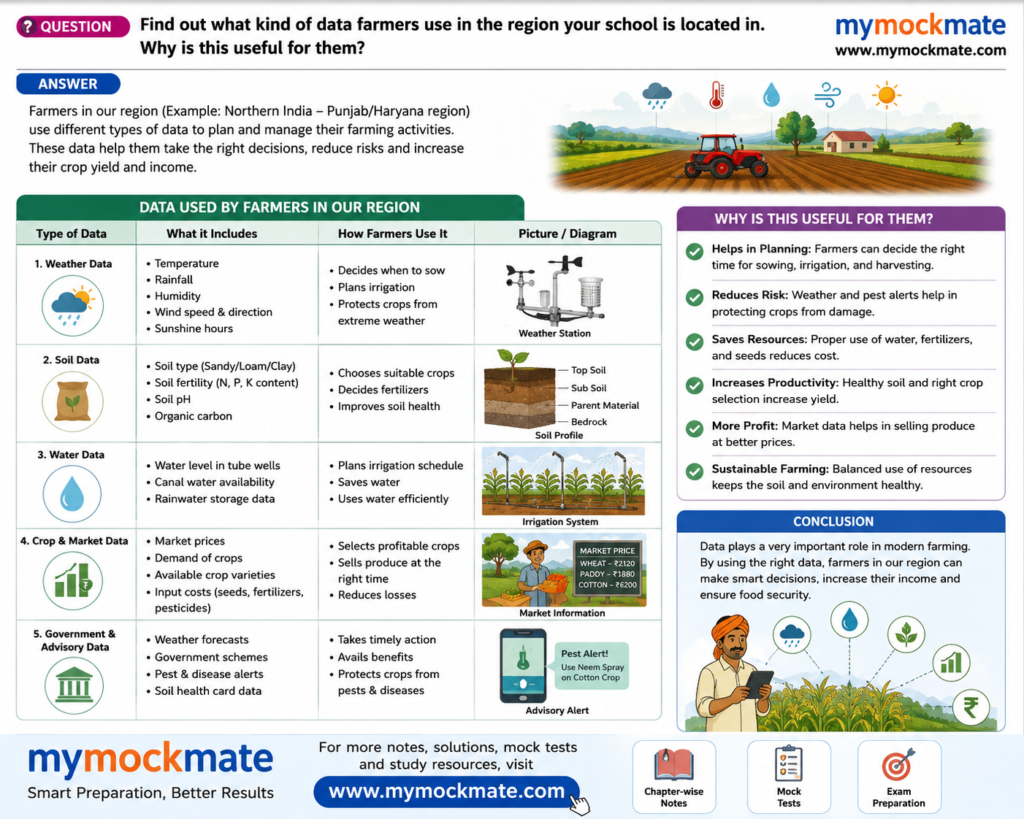
1. Find out what kind of data farmers use in the region your school is located in. Why is this useful for them?
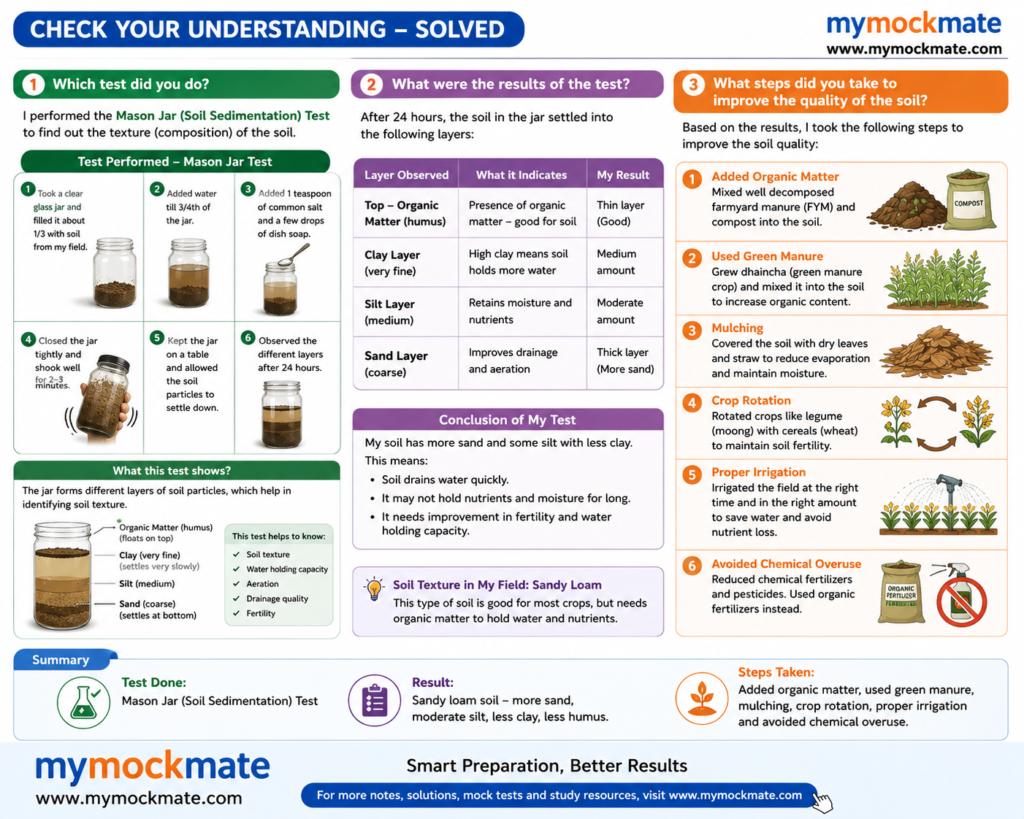
2. Which test did you do?
What were the results of the test?

What steps did you take to improve the quality of the soil?
TASK
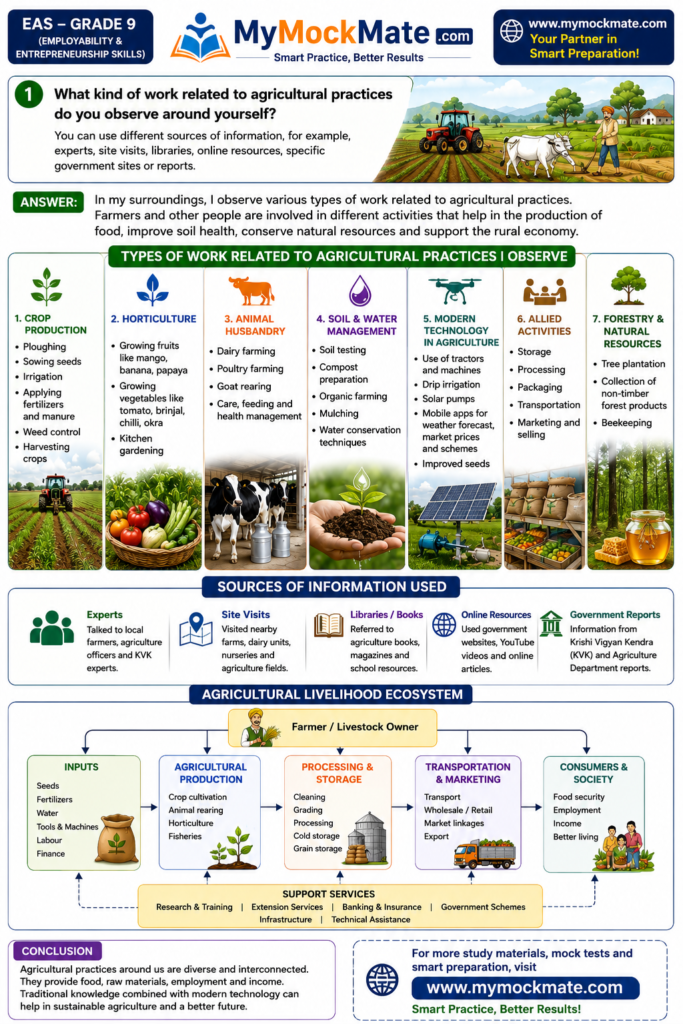

Assess your learning
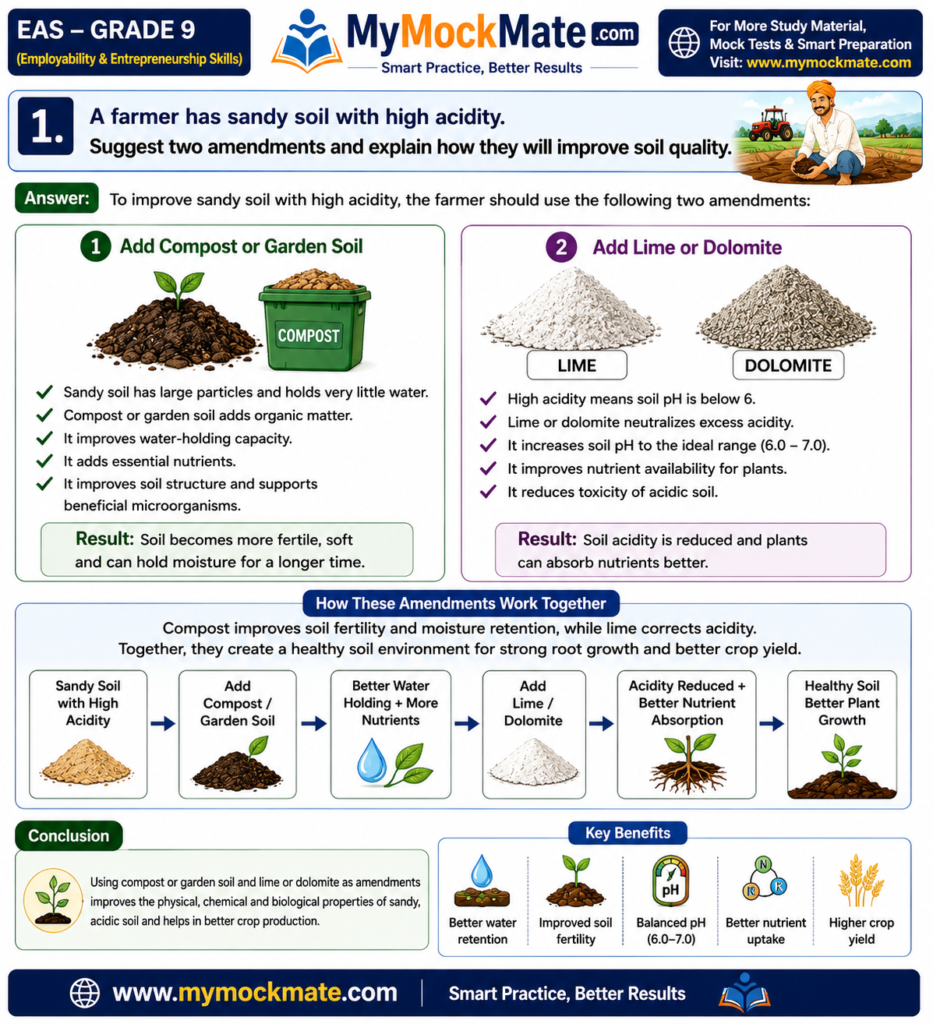
- A farmer has sandy soil with high acidity. Suggest two amendments and explain how they will improve soil quality.
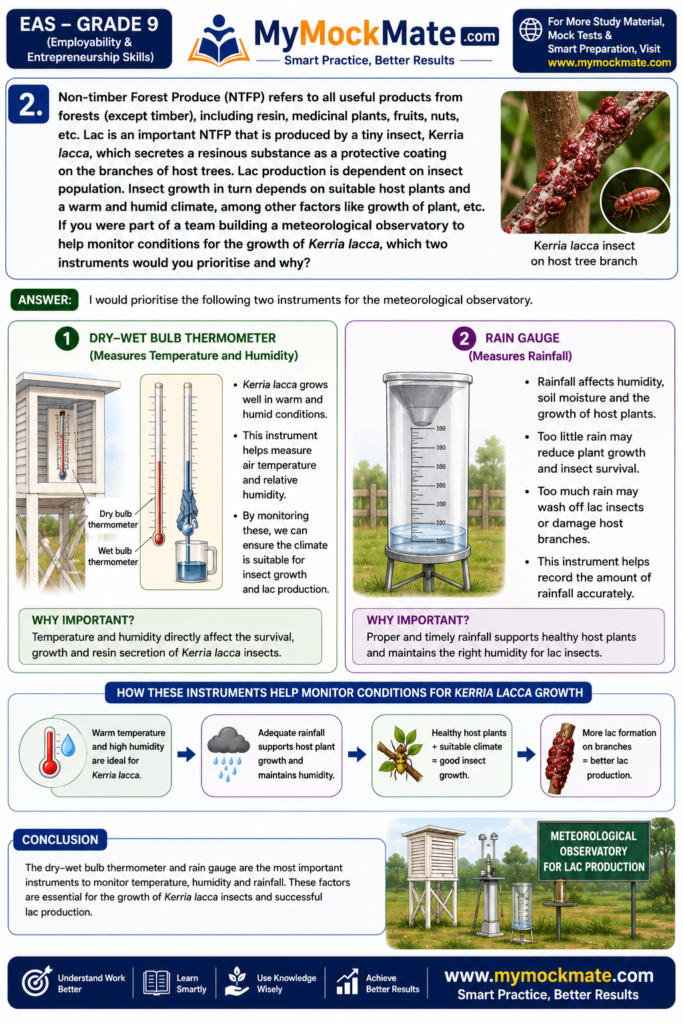
- Non-timber Forest Produce (NTFP) refers to all useful products from forests (except timber), including resin, medicinal plants, fruits, nuts, etc. Lac is an important NTFP that is produced by a tiny insect, Kerria lacca, which secretes a resinous substance as a protective coating on the branches of host trees. Lac production is dependent on insect population. Insect growth in turn depends on suitable host plants and a warm and humid climate, among other factors like growth of plant, etc. If you were part of a team building a meteorological observatory to help monitor conditions for the growth of Kerria lacca, which two instruments would you prioritise and why?
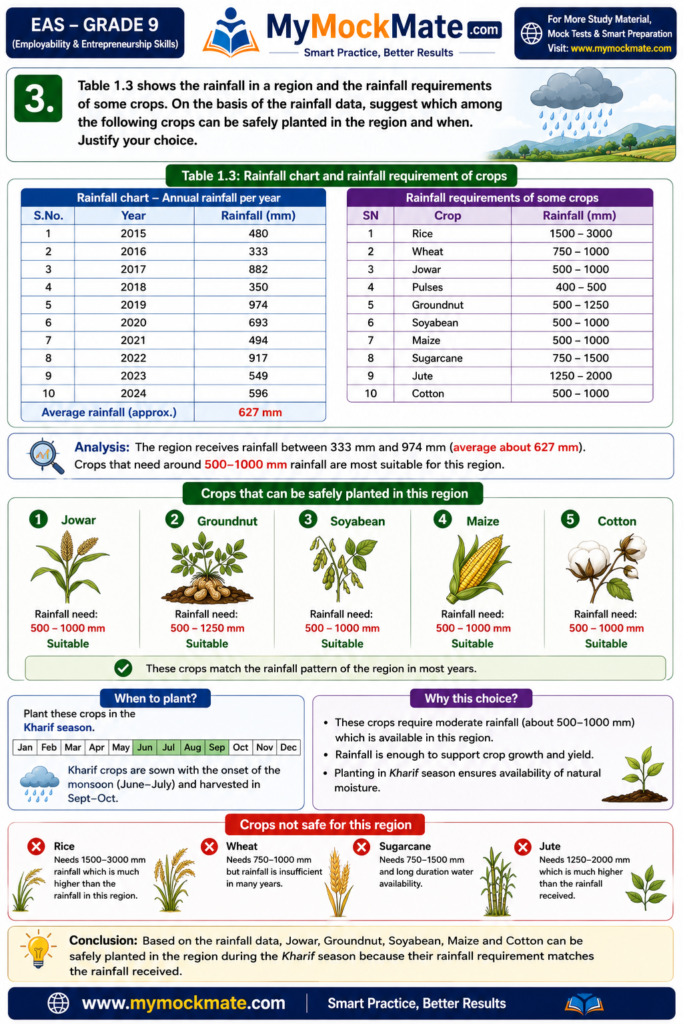
- Table 1.3 shows the rainfall in a region and the rainfall requirements of some crops. On the basis of the rainfall data, suggest which among the following crops can be safely planted in the region and when. Justify your choice.
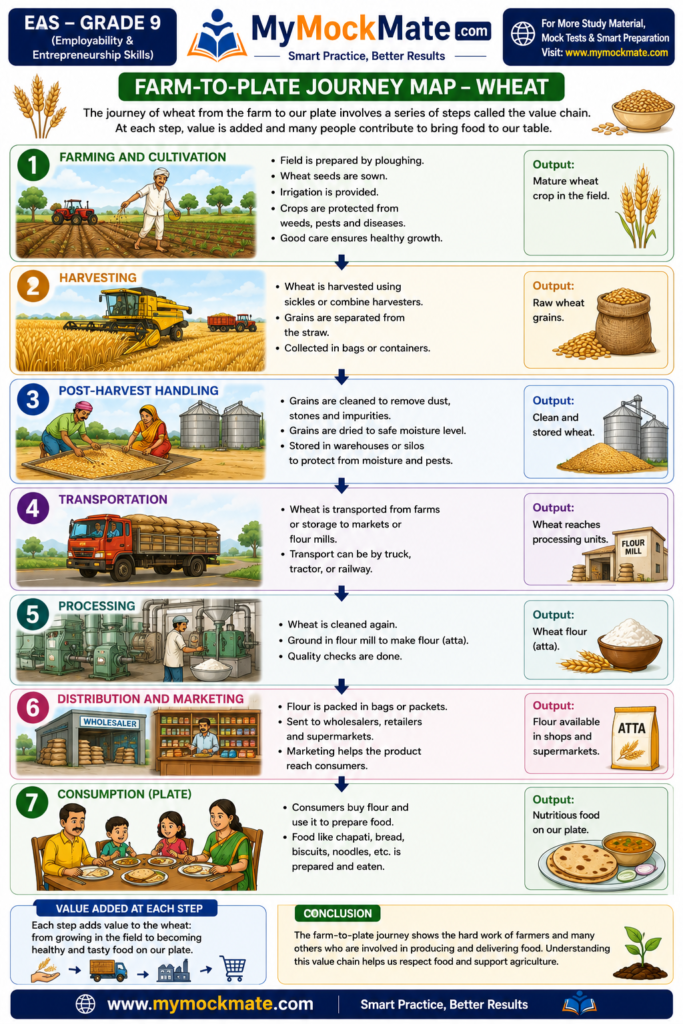
- Create a farm-to-plate journey map for any farming produce. Indicate the value chain as the produce travels from where it was grown to the table in the form of food.
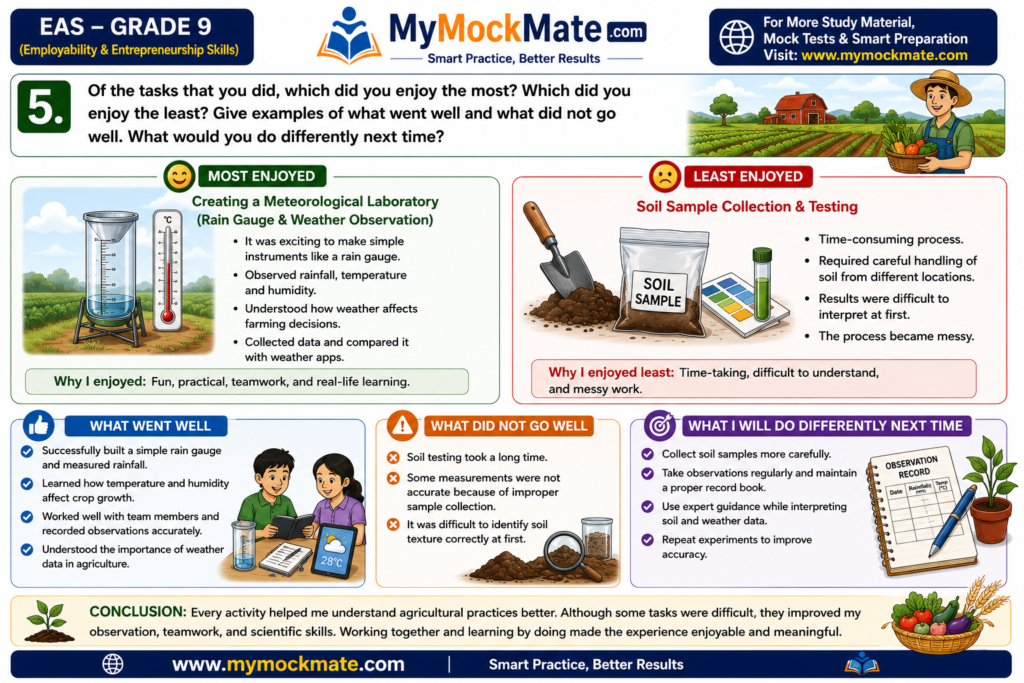
- Of the tasks that you did, which did you enjoy the most? Which did you enjoy the least? Give examples of what went well and what did not go well. What would you do differently next time?
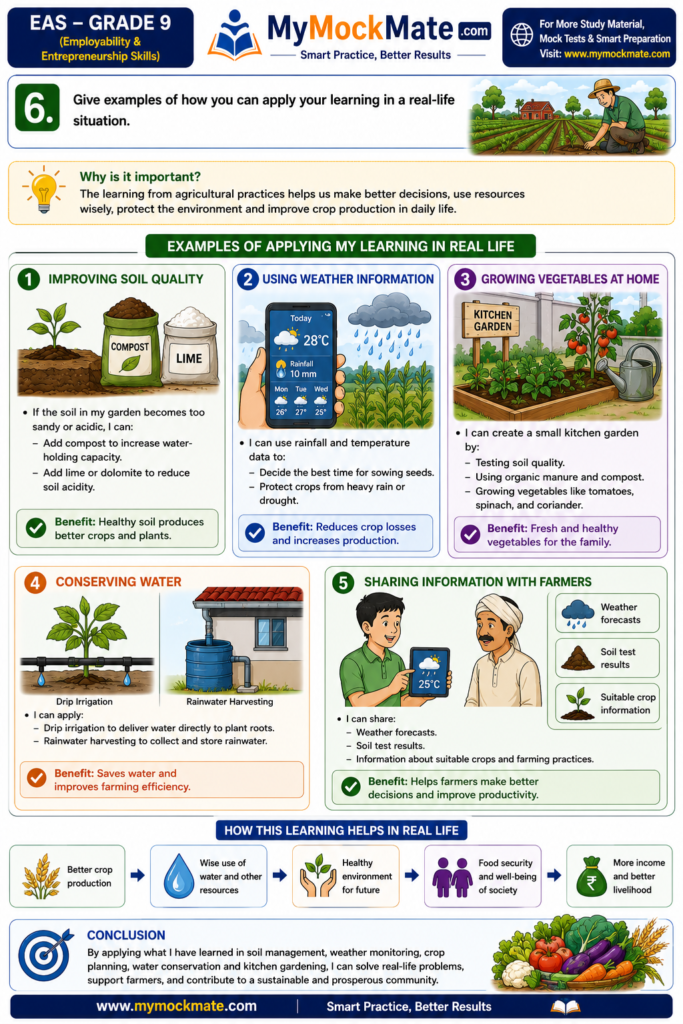
- Give examples of how you can apply your learning in a real-life situation
Common Mistakes Students Make
❌ Confusing Rabi and Kharif crops.
❌ Assuming all soils have the same pH.
❌ Ignoring the importance of seed treatment.
❌ Mixing up weather and climate.
❌ Forgetting the functions of meteorological instruments.
Exam Tips
✔ Learn examples of Rabi, Kharif, and Zaid crops.
✔ Remember the ideal soil pH range.
✔ Memorise functions of:
- Rain Gauge
- Thermometer
- Wind Vane
✔ Practice short answers on soil testing and seed selection.
✔ Revise important definitions.
Practice MCQs
Q1. Which crop season is called the winter crop season?
A. Kharif
B. Zaid
C. Rabi
D. Summer
Answer: C. Rabi
Q2. Which instrument measures rainfall?
A. Thermometer
B. Rain Gauge
C. Wind Vane
D. Barometer
Answer: B. Rain Gauge
Q3. Which soil pH is ideal for most crops?
A. 3–4
B. 8–9
C. 6–7
D. 10–11
Answer: C. 6–7
Q4. Which of the following is a Kharif crop?
A. Wheat
B. Mustard
C. Rice
D. Gram
Answer: C. Rice
Q5. Why are seeds treated before sowing?
A. To reduce weight
B. To improve colour
C. To increase germination and prevent diseases
D. To make them bigger
Answer: C. To increase germination and prevent diseases.
Frequently Asked Questions (FAQs)
1. Why is agriculture important in India?
Agriculture provides food, employment, and raw materials and contributes significantly to the economy.
2. What are the three crop seasons?
Rabi, Kharif, and Zaid.
3. What is soil testing?
It is the process of checking soil properties like pH, nutrients, and texture.
4. What is a rain gauge?
A rain gauge is an instrument used to measure rainfall.
5. Why is seed selection important?
Good quality seeds produce healthy plants and higher yields.
Conclusion
Agricultural practices combine scientific knowledge with traditional wisdom. Understanding soil health, weather conditions, and seed quality helps improve productivity and supports sustainable farming.
Prepare smarter with detailed study notes, mock tests, and chapter-wise solutions only on:
Get:
✅ Chapter-wise Notes
✅ Important Questions
✅ Mock Tests
✅ Exam Preparation Resources
✅ Detailed Solutions for All Subjects