



Short Intro
This study material provides complete step-by-step solutions to all questions from the chapters “The World of Limitless Possibilities” and “Nine Gold Medals”. The answers are written in simple Unicode English for easy upload on educational portals like MyMockMate.
Quick Information Box
- Subject: English
- Topic: Paralympics and Special Olympics
- Book: Kaveri
- Chapters Covered:
- The World of Limitless Possibilities
- Nine Gold Medals
- Skills Covered: Reading, Vocabulary, Grammar, Writing, Critical Thinking
Concepts Used (Topics Covered)
- Reading Comprehension
- Fact and Opinion
- Cause and Effect
- Vocabulary Development
- Modal Auxiliaries
- Reported Speech
- Poetic Devices
- Tone and Mood
- Notice Writing
- Slogans and Poster Writing
- Inclusivity and Empathy
Important Formulas / Grammar Rules
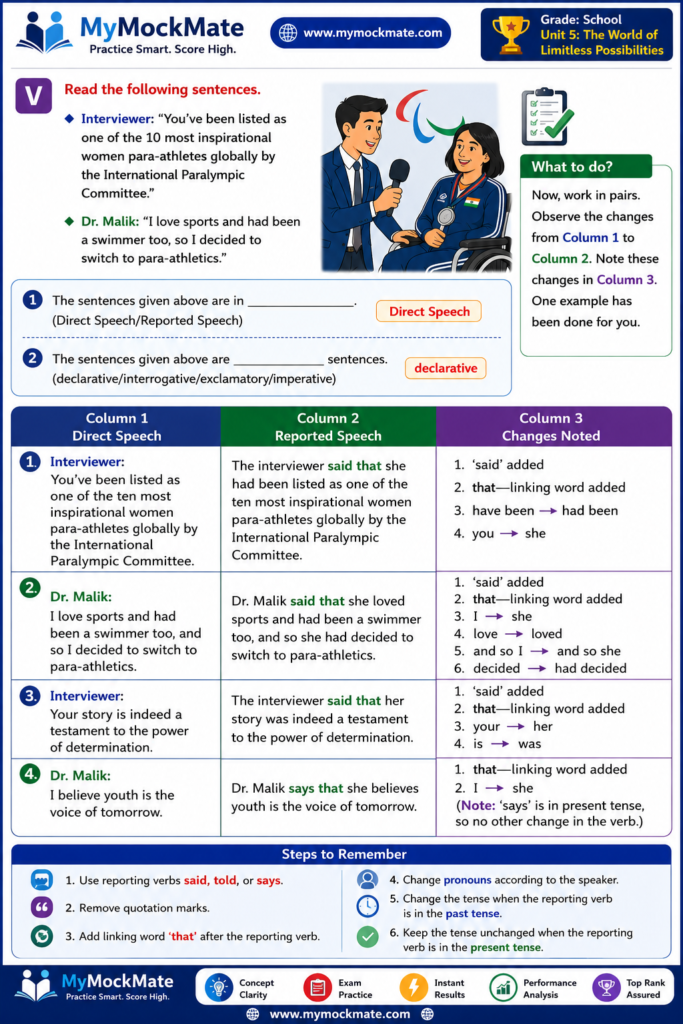
Reported Speech Rules
- Remove quotation marks.
- Add reporting verbs such as said, told, says.
- Add linking word “that”.
- Pronouns change according to the speaker.
- Present tense generally changes to past tense.
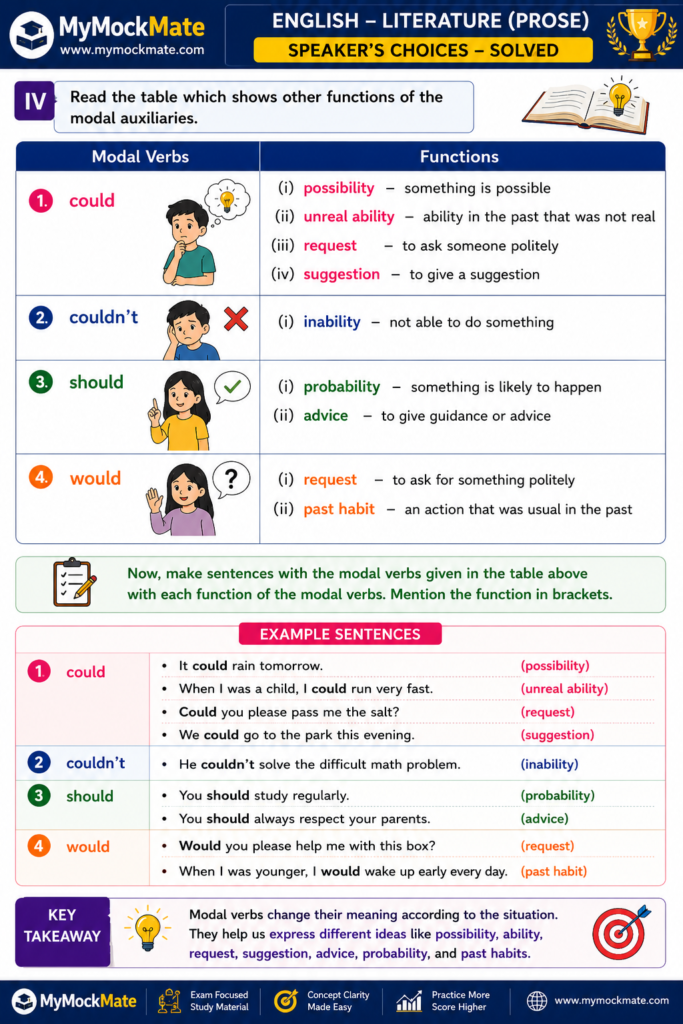
Modal Auxiliary Functions
- Could → possibility, request, suggestion
- Should → advice, probability
- Would → past habit, request
- Couldn’t → inability
Chapter 1: The World of Limitless Possibilities
Reflect and Respond Solutions
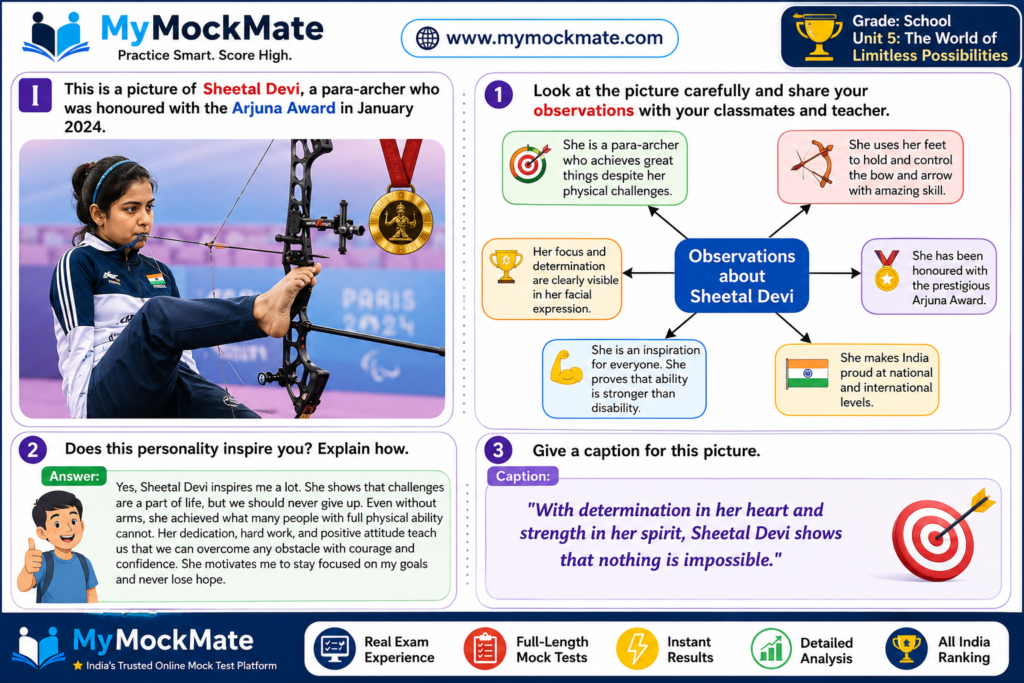
I. This is a picture of Sheetal Devi, a para-archer who was honoured with the Arjuna Award in January 2024.
Reading for Meaning
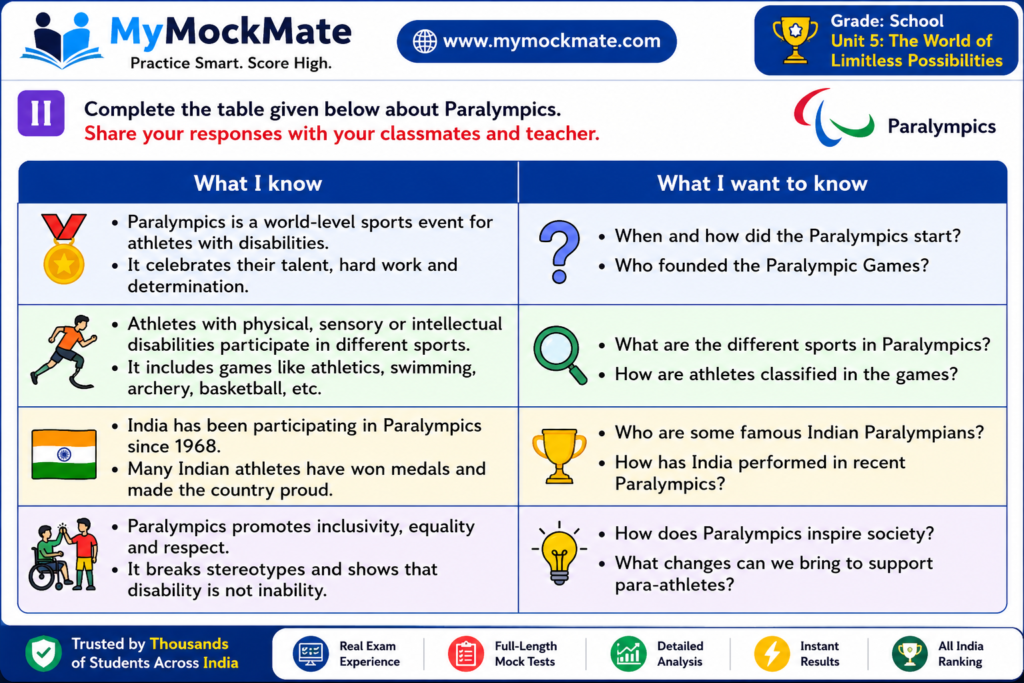
II. Complete the table given below about Paralympics. Share your responses with your classmates and teacher.
Check Your Understanding
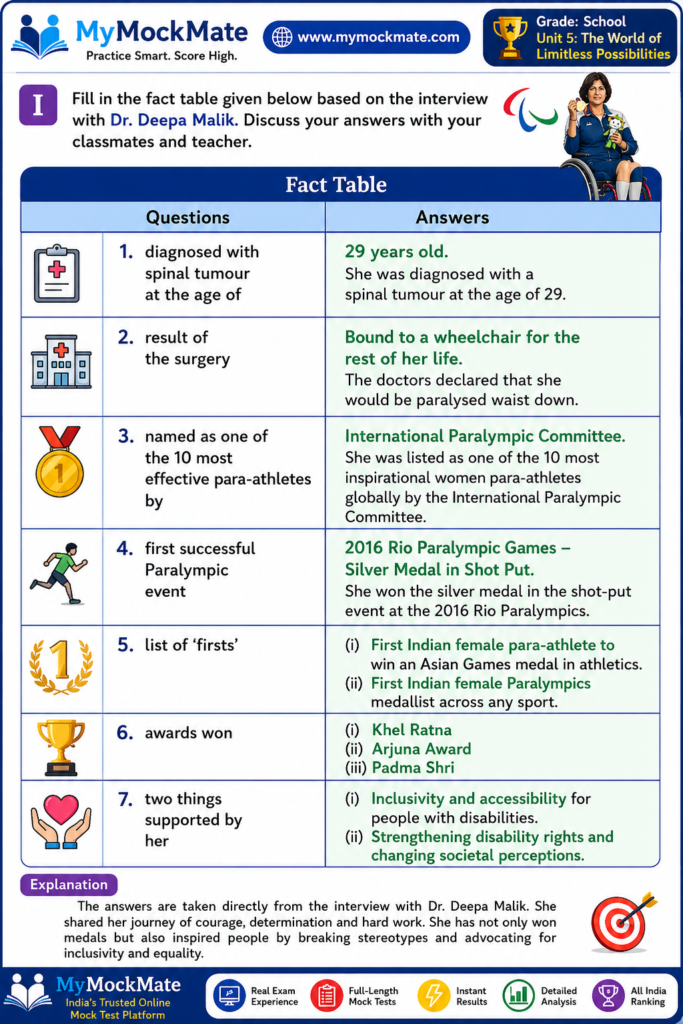
I. Fill in the fact table given below based on the interview with Dr. Deepa Malik. Discuss your answers with your classmates and teacher.
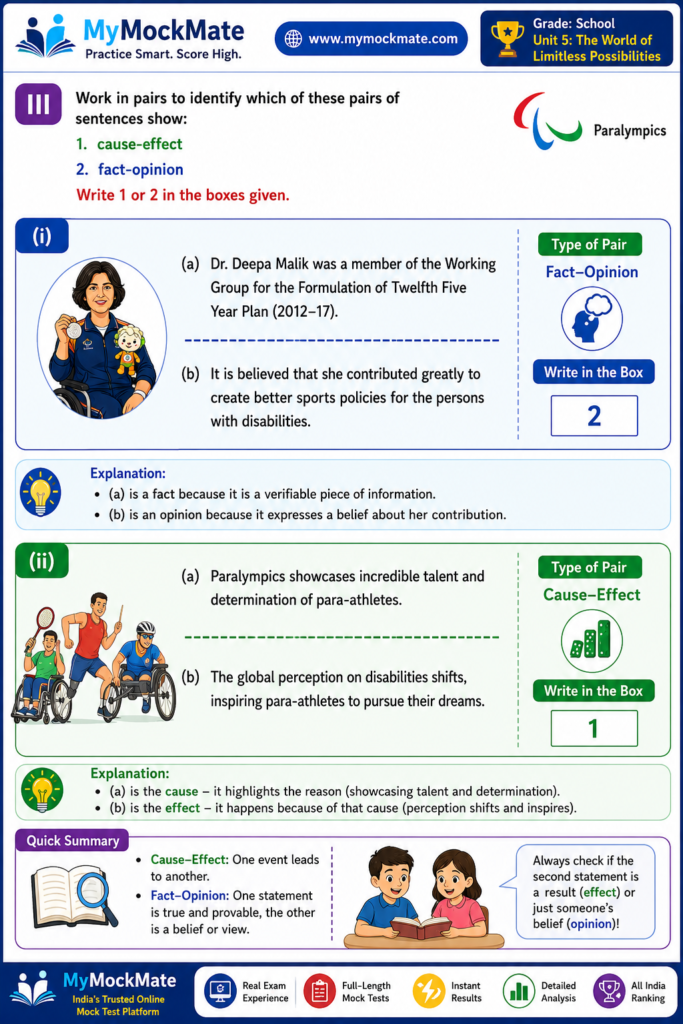
II. Read the two sets of sentences given below. Choose whether the given statements display: fact-opinion or cause-effect.

III. Work in pairs to identify which of these pairs of
sentences show:
- fact-opinion
- cause-effect
Critical Reflection
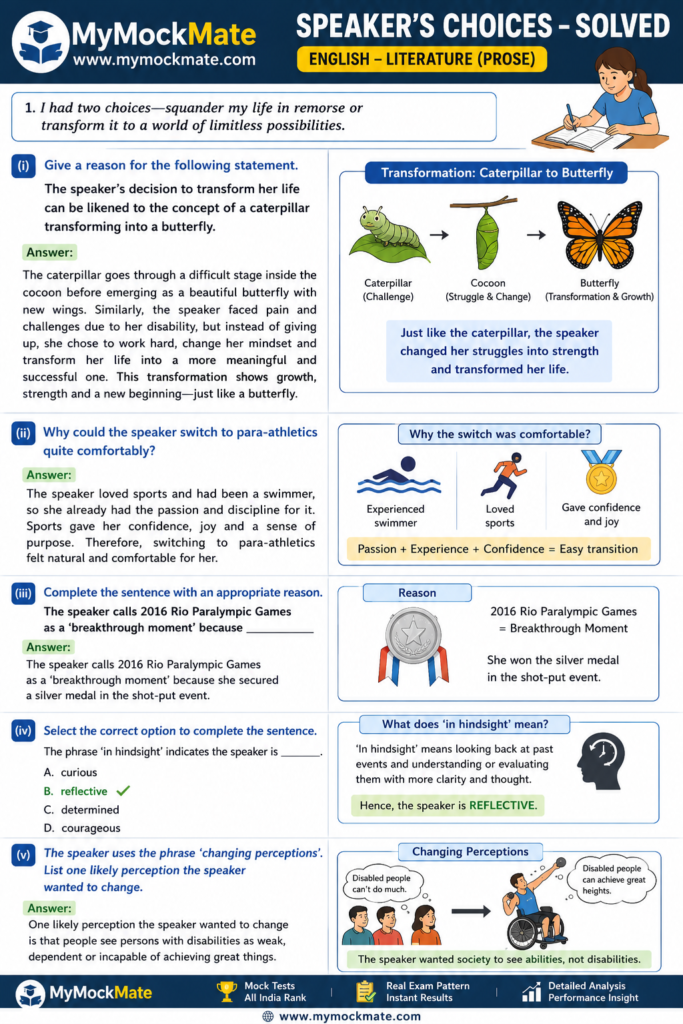
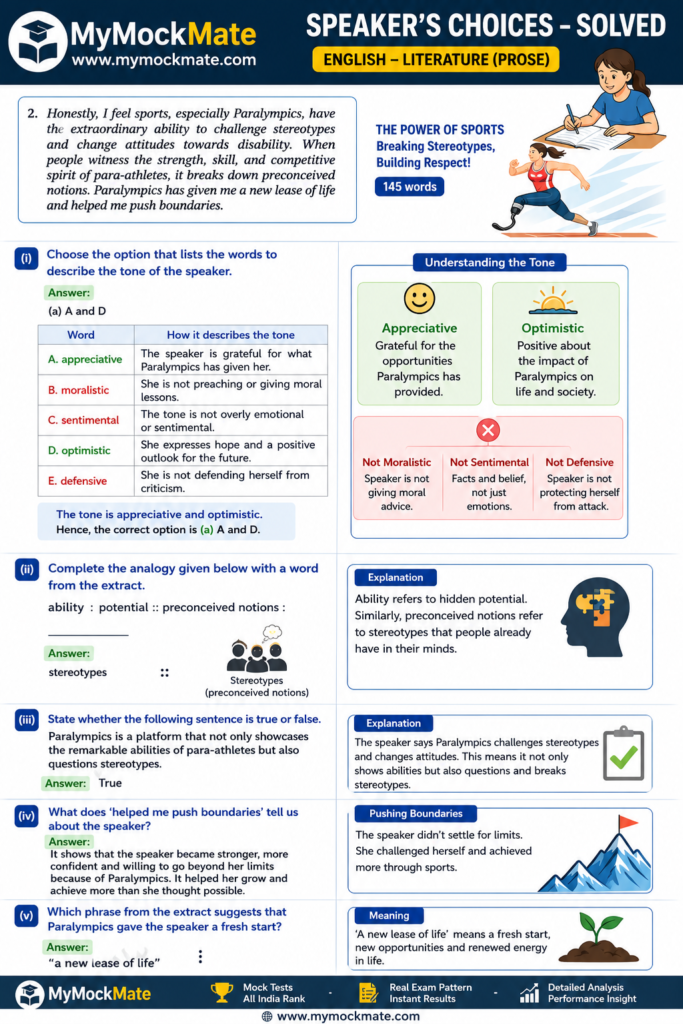
I. Read the extracts given below and answer the questions that follow.
Extract 1 Solutions
Extract 2 Solutions
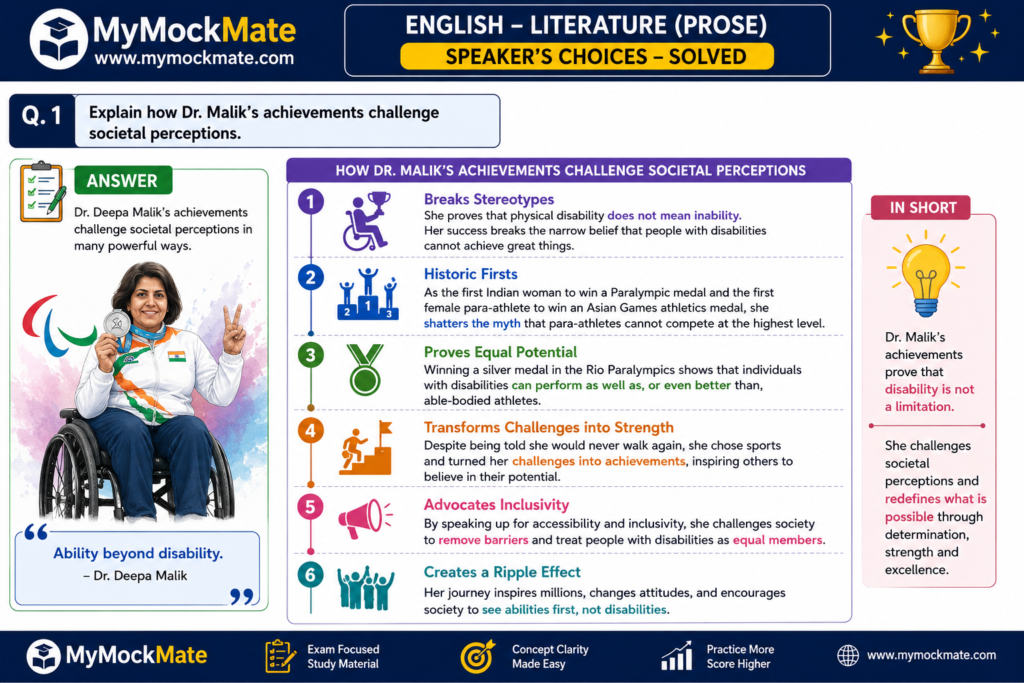
Long Answer Solutions
1. How do Dr. Malik’s achievements challenge societal perceptions?
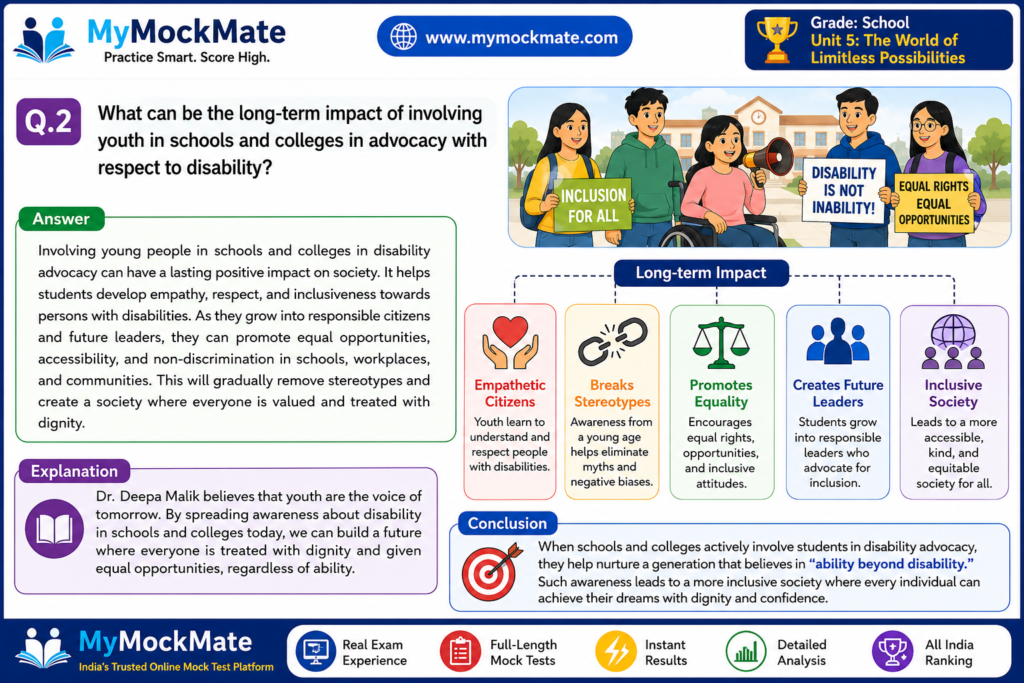
2. Long-term impact of involving youth in advocacy
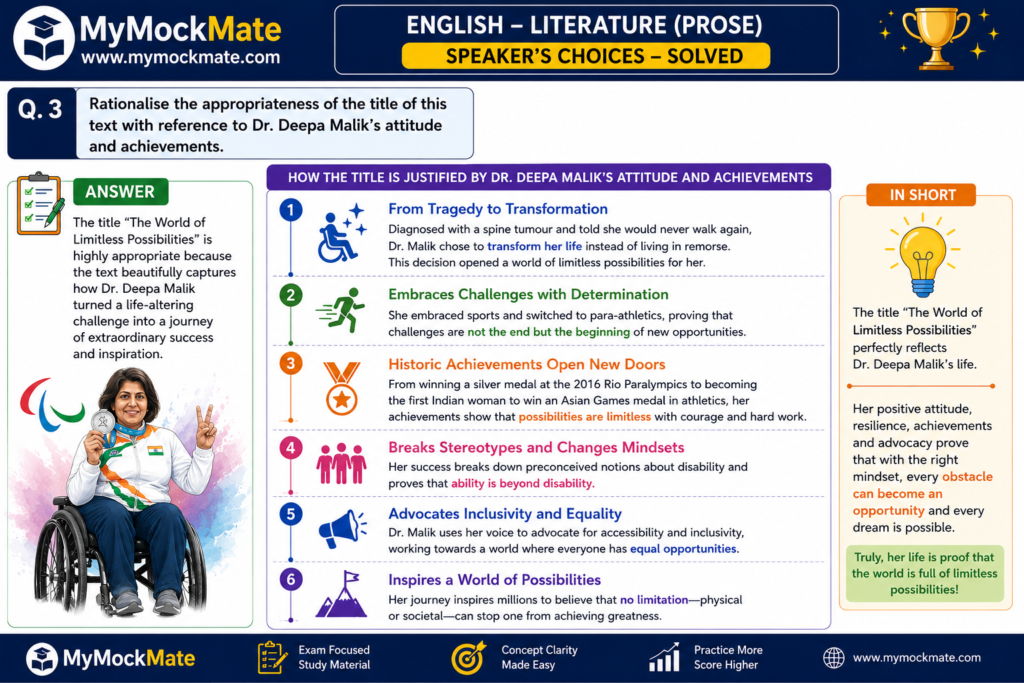
3. Appropriateness of the title
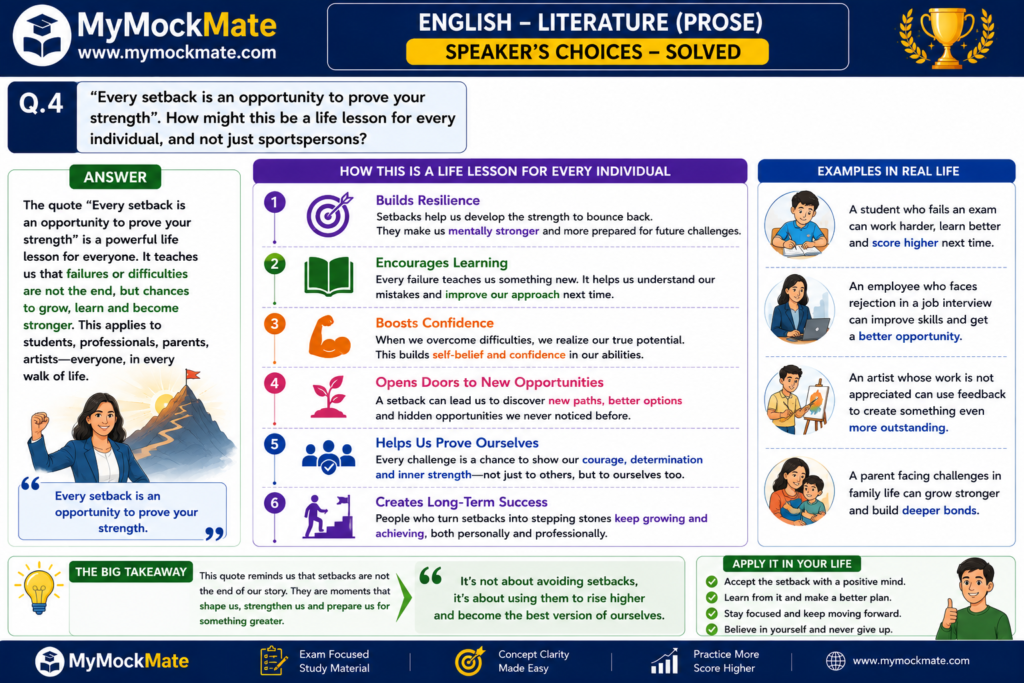
4. “Every setback is an opportunity to prove your strength”. How might this be a life lesson for every individual, and not just sportspersons?
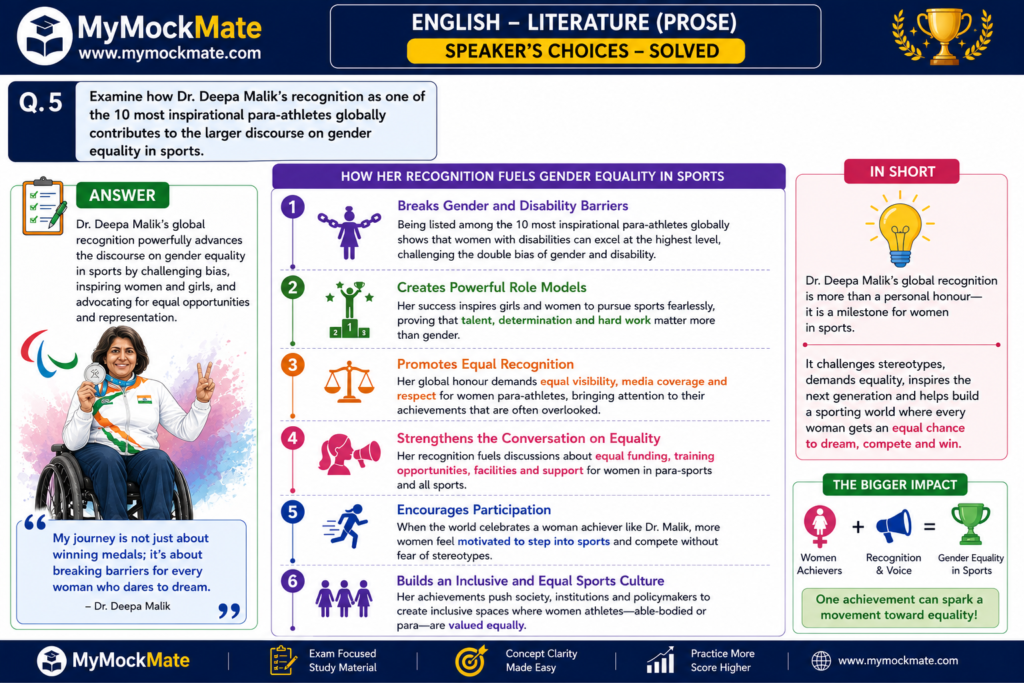
5. Examine how Dr. Deepa Malik’s recognition as one of the 10 most inspirational para-athletes globally contributes to the larger discourse on gender equality in sports.
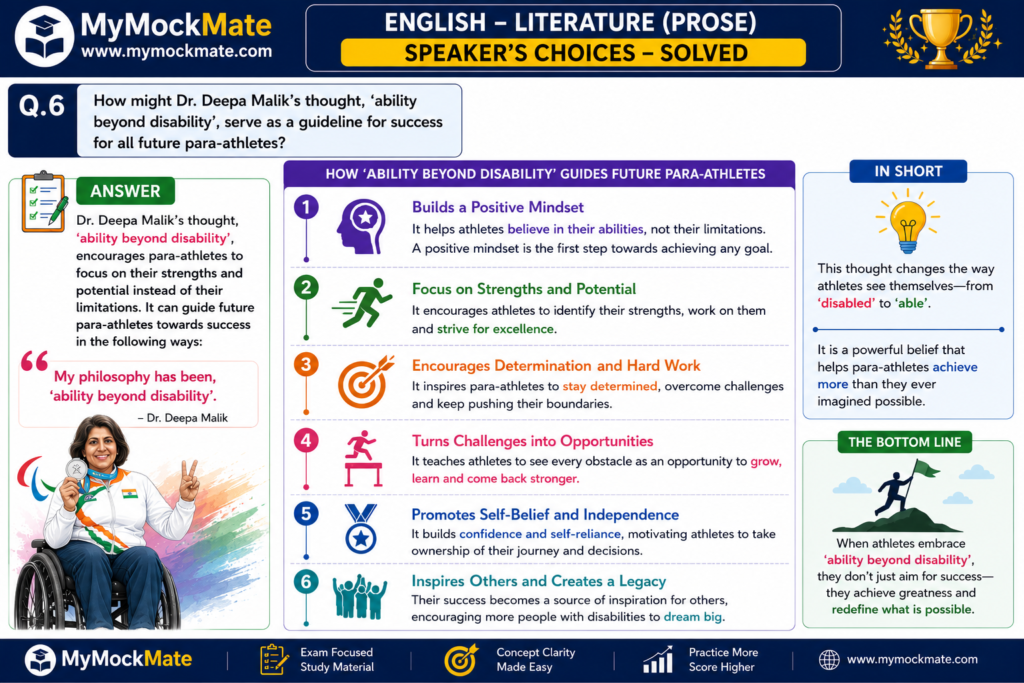
6. How might Dr. Deepa Malik’s thought, ‘ability beyond disability’, serve as a guideline for success for all future para-athletes?
7. What have you learnt from this interview, and how can you implement these learnings in your life?

Vocabulary and Structures in Context
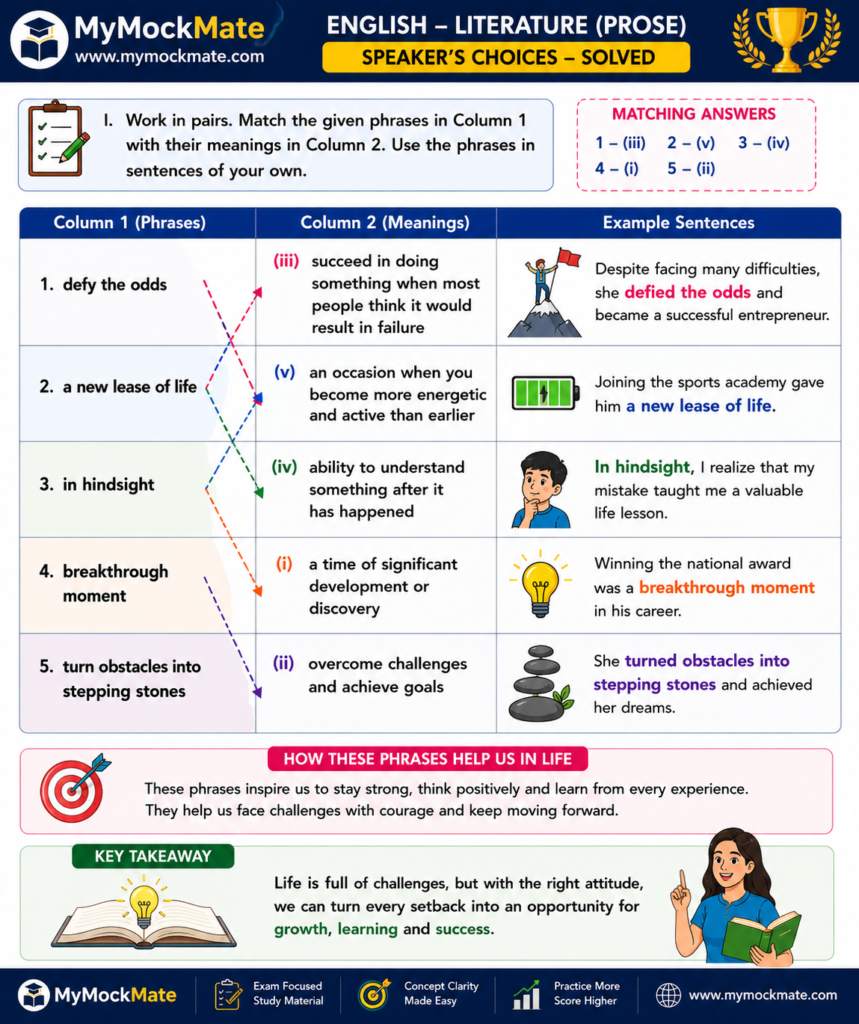
I. Work in pairs. Match the given phrases in Column 1 with their meanings in Column 2. Use the phrases in sentences of your own.
II. A common word used in athletics is ‘sprinting’ which
relates to movement. Read the words related to
movement given in the box below.

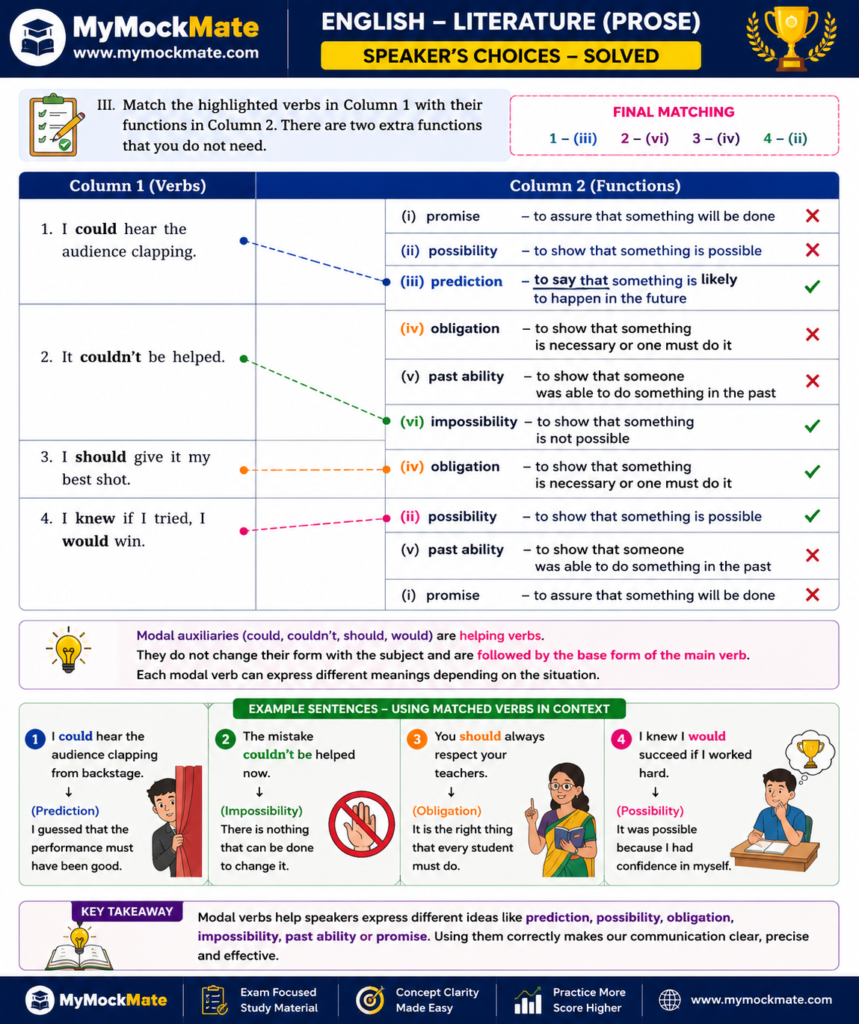
III. Match the highlighted verbs in Column 1 with their
functions in Column 2. There are two extra functions
that you do not need.
IV Read the table which shows other functions of the modal auxiliaries.
V. Read the following sentences.
VI Read the conversation given below.

Listen and Respond
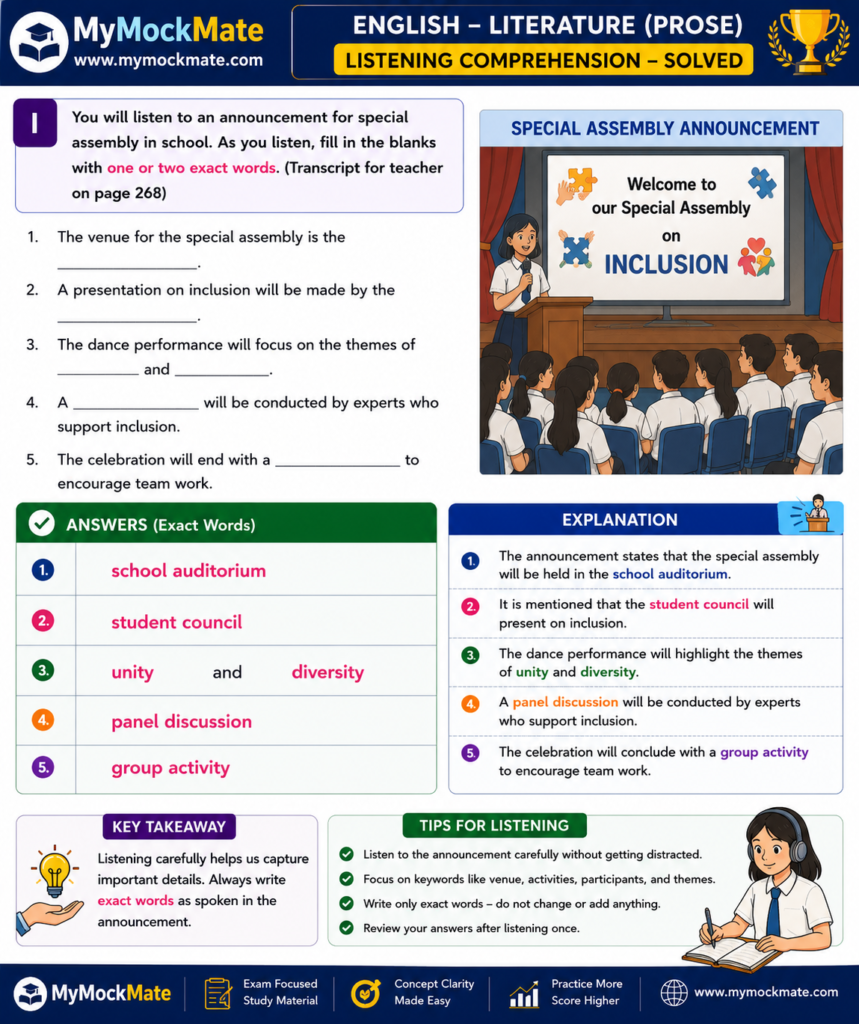
I. You will listen to an announcement for special assembly in school. As you listen, fill in the blanks with one or two exact words.
Writing Task
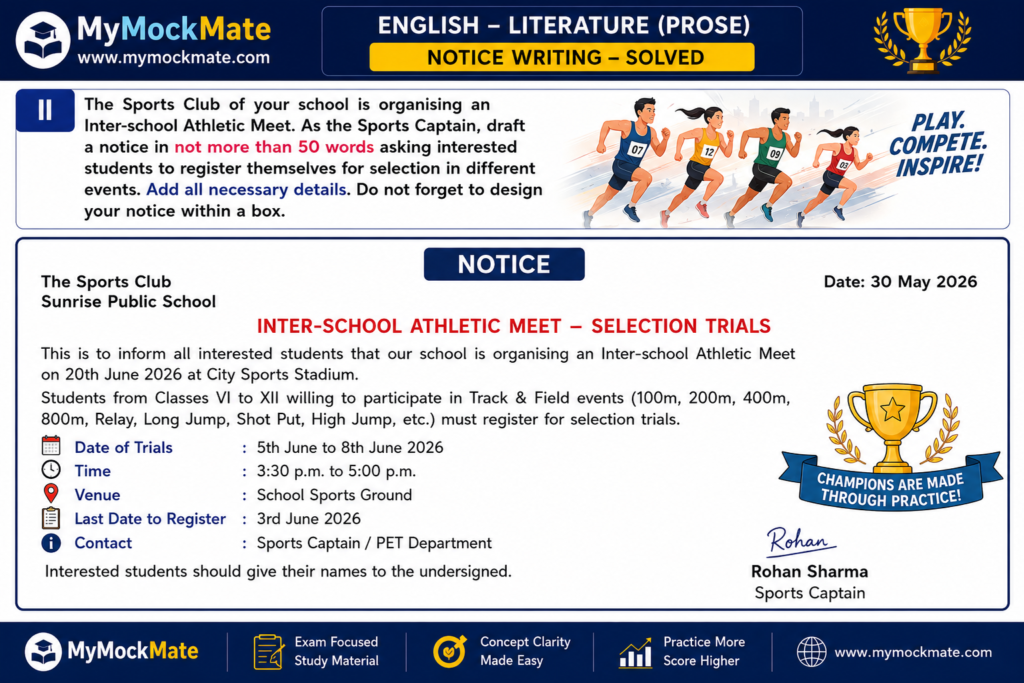
II. The Sports Club of your school is organising an Inter-school Athletic Meet. As the Sports Captain, draft a notice in not more than 50 words asking interested students to register themselves for selection in different events. Add all necessary details. Do not forget to design your notice within a box.
Nine Gold Medals
Reflect and Respond
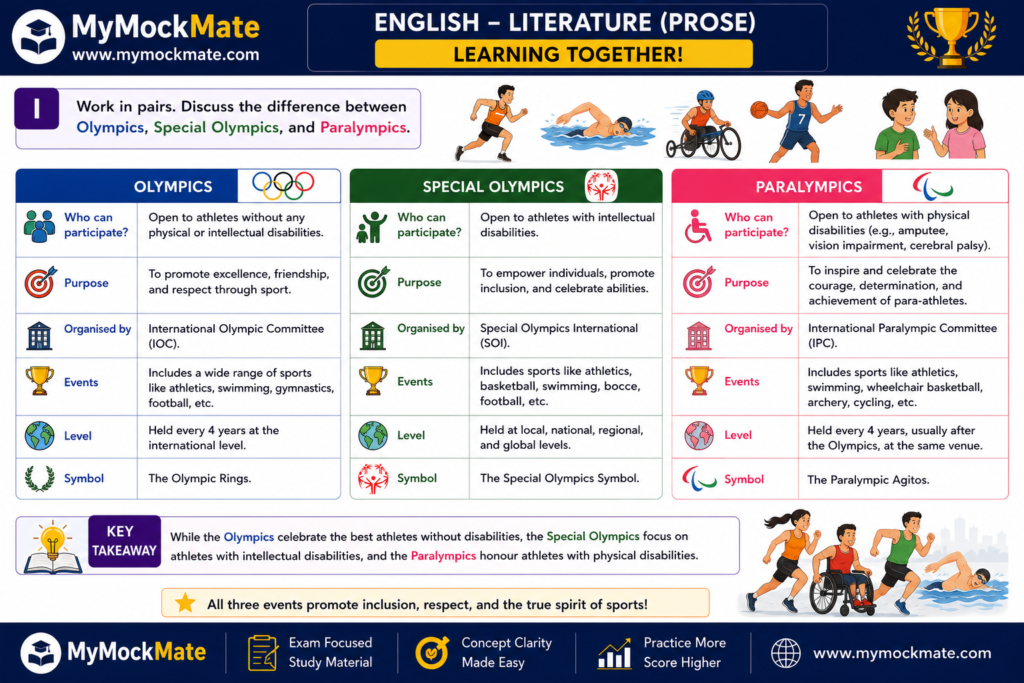
I. Work in pairs. Discuss the difference between Olympics, Special Olympics, and Paralympics.
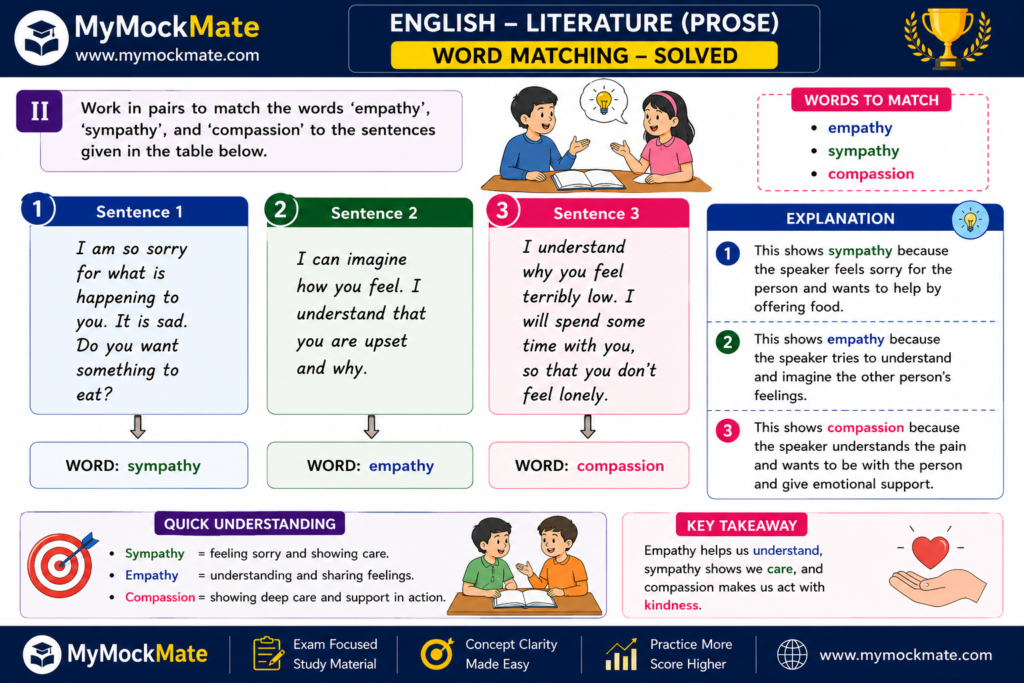
II. Work in pairs to match the words ‘empathy’, ‘sympathy’, and ‘compassion’ to the sentences given in the table below.
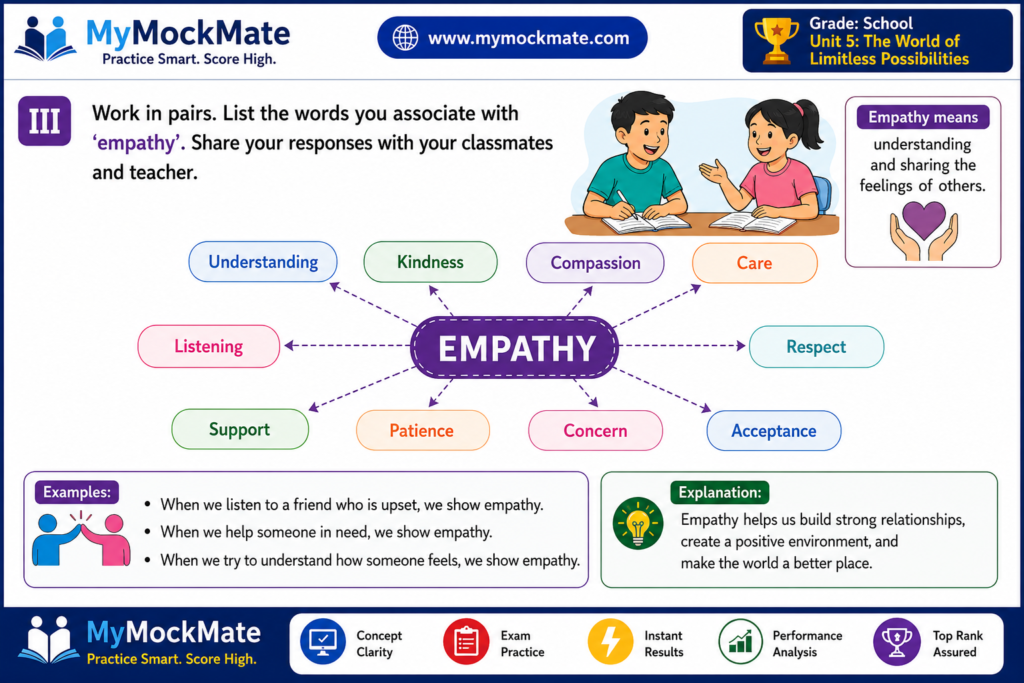
III. Work in pairs. List the words you associate with ‘empathy’. Share your responses with your classmates and teacher.
Check Your Understanding
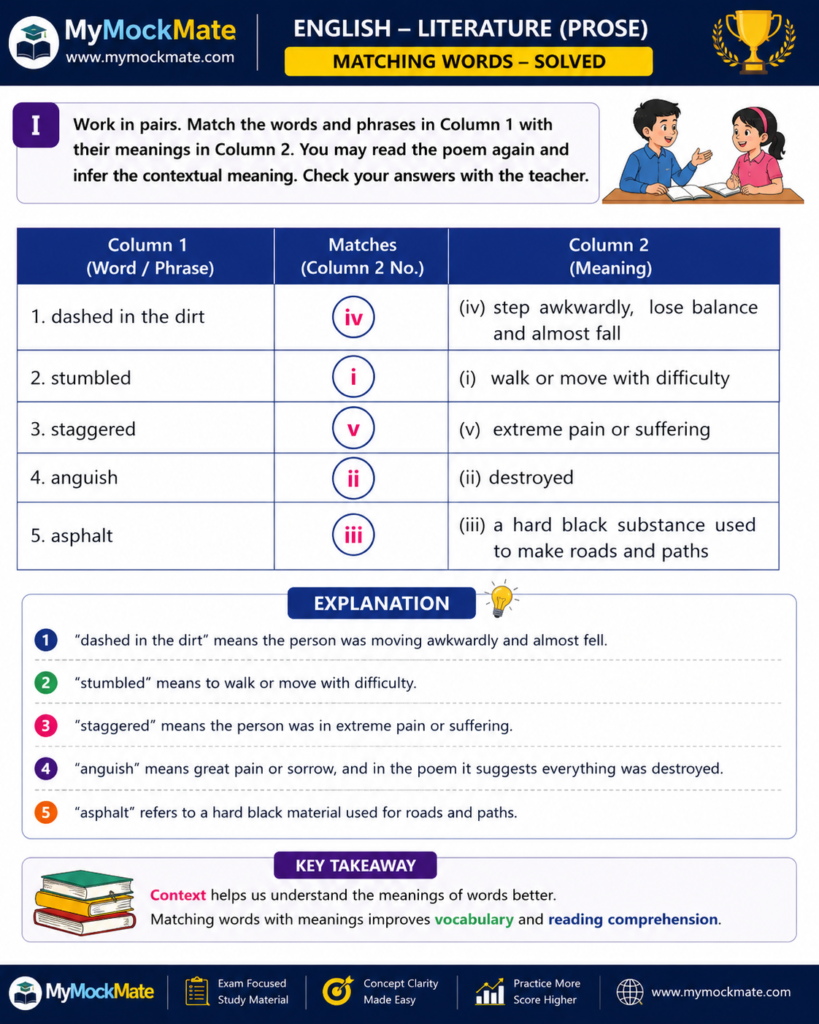
I. Work in pairs. Match the words and phrases in Column 1 with their meanings in Column 2. You may read the poem again and infer the contextual meaning.
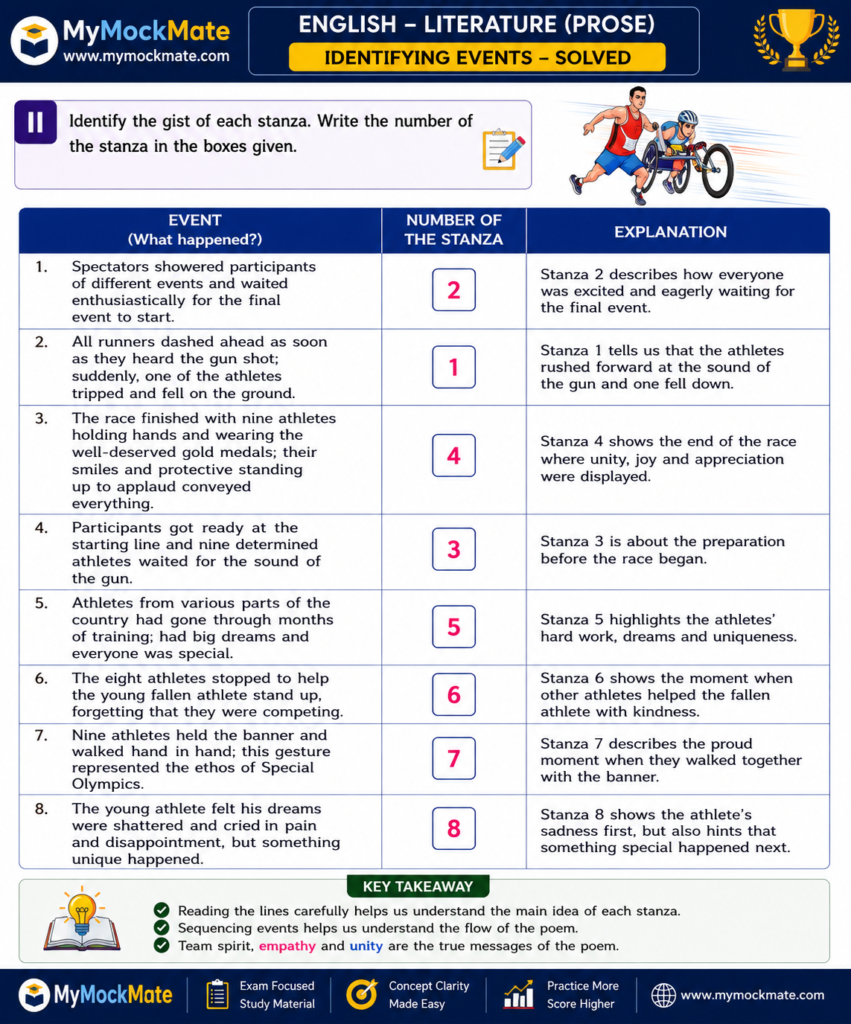
II. Identify the gist of each stanza. Write the number of the stanza in the boxes given.
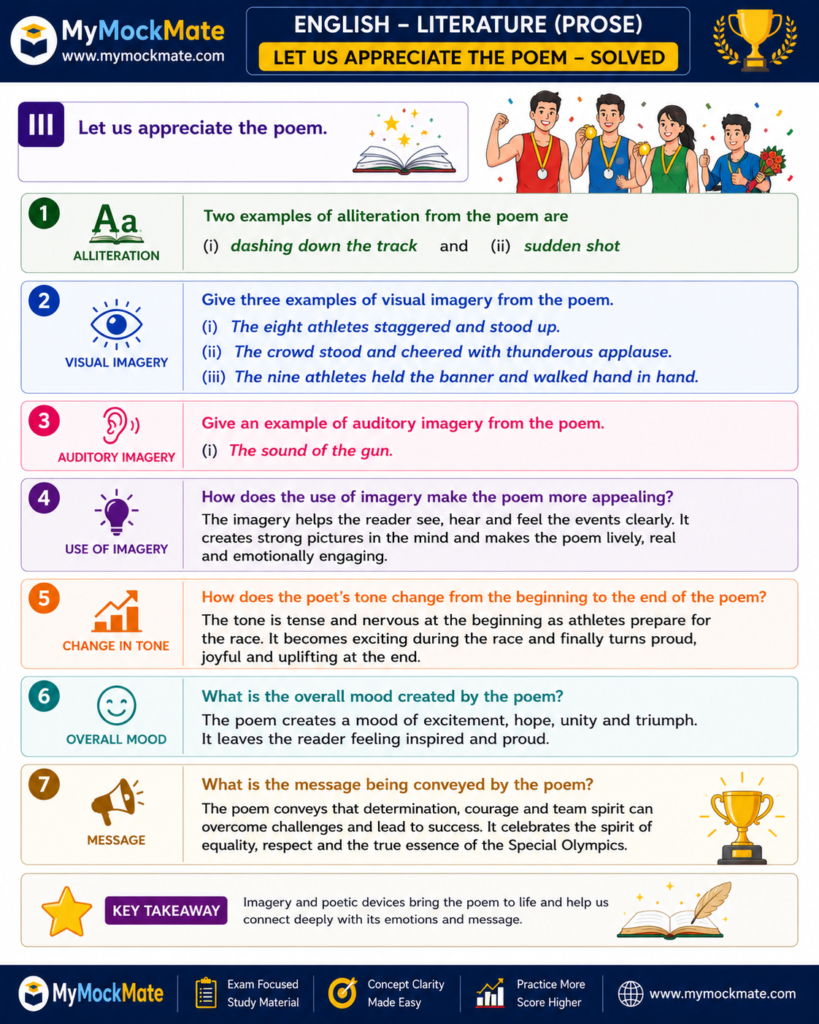
III. Let us appreciate the poem.

Critical Reflection
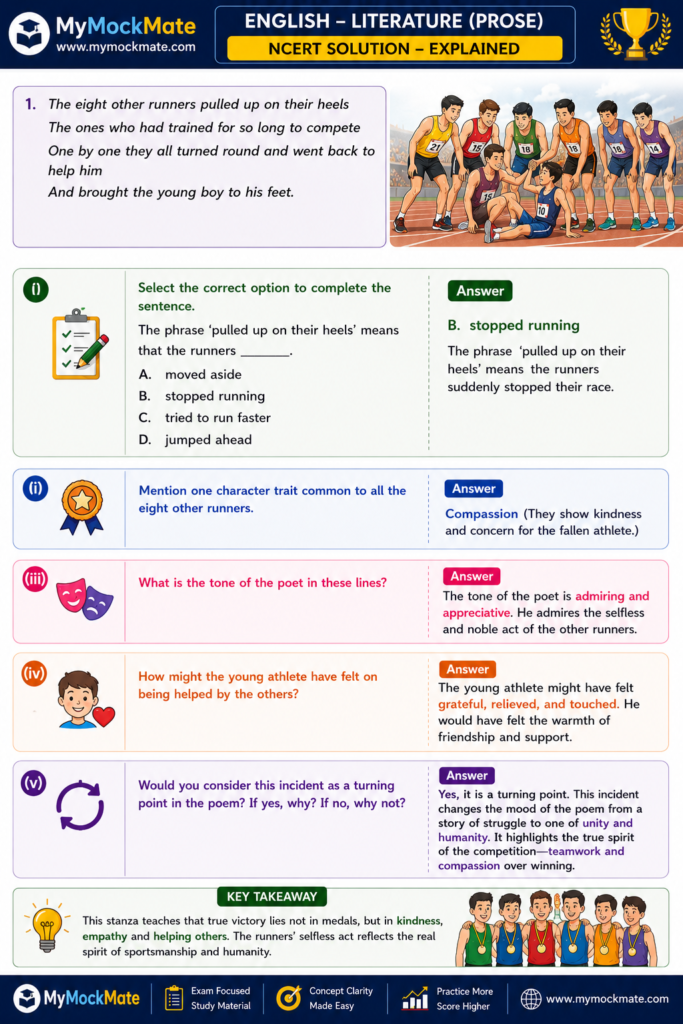
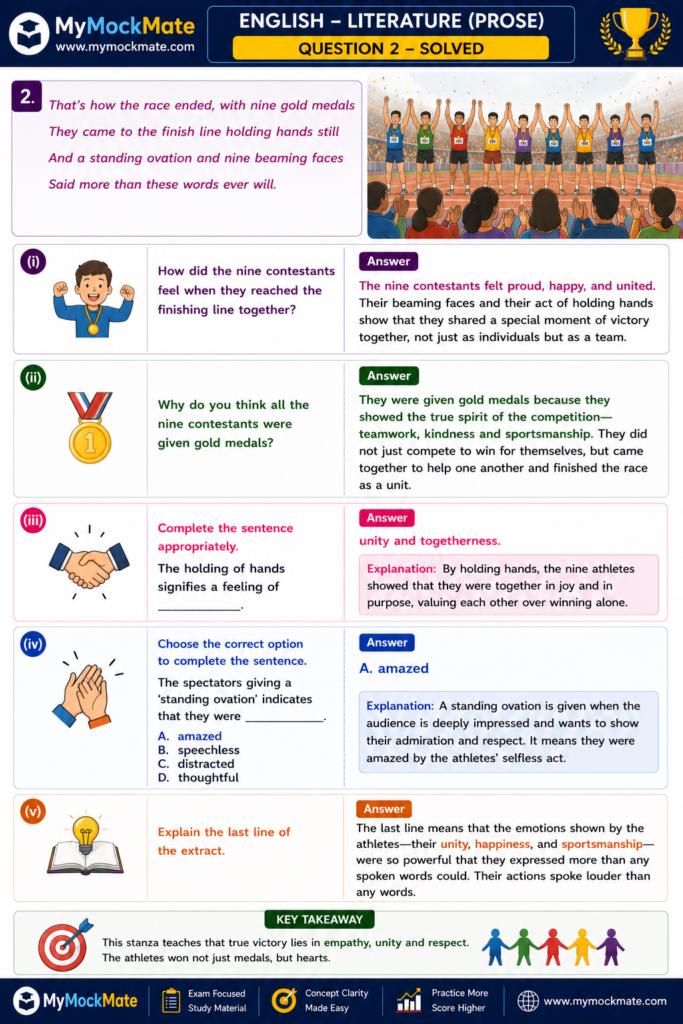
I. Read the extracts given below and answer the questions that follow.
II. Answer the following questions
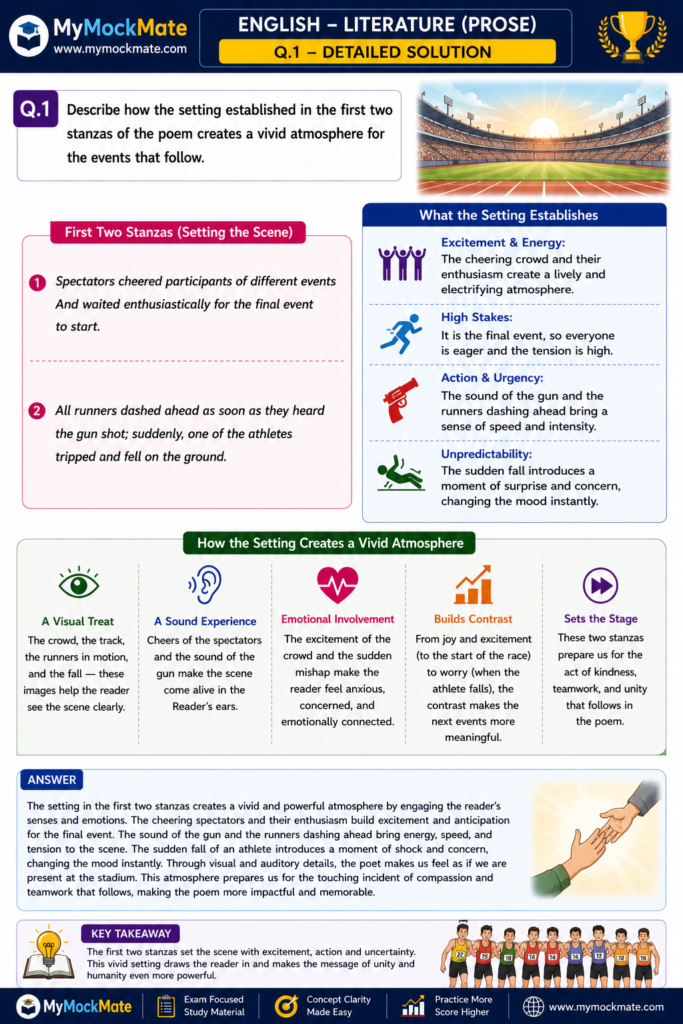
Q.1 Describe how the setting established in the first two stanzas of the poem create a vivid atmosphere for the events that follow.
Q.2 How do you think the youngest athlete might have felt when he fell?

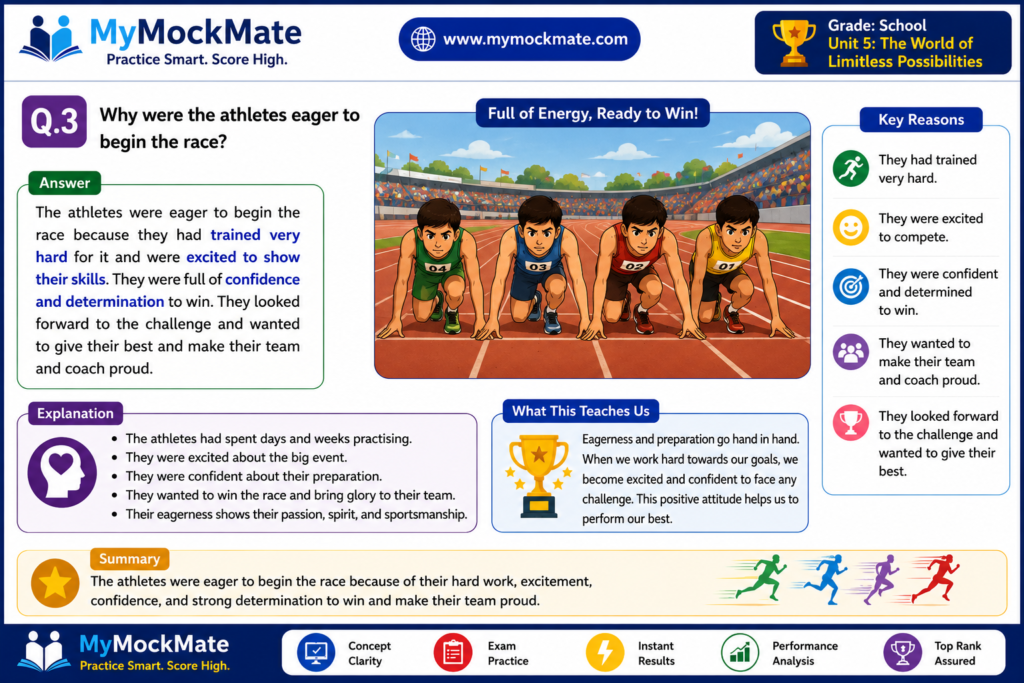
Q.3 Why were the athletes eager to begin the race?
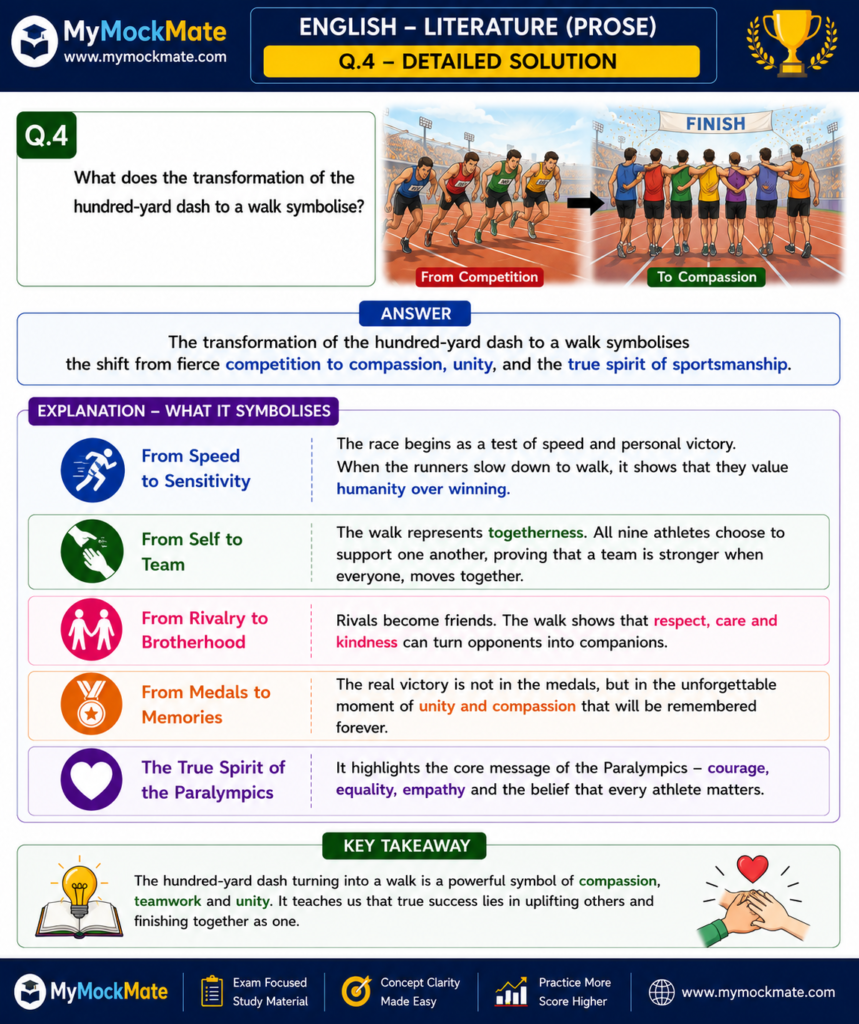
Q.4 What does the transformation of the hundred-yard dash to a walk symbolise?
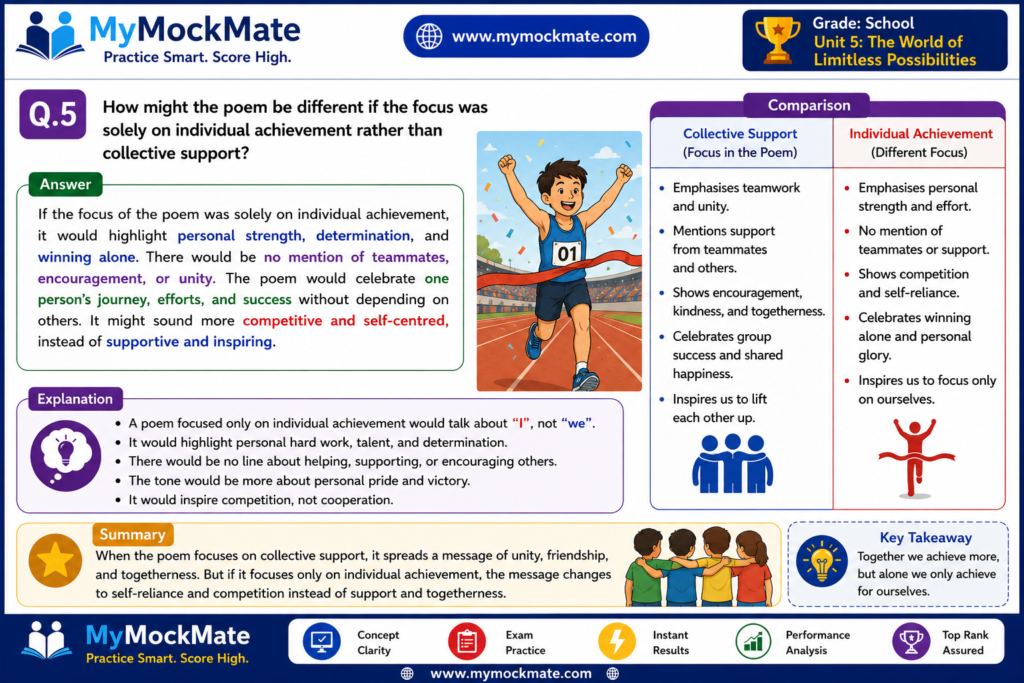
Q.5 How might the poem be different if the focus was solely on individual achievement rather than collective support?
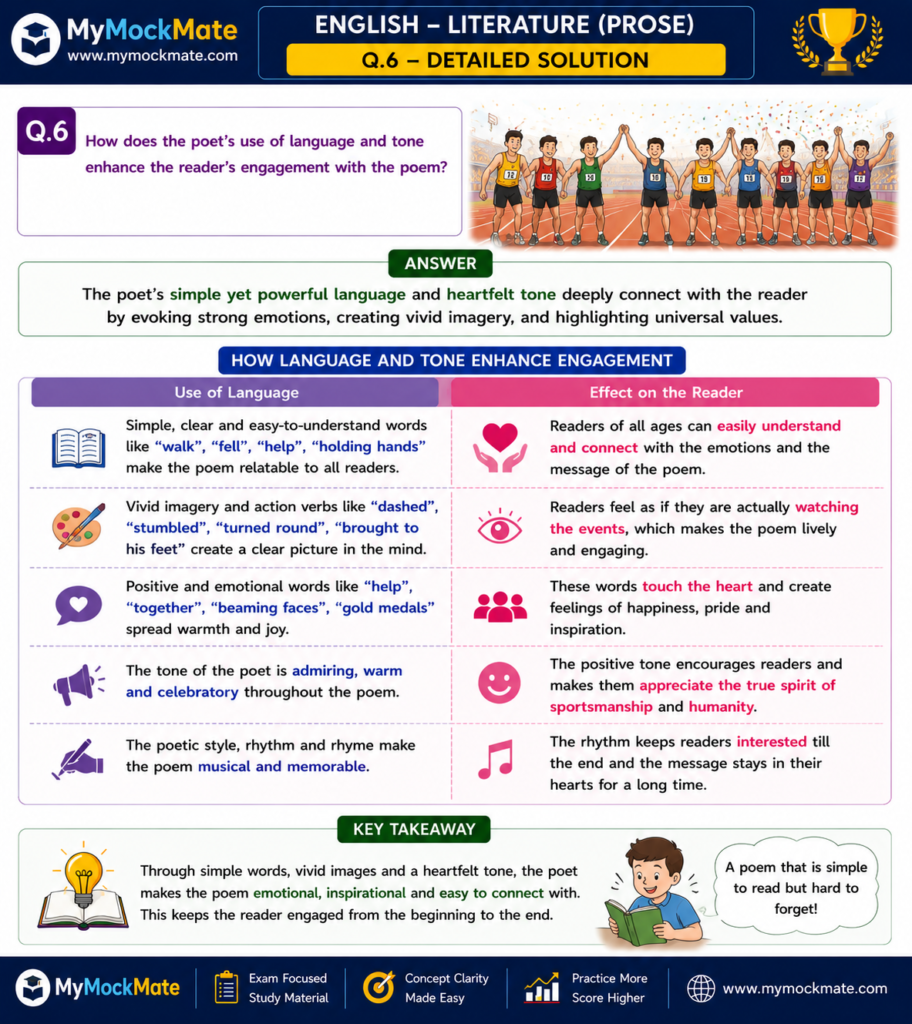
Q.6 How does the poet’s use of language and tone enhance the reader’s engagement with the poem?
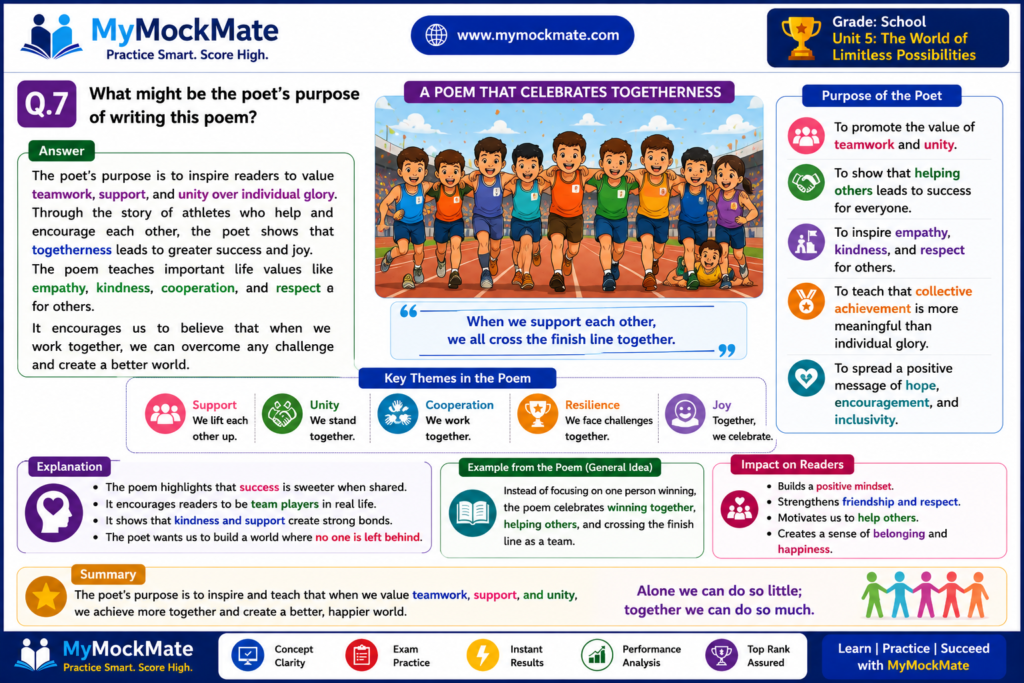
Q. 7 What might be the poet’s purpose of writing this poem?
Vocabulary in Context
I. The phrase ‘standing ovation’ is an example of an adjective–noun collocation. Identify two other similar examples from the poem.

II. Complete the table given below by writing four nouns in Column 2 that collocate with the adjectives in Column 1. One example has been done for you. You may take the help of a dictionary.

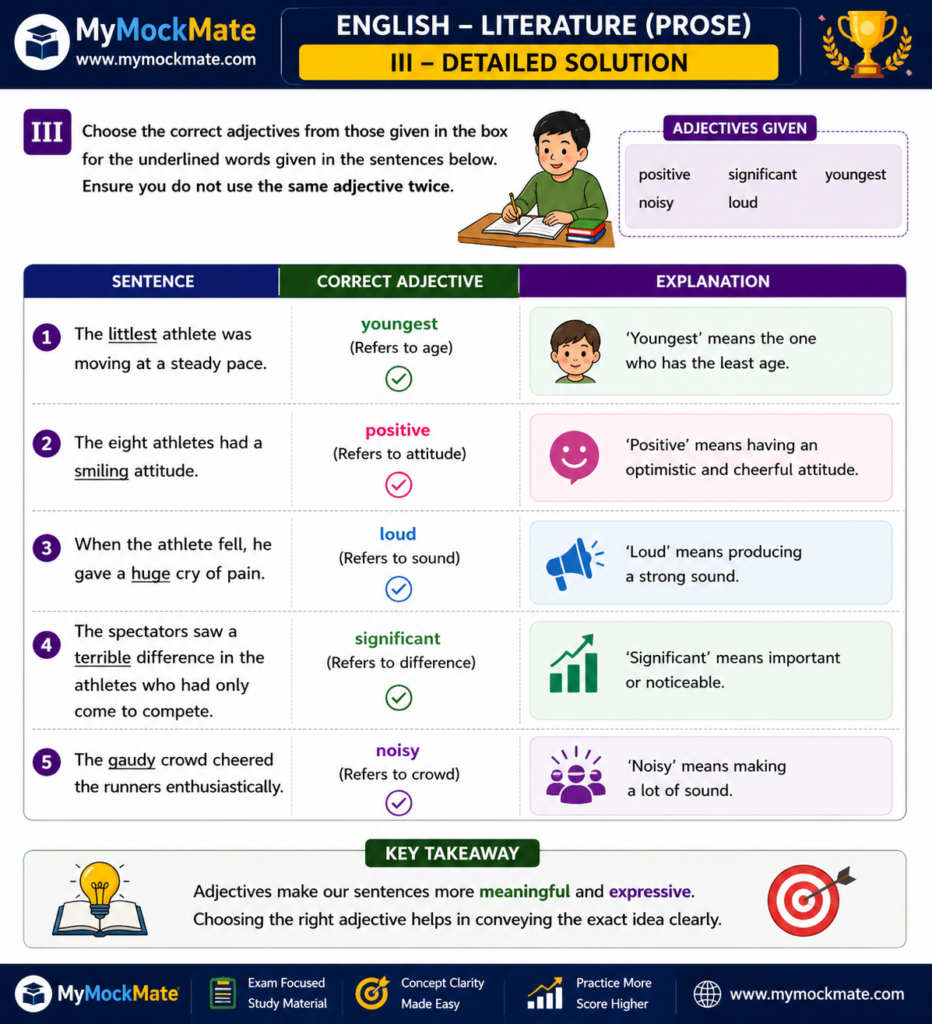
III. Choose the correct adjectives from those given in the box for the underlined words given in the sentences below.
Listen and Respond
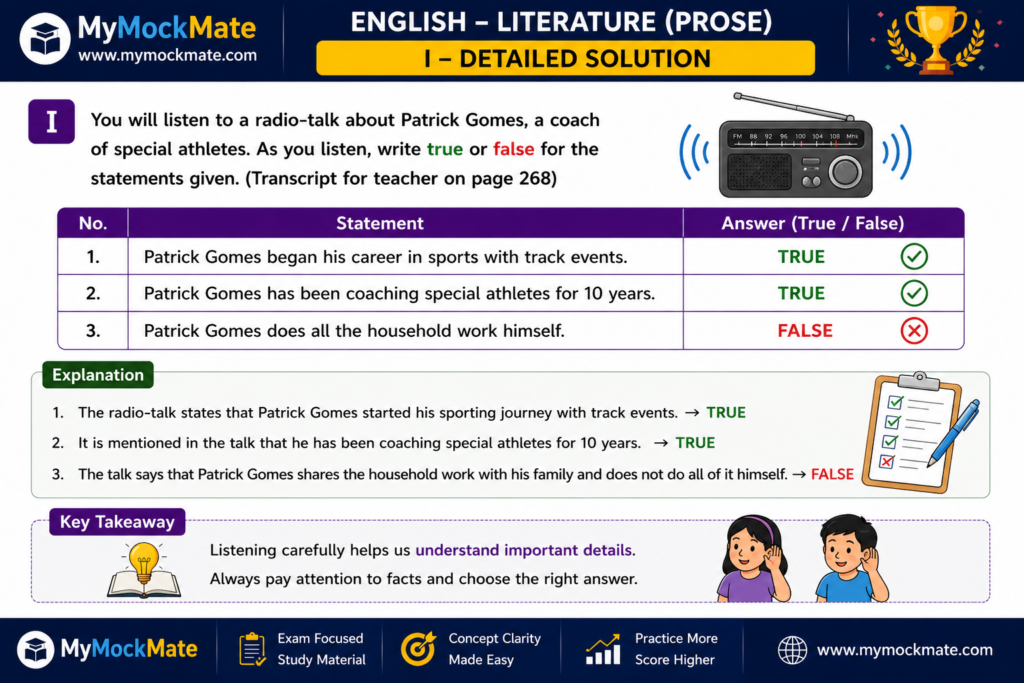
I. You will listen to a radio-talk about Patrick Gomes, a coach of special athletes. As you listen, write true or false for the statements given.
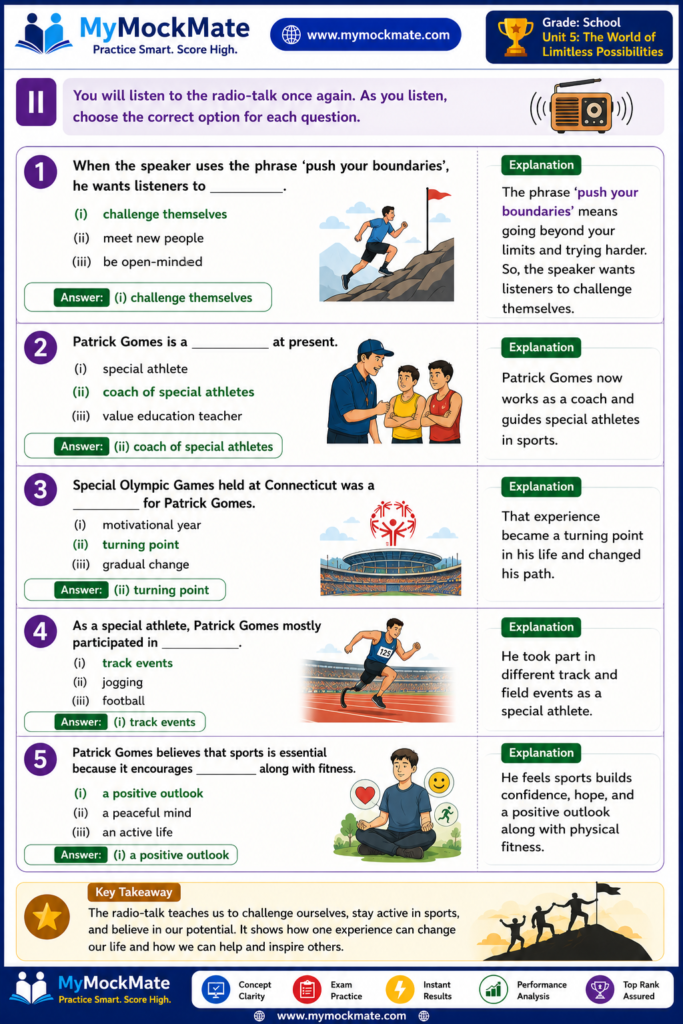
II. You will listen to the radio-talk once again. As you listen, choose the correct option for each question.
Writing Task
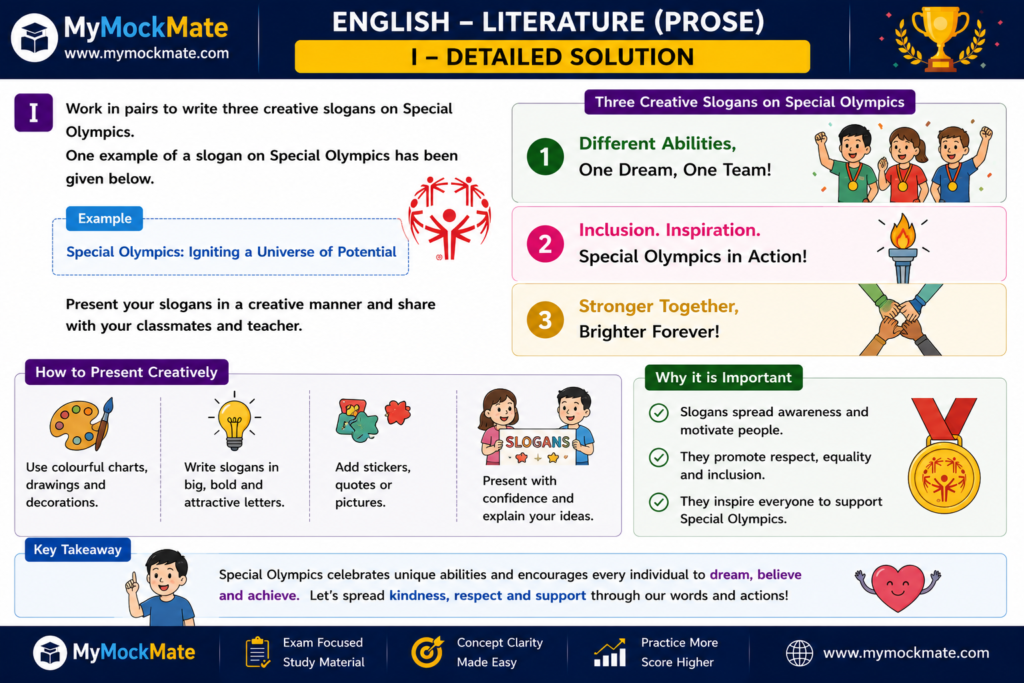
I. Work in pairs to write three creative slogans on Special Olympics.
Practice MCQs
- Which medal did Dr. Deepa Malik win at Rio Paralympics? A. Gold B. Silver C. Bronze D. None Answer: B. Silver
- What does “resilience” mean? A. Weakness B. Courage to recover quickly C. Anger D. Fear Answer: B. Courage to recover quickly
- Which award was received by Dr. Malik? A. Bharat Ratna B. Nobel Prize C. Padma Shri D. Oscar Answer: C. Padma Shri
Common Mistakes
- Confusing fact with opinion.
- Incorrect tense changes in reported speech.
- Writing incomplete answers without explanation.
- Ignoring vocabulary meanings from context.
Exam Tips
- Read comprehension passages carefully.
- Highlight keywords before answering.
- Use proper grammar in reported speech.
- Write answers in simple and clear language.
Chapter 2: Nine Gold Medals
Short Intro
The poem “Nine Gold Medals” teaches the values of empathy, teamwork, kindness, and humanity through a touching incident during a race in the Special Olympics.
Check Your Understanding
I. Match the Words
| Word | Meaning |
| dashed in the dirt | destroyed |
| stumbled | almost fell |
| staggered | moved with difficulty |
| anguish | extreme pain |
| asphalt | road material |
II. Gist of Each Stanza
1 → Stanza 2 2 → Stanza 4 3 → Stanza 8 4 → Stanza 3 5 → Stanza 1 6 → Stanza 6 7 → Stanza 7 8 → Stanza 5
III. Appreciation of the Poem
1. Alliteration Examples
- “sound of the gun”
- “standing still”
2. Visual Imagery
- runners charging ahead
- athlete falling on asphalt
- contestants holding hands
3. Auditory Imagery
“the pistol exploded”
4. Importance of Imagery
Imagery makes the poem vivid and emotional.
5. Tone Change
The tone changes from excitement to sympathy and inspiration.
6. Overall Mood
The mood is emotional, inspiring, and compassionate.
7. Message of the Poem
Humanity and kindness are more important than winning.
Critical Reflection Solutions
Extract 1
(i)
Correct Option: B. stopped running
(ii)
Kindness
(iii)
Sympathetic and emotional
(iv)
He may have felt grateful and encouraged.
(v)
Yes, because it changed the race from competition to cooperation.
Extract 2
(i)
The contestants felt happy and proud.
(ii)
They were given gold medals because they showed true sportsmanship and humanity.
(iii)
unity and teamwork
(iv)
Correct Option: A. amazed
(v)
The last line means their actions expressed emotions more powerfully than words.
Long Answer Solutions
1. Atmosphere created in first two stanzas
The poet creates excitement and anticipation by describing athletes, spectators, and the final race.
2. Feelings of youngest athlete
He felt disappointed, hurt, and frustrated after falling.
3. Why were athletes eager?
They wanted to win medals after months of hard training.
4. Symbolism of race changing into walk
It symbolises cooperation, humanity, and empathy.
5. Difference if focus was individual achievement
The poem would lose its emotional impact and message of kindness.
6. Language and tone effect
Simple language and emotional tone make readers feel connected.
7. Poet’s purpose
The poet wanted to teach the importance of compassion and teamwork.
Vocabulary in Context
Adjective-Noun Collocations
- standing ovation
- young boy
- gold medals
Correct Adjectives
- youngest
- positive
- loud
- significant
- noisy
Speaking Activity Sample Answer
Personally, I believe that Special Olympics promote equality and confidence among differently-abled athletes. They encourage society to become more inclusive.
Writing Task – Slogans
- “Different Abilities, Same Dreams”
- “Together We Win”
- “Courage Beyond Limits”
FAQ Section
1. What is the main theme of “The World of Limitless Possibilities”?
The chapter focuses on determination, courage, and overcoming disability.
2. What is the message of “Nine Gold Medals”?
The poem teaches empathy, kindness, and teamwork.
3. Who is Dr. Deepa Malik?
She is India’s famous Paralympic athlete