






Short Intro
“A Question of Trust” by Victor Canning is an interesting story from the NCERT Class 10 English supplementary reader Footprints Without Feet. The chapter revolves around Horace Danby, a clever lock-maker who secretly steals rare jewels to buy expensive books. This lesson highlights trust, deception, intelligence, and irony. Below are detailed answers and explanations for all textbook questions in a portal-ready Unicode format for www.mymockmate.com.
Quick Information Box
| Particular | Details |
|---|---|
| Chapter Name | A Question of Trust |
| Author | Victor Canning |
| Class | 10 |
| Book | Footprints Without Feet |
| Genre | Crime & Suspense Story |
| Main Character | Horace Danby |
| Key Themes | Trust, Deception, Crime, Irony |
| Exam Importance | Very Important for CBSE Board Exams |
Concepts Used (Topics Covered)
- Character Sketch of Horace Danby
- Irony in the Story
- Theme of Trust and Betrayal
- Crime and Punishment
- Use of Intelligence and Deception
- Moral Values
- NCERT Extract-Based Understanding
Important Formulas / Key Literary Points
Although English chapters do not contain mathematical formulas, these literary concepts are important:
- Irony → Situation opposite to expectations
- Characterisation → Description of characters through actions and dialogues
- Theme → Central idea of the story
- Suspense → Curiosity created in readers’ minds
Questions & Step-by-step Solutions with Explanation
READ AND FIND OUT
Q. What does Horace Danby like to collect?
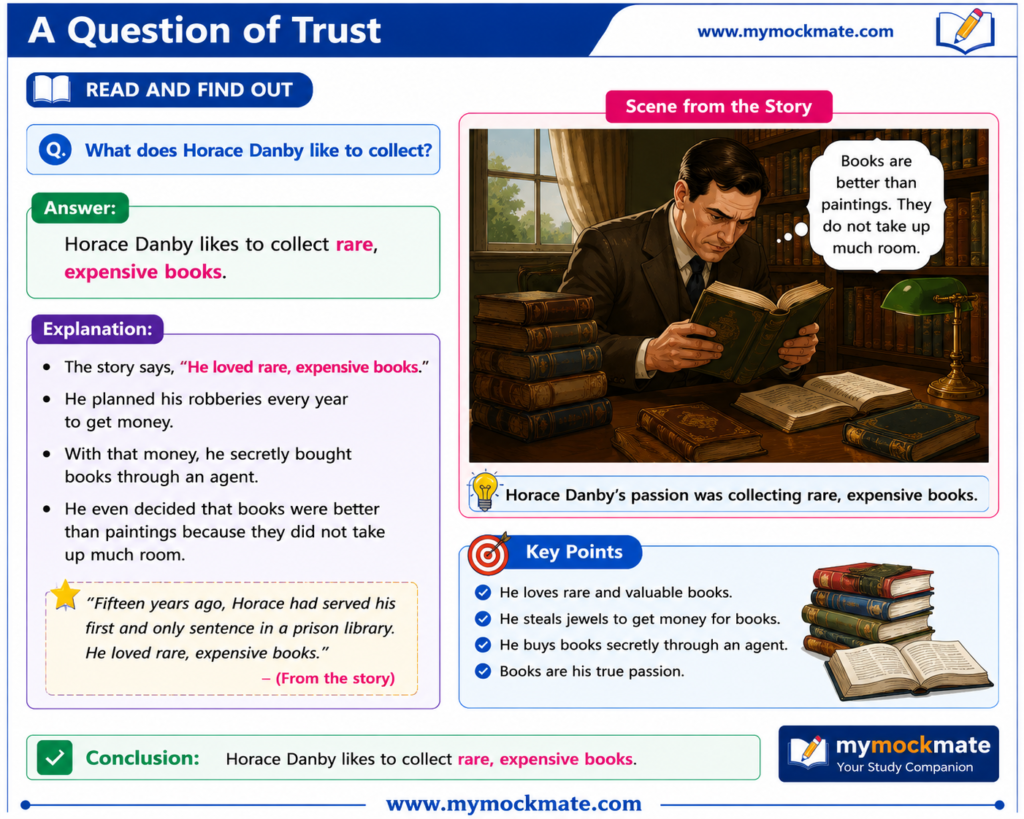
Q. Why does he steal every year?
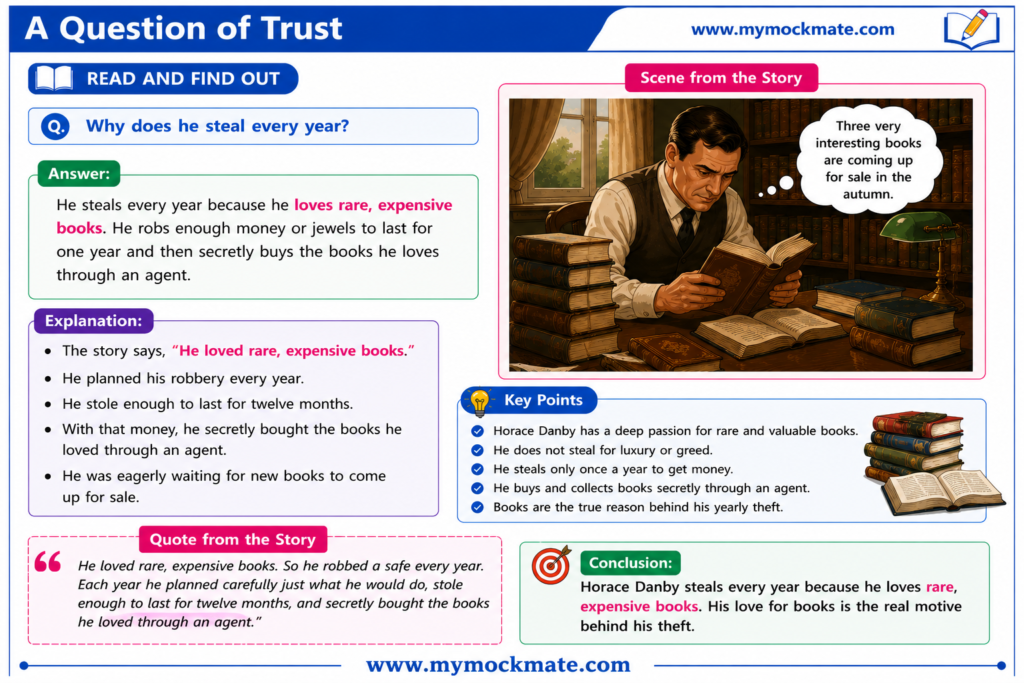
Q. Who is speaking to Horace Danby?

Q. Who is the real culprit in the story?
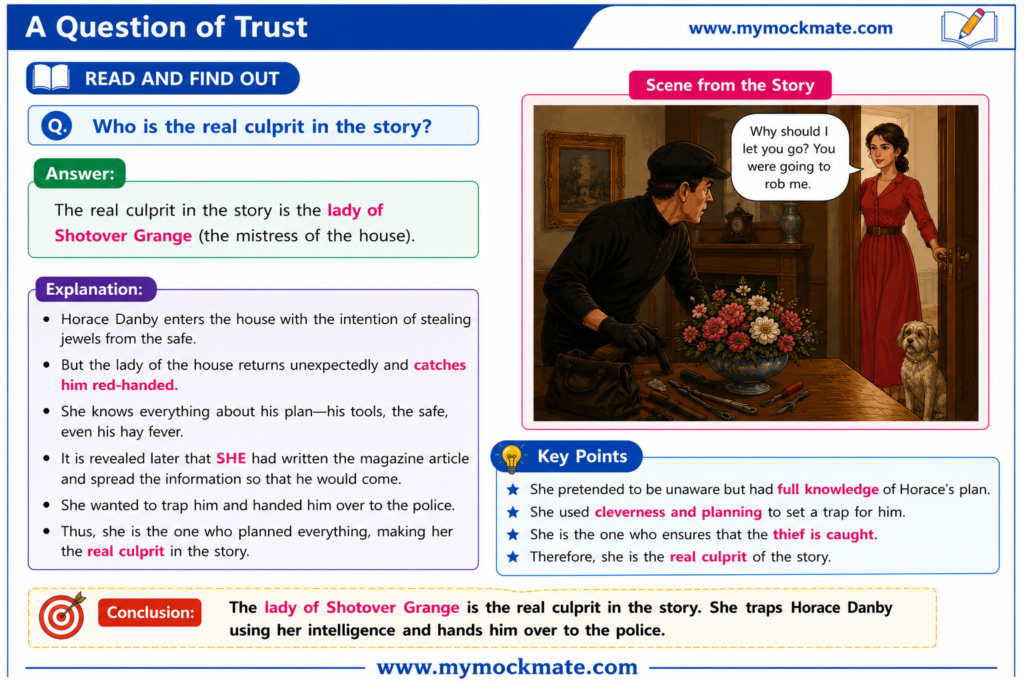
Think About It – Long Answer Solutions
Question 1
Did you begin to suspect, before the end of the story, that the lady was not the person Horace Danby took her to be? If so, at what point did you realise this, and how?
Answer
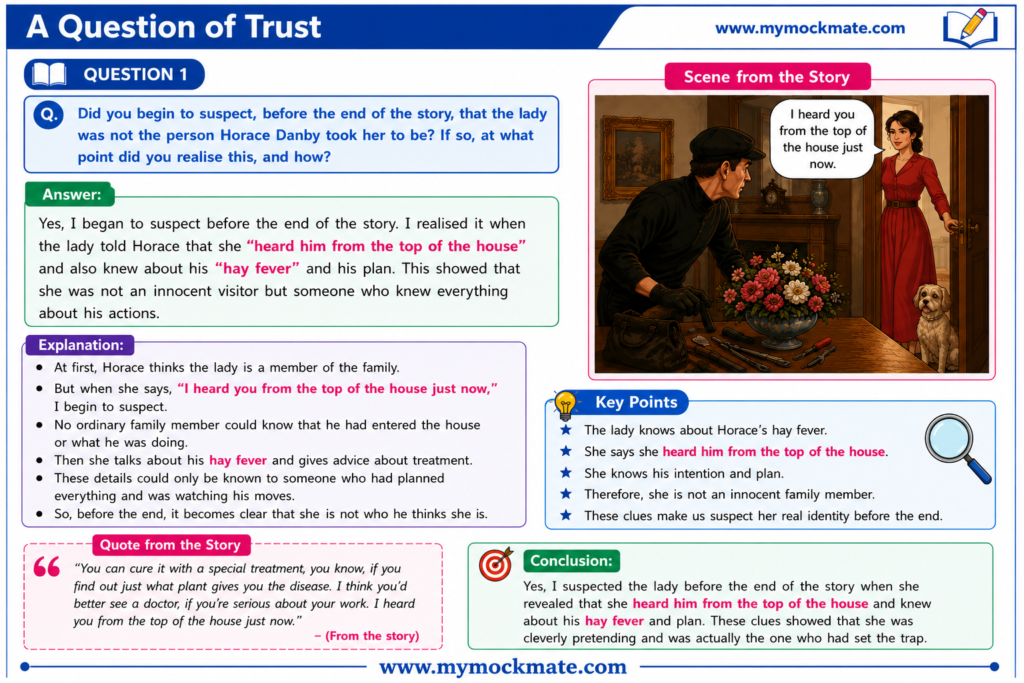
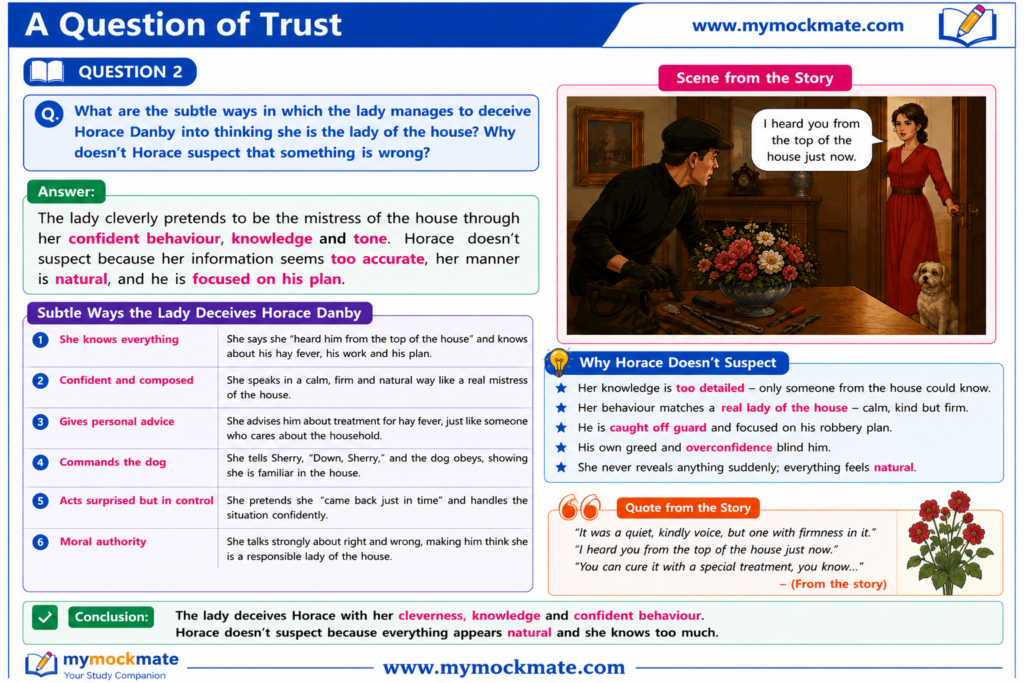
Question 2
What are the subtle ways in which the lady manages to deceive Horace Danby into thinking she is the lady of the house? Why doesn’t Horace suspect that something is wrong?
Answer
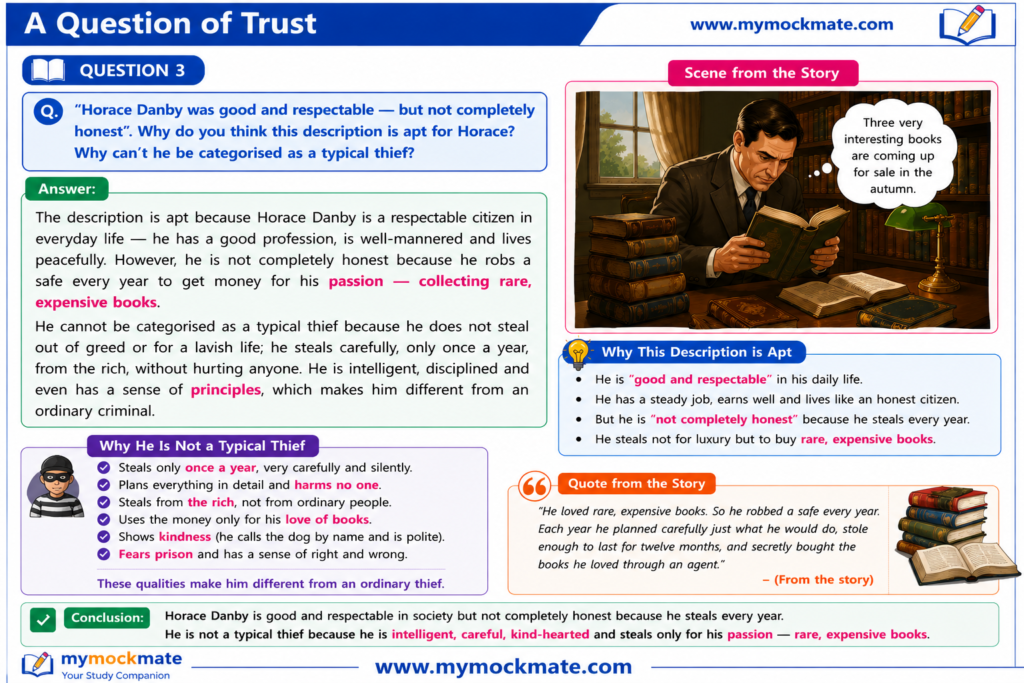
Question 3
“Horace Danby was good and respectable — but not completely honest”. Why do you think this description is apt for Horace? Why can’t he be categorised as a typical thief?
Answer
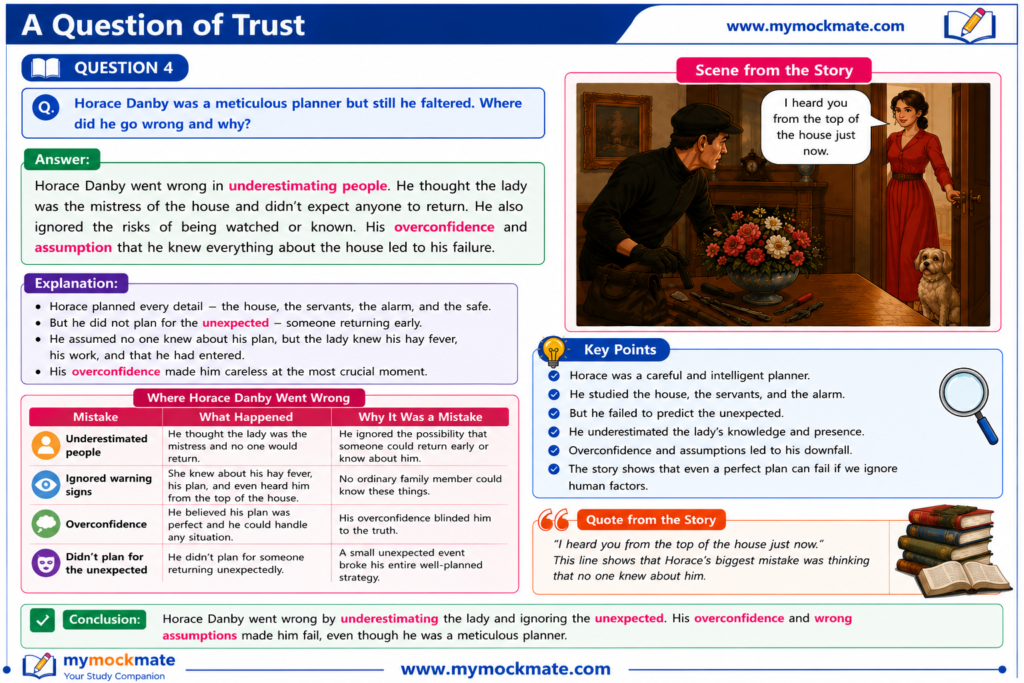
Question 4
Horace Danby was a meticulous planner but still he faltered. Where did he go wrong and why?
Answer
Talk About It – Long Answer Solutions
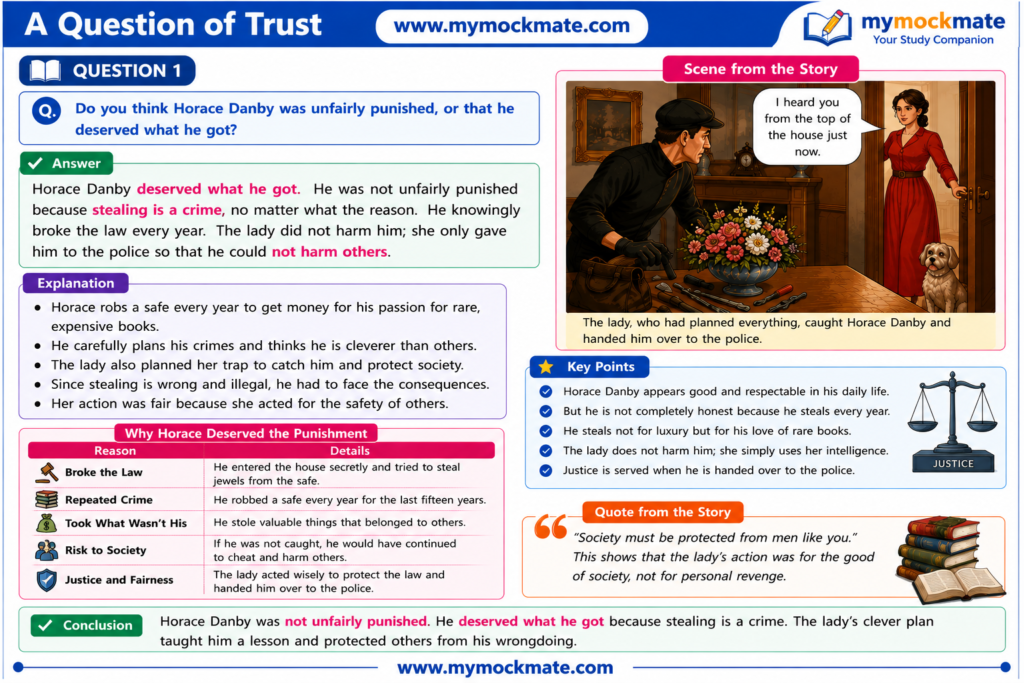
Question 1
Do you think Horace Danby was unfairly punished, or that he deserved what he got?
Answer
Question 2
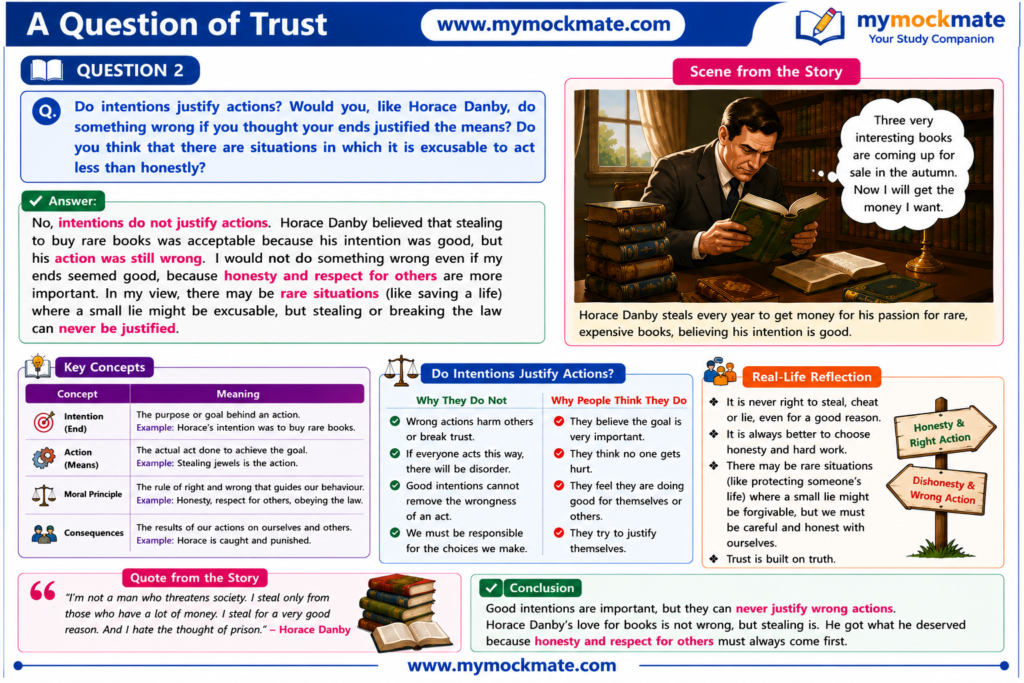
Do intentions justify actions? Would you, like Horace Danby, do something wrong if you thought your ends justified the means? Do you think there are situations in which it is excusable to act less than honestly?
Answer
Common Mistakes Students Make
- Writing very short answers without explanation
- Ignoring the irony of the story
- Confusing the fake lady with the real owner
- Missing important character traits of Horace Danby
- Forgetting the moral lesson of trust and deception
Exam Tips
- Mention “irony” and “deception” in answers for better marks.
- Use simple and clear language.
- Add character analysis wherever possible.
- Write answers in paragraph form with proper explanation.
- Revise important incidents from the story carefully.
Practice MCQs
1. Why did Horace Danby steal every year?
A. To become rich
B. To buy expensive books
C. To travel abroad
D. To help poor people
Correct Answer:
B. To buy expensive books
2. What profession did Horace Danby have?
A. Teacher
B. Banker
C. Lock-maker
D. Doctor
Correct Answer:
C. Lock-maker
3. Why was Horace caught by the police?
A. The servants saw him
B. The dog attacked him
C. He left fingerprints behind
D. The alarm rang loudly
Correct Answer:
C. He left fingerprints behind
4. Who was the real culprit in the story?
A. Horace’s servant
B. The young lady thief
C. The police officer
D. The housekeeper

Correct Answer:
B. The young lady thief
FAQ Section
Q1. What is the main theme of “A Question of Trust”?
The main theme is trust, deception, and irony.
Q2. Why did Horace Danby rob safes?
He robbed safes to buy rare and expensive books.
Q3. Who tricked Horace Danby?
A clever young woman thief tricked him.
Q4. Why did Horace remove his gloves?
He removed them while helping the lady light her cigarette and while opening the safe.
Q5. What lesson does the story teach?
The story teaches that crime never truly succeeds and blind trust can be dangerous.
Prepare smarter and score higher in CBSE Board Exams with detailed NCERT solutions, mock tests, quizzes, study notes, and exam strategies only on
www.mymockmate.com
Practice daily, improve consistently, and achieve your dream marks with expert study resources at MyMockMate.