




Short Intro
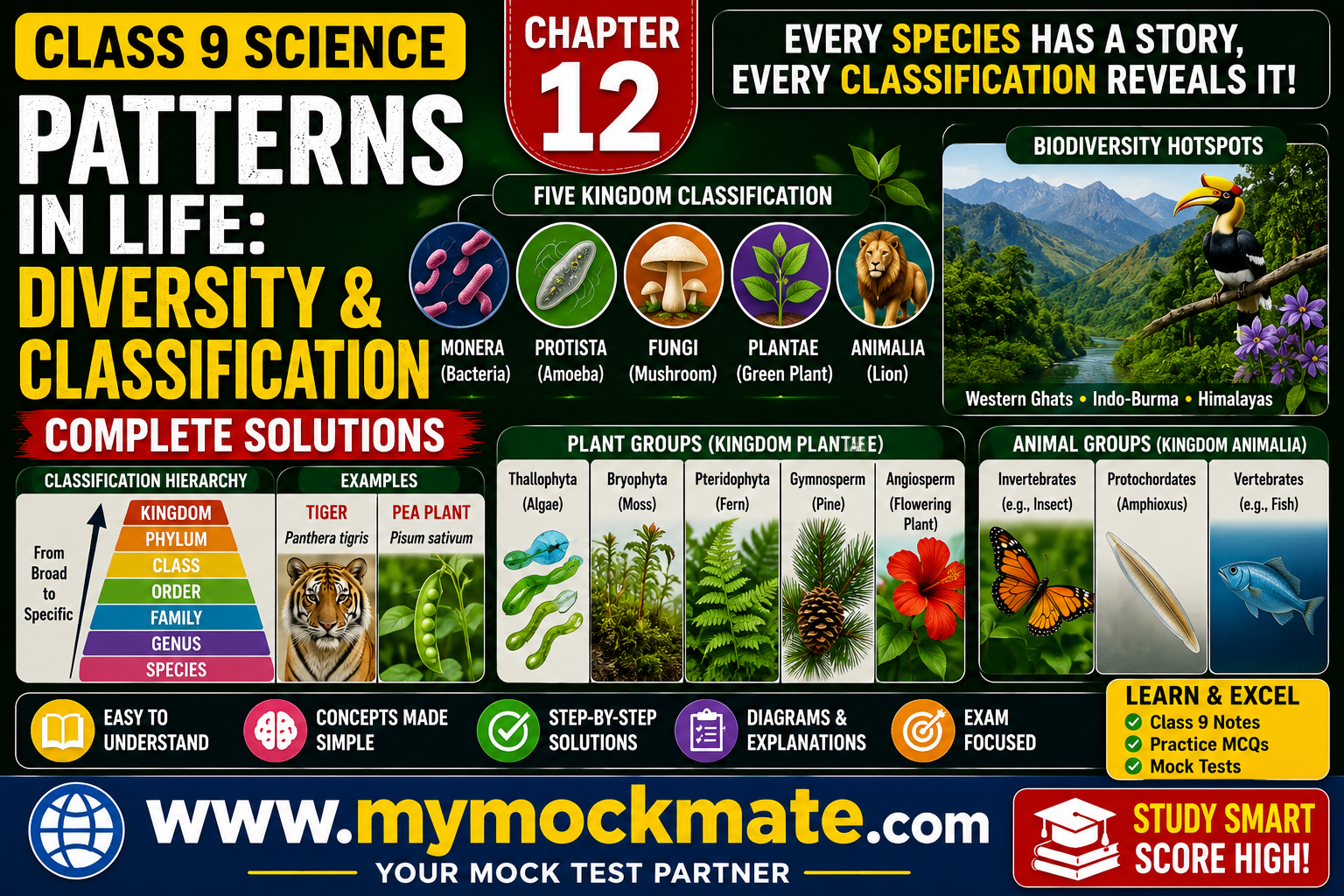
This chapter explains the incredible diversity of living organisms and how scientists classify them into different groups. Students learn about the five kingdom classification system, characteristics of plants and animals, binomial nomenclature, biodiversity, fossils, and the importance of classification in understanding life on Earth.
Quick Information Box
| Topic | Details |
|---|---|
| Chapter Name | Patterns in Life: Diversity and Classification |
| Class | Grade 9 |
| Subject | Science |
| Main Topics | Classification, Biodiversity, Kingdoms |
| Scientist | Carolus Linnaeus |
| Classification Levels | Kingdom to Species |
Concepts Used (Topics Covered)
- Diversity in Living Organisms
- Basis of Biological Classification
- Five Kingdom Classification
- Kingdom Monera
- Kingdom Protista
- Kingdom Fungi
- Kingdom Plantae
- Kingdom Animalia
- Vertebrates and Invertebrates
- Binomial Nomenclature
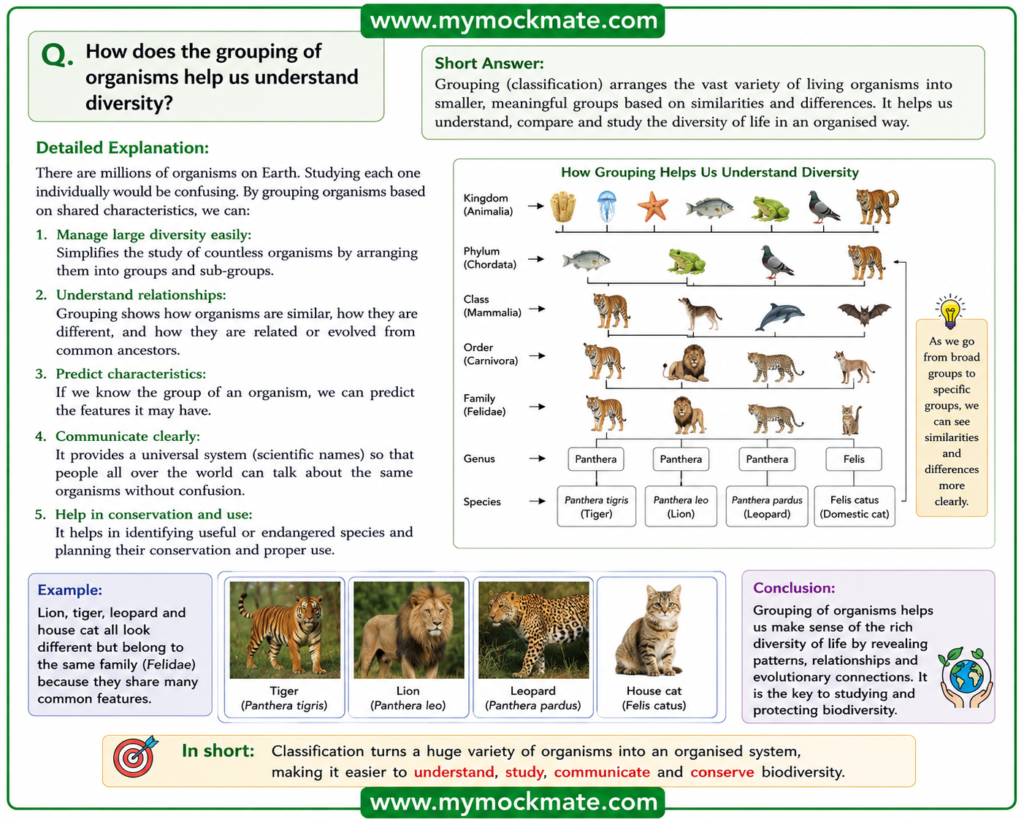
- Classification Hierarchy
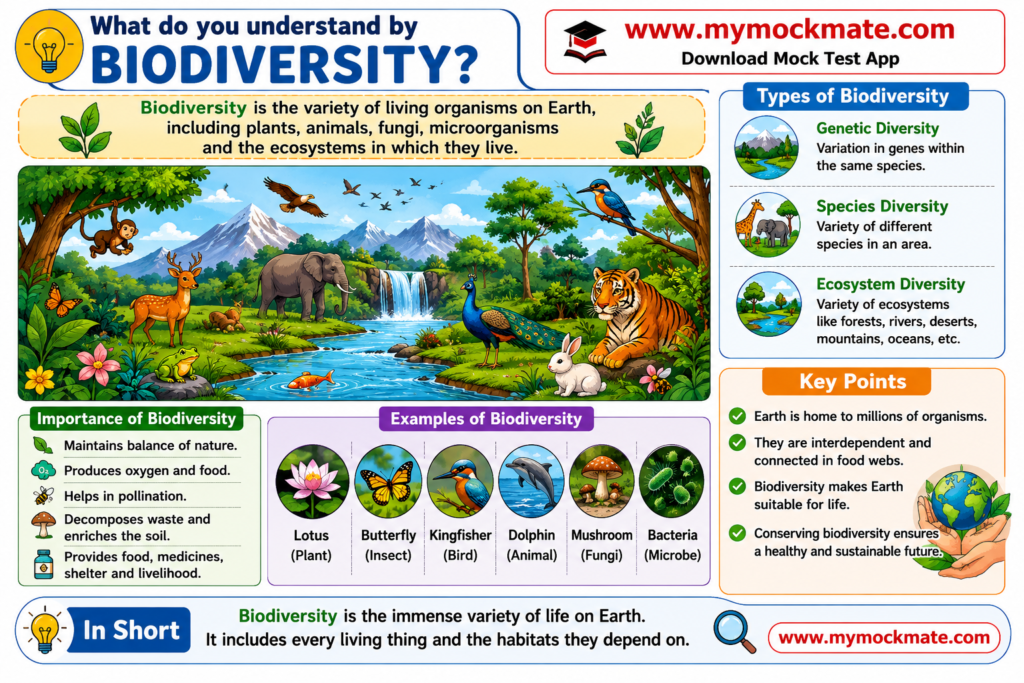
- Biodiversity and Conservation
- Fossils as Evidence
- Three Domain System
Important Formulas
- Scientific Name Format
Genus + Species - Classification Hierarchy
Kingdom → Phylum → Class → Order → Family → Genus → Species - Binomial Nomenclature Rules
- Genus starts with capital letter
- Species starts with small letter
- Names written in italics
Think It Over
- What do you understand by biodiversity?
2. How does the grouping of organisms help us understand diversity?
3. On what basis, are plants and animals classified?

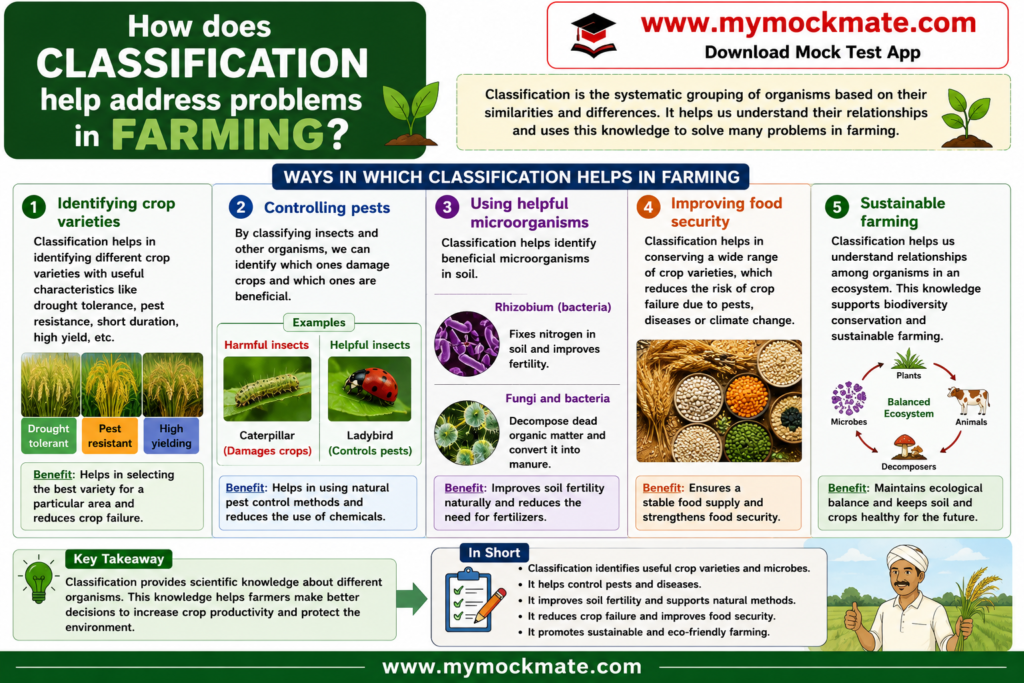
4. How does classification help address problems in farming?
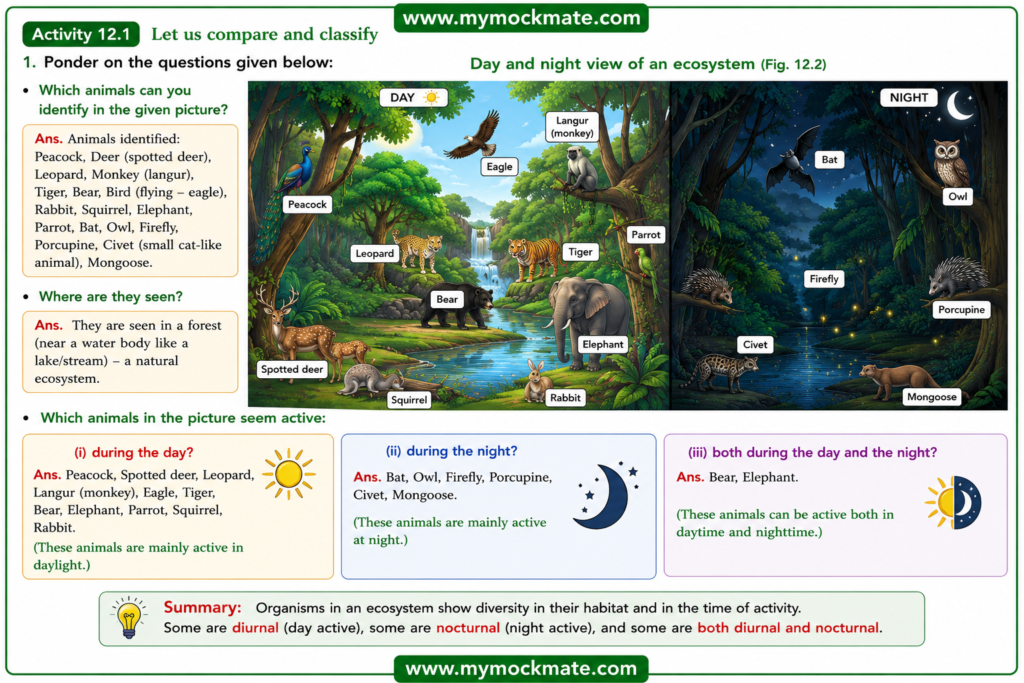
How to Classify Organisms?
- Ponder on the questions given below:
y Which animals can you identify in the given picture? y Where are they seen? y Which animals in the picture seem active: (i) during the day? (ii) during the night? (iii) both during the day and the night?
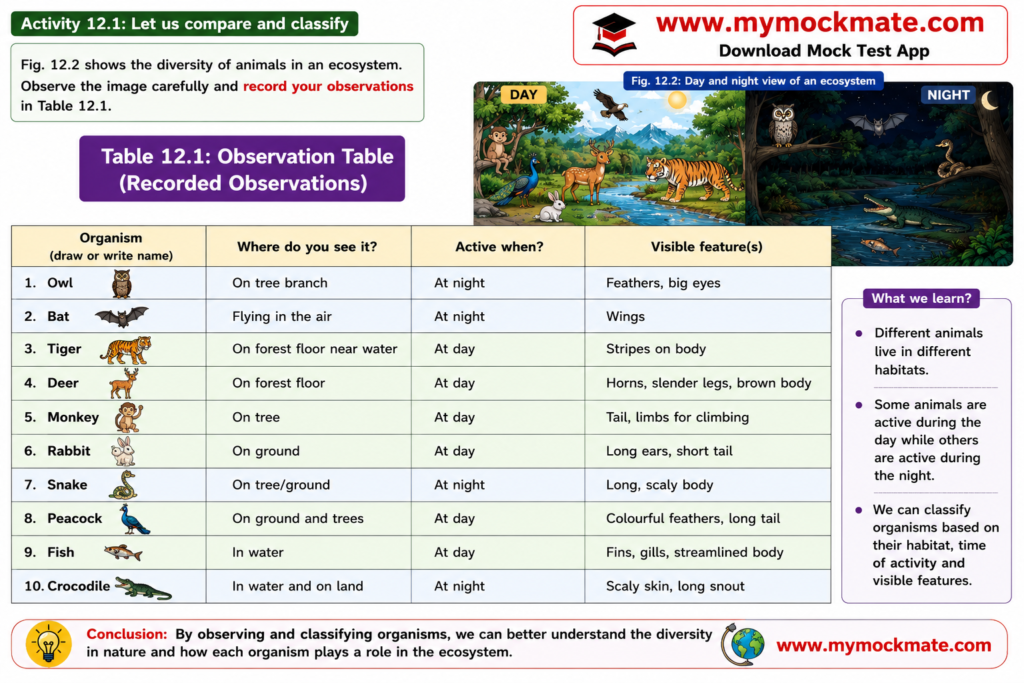
2. Record your observations in Table 12.1.
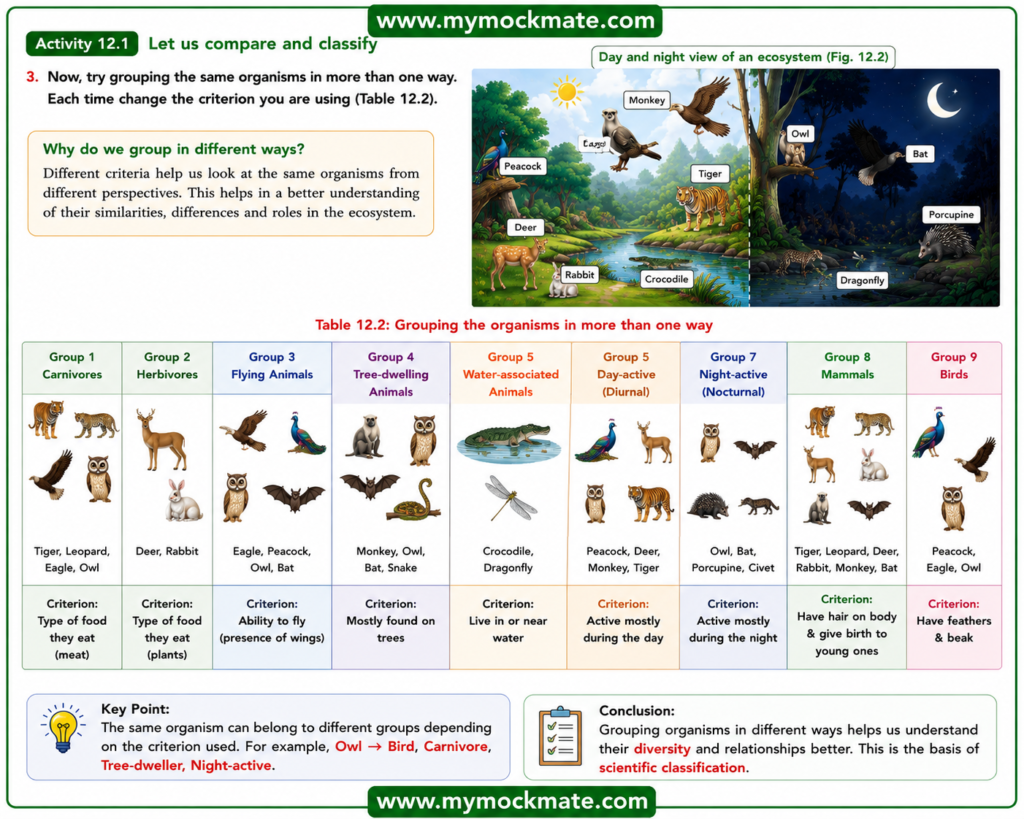
- Now, try grouping the same organisms in more than one way. Each time change the criterion you are using for grouping (Table 12.2).
Pause and Ponder
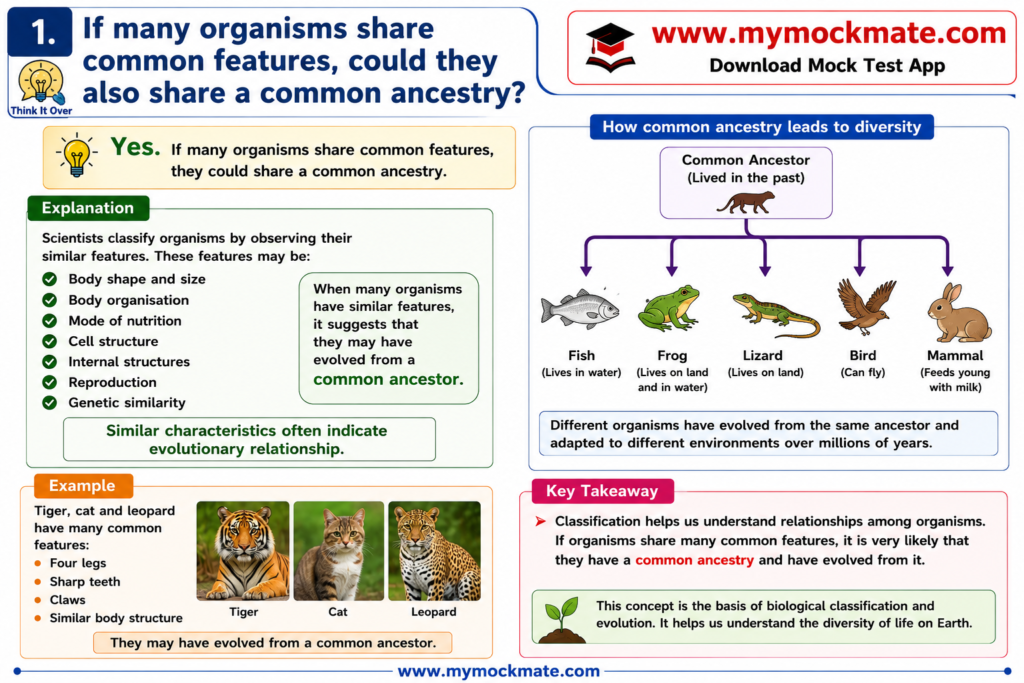
- If many organisms share common features, could they also share a common ancestry?
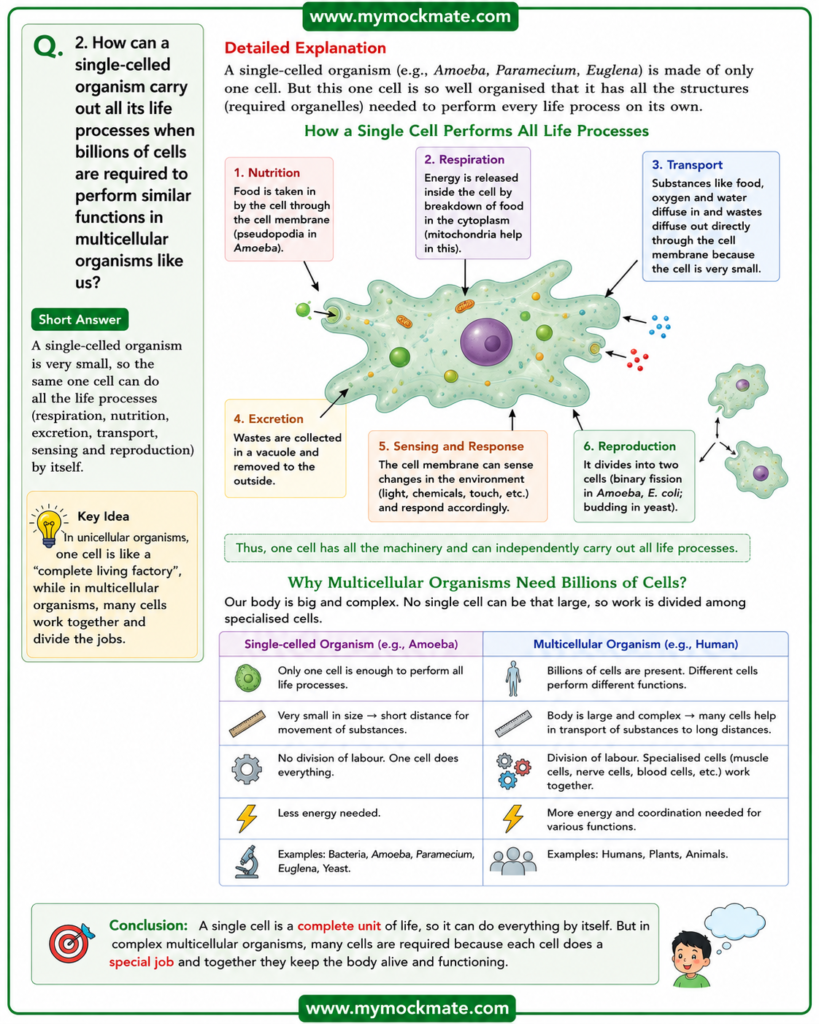
- How can a single-celled organism carry out all its life processes when billions of cells are required to perform similar functions in multicellular organisms like us?
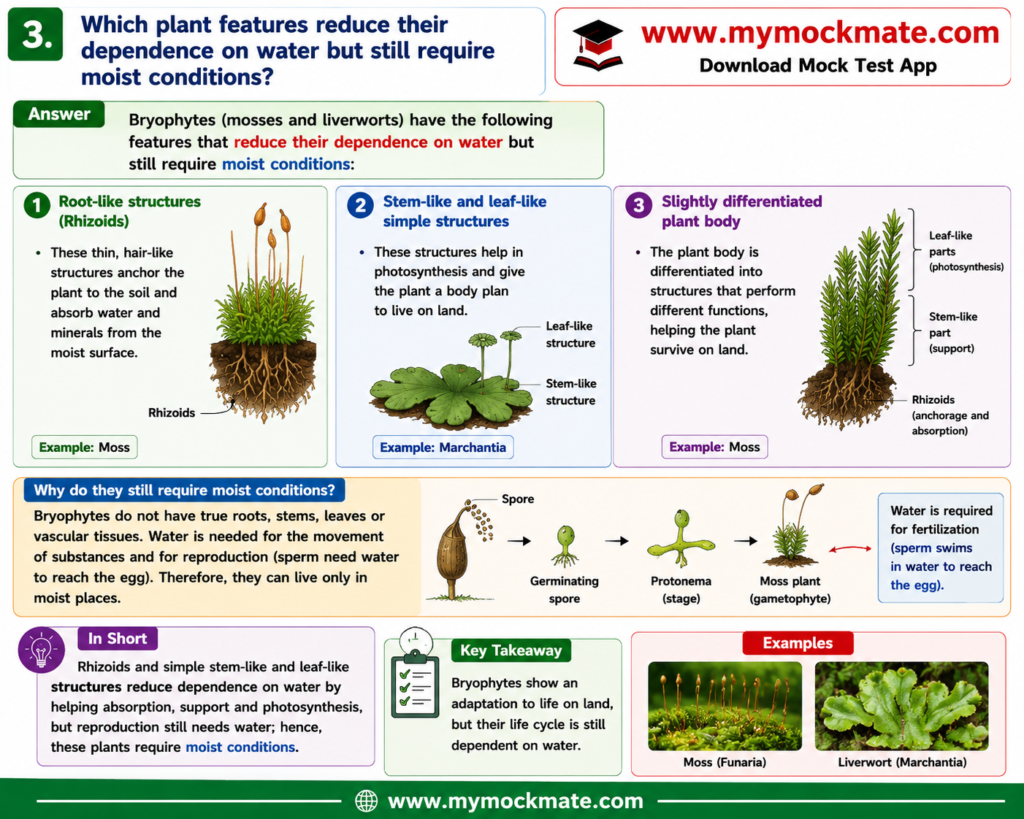
- Which plant features reduce their dependence on water but still require moist conditions?
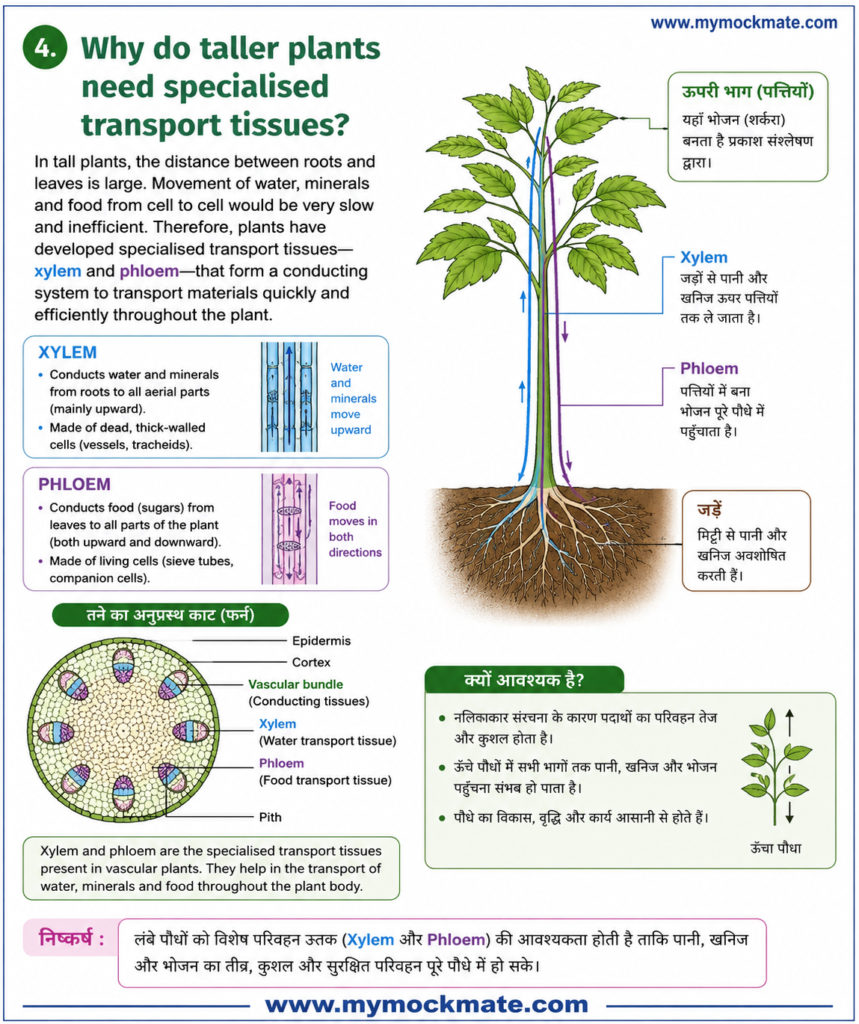
- Why do taller plants need specialised transport tissues?
- How do seeds and fruits affect, where and how plants can survive?
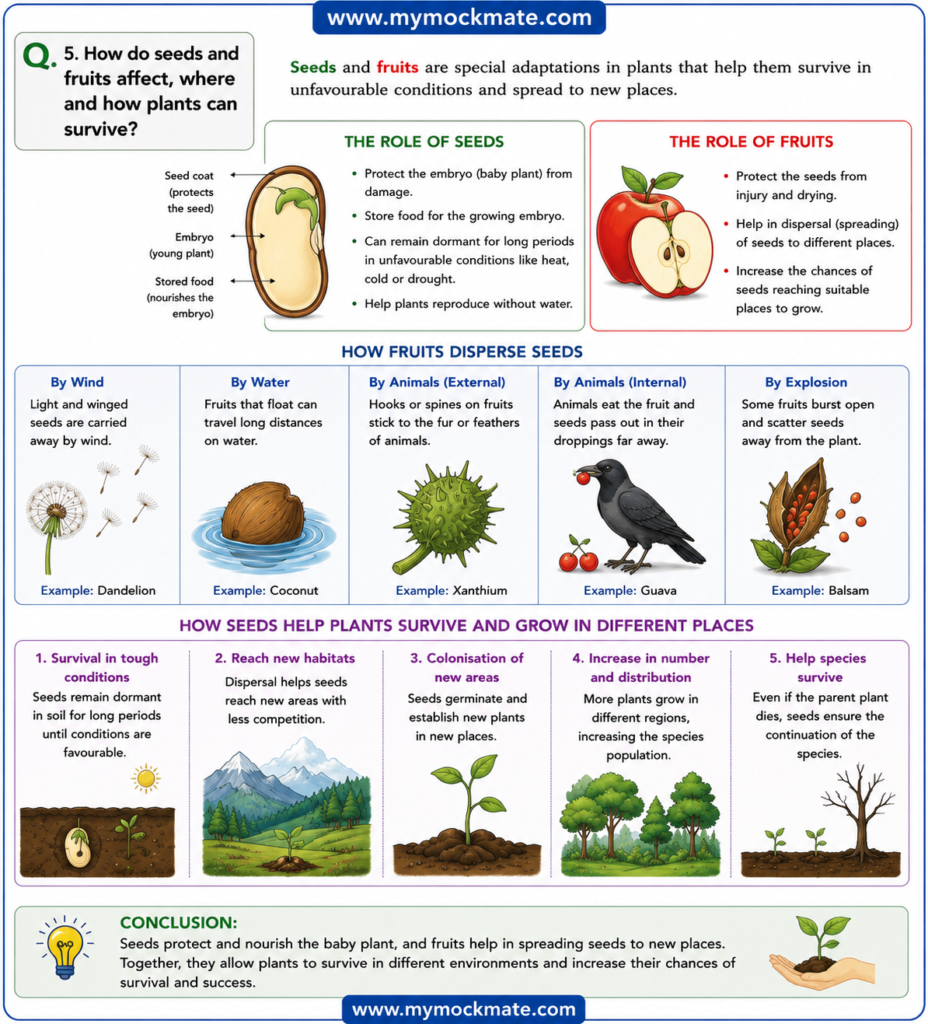
- An earthworm (annelida) and a beetle (arthropoda), both have segmented bodies but the beetle has a hard external skeleton. How does the beetle’s external skeleton help it survive?
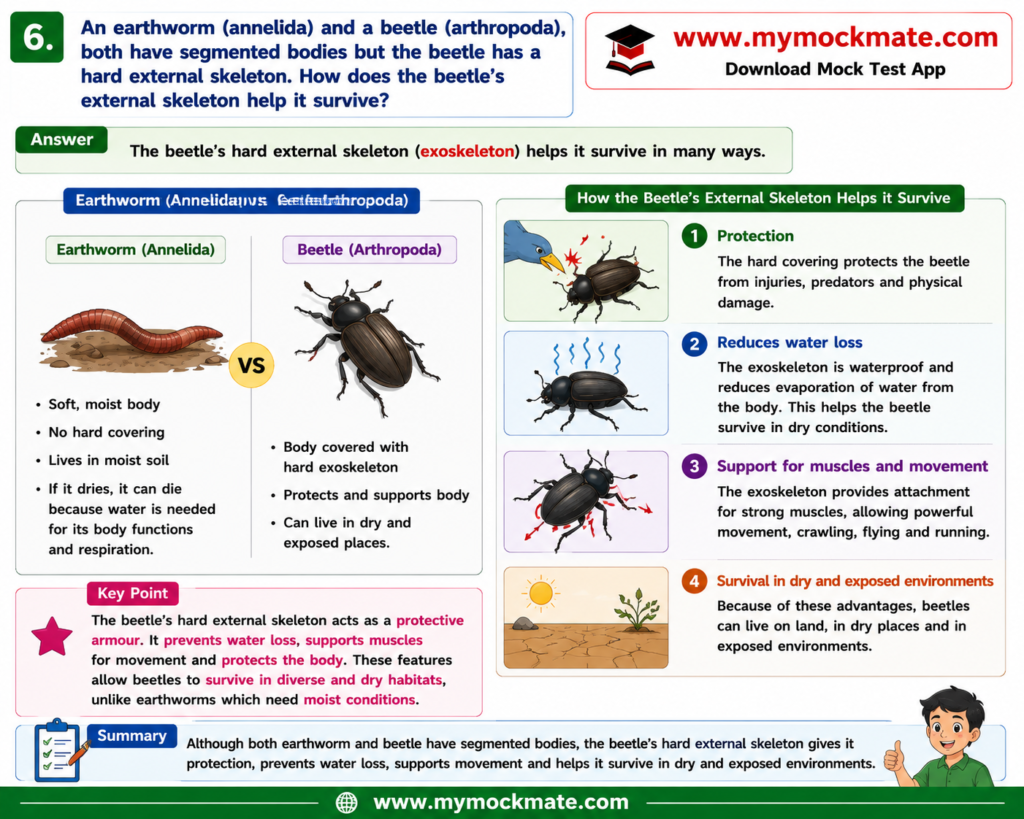
- Does the term ‘biodiversity’ relate only to the variety of organisms, or does it encompass other elements?

- If you find a new organism in a pond, what features will you observe to classify it and why?
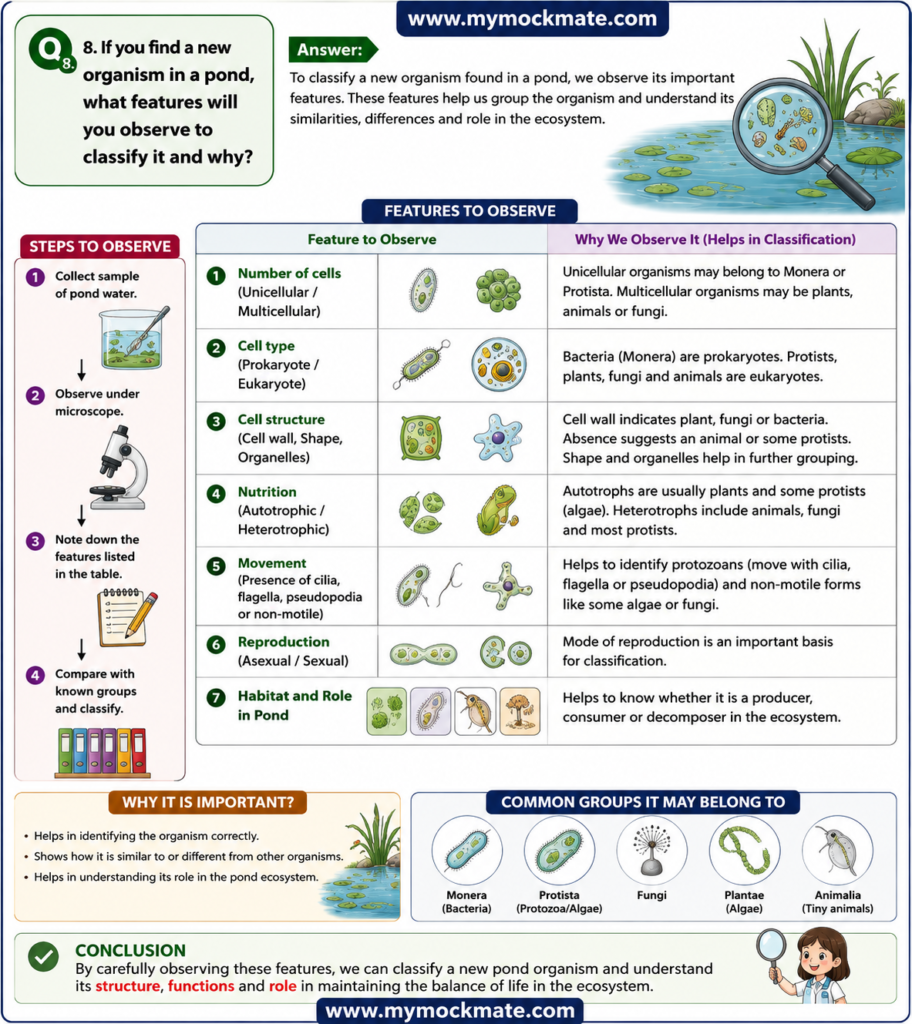
- Why do genetic studies provide deep information about living beings?
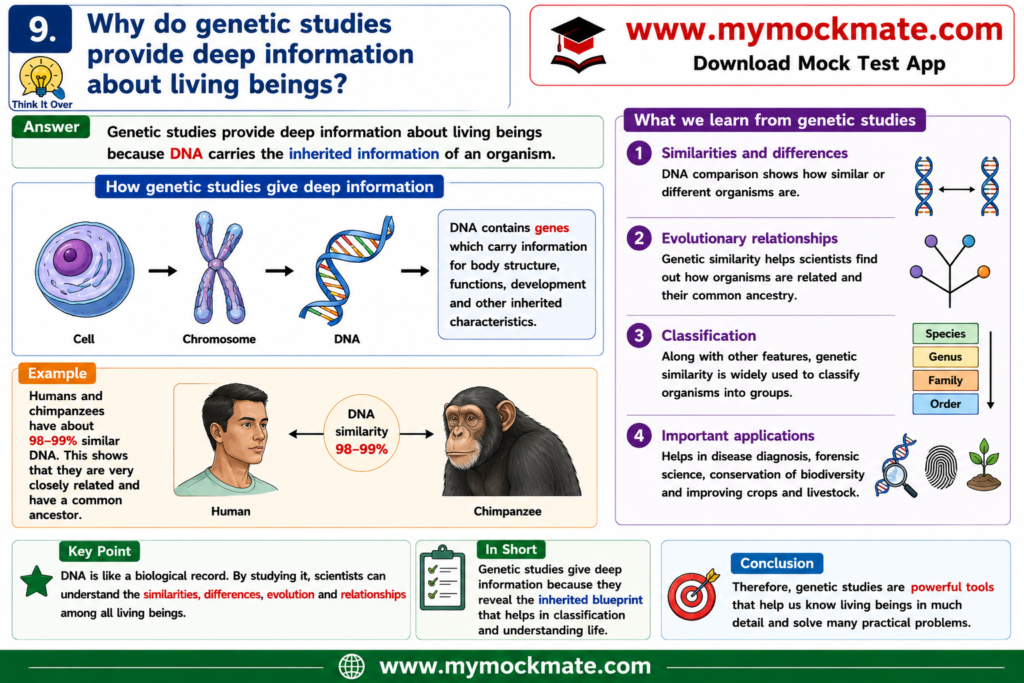
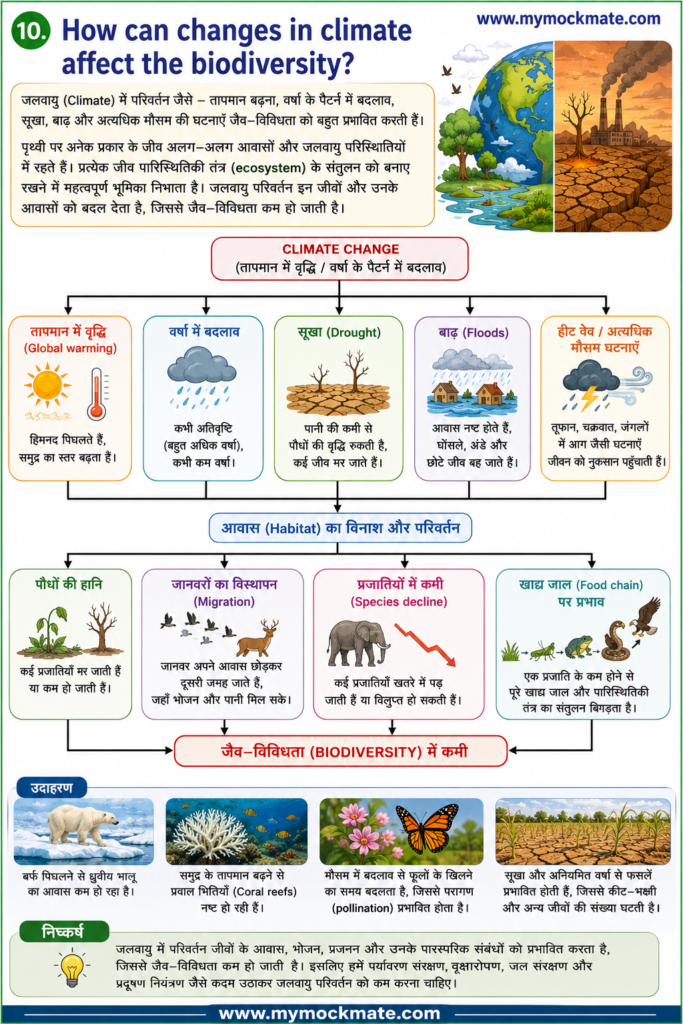
- How can changes in climate affect the biodiversity?
Revise, Reflect, Refine
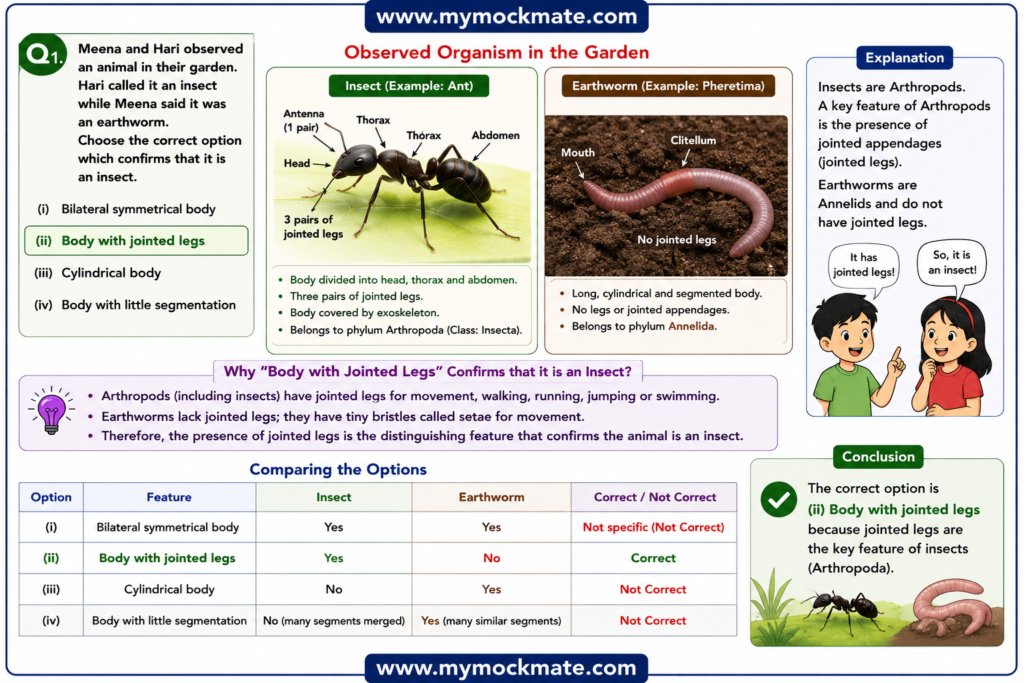
- Meena and Hari observed an animal in their garden. Hari called it an insect while Meena said it was an earthworm. Choose the correct option which confirms that it is an insect. (i) Bilateral symmetrical body (ii) Body with jointed legs
(iii) Cylindrical body (iv) Body with little segmentation.
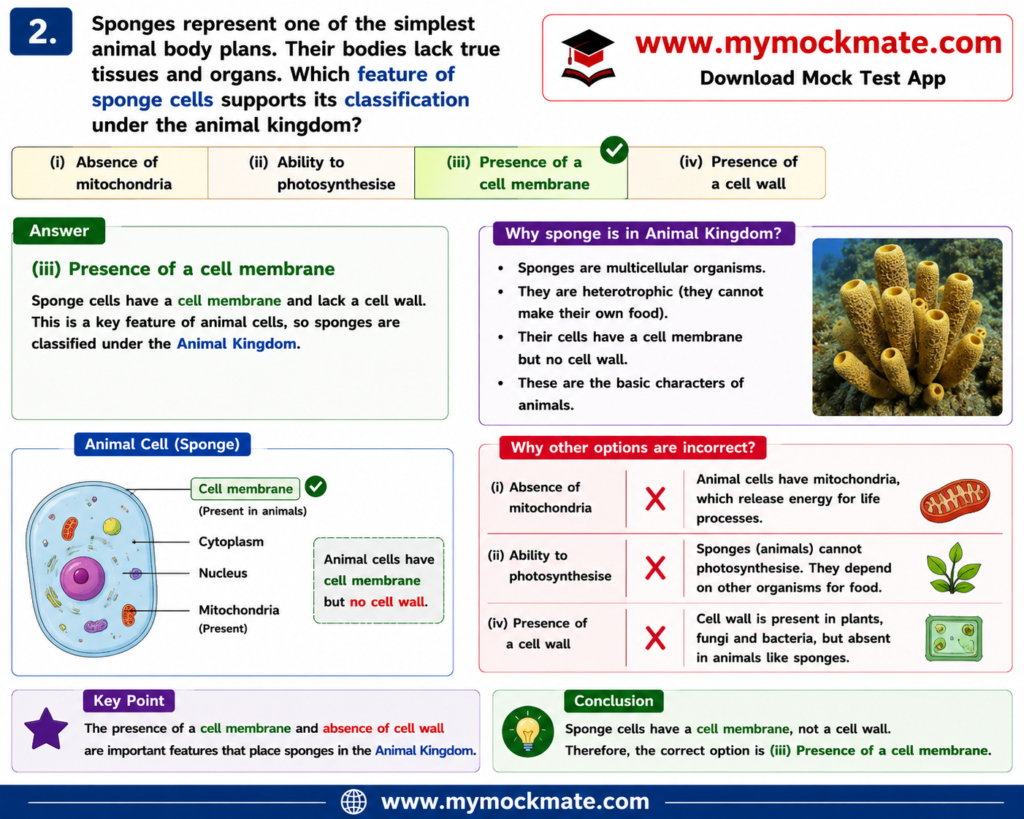
- Sponges represent one of the simplest animal body plans. Their bodies lack true tissues and organs. Which feature of sponge cells supports its classification under the animal kingdom? (i) Absence of mitochondria (ii) Ability to photosynthesise (iii) Presence of a cell membrane (iv) Presence of a cell wall.
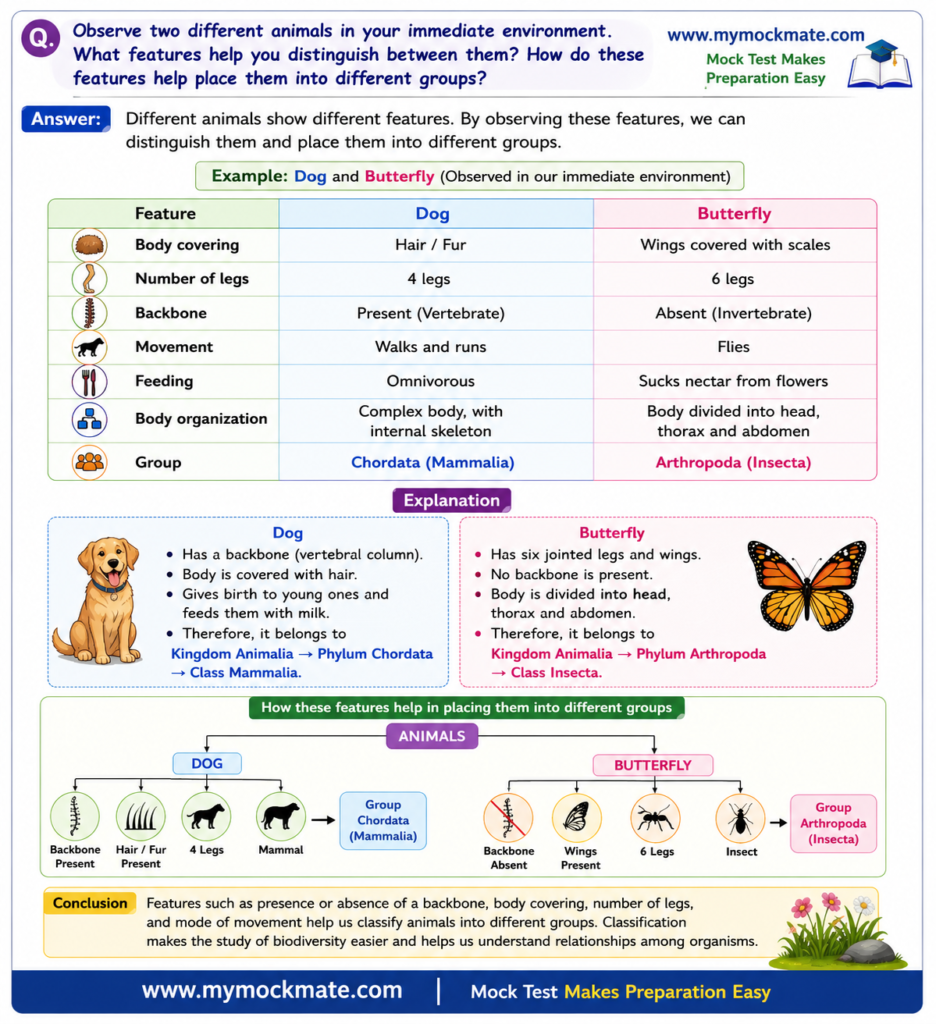
- Observe two different animals in your immediate environment. What features help you distinguish between them? How do these features help place them into different groups?
- How would a scientist justify choosing cellular organisation as a more fundamental characteristic for the basis of classification rather than the presence of xylem and phloem?

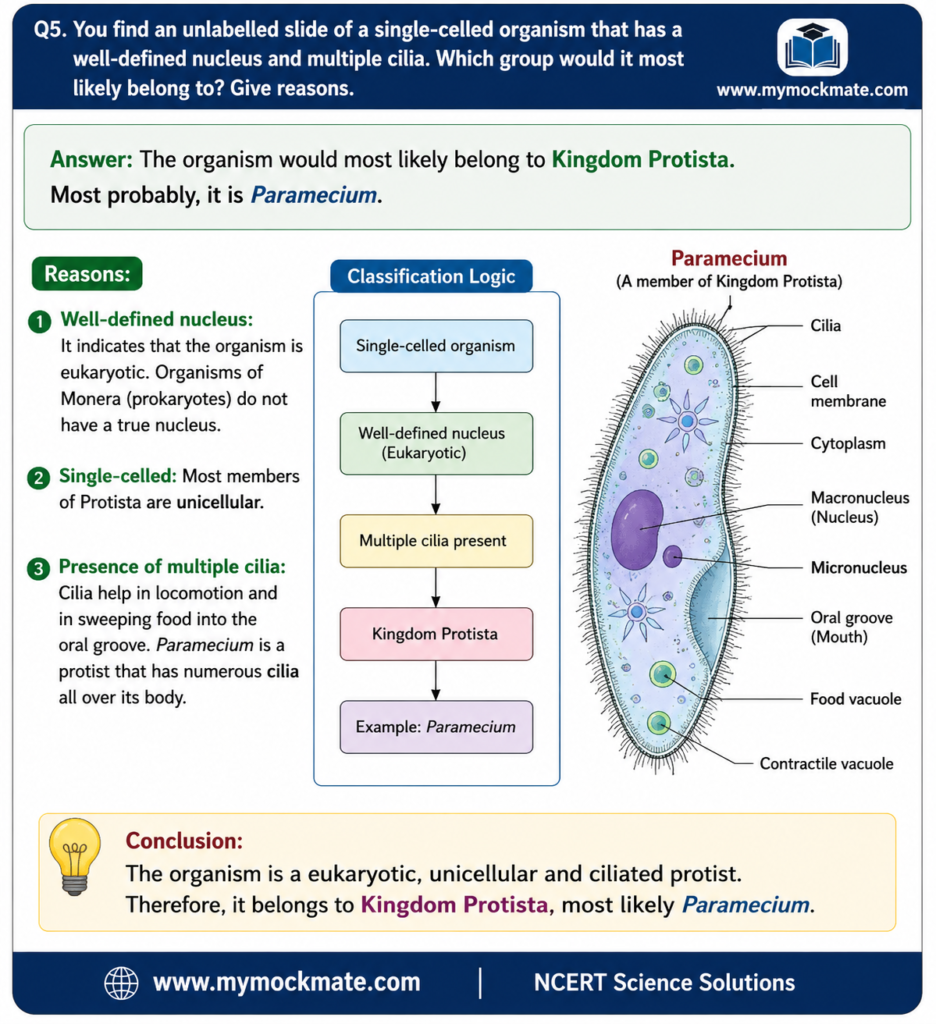
- You find an unlabelled slide of a single-celled organism that has a well-defined nucleus and multiple cilia. Which group would it most likely belong to? Give reasons.
- How does the diversity of organisms contribute to the balance and stability of an ecosystem?

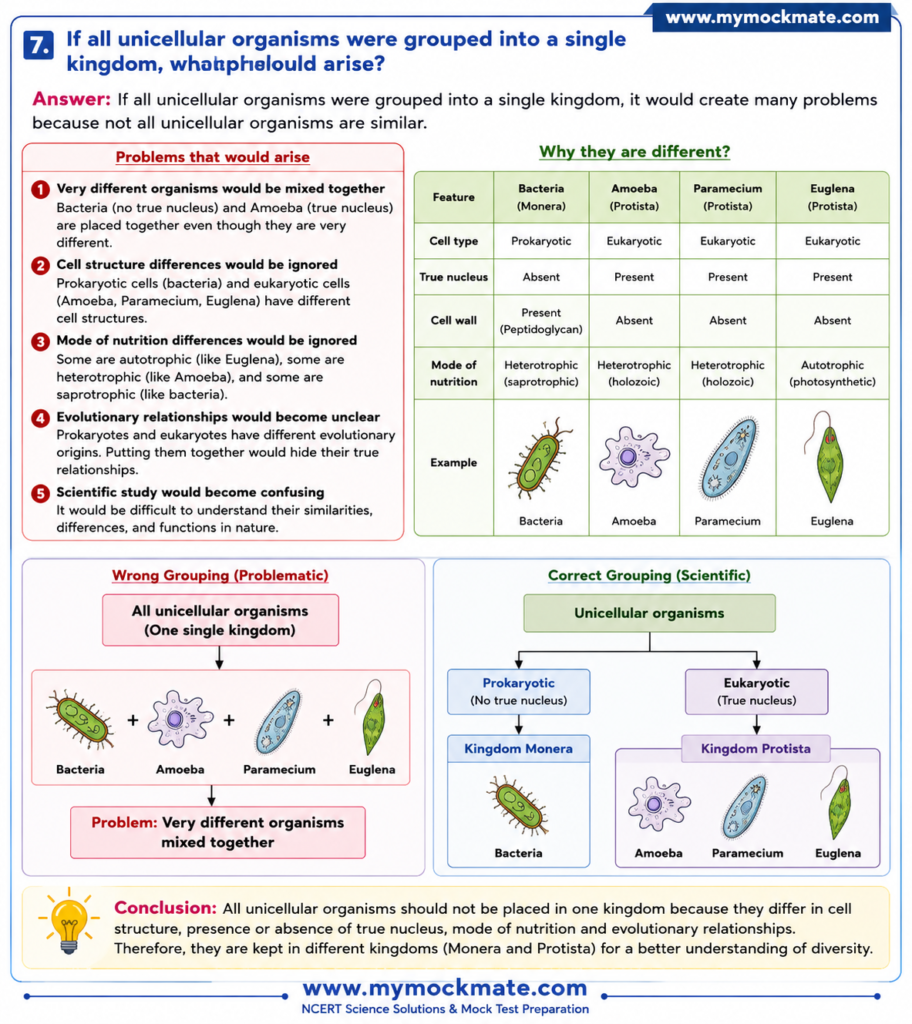
- If all unicellular organisms were grouped into a single kingdom, what problems would arise?
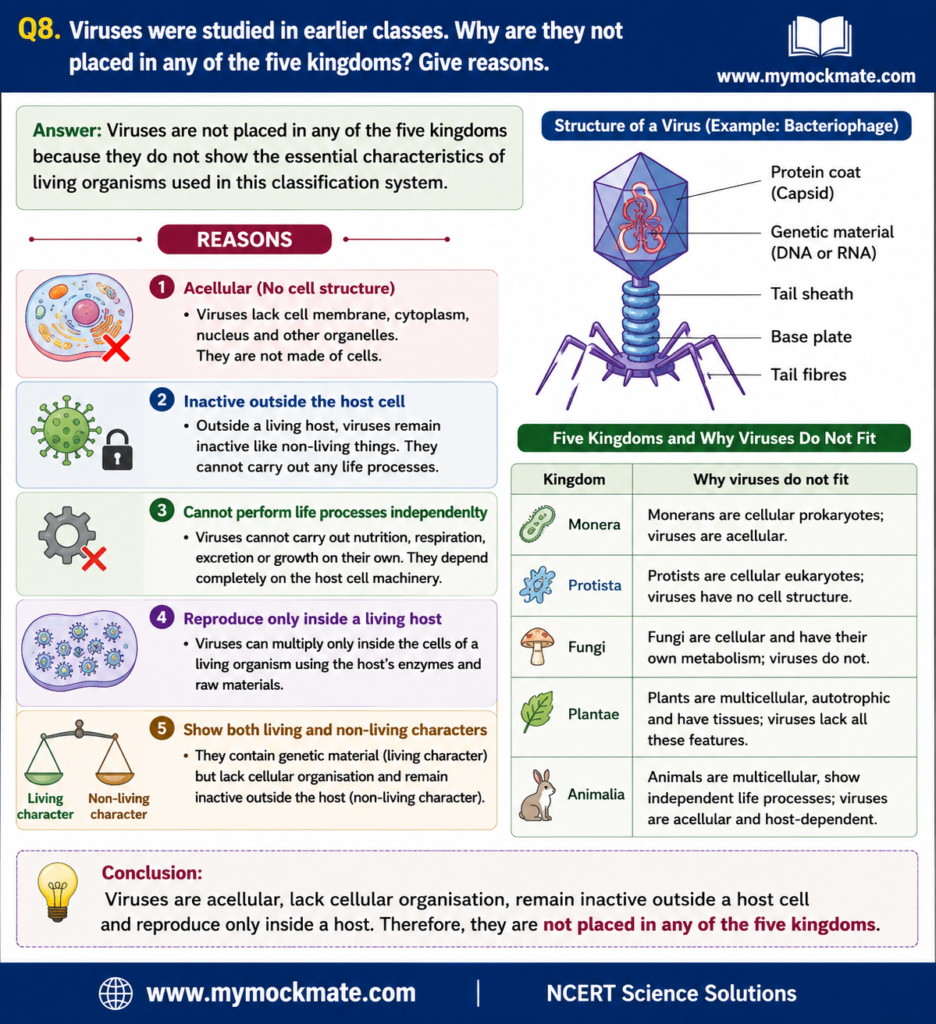
- Viruses were studied in earlier classes. Why are they not placed in any of the five kingdoms? Give reasons
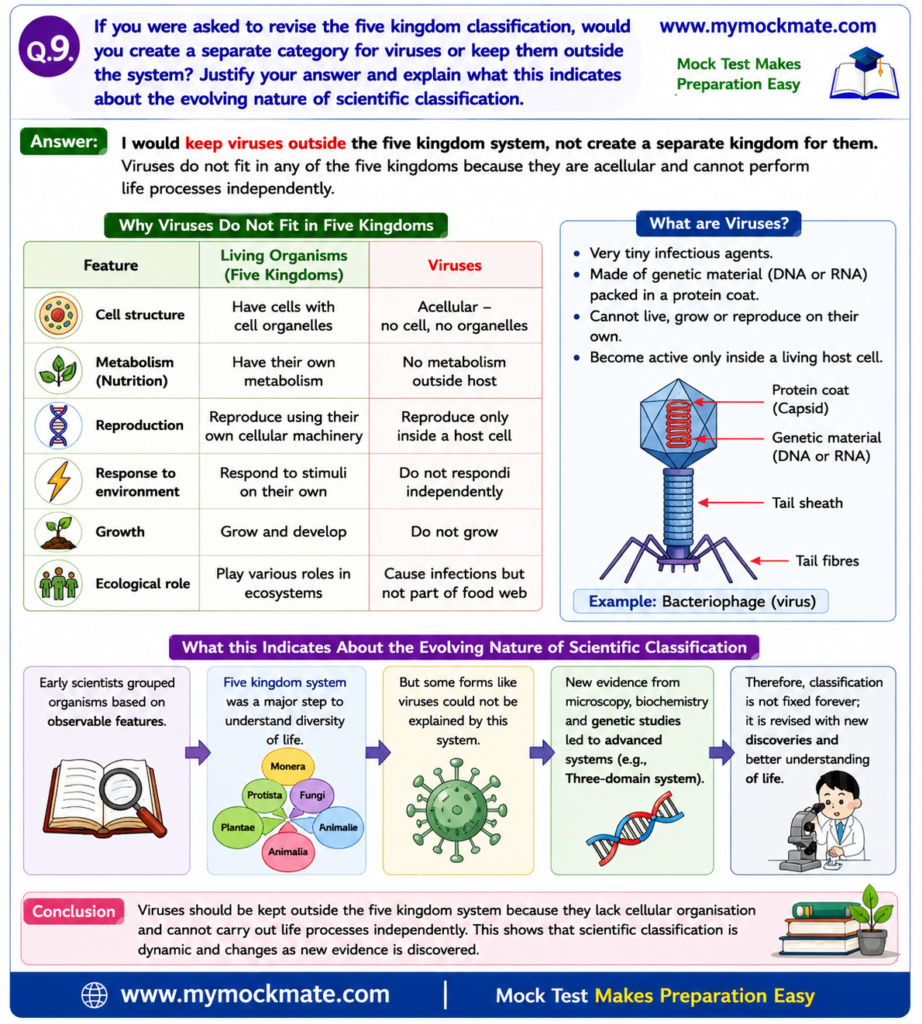
- If you were asked to revise the five kingdom classification, would you create a separate category for viruses or keep them outside the system? Justify your answer and explain what this indicates about the evolving nature of scientific classification.
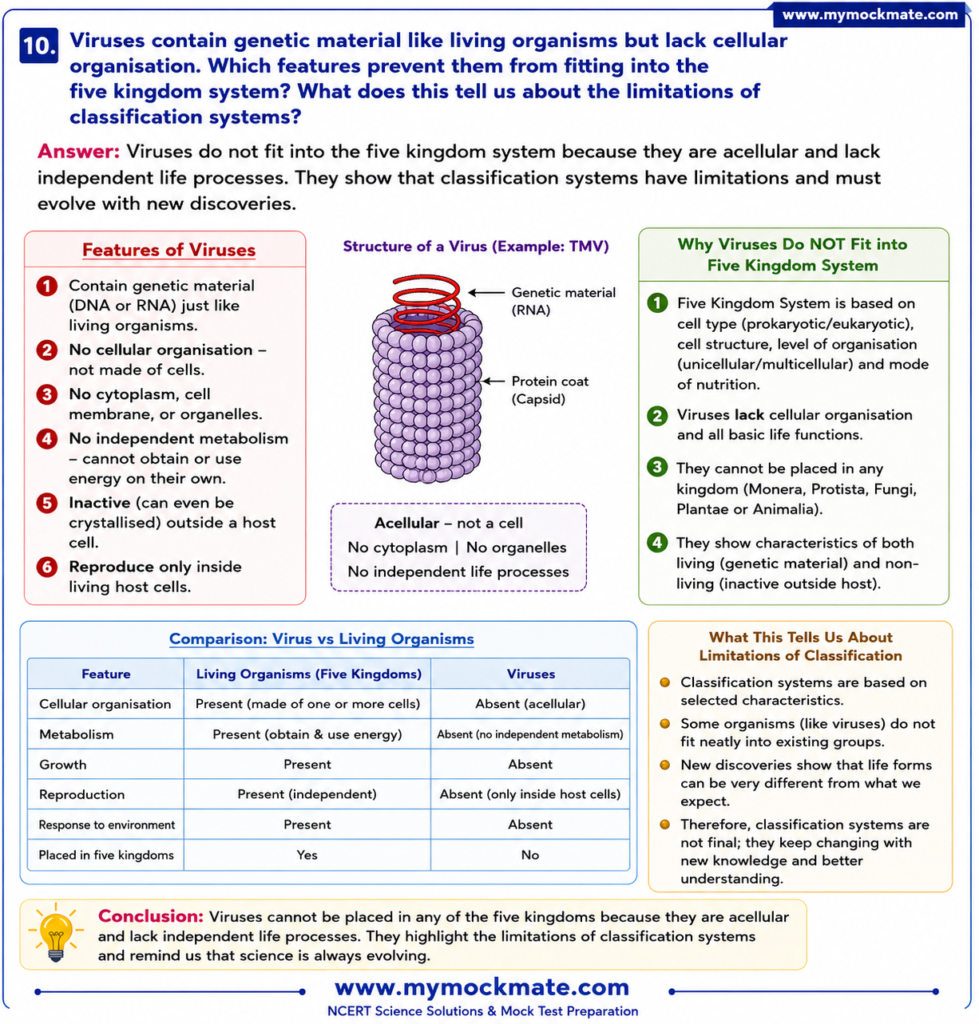
- Viruses contain genetic material like living organisms but lack cellular organisation. Which features prevent them from fitting into the five kingdom system? What does this tell us about the limitations of classification systems?
- Both pteridophytes and bryophytes lack flowers and seeds, yet they are placed in different groups. Explain this classification using their key features.

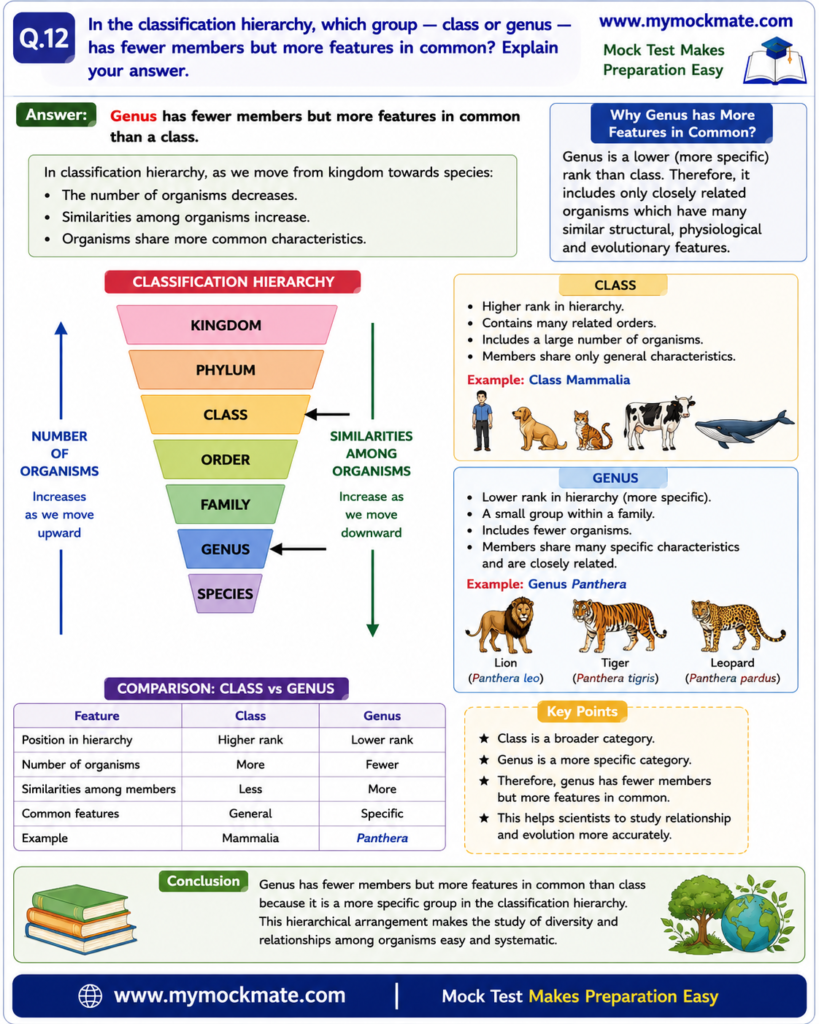
- In the classification hierarchy, which group — class or genus — has fewer members but more features in common? Explain your answer.
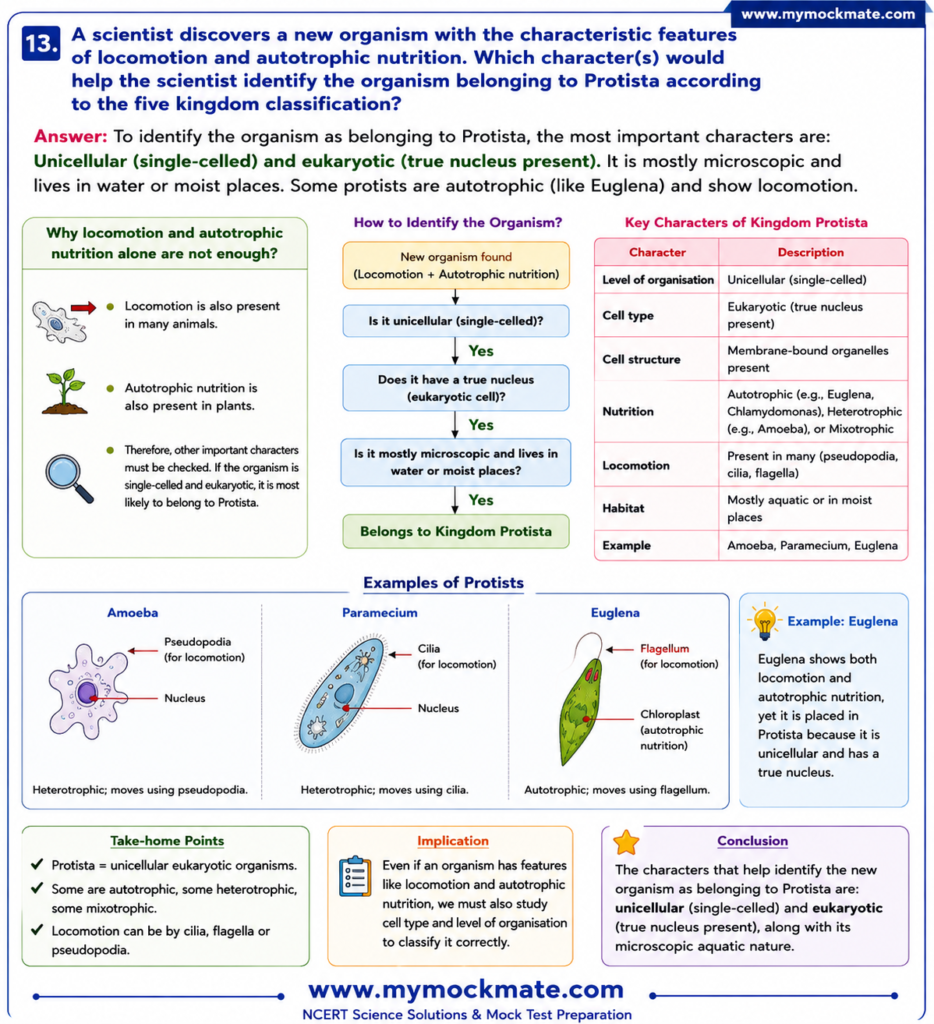
- A scientist discovers a new organism with the characteristic features of locomotion and autotrophic nutrition. Which character(s) would help the scientist identify the organism belonging to Protista according to the five kingdom classification?
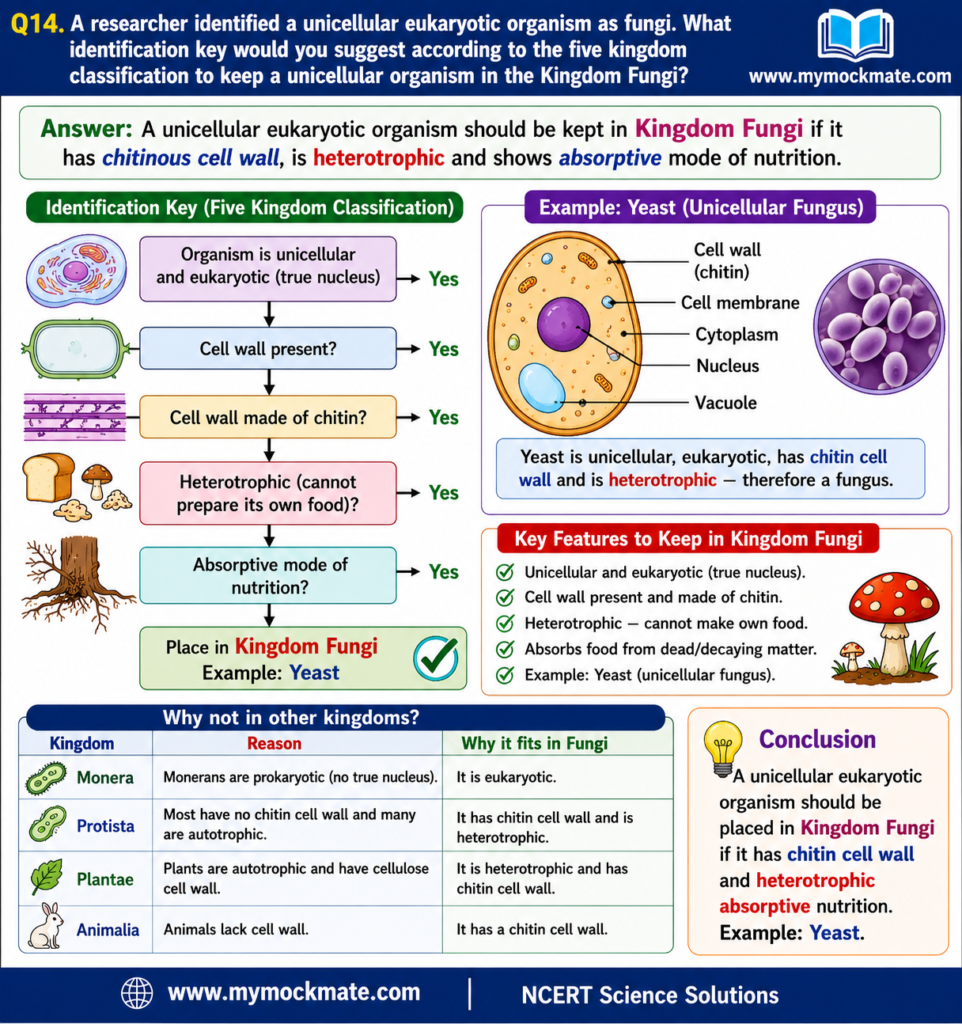
- A researcher identified a unicellular eukaryotic organism as fungi. What identification key would you suggest according to the five kingdom classification to keep a unicellular organism in the Kingdom Fungi?
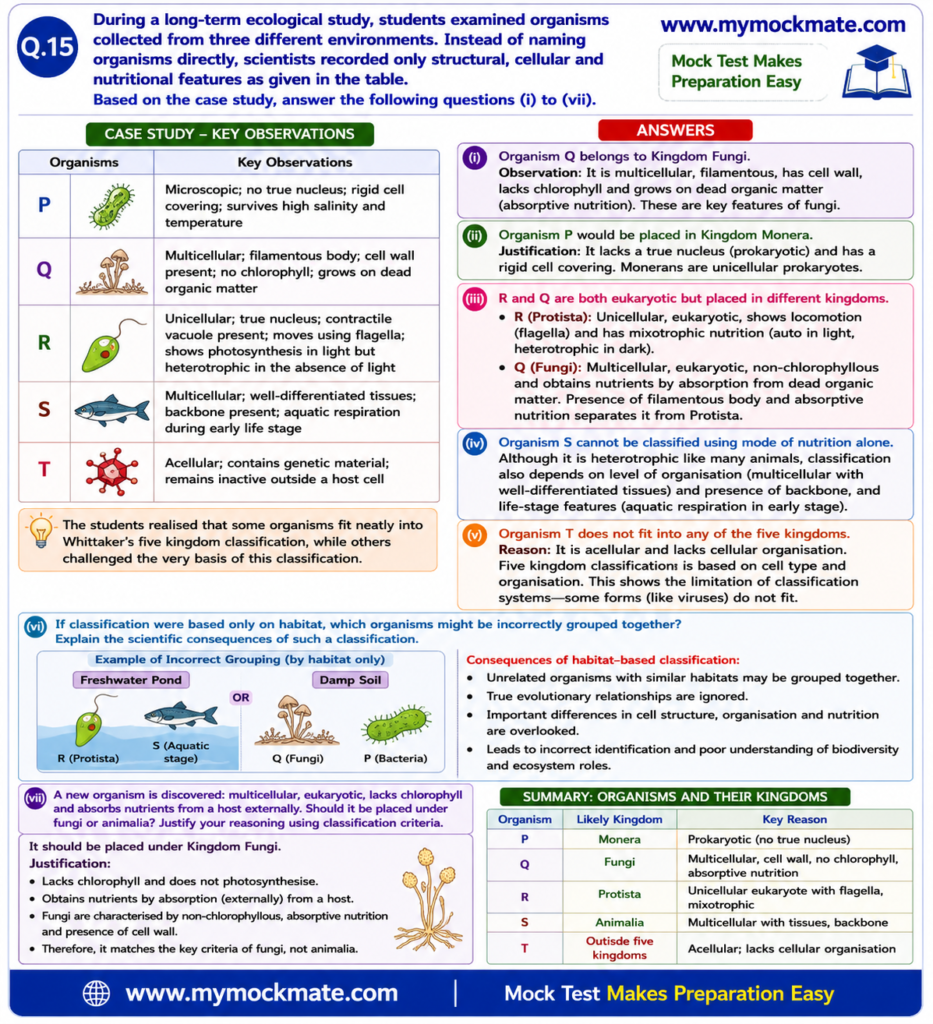
- During a long-term ecological study, students examined organisms collected from three different environments — a freshwater pond, damp soil near decaying logs and the digestive tract of animals. Instead of naming organisms directly, scientists recorded only structural, cellular and nutritional features as given in the table below.
Common Mistakes
- Confusing genus and species
- Mixing vertebrates and invertebrates
- Forgetting scientific naming rules
- Incorrect classification hierarchy
- Assuming habitat alone determines classification
Exam Tips
- Learn classification hierarchy in order.
- Revise kingdom characteristics carefully.
- Practice scientific names regularly.
- Draw neat classification charts.
- Learn examples from each kingdom.
Practice MCQs
1. Who proposed binomial nomenclature?
A. Darwin
B. Linnaeus
C. Aristotle
D. Mendel
Answer:
B. Linnaeus
2. Organisms without true nucleus belong to:
A. Protista
B. Fungi
C. Monera
D. Plantae
Answer:
C. Monera
3. Scientific name of tiger:
A. Felis tigris
B. Panthera tigris
C. Panthera leo
D. Homo sapiens
Answer:
B. Panthera tigris

4. Which kingdom includes mushrooms?
A. Plantae
B. Protista
C. Fungi
D. Animalia
Answer:
C. Fungi
5. Vertebrates possess:
A. Cell wall
B. Backbone
C. Chlorophyll
D. Pseudopodia
Answer:
B. Backbone
FAQ Section
Q1. What is classification?
Grouping organisms based on similarities and differences.
Q2. What is biodiversity?
Variety of living organisms in nature.
Q3. What is binomial nomenclature?
Scientific naming system using genus and species names.
Q4. Why are fossils important?
They provide evidence about ancient life and evolution.
Q5. Why does classification change over time?
New scientific discoveries improve our understanding of organisms.
Prepare smarter with chapter-wise notes, detailed solutions, MCQs, quizzes, and mock tests only on www.mymockmate.com and achieve excellent marks in Science exams!