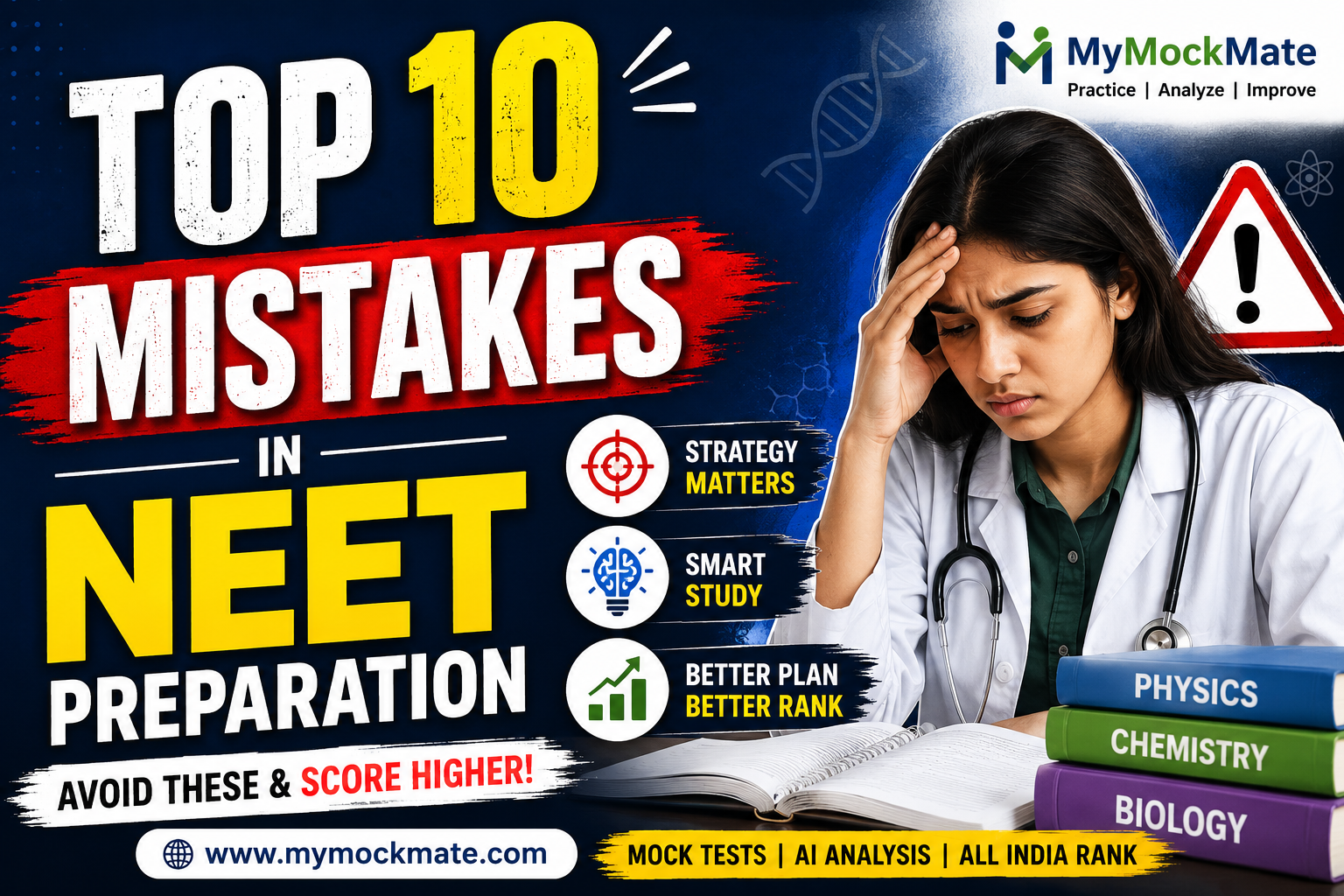
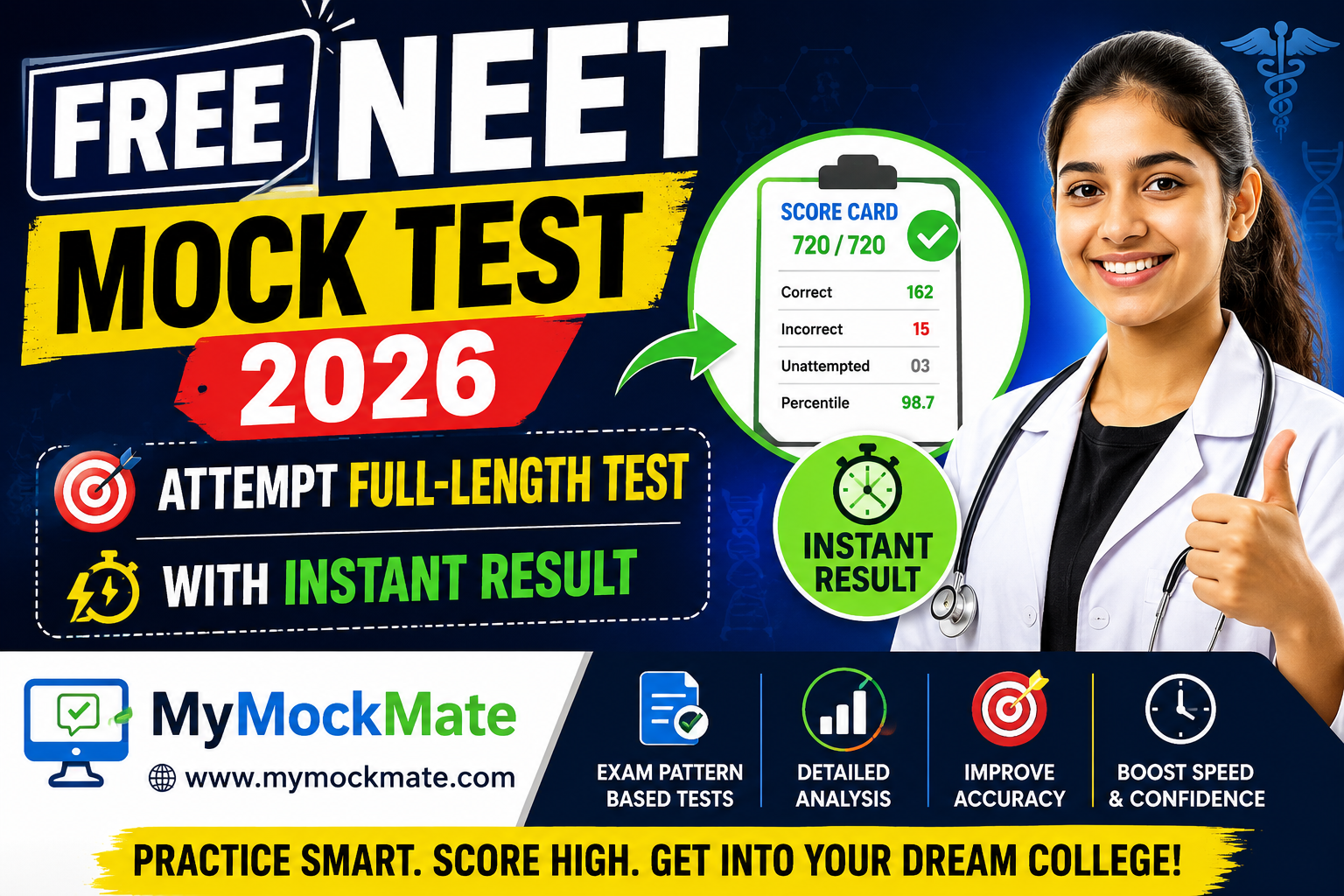
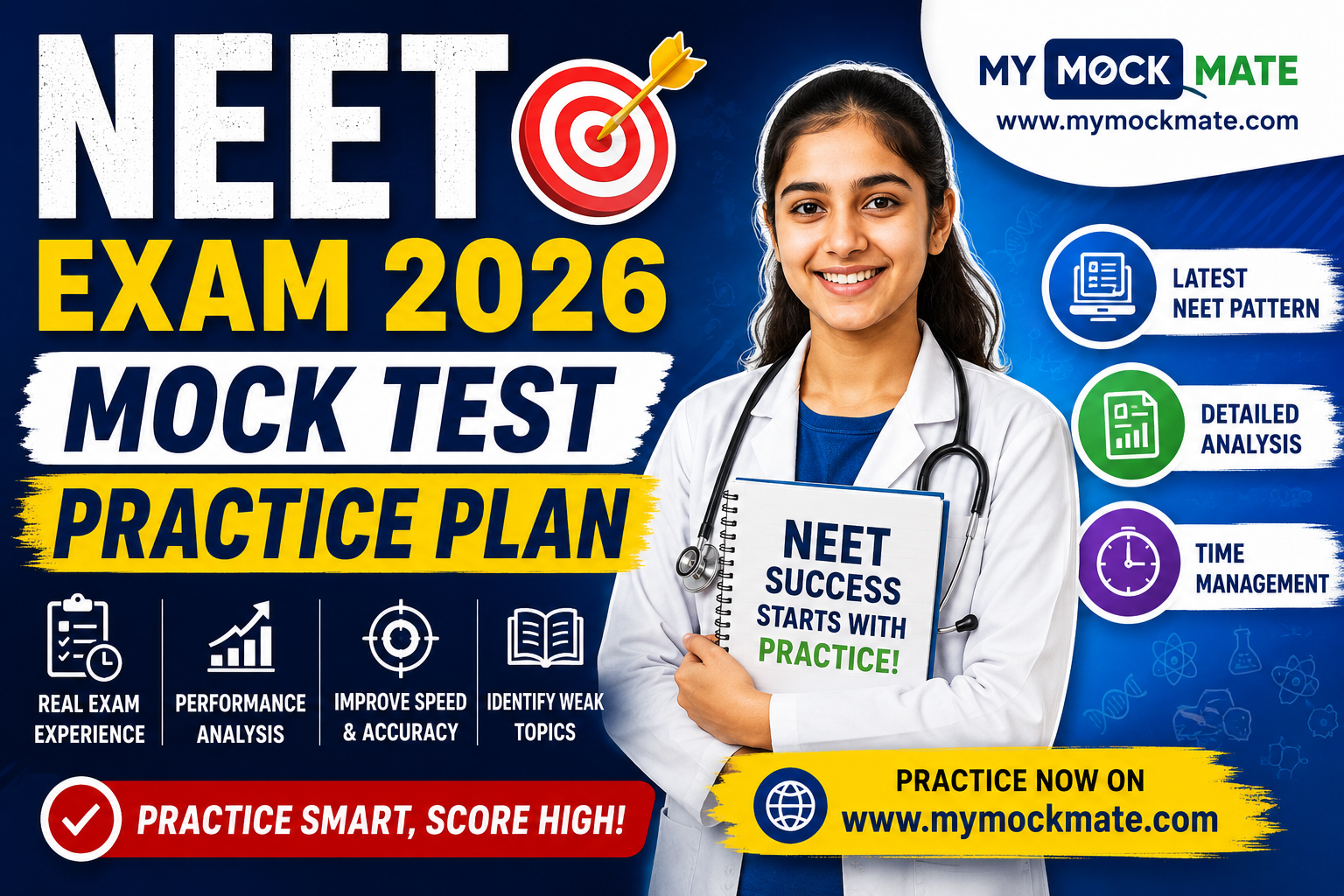
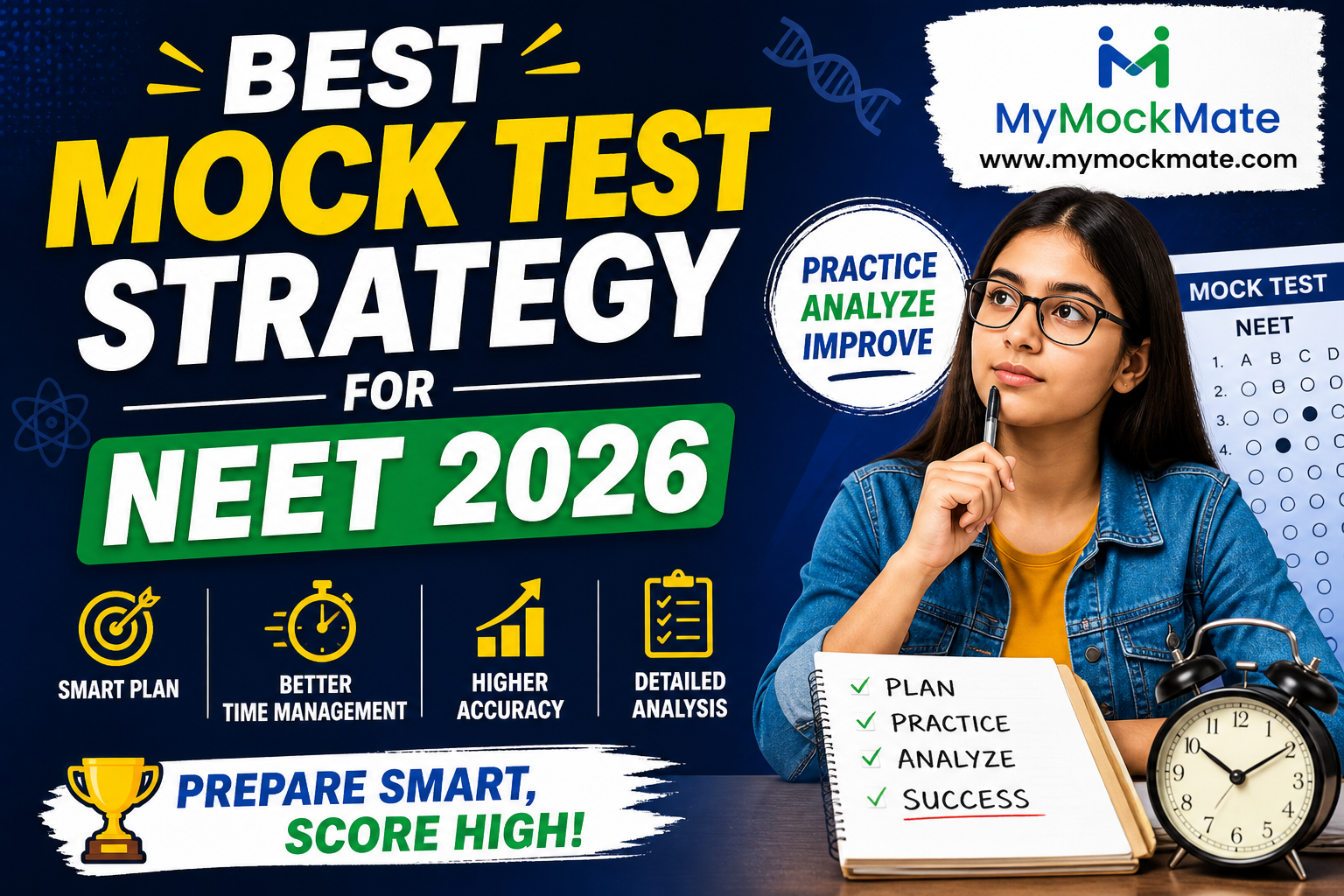
 Discover the best NEET Mock Test Strategy 2026 and learn how many mock tests you should attempt for maximum score improvement. Explore expert preparation tips, study plans, time management strategies, and full-length practice tests on MyMockMate to boost your NEET 2026 preparation.
Preparing for the NEET 2026 examination is not only about studying Biology, Physics, and Chemistry for long hours. The real challenge lies in understanding how to apply concepts under pressure, manage time efficiently, and avoid negative marking. This is where mock tests become one of the most important parts of NEET preparation.
Every NEET topper consistently emphasizes one thing — regular mock test practice. However, many students remain confused about an important question:
“How many mock tests should I attempt for NEET 2026?”
The answer depends on your preparation level, available study time, syllabus completion, and exam strategy. In this detailed guide, we will explain the ideal number of mock tests, the best test schedule, and how students can maximize their scores using smart mock test analysis.
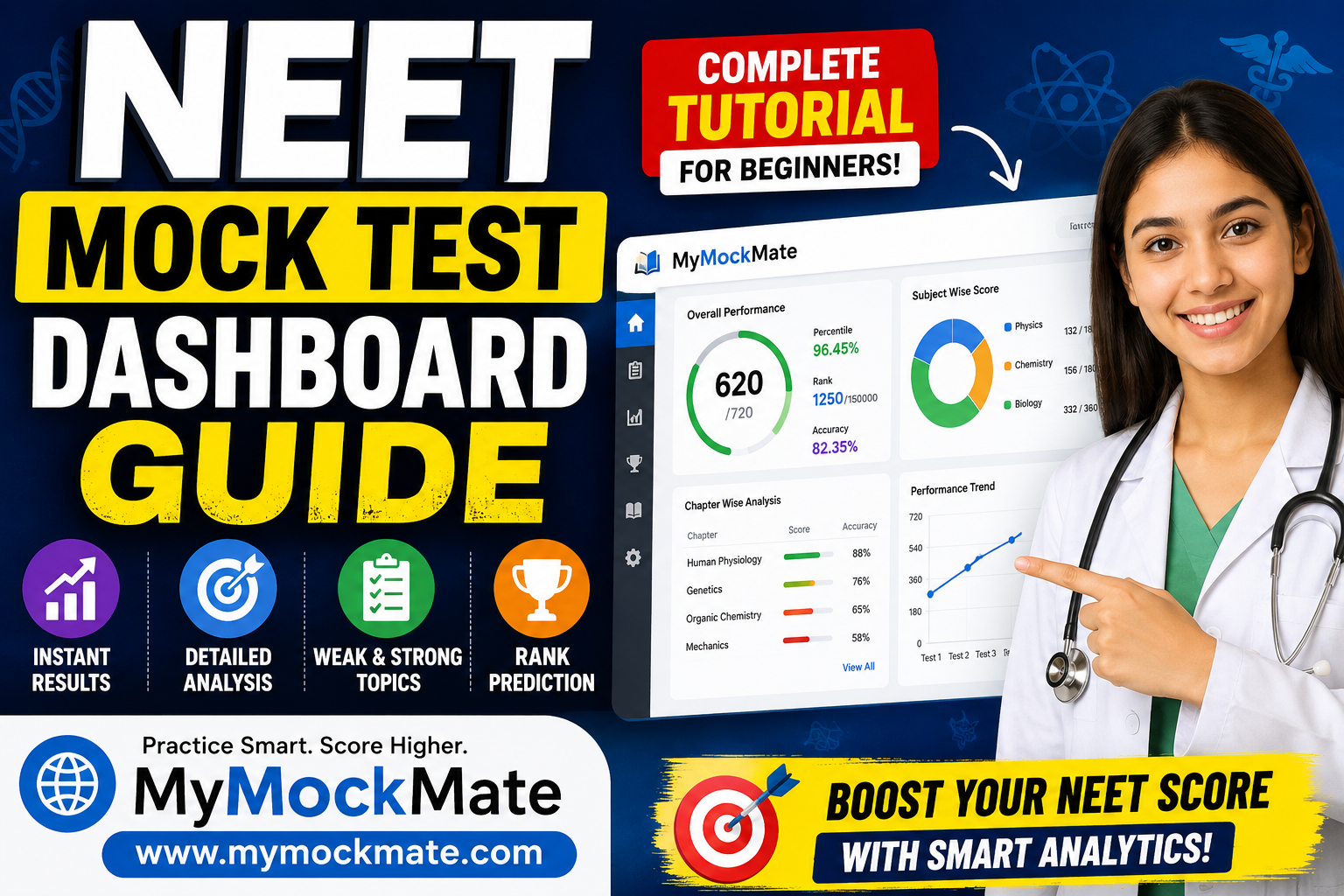
Platforms like MyMockMate provide students with structured NEET mock tests based on the latest exam pattern, helping aspirants improve speed, accuracy, and confidence before the final exam.
Why Mock Tests Are Important for NEET 2026
NEET is one of India’s most competitive medical entrance examinations. Lakhs of students appear every year, but only a small percentage secure top government medical college seats.
Studying theory alone is not enough because NEET tests:
-
Concept application
-
Time management
-
Speed and accuracy
-
Pressure handling
-
Problem-solving ability
-
Consistency
Mock tests simulate the actual NEET exam environment. They help students understand their strengths and weaknesses before the final exam.
Benefits of NEET mock tests include:
-
Better exam temperament
-
Improved question-solving speed
-
Reduced exam fear
-
Strong revision support
-
Performance tracking
-
Better subject balance
-
Higher confidence level
Students who regularly attempt full-length tests generally perform better compared to those who only focus on reading theory.
How Many Mock Tests Should You Attempt for NEET 2026?
There is no single universal number, but experts recommend the following structure:
| Preparation Stage | Recommended Mock Tests |
|---|---|
| Beginner Stage | 1 test per week |
| Intermediate Stage | 2–3 tests per week |
| Final 3 Months | 3–5 tests per week |
| Final 30 Days | Alternate-day full tests |
On average, serious NEET aspirants should attempt:
Ideal Target:
50 to 80 Full-Length Mock Tests Before NEET 2026
Top scorers often attempt:
-
70+ full-length tests
-
100+ chapter-wise tests
-
Multiple revision tests
However, quality matters more than quantity.
Attempting 20 tests with proper analysis is far better than attempting 100 tests without reviewing mistakes.
Stage-Wise NEET Mock Test Strategy 2026
1. Foundation Phase (Class 11 Concepts)
During the initial preparation phase:
Focus Areas:
-
Understanding NCERT
-
Building conceptual clarity
-
Learning formulas
-
Developing discipline
Mock Test Frequency:
-
1 test every week
-
Chapter-wise tests preferred
Goal:
-
Build confidence
-
Identify weak subjects early
At this stage, students should avoid excessive full-length tests because syllabus coverage is incomplete.
2. Syllabus Completion Phase
Once 60–70% syllabus is completed:
Start:
-
Subject-wise tests
-
Half syllabus tests
-
Time-based practice sessions
Recommended Frequency:
-
2–3 tests weekly
Focus:
-
Accuracy improvement
-
Reducing silly mistakes
-
Strengthening weak chapters
Using platforms like MyMockMate can help students practice chapter-wise and full-length NEET papers in a structured format.
3. Full-Length Test Phase
This is the most important phase.
Usually starts:
-
4–5 months before NEET exam
Recommended Frequency:
-
3–5 full-length mock tests weekly
Important Goals:
-
Solve 180 questions in 3 hours
-
Improve Biology speed
-
Balance Physics timing
-
Increase Chemistry accuracy
Students should practice exactly like the real exam:
-
Fixed timing
-
No distractions
-
OMR simulation
-
Proper seating discipline
This phase transforms preparation into exam readiness.
Final 30 Days Strategy
The last month before NEET is crucial.
Recommended Plan:
-
Alternate-day full mock tests
-
Daily mistake analysis
-
Quick revision sessions
Avoid:
-
Studying entirely new topics
-
Random resource changes
-
Panic-based preparation
Most Effective Routine:
| Time | Activity |
|---|---|
| Morning | Full-length mock test |
| Afternoon | Analysis |
| Evening | Weak topic revision |
This strategy is followed by many high-rank NEET aspirants.
Importance of Mock Test Analysis
The biggest mistake students make is:
Attempting tests without analysis.
Mock test analysis is where actual learning happens.
After every test, analyze:
-
Wrong answers
-
Silly mistakes
-
Time-consuming questions
-
Weak chapters
-
Guesswork errors
-
Negative marking patterns
Students should maintain a dedicated:
“Mistake Notebook”
Write:
-
Incorrect concepts
-
Repeated errors
-
Important formulas
-
Difficult NCERT lines
This notebook becomes extremely valuable during final revision.
Subject-Wise Mock Test Strategy
Biology Strategy
Biology carries the highest weightage in NEET.
Tips:
-
NCERT revision daily
-
Solve Biology quickly
-
Focus on diagrams and facts
-
Avoid overthinking
Recommended Time:
-
45–50 minutes in mock tests
Physics Strategy
Physics is often the most difficult section.
Focus:
-
Formula revision
-
Numerical practice
-
Time management
Common Problem:
Students spend too much time on Physics.
Solution:
Practice timed mock tests regularly.
Chemistry Strategy
Chemistry can become a scoring section.
Divide Preparation:
-
Physical Chemistry
-
Organic Chemistry
-
Inorganic Chemistry
Best Method:
-
Daily MCQ practice
-
NCERT memorization
-
Reaction revision charts
Common Mistakes Students Make During Mock Tests
1. Ignoring NCERT
NEET is heavily NCERT-based.
2. Attempting Too Many Resources
Limited resources with multiple revisions work better.
3. Not Reviewing Mistakes
Analysis is more important than the number of tests.
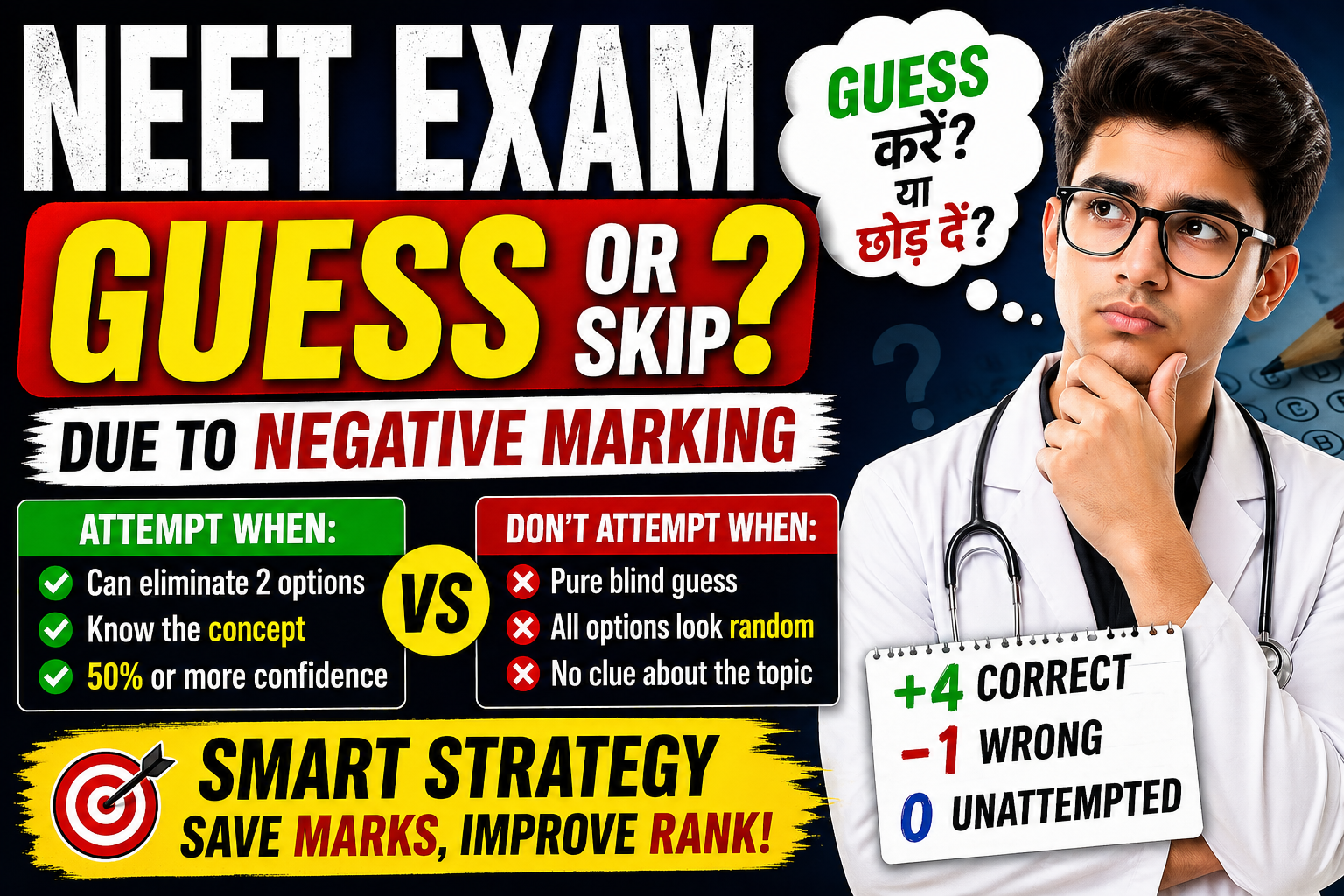
4. Random Guessing
Negative marking can significantly reduce scores.
5. Lack of Consistency
Irregular practice affects exam stamina.
Best Time to Start Full-Length Mock Tests
Experts recommend:
Start Full-Length Tests:
At least 5–6 months before NEET 2026
Why?
Because:
-
Exam temperament develops slowly
-
Accuracy improves gradually
-
Time management needs repetition
The earlier students begin test practice, the better their confidence becomes.
Online vs Offline Mock Tests
| Online Mock Tests | Offline Mock Tests |
|---|---|
| Flexible timing | Real exam feel |
| Instant analysis | Better concentration |
| Performance tracking | Reduced distractions |
| AI insights | OMR familiarity |
Best strategy:
Use both formats.
Platforms like MyMockMate offer online mock tests that simulate real NEET patterns and provide instant performance analysis.
Weekly NEET Mock Test Plan
Sample Weekly Schedule
| Day | Activity |
|---|---|
| Monday | Biology revision + MCQs |
| Tuesday | Physics practice test |
| Wednesday | Chemistry revision |
| Thursday | Full mock test |
| Friday | Mock analysis |
| Saturday | Weak topic revision |
| Sunday | Full syllabus test |
This balanced strategy helps maintain consistency without burnout.
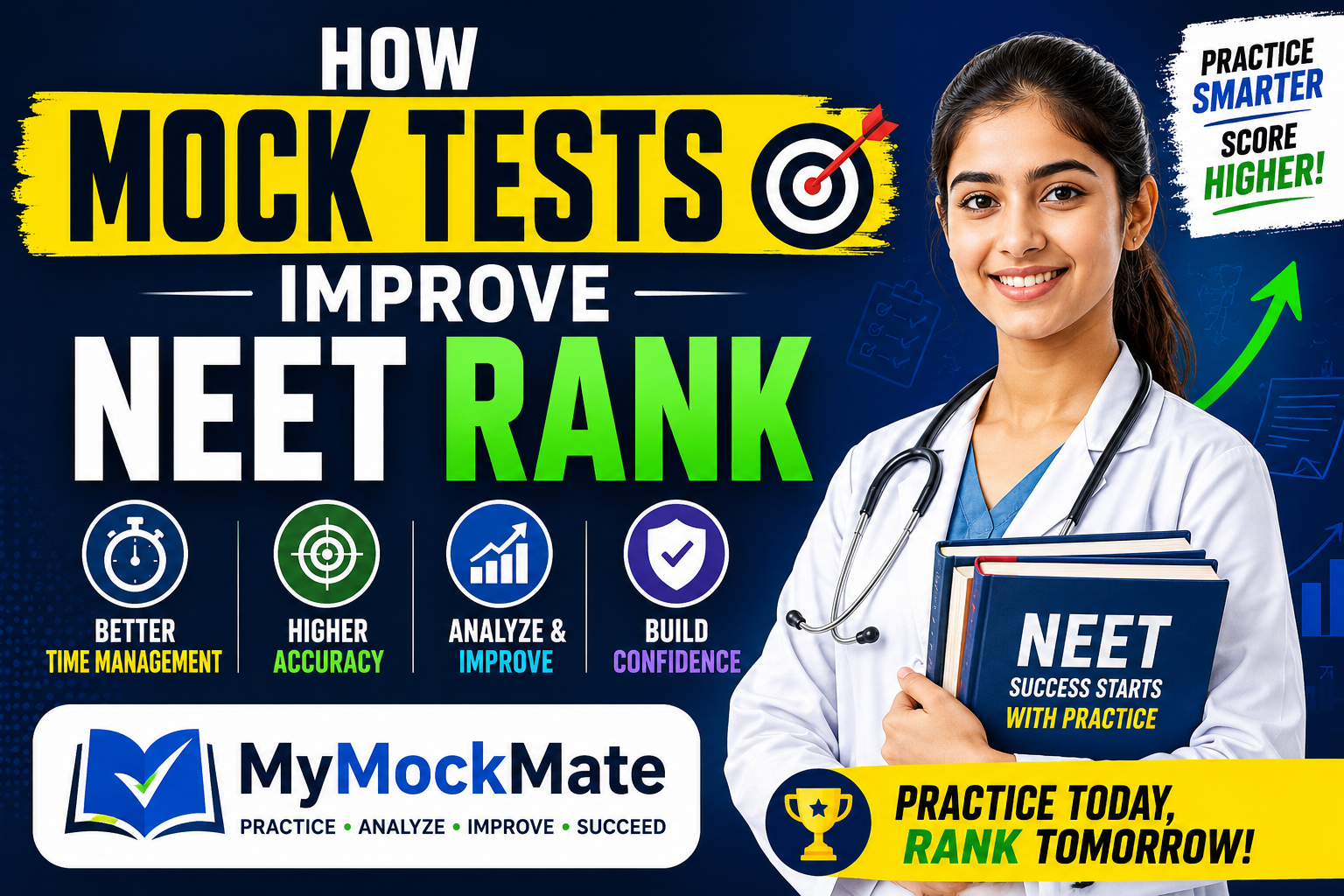
How Mock Tests Improve NEET Rank
Regular mock tests help students:
-
Increase speed
-
Reduce stress
-
Improve retention
-
Strengthen memory recall
-
Build exam confidence
-
Improve rank prediction
Students who consistently practice under timed conditions usually perform better in actual exams.
Smart Tips to Score High in NEET Mock Tests
1. Follow Real Exam Timing
Attempt tests during actual NEET exam hours.
2. Improve Accuracy First
Accuracy matters more than speed initially.
3. Avoid Excessive Guessing
Negative marking can destroy scores.
4. Track Progress Weekly
Maintain a score tracker.
5. Revise Mistakes Frequently
Repeated revision prevents recurring errors.
6. Stay Consistent
Consistency beats occasional long study hours.
Role of Revision Alongside Mock Tests
Mock tests alone are not enough.
Revision is equally important.
Best Revision Strategy:
-
Daily NCERT revision
-
Formula sheets
-
Short notes
-
Error notebook
-
Previous mistakes revision
The combination of:
Revision + Mock Tests = High Score Potential
Why Students Prefer MyMockMate for NEET Preparation
Modern NEET preparation requires smart tools and structured practice.
MyMockMate helps aspirants by providing:
-
Full syllabus mock tests
-
Real exam pattern simulations
-
Chapter-wise practice tests
-
Performance analysis
-
Instant result generation
-
Time-management improvement
-
AI-based test insights
Students can regularly evaluate their preparation level and improve weak areas systematically.
NEET 2026 Preparation Roadmap Using Mock Tests
Phase 1: Build Concepts
-
NCERT focus
-
Chapter-wise MCQs
-
Weekly tests
Phase 2: Improve Accuracy
-
Subject-wise tests
-
Formula revision
-
Error analysis
Phase 3: Full-Length Tests
-
3–5 tests weekly
-
Real exam simulation
-
Time management
Phase 4: Final Revision
-
Alternate-day tests
-
Mistake notebook revision
-
Confidence building
Final Thoughts
The answer to “Kitne Test Attempt Kare?” is simple:
Attempt enough tests to become comfortable with the actual exam.
For most serious aspirants:
50–80 quality mock tests are ideal for NEET 2026.
But remember:
-
Analysis matters more than quantity
-
Consistency is more important than intensity
-
Revision is equally necessary
Mock tests are not just evaluation tools — they are learning tools.
Students who combine:
-
Smart study plans
-
Proper revision
-
Regular mock tests
-
Detailed analysis
usually achieve better NEET ranks.
To practice structured and exam-oriented NEET mock tests, students can explore MyMockMate and strengthen their preparation for NEET 2026 effectively.
Frequently Asked Questions (FAQs)
1. How many mock tests should I attempt before NEET 2026?
Students should ideally attempt 50–80 full-length mock tests along with chapter-wise practice tests before the exam.
2. When should I start giving full-length NEET mock tests?
You should start full-length mock tests at least 5–6 months before the NEET exam.
3. Is solving previous year papers enough for NEET?
Previous year papers are important, but full mock tests are also necessary for time management and exam simulation.
4. How often should I attempt mock tests in the final month?
In the final month, students should attempt full-length mock tests on alternate days.
5. Which is more important: mock test quantity or analysis?
Analysis is far more important. Understanding mistakes improves scores significantly.
6. Can online mock tests improve NEET rank?
Yes. Online mock tests help improve speed, accuracy, and exam confidence when practiced consistently.
7. How can I improve my NEET mock test score?
Focus on:
-
NCERT revision
-
Mistake analysis
-
Time management
-
Regular practice
-
Formula revision
8. Which platform is good for NEET mock test practice?
MyMockMate provides structured NEET mock tests based on the latest exam pattern and detailed performance analysis.