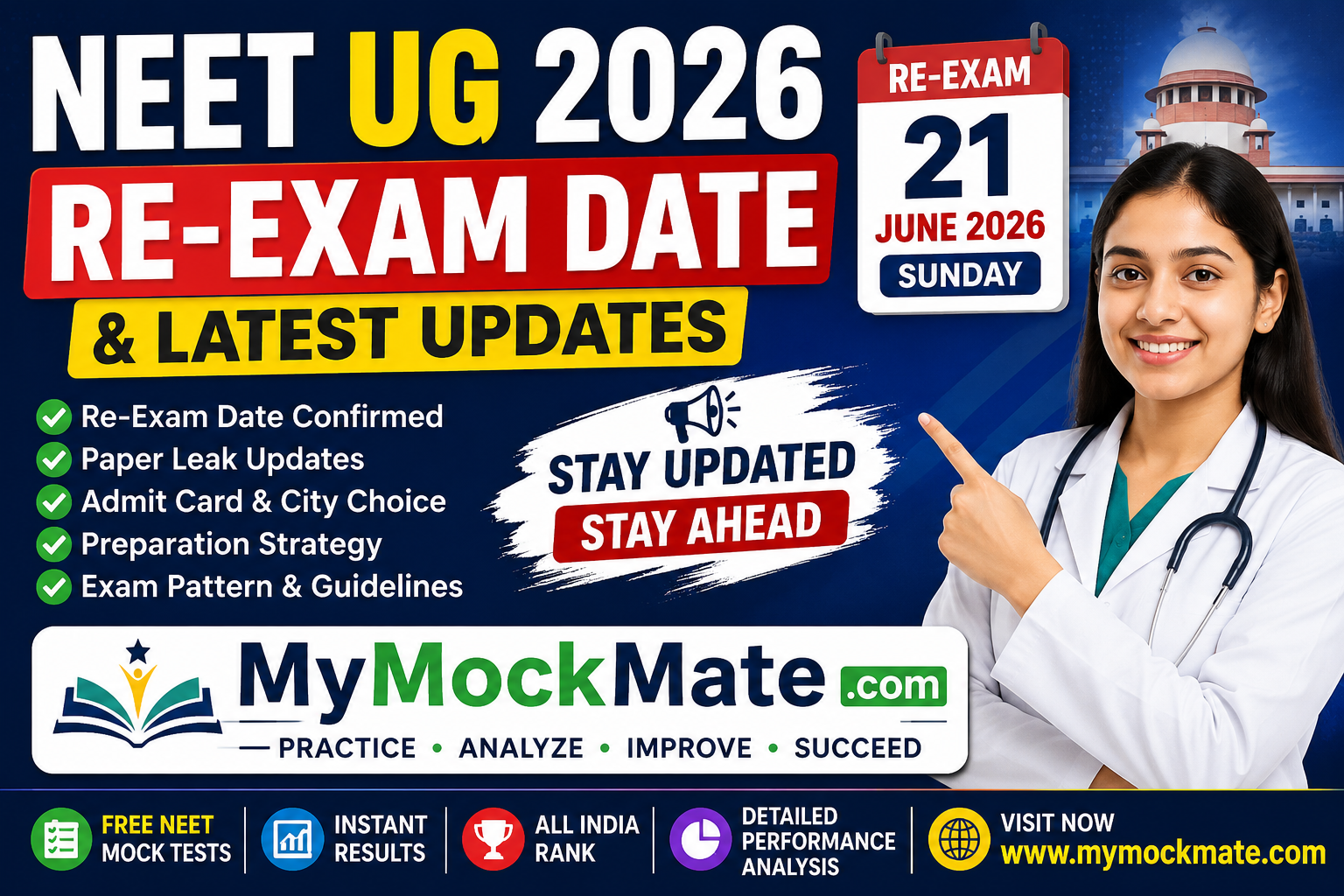
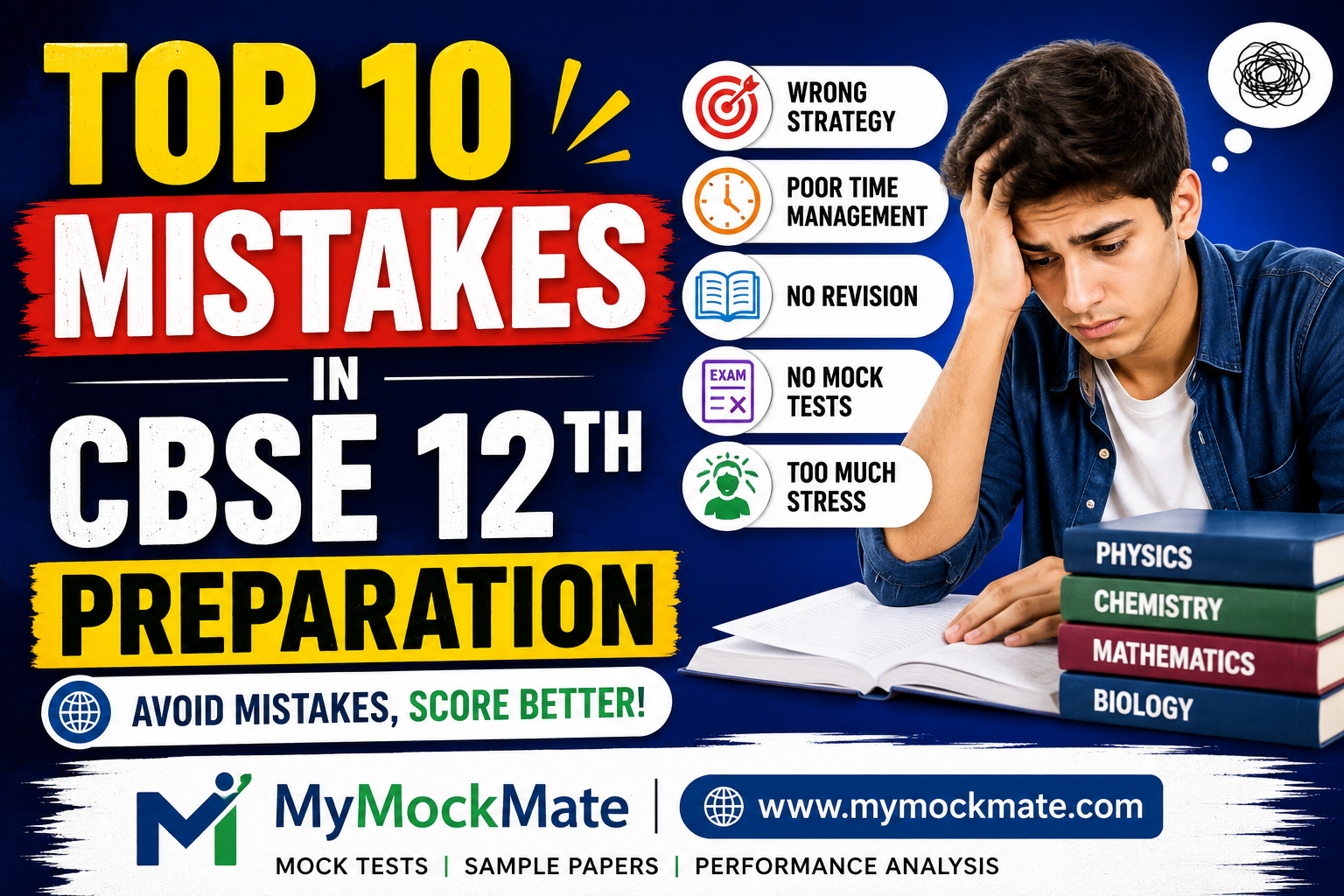
 Discover effective NEET stress management tips to improve focus, confidence, and exam performance. Learn smart preparation strategies with MyMockMate mock tests.
NEET Stress Management Tips for Better Exam Performance
Preparing for NEET UG 2026 is one of the most challenging academic journeys for Indian students. Every year, millions of aspirants compete for limited MBBS seats, making the examination highly competitive and emotionally demanding.
Students preparing for NEET often face:
- long study hours,
- pressure from family,
- fear of failure,
- comparison with others,
- social expectations,
- uncertainty about rank and college admission.
As the exam date approaches, stress levels increase rapidly. Many students experience anxiety, low confidence, sleep problems, overthinking, and even burnout. In some cases, stress becomes so severe that it negatively affects performance despite good preparation.
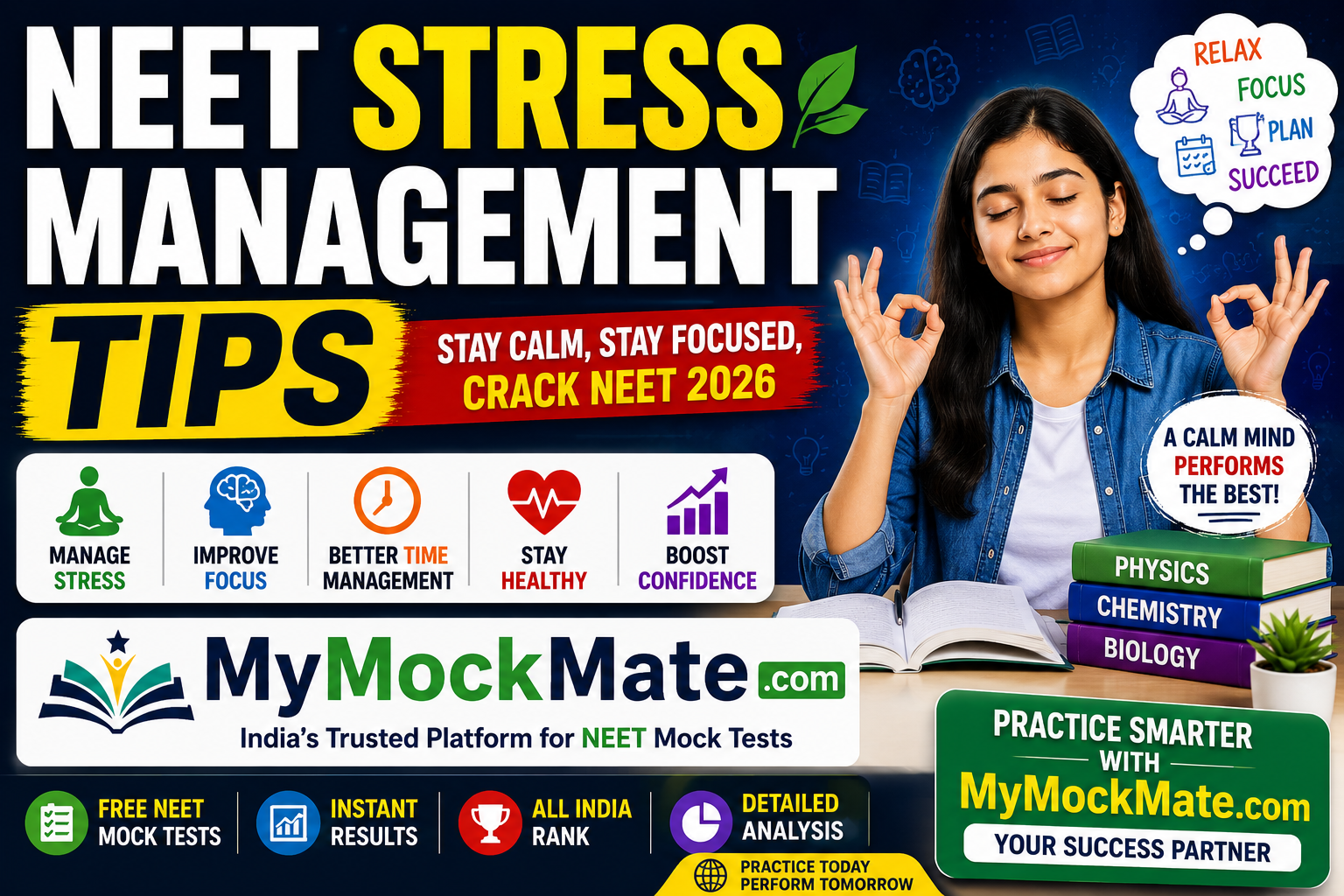
However, stress management is an essential skill for NEET aspirants. Students who remain mentally calm and emotionally balanced generally perform much better than students who study under constant panic.
This is why modern NEET preparation is not only about:
- studying harder,
but also about: - studying smarter,
- staying mentally healthy,
- maintaining emotional stability,
- practicing under real exam conditions.
Platforms like MyMockMate help students reduce exam stress by providing:
- structured mock tests,
- instant performance analysis,
- All India ranking,
- confidence-building practice.
In this detailed guide, we will discuss the best NEET stress management tips that can help aspirants improve focus, confidence, and exam performance.
Why NEET Preparation Causes So Much Stress
NEET is not an ordinary school exam. It is a highly competitive national-level medical entrance examination.
Several factors contribute to stress among students.
1. Huge Competition
Lakhs of students appear for NEET every year, while MBBS seats remain limited.
This creates:
- performance pressure,
- fear of low rank,
- uncertainty regarding admission.
2. Long Preparation Duration
Most students prepare for NEET for:
- 1 year,
- 2 years,
or even longer.
Continuous preparation for such a long period can mentally exhaust students.
3. Social and Family Expectations
Many aspirants face:
- parental pressure,
- societal expectations,
- comparison with relatives or friends.
This often increases anxiety levels.
4. Fear of Failure
Students constantly worry:
- “What if I fail?”
- “What if I score low?”
- “What if I don’t get MBBS?”
Such thoughts create emotional instability.
5. Information Overload
Today’s students consume excessive:
- YouTube videos,
- topper strategies,
- social media discussions,
- rank predictions,
- paper leak rumors.
Too much information confuses and stresses the mind.
Is Stress Completely Bad?
Interestingly:
some stress is normal and useful.
A moderate level of stress:
- keeps students alert,
- improves focus,
- increases seriousness.
However:
excessive stress becomes harmful.
Too much stress can cause:
- low concentration,
- memory problems,
- panic during exams,
- poor sleep,
- low confidence.
The goal is not to eliminate stress completely, but to manage it properly.
Signs of Unhealthy NEET Stress
Students should identify stress early.
Common Symptoms Include:
- headaches,
- irritation,
- lack of motivation,
- overthinking,
- panic attacks,
- sleep disturbances,
- inability to focus,
- excessive fear about results,
- crying frequently,
- avoiding studies completely.
If these symptoms continue for long periods, students must seek support from parents, teachers, or counselors.
NEET Stress Management Tips
Now let us discuss the most effective strategies to reduce stress during NEET preparation.
1. Follow a Realistic Study Schedule
One of the biggest mistakes students make is:
creating impossible timetables.
Some aspirants plan:
- 14–16 study hours daily,
which becomes mentally exhausting.
Instead:
- create realistic schedules,
- include breaks,
- maintain flexibility.
Consistency matters more than extreme study hours.
2. Avoid Comparing Yourself With Others
Comparison is one of the biggest causes of stress.
Every student has:
- different learning speed,
- different strengths,
- different preparation style.
Constantly comparing:
- marks,
- mock test scores,
- study hours,
creates unnecessary anxiety.
Focus on:
“personal improvement.”
3. Practice Mock Tests Regularly
Many students fear exams because they rarely experience real exam conditions.
Regular mock tests reduce fear significantly.
Platforms like MyMockMate help students:
- practice under time pressure,
- improve confidence,
- analyze mistakes,
- track performance.
Mock tests make students mentally stronger.
4. Sleep Properly
Sleep is extremely important for:
- memory,
- concentration,
- emotional stability.
Many NEET aspirants sacrifice sleep during preparation, which actually reduces productivity.
Experts generally recommend:
6–8 hours of quality sleep daily.
Proper sleep improves:
- retention,
- mood,
- focus.
5. Avoid Excessive Social Media
Social media often increases stress because students constantly see:
- topper scores,
- rank discussions,
- panic news,
- unrealistic study routines.
Limit unnecessary scrolling.
Use the internet only for:
- learning,
- mock tests,
- official updates.
6. Focus on NCERT Instead of Too Many Books
Many students become stressed because they continuously switch resources.
Remember:
quality revision is more important than quantity.
Stick primarily to:
- NCERT,
- standard notes,
- mock tests,
- previous year questions.
Too many books create confusion.
7. Take Short Breaks
Continuous study for long hours reduces efficiency.
Take:
- short walks,
- stretching breaks,
- relaxation time.
The brain performs better when refreshed.
8. Exercise Daily
Physical activity reduces stress hormones naturally.
Simple activities like:
- walking,
- yoga,
- stretching,
- light exercise,
can improve mood and concentration.
Even 20–30 minutes daily can help greatly.
9. Practice Meditation and Deep Breathing
Meditation is highly effective for stress reduction.
Benefits include:
- improved focus,
- emotional control,
- reduced anxiety,
- mental calmness.
Simple breathing exercises before studying or mock tests can relax the mind.
10. Stop Thinking About Results Constantly
Many students waste mental energy imagining:
- ranks,
- colleges,
- failures,
- future uncertainty.
Instead:
focus only on today’s preparation.
Results come automatically through consistent effort.
11. Learn From Mock Test Mistakes
Students often panic after low mock scores.
But low scores are:
learning opportunities.
Mock tests are meant to expose weaknesses before the actual exam.
Platforms like MyMockMate provide detailed analysis that helps students improve systematically.
12. Maintain a Positive Environment
Negative surroundings increase stress rapidly.
Avoid:
- toxic discussions,
- demotivating people,
- unnecessary arguments.
Stay connected with:
- supportive friends,
- family,
- teachers.
Positive environments improve mental strength.
13. Don’t Study Continuously Without Revision
Students often keep reading new topics without revising old concepts.
This creates:
- memory overload,
- confusion,
- stress.
Revision improves confidence because students realize they actually remember concepts well.
14. Eat Healthy Food
Diet affects mental performance significantly.
Avoid:
- excessive junk food,
- too much caffeine,
- unhealthy eating patterns.
Include:
- fruits,
- water,
- balanced meals,
- protein-rich food.
Healthy eating supports brain performance.
15. Avoid Last-Minute Panic
As NEET approaches, students often panic and:
- start new books,
- change strategy suddenly,
- overload themselves.
This increases anxiety.
Final weeks should focus on:
- revision,
- mock tests,
- confidence building.
Why Mock Tests Reduce NEET Stress
Mock tests are not only academic tools; they are psychological training tools as well.
Regular testing:
- reduces exam fear,
- improves confidence,
- familiarizes students with pressure,
- strengthens time management.
Students who attempt regular mock tests generally remain calmer during actual exams.
How MyMockMate Helps Reduce NEET Stress
MyMockMate helps students prepare systematically through:
- full-length mock tests,
- chapter-wise tests,
- All India ranking,
- instant performance reports.
Key Benefits
✅ Builds Confidence
Repeated practice reduces fear.
✅ Improves Time Management
Students learn proper paper-solving strategies.
✅ Identifies Weak Areas
Students focus revision intelligently.
✅ Creates Real Exam Experience
This reduces panic during actual NEET.
Mental Strategies Used by NEET Toppers
Top rankers often:
- stay consistent,
- avoid unnecessary panic,
- focus on revision,
- attempt regular mock tests,
- maintain healthy routines.
They understand:
mental calmness is a competitive advantage.
Importance of Self-Belief
Many students lose confidence after:
- difficult mock tests,
- low scores,
- hearing topper stories.
Remember:
improvement matters more than perfection.
Every mock test is an opportunity to improve.
How Parents Can Help Students
Parents play a major role in reducing stress.
Helpful behaviors include:
- emotional support,
- avoiding excessive pressure,
- encouraging healthy routines,
- appreciating effort instead of only marks.
Supportive parents improve student confidence greatly.
NEET Stress During Final Month
The final month before NEET is emotionally intense.
Students should:
- revise calmly,
- avoid rumors,
- sleep properly,
- practice mock tests,
- trust their preparation.
Overstudying during the last week often reduces performance.
Exam Day Stress Management Tips
Before Exam
- wake up early,
- eat light food,
- avoid panic discussions.
During Exam
- stay calm,
- attempt easy questions first,
- avoid overthinking difficult questions.
If Panic Happens
Take deep breaths for 20–30 seconds and restart calmly.
Common Mistakes Students Make Under Stress
❌ Studying Continuously Without Rest
This causes burnout.
❌ Ignoring Mental Health
Mental stability directly affects marks.
❌ Believing Mock Scores Define Final Result
Actual NEET performance can differ significantly.
❌ Overthinking Every Mistake
Mistakes are normal during preparation.
Final Motivation for NEET Aspirants
Remember:
stress does not mean weakness.
Every serious NEET aspirant experiences pressure.
What matters is:
- how you handle it,
- how consistently you prepare,
- how calmly you perform.
Success in NEET is not only about intelligence.
It is also about:
- discipline,
- emotional control,
- confidence,
- smart preparation.
Conclusion
NEET preparation can be stressful, but proper stress management can dramatically improve performance.
Students should focus on:
- consistency,
- revision,
- sleep,
- healthy routines,
- mock tests,
- positive thinking.
Mock tests are especially powerful because they:
- reduce exam fear,
- improve confidence,
- build mental toughness.
Platforms like MyMockMate help students practice smarter through:
- instant analysis,
- All India ranking,
- structured NEET mock tests,
- confidence-building preparation.
Always remember:
a calm mind performs better than a stressed mind.
Stay focused, stay positive, and trust your preparation journey.
Frequently Asked Questions (FAQs)
Q1. Why do NEET aspirants feel so stressed?
Because of:
- high competition,
- family expectations,
- fear of failure,
- long preparation periods.
Q2. Can stress affect NEET performance?
Yes. Excessive stress can reduce:
- concentration,
- memory,
- confidence,
- accuracy.
Q3. How can mock tests reduce NEET stress?
Mock tests create familiarity with exam conditions, improving confidence and reducing fear.
Q4. Which platform is useful for NEET mock tests?
MyMockMate provides:
- NEET mock tests,
- instant analysis,
- All India ranking,
- structured preparation tools.
Q5. How many hours should a NEET student sleep?
Most experts recommend:
6–8 hours daily.
Q6. Is social media harmful during NEET preparation?
Excessive social media use can increase anxiety and distraction.
Q7. Can meditation help NEET students?
Yes. Meditation improves:
- focus,
- emotional control,
- stress reduction.
Q8. What should students do if they score low in mock tests?
Analyze mistakes calmly and focus on improvement rather than panicking.