




Short Intro
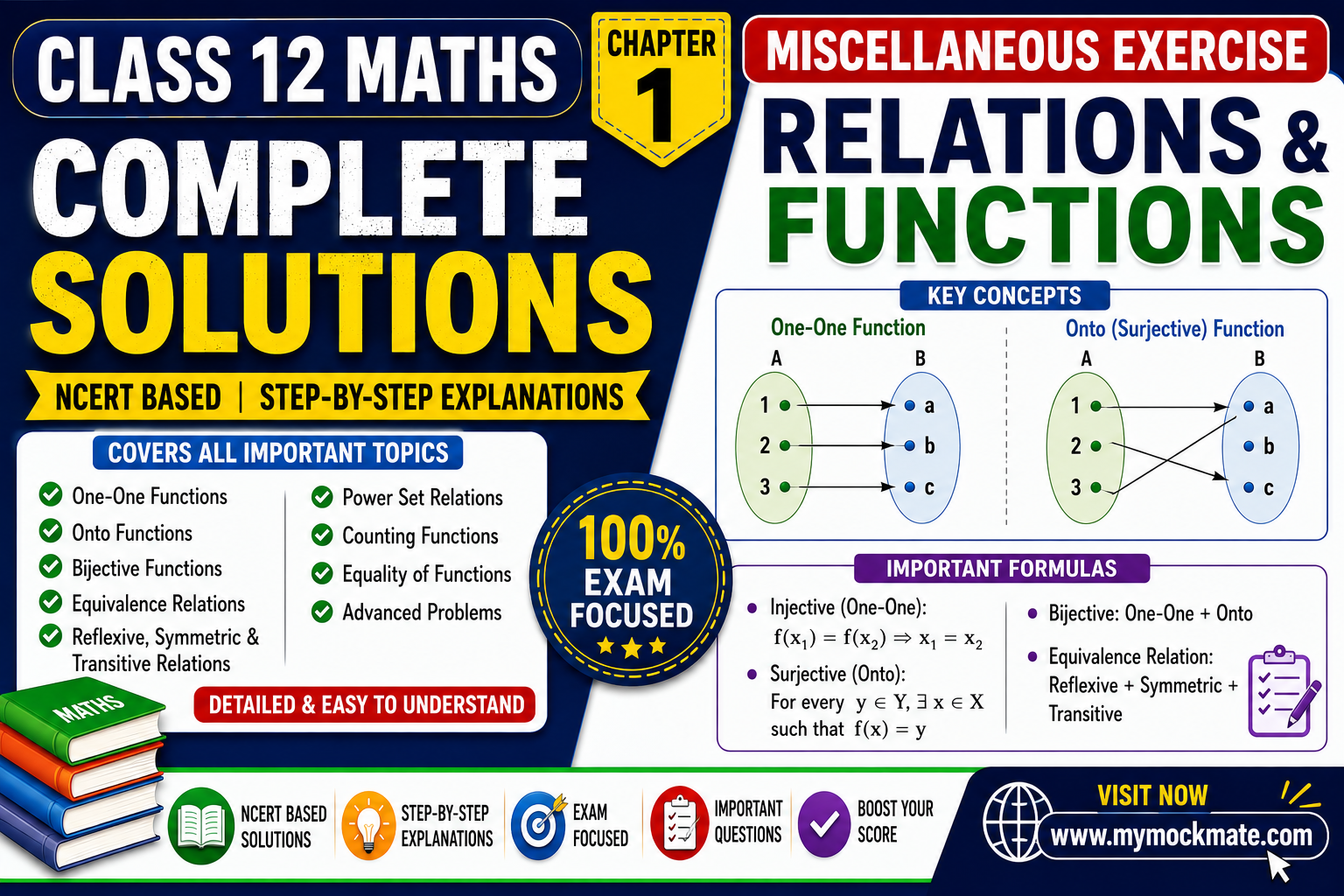
In this post, students can find complete step-by-step solutions for the Miscellaneous Exercise of Class 12 Maths Chapter 1 – Relations and Functions. This exercise includes advanced concepts of equivalence relations, one-one and onto functions, injective mappings, and counting functions based on the latest NCERT syllabus.
Quick Information Box
| Item | Details |
|---|---|
| Board | NCERT / CBSE |
| Class | 12 |
| Subject | Mathematics |
| Chapter | Relations and Functions |
| Exercise | Miscellaneous Exercise |
| Main Topics | Relations & Functions |
Concepts Used (Topics Covered)
- One-One Functions
- Onto Functions
- Bijective Functions
- Equivalence Relations
- Reflexive Relations
- Symmetric Relations
- Transitive Relations
- Power Set Relations
- Counting Functions
- Equality of Functions
The chapter discusses different types of relations and functions along with injective and surjective mappings.
Important Formulas
One-One Function
f(x₁) = f(x₂) ⇒ x₁ = x₂Onto Function
For every y ∈ Y, there exists x ∈ X such that f(x) = yEquivalence Relation
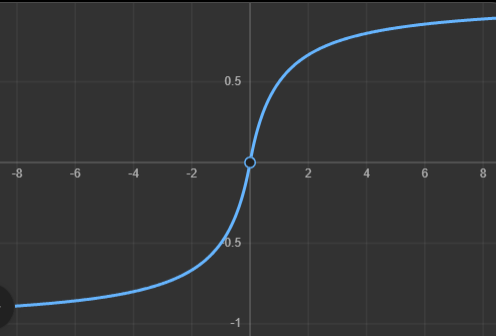
A relation which is reflexive, symmetric and transitive.Function Given in Question 1
Questions & Step-by-step Solutions
Question 1
Show that the function
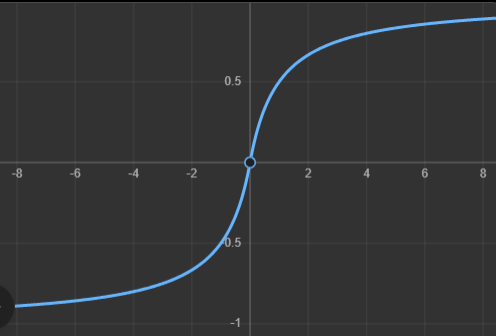
is one-one and onto.
Solution
Suppose:
f(x₁) = f(x₂)Then:
x₁/(1+|x₁|) = x₂/(1+|x₂|)After simplification:
x₁ = x₂Hence function is one-one.
Now let:
y ∈ (−1,1)Choose:
x = y/(1−|y|)Then:
f(x)=yHence function is onto.
Therefore:
f is bijective.Question 2
Show that

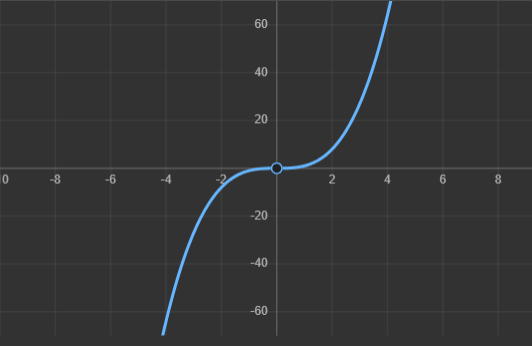
is injective.
Solution
Suppose:
f(x₁)=f(x₂)Then:
x₁^3=x₂^3Taking cube roots:
x₁=x₂Therefore:
f is injective.Question 3
Relation on Power Set
Given:
ARB iff A ⊂ BSolution
For equivalence relation, relation must be reflexive, symmetric and transitive.
Here:
A ⊂ Ais true.
Hence reflexive.
But:
A ⊂ Bdoes not imply:
B ⊂ ATherefore not symmetric.
Hence:
R is not an equivalence relation.Question 4
Number of onto functions from {1,2,3,…,n} to itself
Solution
For finite sets:
Every onto function from a set to itself is one-one.
Hence total onto functions are equal to total permutations.
Therefore:
Number of onto functions = n!Question 5
Check whether functions f and g are equal.
Given:
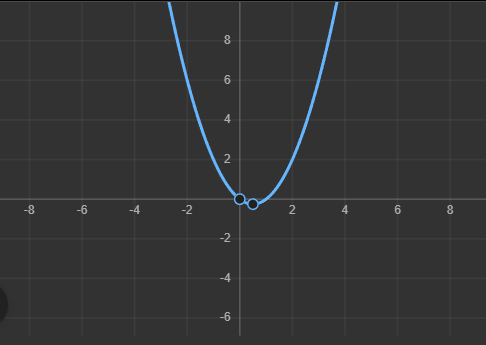
and
Solution
Evaluate functions for all elements of:
A={−1,0,1,2}For f(x)
| x | f(x) |
|---|---|
| −1 | 2 |
| 0 | 0 |
| 1 | 0 |
| 2 | 2 |
For g(x)
| x | g(x) |
|---|---|
| −1 | −2 |
| 0 | −1 |
| 1 | 0 |
| 2 | 1 |
Since outputs differ:
f ≠ gQuestion 6
Number of relations containing (1,2) and (1,3) which are reflexive and symmetric but not transitive
Solution
Required answer:
(B) 2Question 7
Number of equivalence relations containing (1,2)
Solution
Possible equivalence relations are:
- Relation where 1 and 2 belong to same class
- Universal relation
Hence:
(B) 2Common Mistakes
- Confusing subset with proper subset
- Forgetting onto condition
- Not checking symmetry separately
- Mistakes in proving injective functions
- Ignoring co-domain while checking onto
Exam Tips
- Always verify reflexive, symmetric and transitive properties separately.
- Use counterexamples to disprove properties.
- Remember: bijective = one-one + onto.
- Practice function mappings carefully.
Practice MCQs
MCQ 1
A bijective function is:
A. One-one only
B. Onto only
C. Both one-one and onto
D. None
Answer:
C. Both one-one and ontoMCQ 2
The number of onto functions from a finite set to itself equals:
A. n
B. n²
C. n!
D. 2ⁿ
Answer:
C. n!MCQ 3
Relation:
A ⊂ Bis:
A. Symmetric
B. Reflexive only
C. Equivalence relation
D. Universal relation
Answer:
B. Reflexive onlyFAQ Section
What is an injective function?
A function where different inputs produce different outputs.
What is a bijective function?
A function which is both one-one and onto.
What is an equivalence relation?
A relation which is reflexive, symmetric and transitive.
What is the number of onto functions from a finite set to itself?
n!📘 Prepare Smarter with MyMockMate!
✅ Chapter-wise NCERT Solutions
✅ Important Notes & MCQs
✅ Online Mock Tests
✅ Instant Result & Analysis
✅ CBSE Board Exam Preparation
Start learning now on MyMockMate